
How to Budget for a Wedding Without Regretting What You Cut (Spoiler: It’s Usually the Video)

Here’s how to budget for a wedding without regrets: agree a total you can genuinely afford, set your guest list early (it drives most of the cost), rank what matters most to you both, give each part of the day a fixed amount, and keep money aside for the extras that always appear. Then, when something has to give, cut the things guests won’t remember, not the things you’ll want to look back on.
This guide walks through each step with the latest UK figures, and makes the case, from behind the camera, for thinking twice before cutting the video.
What is the typical wedding budget in the UK?
Two big national surveys give a good picture of a typical wedding budget in the UK:
- Hitched Wedding Industry Report: published in January 2026 and based on 2,020 couples who married in 2025, it put the average cost of a wedding at £21,990, with an average spend of £272 per guest.
- Bridebook 2026 UK Wedding Report: based on around 7,000 newly married and planning couples, it puts the average at £20,604, excluding the honeymoon and engagement ring, at about £278 per guest.
Where you marry matters. Bridebook puts London at an average of £26,986, the most expensive region, while couples in the East of England spent an average of £19,794.
Averages are a starting point, not a target. Plenty of lovely weddings cost far less, and an average doesn’t mean you should spend that much. It’s simply useful for checking whether your plans are realistic.
What couples spend on each supplier
Bridebook’s 2026 report also breaks down average spending on individual suppliers. These are national averages, so local prices will vary:
| Supplier | Average spend (Bridebook 2026) |
|---|---|
| Venue (excluding catering) | £6,040 |
| Reception catering | £5,406 |
| Evening catering | £2,002 |
| Dress | £1,532 |
| Videographer | £1,514 |
| Photographer | £1,484 |
| Florist | £1,187 |
| Menswear | £859 |
The pattern is clear: venue and food take the biggest share by far, and both scale with your guest numbers.
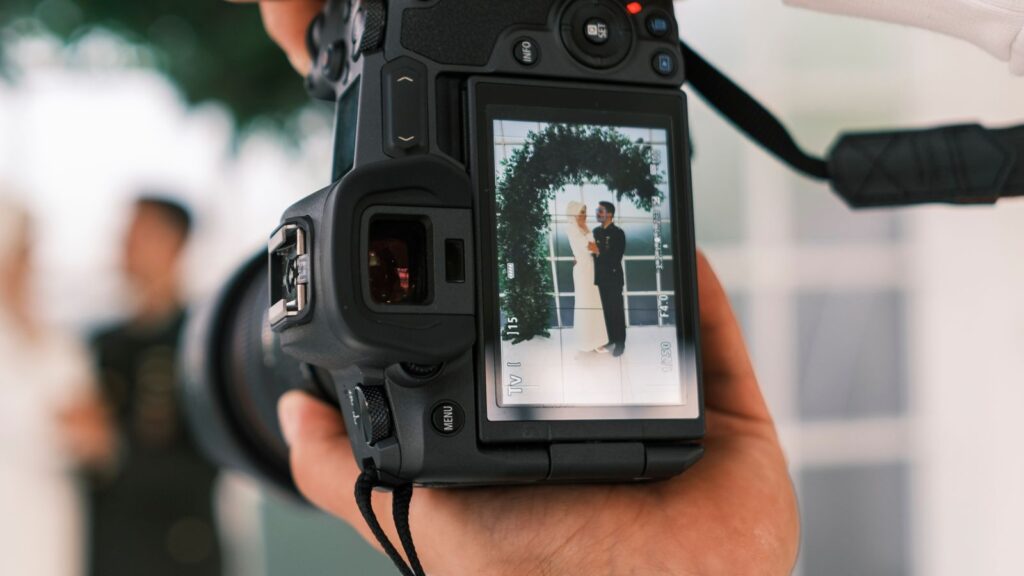
How to budget for a wedding, step by step
1. Agree the total before you look at anything
Sit down together and decide what you can comfortably spend, including any contributions from family. Ask anyone contributing for a firm amount, and whether it comes with expectations (a guest list wish, a particular venue). Set the total before you visit venues or browse suppliers, because once you’ve seen a dream venue, every number starts to stretch.
2. Fix your guest numbers early
Guest numbers drive most of the cost. Bridebook’s 2026 figures show the average spend rising from around £15,162 for a 50-guest wedding to around £26,000 for 120 or more. Hitched found weddings with more than 100 guests averaged £35,591. Every extra guest adds food, drink, chairs, favours, stationery and sometimes a bigger venue.
If your budget is tight, trimming the guest list is usually the cut that hurts least on the day and saves the most.
3. Rank your priorities together
Each of you writes down the three things that matter most and the three you could happily skimp on. Compare notes. You’ll usually find a few clear winners and a few things neither of you cares about. Spend more on the winners and less on the rest.
4. Give every category a fixed amount
Turn your priorities into numbers. Use a spreadsheet with columns for the budgeted amount, the actual quote, the deposit paid, the balance and the date it’s due. Bridebook’s supplier averages above are a useful sense check for each line.
5. Plan for overspending, because it happens
Hitched found that 56% of newlyweds overspent their original budget, while only 6% came in under. Build in a contingency from the start and treat it as untouchable until you genuinely need it. Common surprises include:
- Service charges, VAT and corkage on venue and catering quotes
- Supplier travel and accommodation for venues further away
- Alterations to outfits
- Postage for invitations, and printing extras
- Evening food for more guests than you planned
- Suppliers’ meals on the day
- Tips and thank-you gifts
6. Protect the money you’ve paid
Deposits are often paid many months in advance, so protect them:
- Pay by credit card where you can. Under Section 75 of the Consumer Credit Act, if something costs more than £100 and no more than £30,000, the card provider can be jointly liable if the supplier doesn’t deliver. According to Which?, this applies even if you only paid the deposit on the card.
- Consider wedding insurance. It can cover some costs if a venue cancels or a supplier goes out of business. It won’t cover a change of heart, so read what’s included.
- Get everything in writing. Contracts should list what’s included, payment dates and cancellation terms.
Where to cut your wedding budget (and where not to)
When the numbers don’t add up, it helps to ask one question about each item: will we still care about this in ten years?
Cuts couples rarely regret
- Fewer guests. The biggest saving available, as the figures above show.
- An off-peak date. Midweek, Friday, Sunday or winter weddings are often cheaper at venues and with suppliers.
- Favours and stationery. Few guests remember favours. Digital save-the-dates and RSVPs save printing and postage.
- Simpler food. A sharing feast, buffet or hog roast can cost less than a formal three-course meal.
- Reusing flowers. Ceremony arrangements can be moved to the reception.
- Second-hand décor and outfits. Buy pre-loved and sell on afterwards.
Cuts couples often regret
- Cheap or unreliable suppliers for the things that last. You can’t reshoot a wedding.
- Asking a friend to be the photographer or videographer. They miss the day as a guest, and the results are a gamble.
- Squeezing coverage so it stops before the speeches or first dance.
- Dropping the video altogether.

Why the video is usually the cut couples regret
Bridebook’s figures show the average couple spends a similar amount on a videographer as on a photographer, yet video is often the first thing to go when budgets get tight. It feels optional in a way the venue and food don’t.
But think about what’s left afterwards. The food is eaten, the flowers wilt and the venue goes back to hosting someone else’s wedding. What remains is your photos, and, if you have one, your film. Photos show what your day looked like. Video captures what it sounded and felt like: your vows in your own voices, the best man’s jokes landing, your grandparents dancing, the noise of the room when you walked in.
Those are the moments you can’t recreate, and once the day has passed there’s no way to go back and film them. If you’re unsure, our article is a wedding videographer worth it? looks at the question in more depth.
Keep the video, but spend less on it
If video is a “maybe”, there are ways to keep it without blowing the budget:
- Shorter coverage. Ceremony, speeches and first dance cover the moments that matter most.
- A highlight film only. A short, edited film rather than full-length coverage. Read what a wedding highlight film is to see what’s included.
- One team for photos and video. Booking both from the same company can simplify planning on the day.
- An off-peak date. Supplier availability is often better midweek and in winter.
Budgeting for your wedding film with us
We film and photograph weddings across Suffolk, Essex, Norfolk, Cambridgeshire, Hertfordshire and London. You can see our approach on our wedding films and photography page, and our current packages are on our pricing page so you can plug real numbers into your budget. For a wider look at what affects costs, read how much a wedding videographer costs in the UK, or get in touch with your date and we’ll talk you through the options.
Frequently asked questions
What is the average wedding budget in the UK?
The Bridebook 2026 UK Wedding Report puts the average at £20,604, excluding the honeymoon and ring. The Hitched Wedding Industry Report, based on 2025 weddings, put it at £21,990.
What should take the biggest share of a wedding budget?
For most couples, the venue and catering. In Bridebook’s 2026 figures, venue hire and reception catering are by far the largest supplier costs.
How can we cut our wedding budget quickly?
Reduce guest numbers, choose an off-peak date or day, and simplify the food. Those three changes usually save more than trimming lots of small items.
How much contingency should we leave?
There’s no fixed rule, but leaving a buffer is wise: Hitched found more than half of couples overspent their original budget. Decide on a contingency at the start and only use it for genuine surprises.
Is it worth paying wedding deposits by credit card?
Often, yes. Section 75 protection can apply to items costing over £100 and up to £30,000, even if only the deposit went on the card. Check your card’s terms and pay off the balance to avoid interest.