
How to Choose a Wedding Dress That Looks Even Better in Photos
If you’re wondering how to choose a wedding dress, the best approach is to pick one you feel completely yourself in, then check it against the things a camera notices: how the fabric handles light, how the colour sits next to your skin, how it moves when you walk and dance, and whether you can actually relax in it for twelve hours. Get those right and the dress will look as good in your photos and film as it does in the boutique mirror.
This guide covers how to choose a wedding dress with both the day and the pictures in mind, from fabric and colour to fittings and the small details your photographer will thank you for.
How to choose a wedding dress: start with how you want to feel
It might sound odd coming from a photography team, but the photos come second. The single thing that makes a wedding dress look good in pictures is a person who is comfortable and happy wearing it. Stiff shoulders, tugging at a strapless bodice or holding your breath in a too-tight waist all show up on camera far more than the shade of ivory.
Before you book appointments, write down three words for how you want to feel on the day: relaxed, glamorous, romantic, bold, timeless, fun. Bring those words to every shop. A good consultant will use them to steer you, and they give you a simple test when you’re torn between two dresses: which one matches your words?
How fabric looks on camera
Fabric is where dresses look most different in a photo compared with real life. Under a camera, light either soaks into a fabric or bounces off it, and that changes how the dress reads in every picture.
| Fabric | How it tends to photograph | Worth knowing |
|---|---|---|
| Satin and mikado | Structured, with a soft sheen that catches light along folds and seams | Strong direct sun can create bright highlights. Shade is your friend for portraits |
| Crepe | Matte, clean and modern. Shows the shape of the cut clearly | Fits closely, so the tailoring needs to be spot on |
| Chiffon and tulle | Light and airy. Moves beautifully in a breeze or on the dance floor | Layers can look slightly see-through when backlit, so check in daylight |
| Lace | Gives texture and detail that close-up shots love | Very fine lace can lose detail in wide shots, so it shines in the close-ups |
| Beading and sequins | Sparkles in flash and evening light | Heavy beading adds weight, so think about comfort over a long day |
None of these is better than another. They just behave differently. If you love a shiny satin, for example, it’s worth mentioning to your photographer so they can plan portraits in softer light.
Choosing the right white (or not white at all)
Wedding dresses come in far more shades than “white”: bright white, soft white, ivory, champagne, blush, and plenty of colours beyond. In photos, the shade does two jobs. It sits next to your skin tone, and it decides how much detail the camera can hold in the brightest part of the picture.
- Hold swatches against your face in daylight, not just under shop lighting. The right shade makes your skin look warm and healthy; the wrong one can make you look washed out.
- Bright white is the hardest shade for a camera on a sunny day, because it’s the brightest thing in the frame. A skilled photographer will expose for it, but ivory and soft whites are naturally a little more forgiving.
- Ivory and champagne can look slightly creamy next to a bright white shirt or tablecloth. That’s normal and usually looks lovely, but it’s worth knowing before you see the photos.
- Coloured dresses photograph beautifully. Just think about how the colour will sit next to your flowers, bridal party outfits and venue.
Necklines, sleeves and the shape of the dress
Most of your photos will be taken from the waist up: the ceremony, speeches, hugs and candid moments at the table. That makes the neckline and sleeves more important to your photos than you might expect.
Necklines
Choose a neckline you won’t need to adjust. Strapless dresses look stunning, but if you find yourself hitching it up every few minutes, that gesture will appear in candid shots. Straps, sleeves, a halter or an illusion neckline give more support if you want to hug, dance and lift your arms without thinking about it.
Sleeves and backs
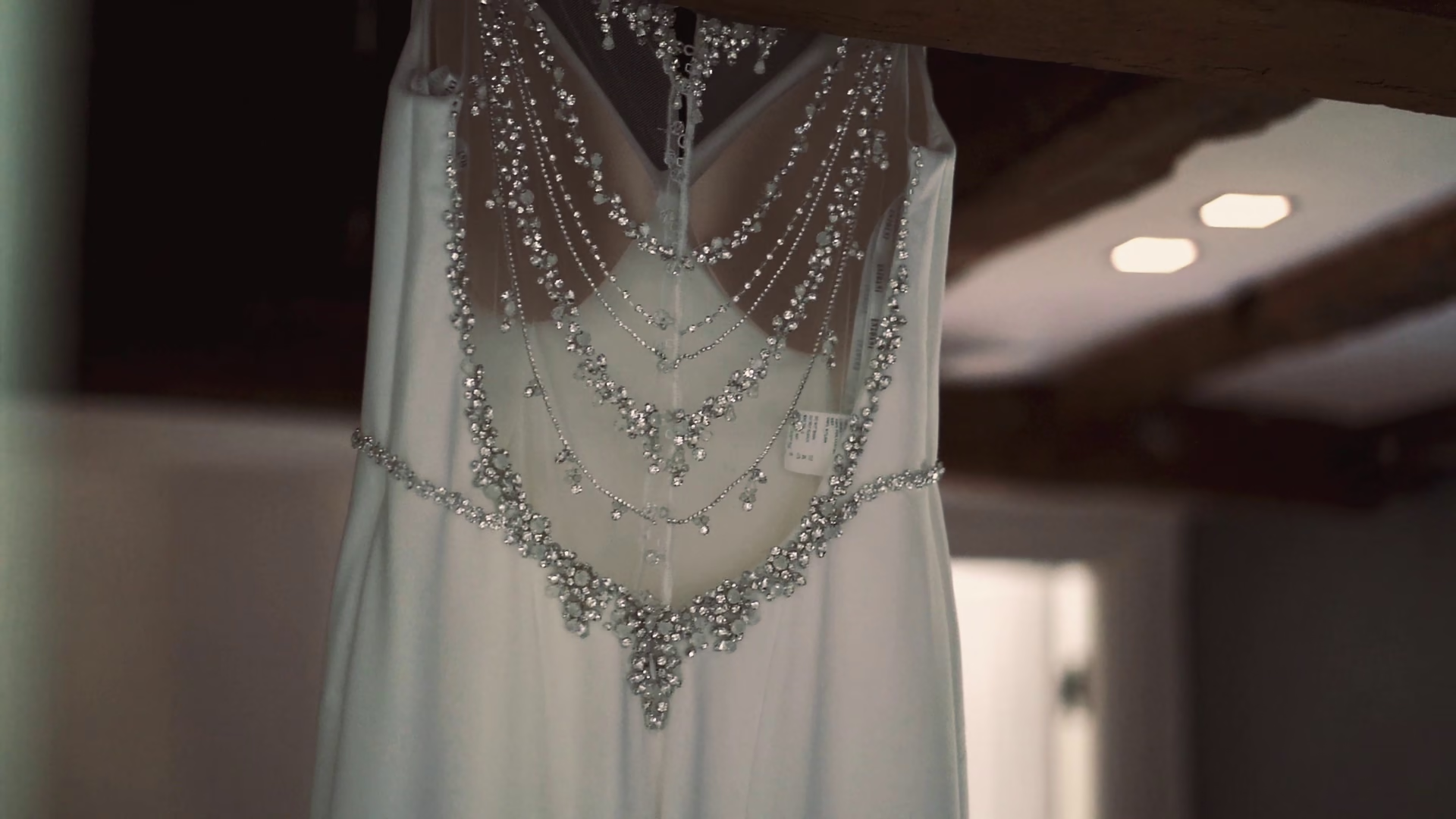
Sleeves, from delicate long lace to bold puffs, add interest to close-ups and keep you warmer at autumn and winter weddings. Don’t forget the back of the dress, either. You’ll spend the whole ceremony with your back to your guests, so a detailed back, buttons or a low cut gets seen far more than people realise.
Silhouette
A-line, ballgown, fit-and-flare, sheath and mermaid shapes all photograph well. The question is what suits your body and your day. A full ballgown looks incredible on a grand staircase but takes up a lot of space in a small car or a narrow church aisle. A sleek sheath dress looks great in motion but can feel restrictive when you sit down for the meal.
Movement: the test most people forget
Dress shops are full of mirrors, and mirrors show you standing still. Your wedding is anything but still. Photos and film catch you walking down the aisle, turning to greet guests, sitting, hugging and dancing.
When you try on a dress, ask to do these things in it:
- Walk at a natural pace and watch how the skirt moves.
- Sit down and stand up again, the way you will at the meal.
- Lift your arms as if hugging someone taller than you.
- Turn and spin, as you would on the dance floor.
- Bend as if picking up a dropped bouquet or greeting a small child.
If you get married on film, movement matters even more. Flowing fabrics and skirts that swing look gorgeous in slow motion, and a dress you can move in freely tends to give you more natural, joyful footage.
Think about your venue, season and timeline
The same dress can look very different in a sunlit barn, a dim church and a marquee at night. A few practical questions help you narrow things down:
- Where are the portraits happening? Long trains look wonderful on lawns and staircases, but drag through mud in a wet field. Ask about a bustle so you can lift the train for the evening.
- What’s the season? Heavy fabrics and sleeves suit colder months; lighter layers help on a hot summer day. If it might rain, have a plan for your hem. Our guide to what happens if it rains on your wedding day covers this.
- When is the light best? If you’re planning portraits around sunset, a dress with sheen or sparkle will glow in that warm light. See whether golden hour photos are worth planning around.
- Are you changing outfits? Some people choose a second, lighter outfit for the party. If so, tell your photographer so the changeover can be fitted into the timeline.
Timing, fittings and what to bring
Made-to-order dresses can take months to arrive, and UK wedding planning site Bridebook suggests allowing a minimum of six months for a made-to-order gown, with as many as four fittings being common. Lead times vary a lot between designers and shops, so ask each boutique for their own timings before you fall in love with a dress.
For every fitting, bring the shoes and underwear you’ll actually wear on the day. A change of heel height changes the hem length, and the wrong bra can change how a bodice sits. Your final fitting is also a good time to practise the bustle with whoever will help you do it on the day.
Small details your photographer will notice
Once you’ve chosen the dress, a few small things make a big difference in your photos:
- Remove the shop labels or tags before the morning, so they don’t appear in getting-ready shots.
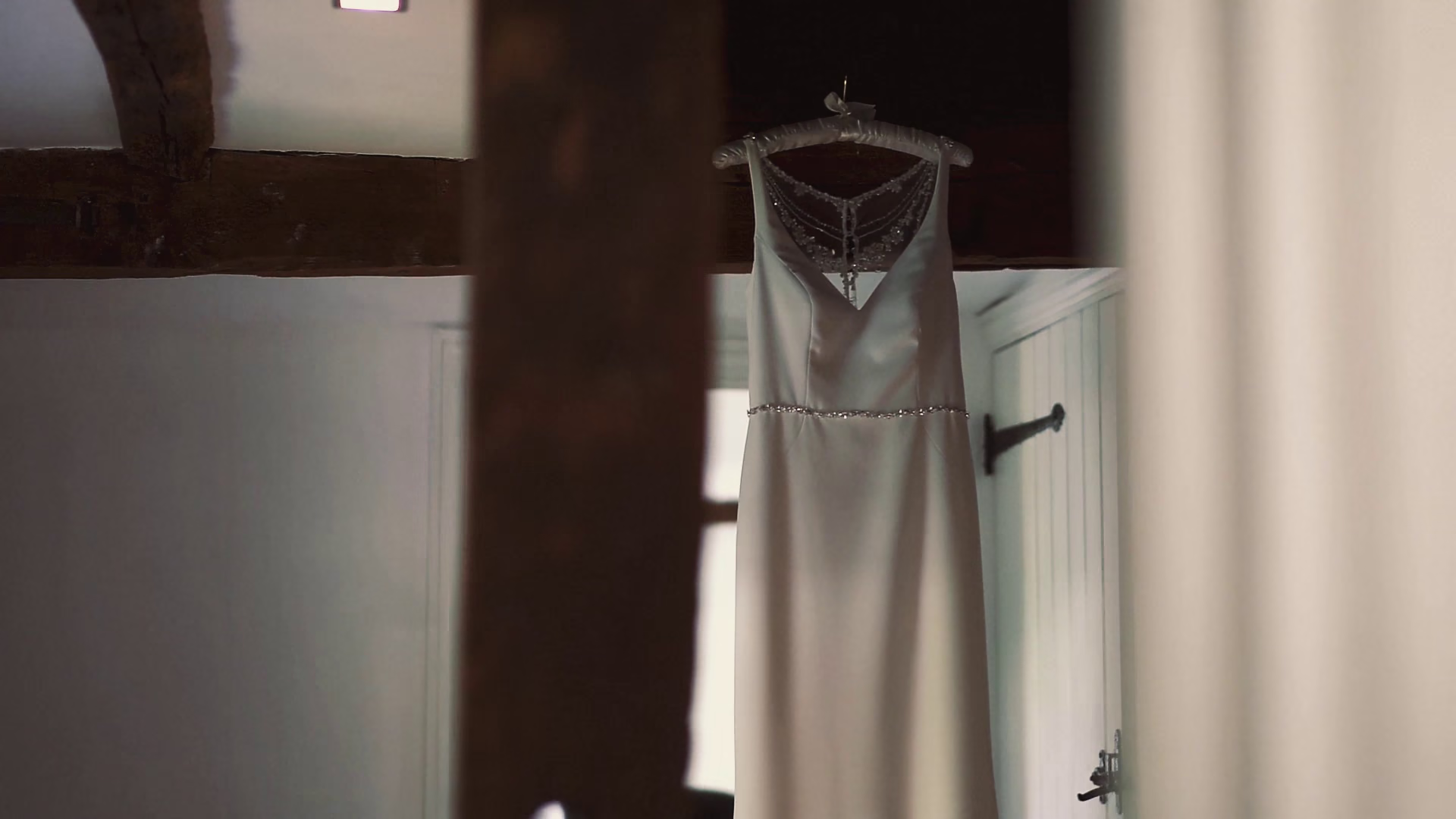
- Use a nice hanger. A wooden or fabric one looks much better in detail photos than a plastic shop hanger.
- Pockets are handy, but a hand constantly in a pocket can change the line of the dress. Use them, just not all the time.
- Steam it on the morning if it’s been folded or travelled. Creases show up clearly in close-ups.
- Plan your veil length with the venue in mind. Long veils look beautiful outdoors but catch the wind easily.
Make sure your photographer sees it all
Once you’ve found the dress, tell your photographer and videographer about it: the fabric, the colour, any detail on the back, and anything you’d love captured. It helps them plan light, angles and the getting-ready shots. Our wedding photography and film team covers weddings across Suffolk, Essex and beyond, and if you’re still choosing your team, our guide on how to choose a wedding photographer is a good next read. For costs, see our pricing page, or get in touch to check your date.
Frequently asked questions
How far in advance should I buy my wedding dress?
It depends on the shop and designer. Made-to-order gowns often need at least six months, plus time for alterations. Off-the-rack and sample dresses can be much quicker, so ask each boutique for its lead times.
Does a bright white dress photograph badly?
No. A good photographer will expose for it. Bright white is simply less forgiving in harsh sun, so ivory and softer whites can be a little easier to photograph on very bright days.
What colour wedding dress looks best in photos?
The one that suits your skin tone. Hold different shades against your face in daylight and pick the one that makes you look warm and well, rather than going by the name of the colour.
Should I tell my photographer about my dress?
Yes. Knowing the fabric, colour and any special detailing helps them plan portraits, light and getting-ready shots so the dress is shown at its best.