
How to Plan a Wedding Timeline (The Version Your Photographer Wishes You’d Seen First)
Most wedding timelines look perfect on paper and fall apart by 2pm. Not because anyone did anything wrong, but because the schedule was written as if everything takes exactly as long as it should. From behind the camera we see the same pinch points at almost every wedding: hair and make-up running over, the receiving line taking twice as long as planned, and portraits being squeezed into ten minutes of fading light.
Here’s how to plan a wedding timeline that survives real life, with a sample schedule you can adapt and the buffers that make the difference.
Start with the fixed points, not the morning
A timeline is built backwards from the things you can’t move. Write these down first:
- Ceremony time: set by the church, registrar or venue, and the least flexible thing on the day.
- Wedding breakfast service time: the caterers will tell you when food needs to be served.
- Sunset time: look it up for your date. It decides when portraits and golden-hour shots can happen.
- Venue curfew: when music has to stop and when guests have to leave.
- Evening guest arrival: usually somewhere between 7pm and 8pm.
Everything else fits around those points.
A sample UK wedding timeline (2pm ceremony)
This is a realistic schedule for a typical UK wedding with a 2pm ceremony and a sit-down meal. Adjust the times to your own fixed points.
| Time | What’s happening | Why it’s timed like this |
|---|---|---|
| 8:00am | Hair and make-up starts | Allow 45 to 60 minutes per person, plus a spare slot |
| 11:00am | Photographer/videographer arrives for prep | Details, getting ready, nervous laughter |
| 12:30pm | Groom and groomsmen ready | So they’re not rushing before guests arrive |
| 1:00pm | Dress on, final touches | The moment you’ll want filmed. Don’t rush it |
| 1:30pm | Guests arrive, groom at the venue | 30 minutes for guests to find seats and settle |
| 1:40pm | Bride/couple leave for the ceremony | Build in travel time plus 10 minutes |
| 2:00pm | Ceremony | Civil ceremonies run about 20 to 30 minutes; church services usually 45 to 60 |
| 2:45pm | Confetti, congratulations, drinks reception | Guests want to hug you. Let them |
| 3:15pm | Group photos | Keep the list to 8 to 10 groups and have an usher round people up |
| 3:45pm | Couple portraits (round one) | 20 to 30 minutes, away from the crowd |
| 4:30pm | Guests called to the wedding breakfast | It takes 15 to 20 minutes to seat everyone |
| 4:45pm | Meal served | Usually around 90 minutes for three courses |
| 6:15pm | Speeches | Some couples do speeches before the meal so nerves don’t spoil dinner |
| 7:00pm | Golden-hour portraits (summer) / room turnaround | 10 minutes outside at the right time beats 30 minutes at the wrong one |
| 7:30pm | Evening guests arrive | |
| 8:00pm | Cake cutting and first dance | Do them back to back so everyone’s in the room |
| 8:15pm | Party, evening food around 9pm | |
| 11:30pm–12am | Last song and send-off | Check the venue’s curfew |
The 7 buffers photographers wish every couple built in
- Hair and make-up overruns. Add 30 minutes to whatever your stylist says. The last person in the chair always runs late.
- Travel time plus traffic. Allow for country lanes, tractors, parking and the walk from the car.
- The confetti chaos. Straight after the ceremony, everyone wants to congratulate you. It’s lovely, and it takes 20 to 30 minutes whether you plan it or not.
- Group photo round-ups. The groups themselves are quick. Finding Uncle Dave at the bar isn’t. Give your photographer a list and a loud usher.
- Seating guests. Calling 100 people into a room and getting them seated takes far longer than you’d think.
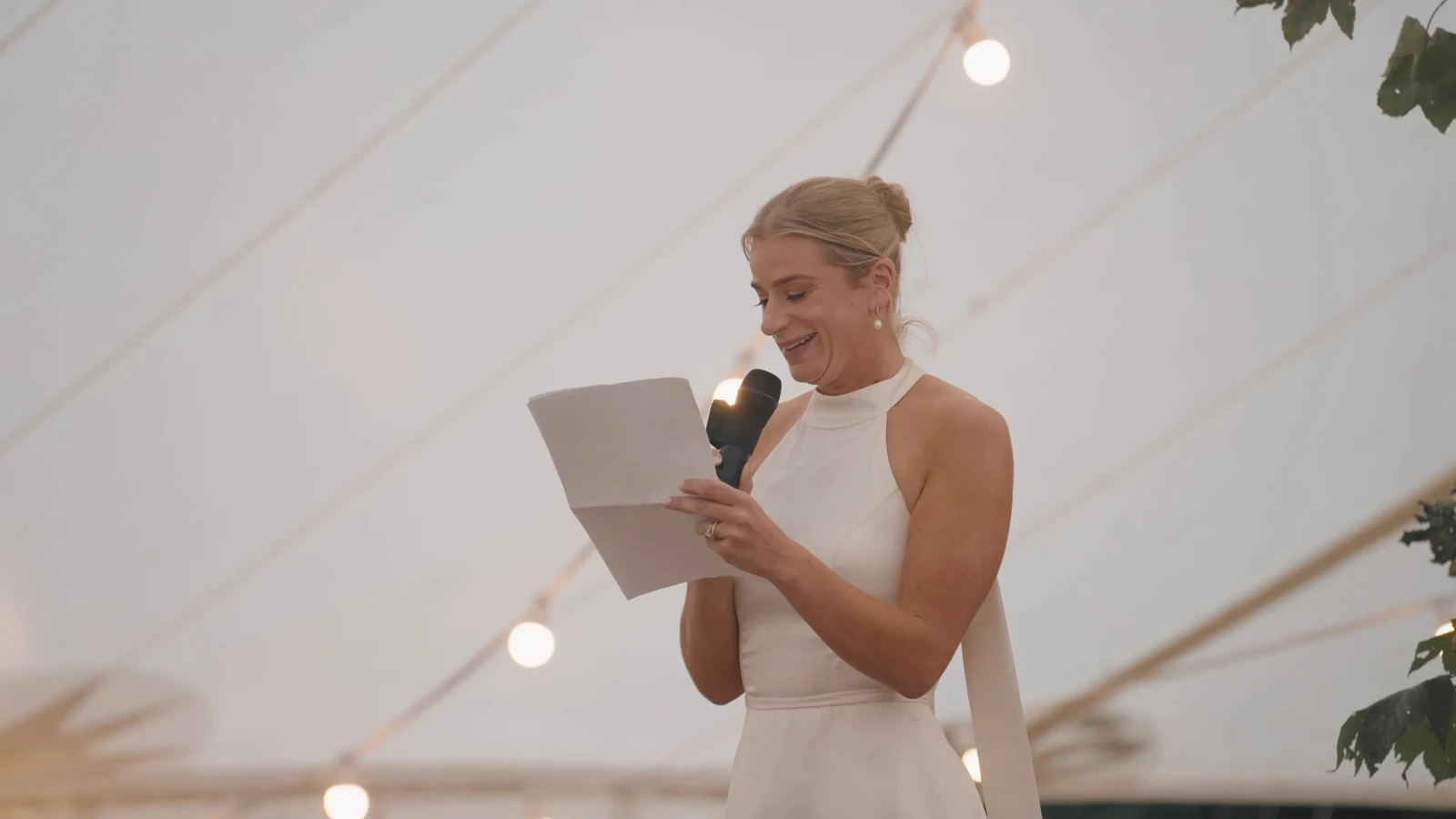
- Speech length. Ask speakers to aim for around 5 to 10 minutes each. Three speeches can easily take 45 minutes once laughter and applause are included.
- Light. In winter, sunset can be before 4pm. If you want outdoor portraits, they must happen straight after the ceremony.
Planning the timeline around photography and video
Your photographer and videographer will have opinions on your timeline, so share a draft with them early. A few things that make a big difference to how your photos and film turn out:
- Getting ready by a window. Natural light makes prep photos look beautiful. A dark hotel corridor doesn’t.
- A first look, if you want one. Seeing each other privately before the ceremony frees up time for portraits later.
- Two short portrait sessions instead of one long one. One after the drinks reception, one at golden hour. You miss less of your own wedding and get better light.
- Speeches in good light. If they’re at the end of the meal, ask the venue to keep the lights up. Dim uplighting is atmospheric, but it makes speech footage grainy.
- Feed your suppliers during the meal. That way they’re ready the moment the speeches start, rather than eating while the best man stands up.
Winter wedding timeline tweaks
From November to February the light disappears fast. Consider an earlier ceremony (12pm or 1pm), do couple portraits straight after the ceremony, and plan indoor moments, such as fairy lights, sparklers or a candlelit corridor, for later shots.
Who should hold the timeline on the day?
Not you. Give a printed copy to your venue coordinator, your photographer, your videographer, your best man or chief bridesmaid, and the DJ or band. One person (ideally the venue coordinator or a trusted friend) should be in charge of moving things along, so you can enjoy the day.
Want your timeline checked by people who film weddings?
We film and photograph weddings across Suffolk, Essex and further afield, and we’re always happy to look over a timeline and point out where it might pinch. See our wedding films and photography, or send us your date and we’ll take a look.
Frequently asked questions
How far in advance should I plan my wedding timeline?
Start a rough version as soon as your ceremony time is confirmed, then finalise it about a month before with your venue and suppliers.
How long should a wedding day be?
From the start of prep to the last dance, most UK weddings run 12 to 16 hours. The ceremony to the evening reception is usually around 5 to 6 hours.
How long do wedding photos take after the ceremony?
Allow about 30 minutes for group photos and 20 to 30 minutes for couple portraits, plus time for the congratulations in between.
Should speeches be before or after the meal?
Either works. Before the meal gets nerves out of the way and keeps the kitchen happy; after the meal is more traditional. Tell your caterer and photographer which you choose.