
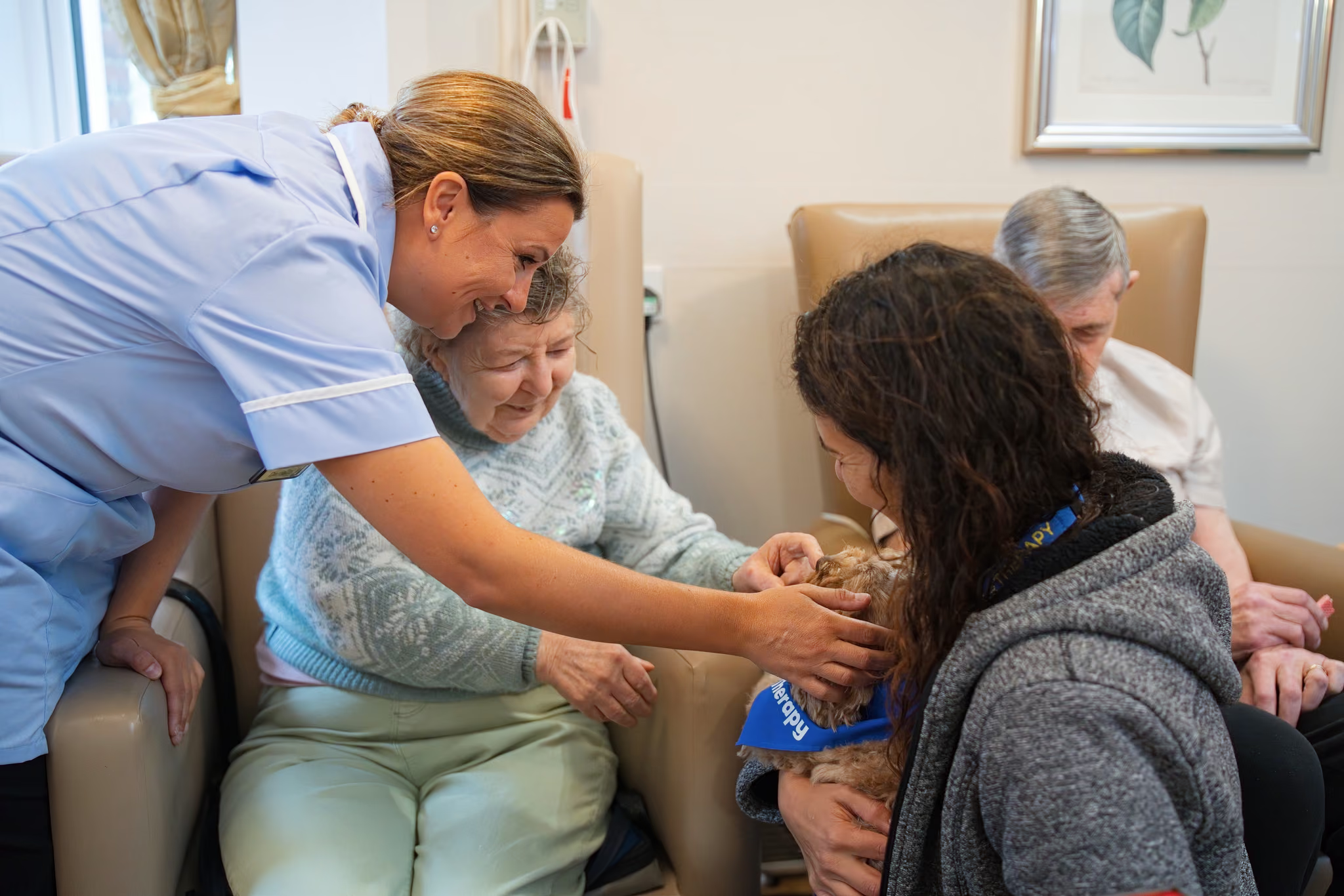
A photograph can show a warm relationship in a fraction of a second. Getting that picture should not mean turning somebody’s home into a studio.
On Wednesday 21 October 2026, I spent three hours photographing Eastham Care Home in Woodham Ferrers as part of our ongoing work with My Home Life England. The brief was to capture natural moments between residents and staff, the enjoyment of the activities and the facilities around them. It was a people-first assignment, and the lighting needed to support that.
I had already met and interviewed home manager Karolyn Sisto during the My Home Life Chelmsford programme. This visit took the wider project into a different setting: the home itself, with its own routine, familiar faces and things happening at the same time. The Eastham Care Home photography case study shows the finished selection.
Start with the activity, not the camera
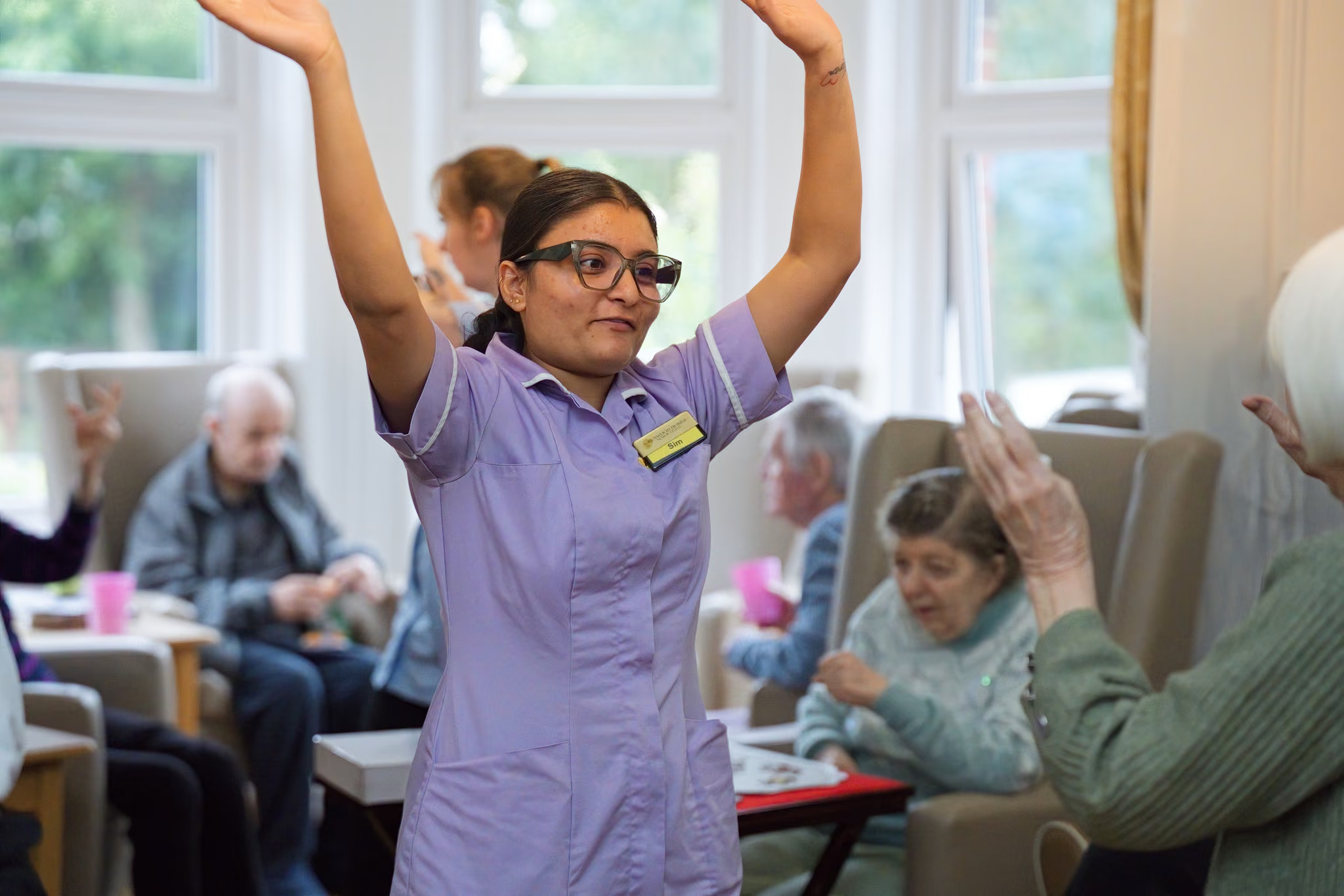
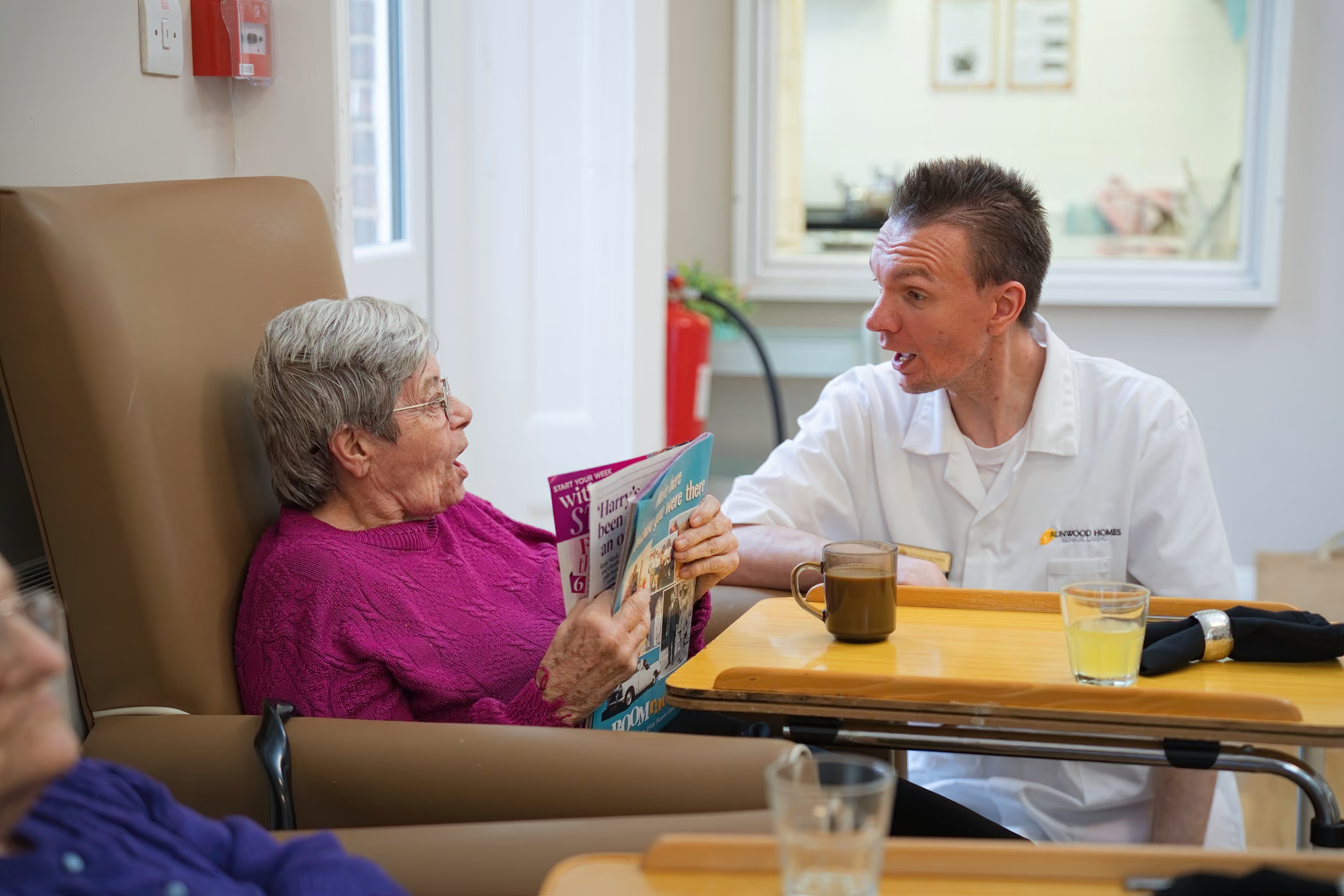
Our schedule began at 10am. In the living room, residents were taking part in dancing, mobility exercises and games, with carers and other members of the team joining in. There were broad scenes that explained the room, but the strongest pictures often happened within them: a shared look, a hand held out or a laugh between two people.
My priority was to follow those interactions. If I stopped the activity each time I wanted a cleaner background or a different angle, I would change the thing I had been asked to photograph. Moving my own position and waiting for a clearer moment made more sense than making the room organise itself around me.
Why I chose not to use flash
I did not use an on-camera or off-camera flash. I wanted to avoid repeated bursts of light becoming a distraction while people were enjoying the morning. That was a choice for this setting and this brief, rather than a rule that flash can never be appropriate.
Instead, I used a 100W video light bounced off the ceiling. The light stayed on continuously, so I could work without a fresh flash every time I pressed the shutter. Bouncing it gave me a broader, softer source than pointing the light straight at someone.
Continuous lighting still needs thought. The ceiling’s height and colour affect how much light comes back and what colour it becomes. For a similar assignment, I would assess the room before deciding whether a ceiling bounce was suitable. The equipment should fit the space and the people using it.
Accept some ISO instead of missing the expression
At times the ISO was higher than I would choose in a controlled studio, but it remained manageable. People were moving, and I still needed to catch gestures and expressions cleanly. There was no benefit in chasing a lower ISO if it meant losing the moment to movement or stopping the activity.
I judge that compromise against the finished photograph. An expressive, well-timed image with some noise can be more useful than a technically cleaner frame in which nothing is happening. That does not mean ignoring image quality; it means deciding which compromises serve the brief.
Two cameras, three different ways of seeing
I used two Sony A7 V bodies and an 85mm f/1.4, a 35–150mm and a 16–35mm f/2.8. Having two bodies reduced the need to stop and swap lenses as the room changed. The three lenses gave me different options without asking residents or staff to repeat what they were doing.
- 85mm f/1.4
- A way to isolate an expression or a small interaction, with separation from a busy room.
- 35–150mm
- Flexible framing as people moved between wider group activity and closer conversations.
- 16–35mm f/2.8
- A wider view when the setting, shared space or facilities needed to be part of the picture.
Those are the roles the focal lengths offer; I did not need every photograph to show off a particular lens. The useful question was whether the frame explained a relationship, an activity or a space.
Give the place a part in the story
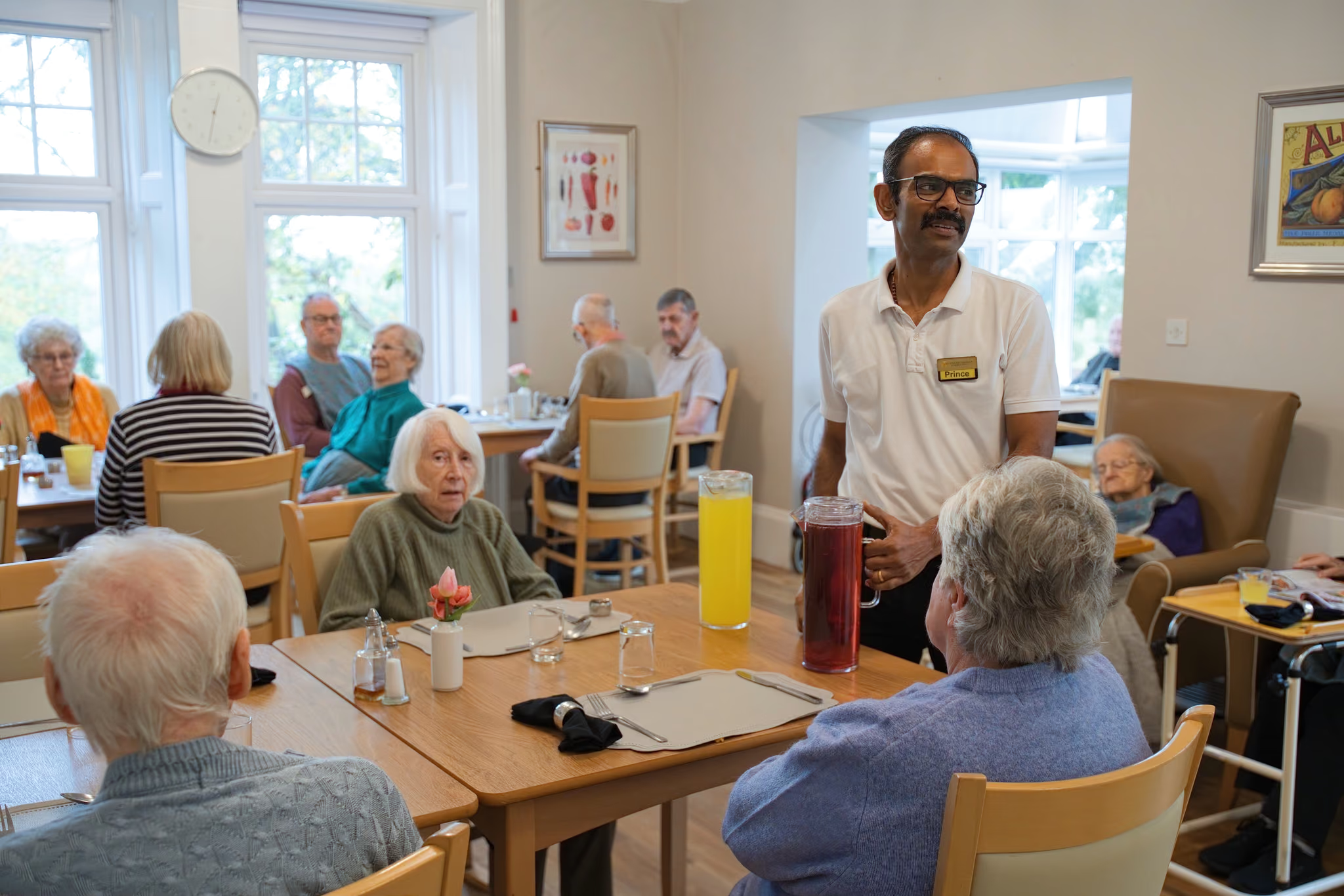
A collection of close portraits alone would have left out part of the brief. Wider views and photographs of the facilities show where these moments happen. They also give a website editor a different kind of image to work with: something that can introduce the home, describe a space or sit beside practical information.
The balance is important. Rooms should look like the setting for everyday life, while the people remain individuals rather than decoration for an interiors photograph. Our workplace and corporate photography follows the same principle: show what happens in a place as well as what the place looks like.
The edit is another act of care
A busy morning produces variations. Several frames can record the same exchange, but a public gallery does not need all of them. I look for the clearest expression, useful composition and enough variety for the collection to tell a story.
For this website, the project gallery contains 50 selected photographs. That is a showcase selection, not a statement that only 50 photographs were taken or delivered. Repeated frames and awkward expressions do not add value simply because they increase the count.
If you are planning a care-home photography session, start with the activities people already enjoy, the images you need and the home’s arrangements for who can be photographed and how the pictures can be used. Give the photographer a named contact, an achievable schedule and room to observe. Lighting and lenses can then be chosen around that plan.
Explore the 50-photo Eastham Care Home gallery, see our wider My Home Life England production partnership, or plan photography in Woodham Ferrers with us.