
Looking for a Videographer? How to Choose the Right One for Your Project
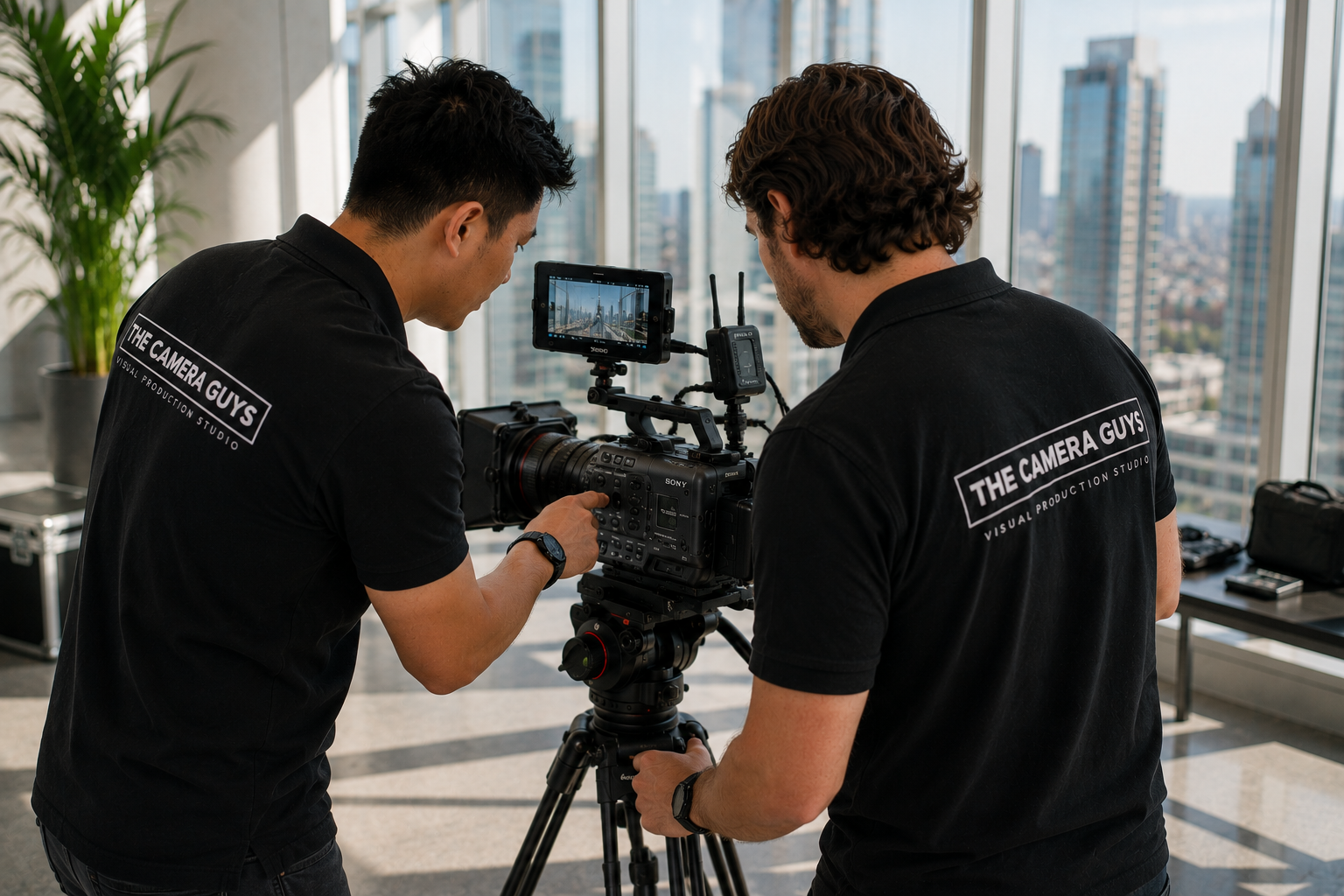
Looking for a videographer can feel straightforward until every portfolio looks polished and every quote includes something different. The best choice is not necessarily the biggest crew, the newest camera or the lowest day rate. It is the person or team whose work, approach and proposal fit what you actually need.
This guide gives you a practical way to build a shortlist, compare like-for-like quotes and ask better questions before you book. It works for a business film, an event or a personal celebration—although the right evidence will differ for each.
1. Decide what the film needs to do
Before searching for a style, write one sentence describing the job. “We need a film” is a starting point; “we need new customers to understand our installation process before booking a consultation” is a brief somebody can work with.
For a private celebration, the purpose might be keeping the speeches and the atmosphere of being together. For a conference, it might be recording complete talks as well as producing a short highlights edit. Those are different jobs, even if both involve a camera in a busy room.
- Audience: who will watch, and what do they already know?
- Use: website, presentation, social channels, internal training or a private keepsake?
- Deliverables: one finished film, several versions, full recordings or a combination?
- Deadline: when do you need the approved files, not just the first draft?
- Constraints: fixed event times, limited access, a quiet interview room, brand approvals or people who cannot appear?
A specialist in corporate video production should be able to discuss audience, message and approvals. Someone covering a once-only celebration needs an approach that protects the moments you cannot repeat. Start with that fit, not a generic promise to make everything cinematic.
2. Watch complete, relevant portfolio examples
A showreel is a useful introduction, but its best five seconds from twenty shoots will not show how a whole film holds together. Ask to see two or three complete examples similar to your project. They do not have to feature your exact industry or venue: an interview-led film for another sector may be stronger evidence than an unrelated montage filmed around the corner.
When you browse a videography portfolio, listen as carefully as you look. Can you understand the dialogue? Does the story make sense without someone explaining it? Do the shots feel consistent? Does the pace suit the subject, rather than simply following the music?
For events, look at difficult moments as well as the impressive ones: a dim room, someone walking unexpectedly towards the camera, a speaker who turns away from the microphone. For interviews, watch how comfortable the contributor seems. These are useful clues about how the work was captured, not just how it was edited.
Ask what they personally did
Production is collaborative. A portfolio may include work someone directed, filmed, edited or contributed to as part of a larger crew. Ask which role they performed and whether the people responsible for the work you like would be involved in yours. An honest, specific answer is more useful than a long list of client logos.
3. Know who will turn up—and who will edit
Ask who your main contact will be, who is filming and who handles the edit. A freelance operator and a production company can both be excellent choices. What matters is whether the proposed team covers the job and whether responsibilities are clear.
One operator can be a sensible choice for a controlled interview or compact shoot. Simultaneous activity in separate rooms, a live performance or an event that needs both photographs and uninterrupted video may justify more people. More crew is not automatically better; fewer crew is not automatically better value. Ask the supplier to explain the coverage you gain and what would be missed with the smaller option.
If you are comparing a Colchester videographer with a team travelling from elsewhere, consider arrival time, venue familiarity and travel charges alongside the creative work. Location is useful context, not a substitute for a relevant portfolio. Our video production locations directory can help you find the area information relevant to your brief.
Reviews can add another perspective. Look for comments about communication, reliability, how people felt on camera and the delivery process—not only praise for the finished image. Our client reviews include links to their original sources so you can read them in context.
4. Compare the whole project price, not just a filming rate
A low filming rate may exclude editing; a higher proposal may already include planning, captions and several delivery formats. Neither number tells you enough on its own. Send the same outline to your shortlisted suppliers and ask each to identify inclusions, assumptions and optional extras.
| Check in the quote | What to ask |
|---|---|
| Preparation | Are briefing, scripting, interview planning and location preparation included? |
| Filming | How many people, how many hours and what happens if the schedule overruns? |
| Editing | How many finished films, approximately how long, and how many revision rounds? |
| Versions | Are portrait edits, captions, graphics and clean versions separate deliverables? |
| Expenses and tax | Are travel, accommodation, music, stock assets and any applicable VAT included? |
| Delivery | What are the first-cut and final-delivery dates, and how will files be supplied? |
Use our video production pricing page to explore scope and costs, then get a written proposal for the actual job. An estimate is a planning tool; it should not leave you guessing whether editing or essential coverage is included.
If a proposal is beyond your budget, ask what can be simplified without compromising the priority. Fewer locations or fewer finished versions may be a better saving than rushing a once-only event. Be wary of proposals that promise every possible deliverable without explaining the time or people required.
5. Ask about sound, backups and what happens when plans change
You do not need to become a camera expert. Ask what the production plan does for your project: how speeches will be recorded, how an interview room will be made suitable, and what the contingency is if equipment fails or a crew member becomes unavailable. For event videography, clarify which moments will be recorded in full and which will appear only in highlights.
Ask how footage is backed up after filming and how long working files are retained. Do not assume raw footage is included or kept forever. Confirm what you receive, what you can reuse, and whether any music or stock licences limit where a film can be published. Venue access and permissions should have a named person responsible for arranging them.
Agree how feedback will work
Choose one person to collect feedback from everyone approving the film. Ask whether revisions mean changes within the agreed brief or a new direction, and what happens if additional work is requested. A clear review process is not bureaucracy: it stops conflicting instructions and helps the final film arrive on time.
Before booking, read the written cancellation, rescheduling and payment terms. Ask about anything unclear. A trustworthy supplier should be comfortable explaining the process and identifying what they cannot promise.
A first enquiry you can actually use
We are planning [project or event] at [location] on [date]. The film is for [audience] and will be used on [channels]. Our priority is [main outcome or moments]. We think we need [deliverables], with final files by [deadline]. Our working budget is [range]. Could you share relevant complete examples, explain the team you would propose, and quote for filming, editing and any additional costs?
You do not need every answer before getting in touch. Mark uncertain details as undecided and ask what information would change the recommendation. A good first conversation should make the choices clearer, not pressure you into a package before the job is understood.
The final shortlist test
Before you choose, check that you can answer three questions: Do I like relevant work this team has actually made? Do I understand who is doing the work and what I will receive? Do I trust their plan and communication? If any answer is missing, ask another question before paying a deposit.
If you would like us to put a proposal together, tell The Camera Guys about your filming project. We can discuss what needs capturing, the practical coverage and a realistic scope before you decide.