
01 / THE SHORT ANSWER
What should you budget?
At The Camera Guys, one videographer costs £546 for four hours or £942 for eight hours on location. Editing and travel are additional.
Our rate starts at £249 for the first hour, then £99 for each consecutive hour. Editing is £49 per hour. That puts the filming, editing and travel in the two worked examples below at £1,379 and £1,726. Our King Edmund School film was a separate £1,800 package.
These are our own prices and project examples, checked on 23 September 2026. They are not a UK market average. A solo videographer, a crew filming an event and a production company making a scripted advert are pricing different jobs.
For the latest rates, equipment inclusions and optional extras, see our videographer pricing.
One operator, consecutive booked hours, filming only. Editing, travel and specialist extras are separate. Longer days and multi-day projects need a tailored quote.
WHY THE SHOOT IS ONLY PART OF IT
Four hours filming.
Twenty-one hours working.
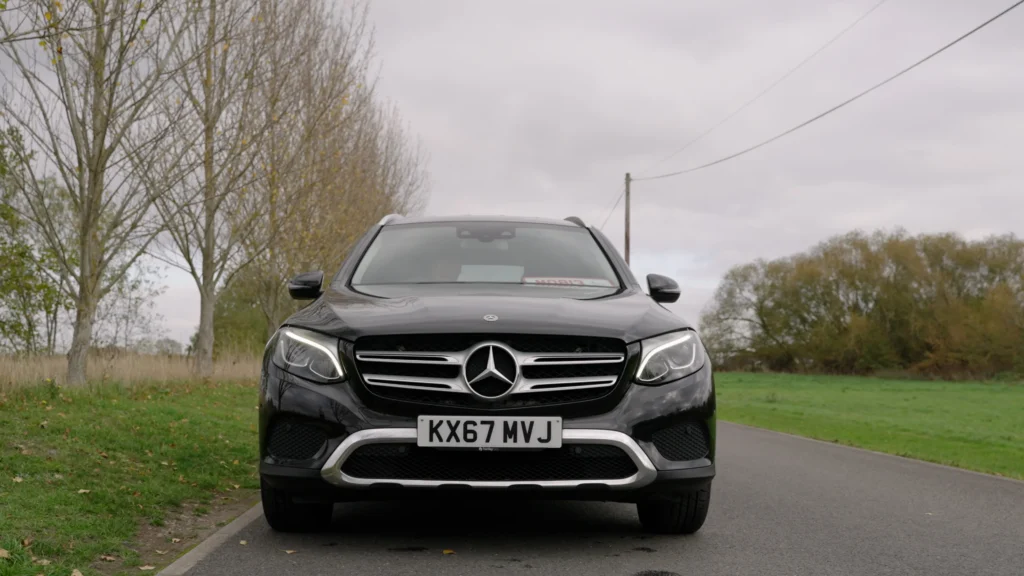
For Target Car Supermarket, allow four hours filming, three hours travelling and fourteen hours editing. The camera is on location for less than a fifth of those twenty-one hours.
The edit is where the footage becomes something a business can publish: creating templates, choosing takes, building the sequence, working on sound and colour, adding branding and exporting the finished videos.
A useful quote makes that work visible. “£546 for four hours filming” and “£1,379 for the filming, edit and travel” can describe the same shoot.
Target Car Supermarket
Time used in this example
The hours illustrate this project. Editing included creating templates for the series; it is not a fixed multiple of filming time.
02 / THE WORK BEHIND THE NUMBERS
Three projects. Three useful comparisons.
All three were single-videographer shoots. Target and Sentry show what the filming, editing and travel hours below would cost at our September 2026 rates. King Edmund is the actual agreed package price.
Target Car Supermarket
Automotive content · Grays, Essex
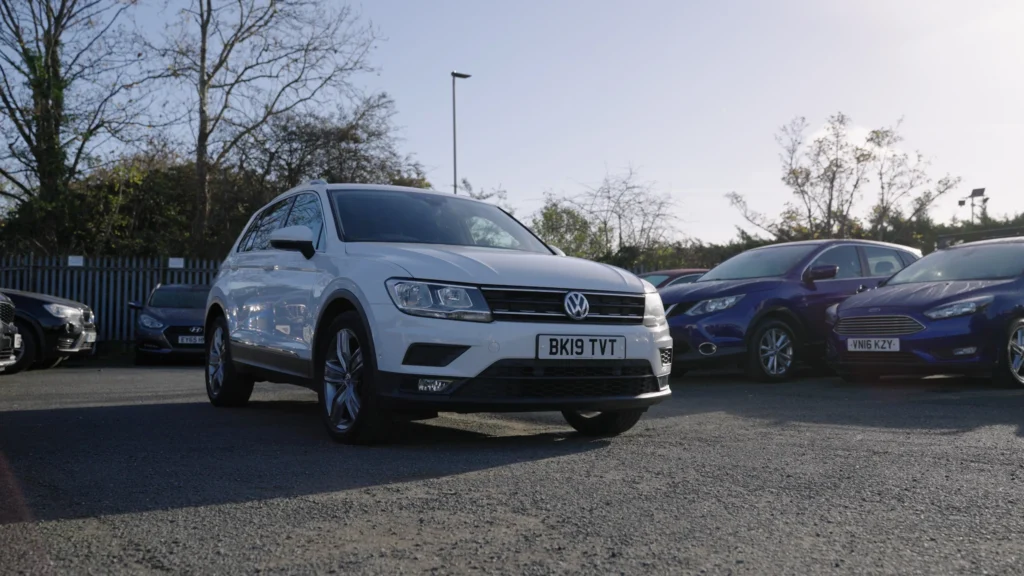
Watch a finished Target video
Four hours at the dealership produced footage for seven branded social videos. The time on site was shared across the batch; the edit still had to create templates and turn that footage into seven individual pieces.
| Work | Calculation | Cost |
|---|---|---|
| Filming · 4h | £249 + 3 × £99 | £546 |
| Editing · 14h | 14 × £49 | £686 |
| Travel · 3h | 3 × £49 | £147 |
| Worked-example total | £1,379 | |
A current-rate reconstruction of the supplied hours, not the original invoice. Travel assumes the round-trip driving-time method.
The useful lesson: filming several pieces together spreads the visit and travel costs, but templates and seven separate edits still take time. £1,379 divided across seven videos is £197 per video for this example’s scope. It is not a standalone £197 video service.
See the Target Car Supermarket automotive videos for the full set and the production story.
Sentry
Exhibition films · Norfolk farms
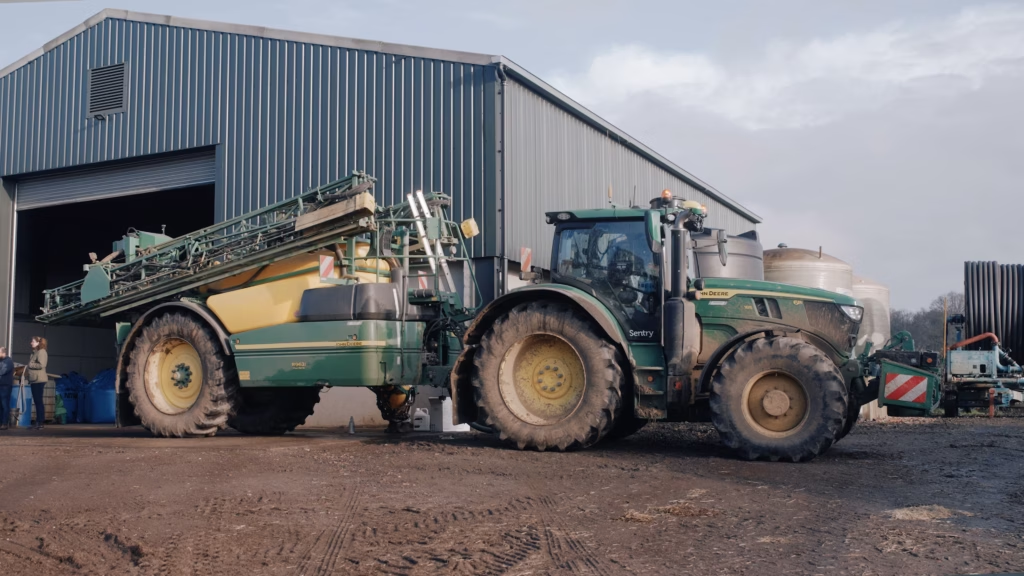
Watch a finished Sentry film
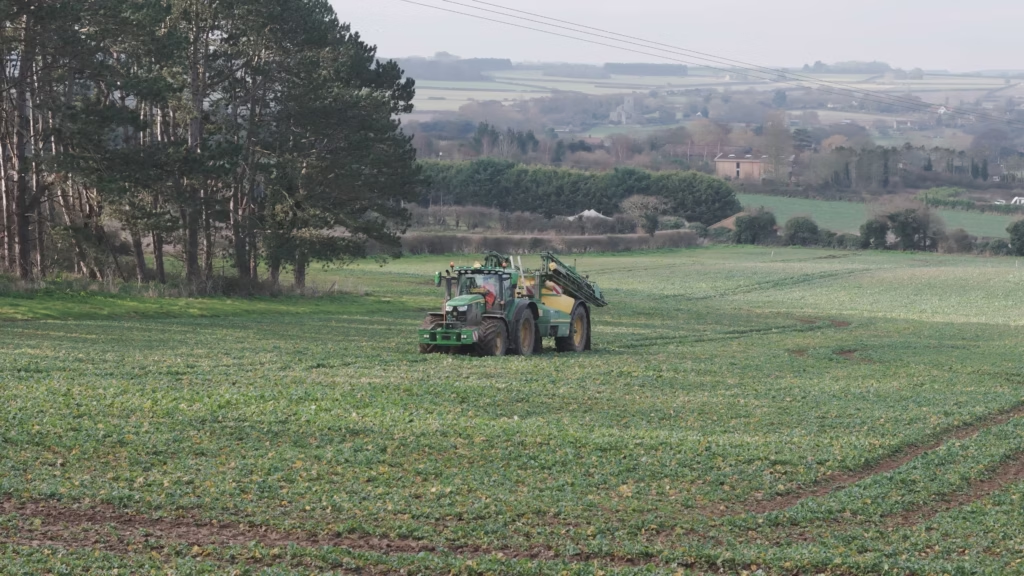
Sentry’s project involved filming across working farms in Norfolk for two exhibition films. The example here allows eight hours filming, eleven hours editing and five hours travelling: 24 hours across those three parts of the job.
| Work | Calculation | Cost |
|---|---|---|
| Filming · 8h | £249 + 7 × £99 | £942 |
| Editing · 11h | 11 × £49 | £539 |
| Travel · 5h | 5 × £49 | £245 |
| Base worked-example cost | £1,726 | |
Current-rate calculation, not the historical package price. The finished films also contain drone footage; the £1,726 figure excludes a separate drone allocation and any other project extras.
The useful lesson: the journey and the edit can add more working hours than the shoot itself. A filming day rate alone would miss £784 of editing and travel in this example.
Explore the Sentry farm film project and our drone filming service for the aerial part of the production.
The King Edmund School
Sixth Form promotional film · Essex
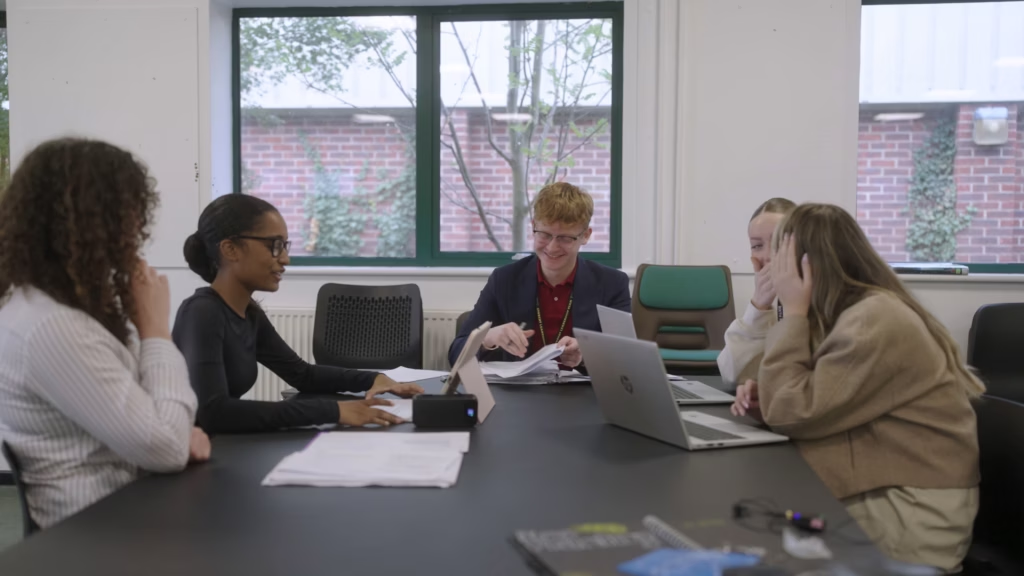
Watch the King Edmund film
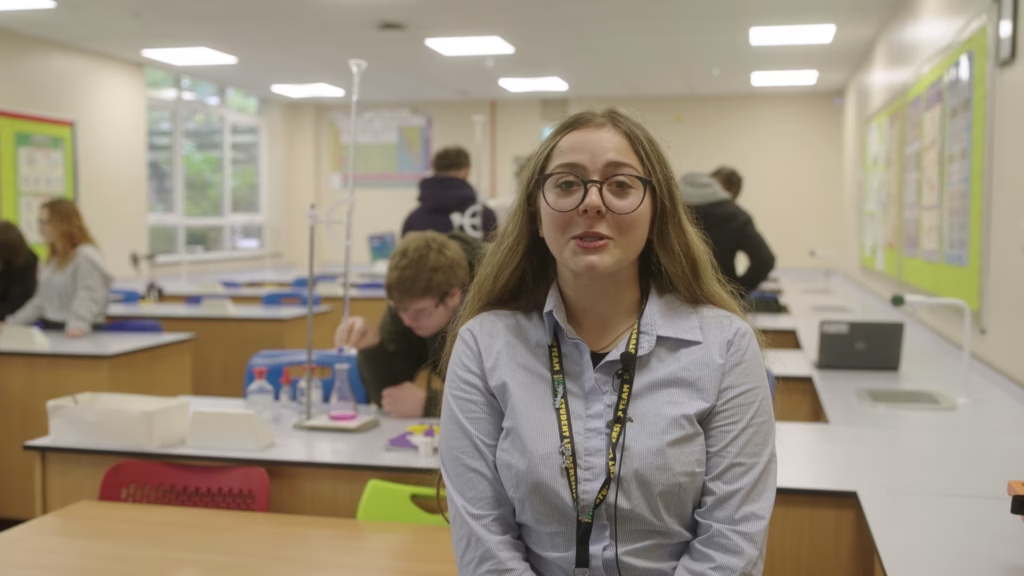
King Edmund needed a film for its Sixth Form enrolment campaign. One videographer spent a full day capturing subjects, facilities and student life, with post-production bringing the material into one promotional film.
- Single-videographer production
- Full day of filming
- Sixth Form promotional film
- Post-production
£1,800 agreed package
We have not reverse-engineered an hourly breakdown for this job. The £1,800 was the agreed package for that brief, rather than a universal school-video tariff.
The useful lesson: an hourly estimate helps explain where a budget goes. A package gives you one agreed price for a defined result. Both can be transparent if the deliverables are clear.
Watch and explore The King Edmund School promotional film.
03 / TRY THE NUMBERS
What changes your video budget?
Move the sliders to see filming, editing and travel separately. This uses our live published rates for one videographer. Editing hours are illustrative; we estimate them properly when we know what you need.
Driving time at £49/hour, in 15-minute steps. Mileage is not added.
YOUR ILLUSTRATIVE BASE COST
- Filming
- £546
- Editing
- £686
- Travel
- £147
One videographer. Excludes drone, extended planning, extra crew, hire and other agreed extras. This is an illustration, not a confirmed quote.
No VAT is currently added.
Open the full pricing page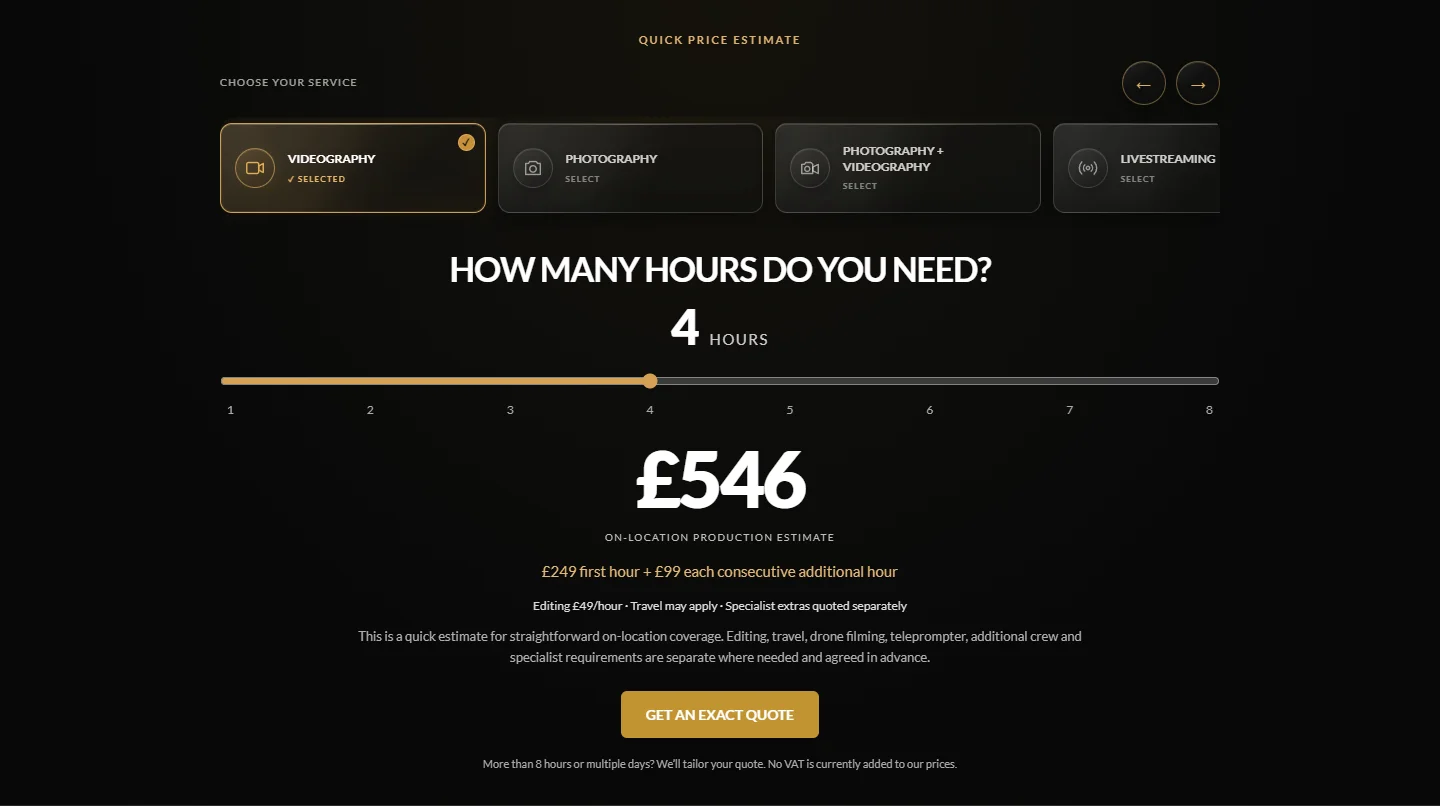
FROM OUR PRICING PAGE
Why the two totals differ
The main pricing slider shows £546 for four hours on location. Add the fourteen editing hours and three travel hours in the Target example and the base cost becomes £1,379.
The screenshot was captured on 23 September 2026. For current service options and inclusions, use the full video production pricing page.
04 / BEFORE YOU BOOK
How to compare two videographer quotes
Ask each supplier to price the same finished job.
“A day of filming” could mean footage handed over at the end, or a finished film delivered a week later. Until that is clear, the totals are not comparable.
Specify what you want to receive
For example: one two-minute website film and three vertical social edits, with captions. The number of videos, their lengths and their formats all affect the edit.
Check the time on site
Our booked time starts when we arrive and begin setup. A four-hour booking includes that setup; it does not promise four hours of continuous recording. Normal off-site preparation and normal pack-down have no separate fee.
Confirm the people and equipment
One operator can film an interview with more than one camera. They cannot cover two rooms at once. Ask whether the plan needs another person, specialist sound, lighting, drone coverage or location hire.
Agree the edit and feedback
Our quoted editing includes two reasonable review rounds within the agreed brief. New versions, a change of direction or extra deliverables add work. Agree those boundaries before the first cut.
Check the final payable total
Travel, parking, licensed assets, studios and other extras should be identified. Check VAT too. RAW footage and source files are not part of our standard delivery; tell us beforehand if you need them.
Hourly rate, day rate or package?
Hourly pricing is useful when you know how long you need someone on location. A day rate reserves a defined block of time: ask how many hours that means. A package is useful when the finished deliverables are already clear, as with King Edmund.
If you are commissioning a more involved production, our corporate video production service explains the kind of work we can build around a brief.
A NOTE FROM SAM
Why I changed the way we quote.
Sam / The Camera Guys
I used to write a completely bespoke quote for every enquiry. Over time, I realised I was often changing the price without changing enough of the work.
I’d hear what someone could spend and try to make the project fit. The intention was good. But once I’d counted the filming, travel and time in the edit, some jobs needed far more of my week than I’d allowed for.
That was something I needed to fix in the way I quoted. A client shouldn’t have to know how many hours an edit takes. It’s my job to explain what’s involved, agree what we’re making and price it properly.
That’s why our pricing is simpler now. You can see the cost of the filming time. We scope the editing around the videos you need. If the budget needs to change, we can talk about what to change in the project, rather than leave the same workload attached to a smaller number.
Small overheads. Work kept in-house.
We have a small office space, we keep the work in-house and we don’t outsource it. Keeping our running costs low helps us offer straightforward rates without having to support a large agency setup.
I don’t want “cheap” to be the reason someone books us. I want them to like the work, understand the price and feel comfortable with what they’re getting. Some projects still need a bespoke quote, but it should be clear how we arrived at it.
Getting that right means we can give each booking the time and attention it needs. It also means clients know where they stand before we start.
MAKING A BUDGET GO FURTHER
Save the repeat visit.
Target’s seven videos share one filming session and one journey. That is a practical place to look for savings: get the people, products and locations ready so several useful pieces can be filmed together.
Decide on website and social formats before filming. Gather feedback into one response per review round. If the budget needs to come down, reduce the number of deliverables or simplify the brief first; then ask for the new scope to be priced.
For a repeat programme, discuss regular video content pricing around a realistic schedule.
05 / THE REMAINING QUESTIONS
Useful things to know
How much is a videographer for a day?
With our September 2026 rates, eight consecutive hours with one videographer cost £942: £249 for hour one and seven further hours at £99. Editing, travel and extras sit outside that figure. A supplier’s “day” may have a different duration, so check the hours.
Is editing included in the hourly filming rate?
Our filming and editing are priced separately. Editing is £49/hour. Four hours filming plus six hours editing is £840 before travel or extras. We estimate the edit from the footage and agreed deliverables; you do not need to guess the hours yourself.
Why is the first hour more expensive?
A short visit still needs equipment preparation, crew allocation, coordination and setup. The first-hour charge accounts for that fixed work as well as the first hour on location. Each consecutive additional hour then costs less.
Do you charge both travel time and mileage?
No. From CO10 0JA, jobs within 25 driving miles one way use 45p per mile for the estimated actual return journey. Beyond 25 miles, we use estimated round-trip driving time at £49/hour, rounded to the nearest 15 minutes, and waive mileage. We confirm the route and charge in the quote.
Does a 30-second video cost less than a two-minute one?
Not necessarily. Thirty seconds may need many carefully planned shots, several locations or detailed graphics. A longer interview may use a simpler setup. The finished running time helps define the brief, but it does not tell you the production hours on its own.
Can we book half an hour or ninety minutes?
Planned bookings use whole hours, so ninety minutes is booked as two hours. Unexpected overruns can be charged in half-hour increments after the booked period. The current pricing terms explain the detail.
SOURCE & METHOD
Using these figures in your own research
Source: The Camera Guys’ own production examples and published rate card, checked 23 September 2026. Target: 4h filming + 14h editing, including template creation + 3h travel. Sentry: 8h filming + 11h editing + 5h travel. Both are single-operator worked examples at that rate card, not historical invoices or a survey of UK suppliers. Sentry excludes a separate drone allocation. King Edmund’s £1,800 is the actual package price supplied for that project.
If citing a figure, keep its scope and date with it. You can link directly to the Target breakdown, Sentry breakdown or this methodology note.
FROM AN EXAMPLE TO YOUR PROJECT
Tell us what you need to make.
A rough idea, a location and the videos you want to receive are enough to start. We’ll work out the production time and send you a clear quote.