
Video Production Company vs Freelance Videographer: Which Should You Hire?
A single interview in your office and a launch filmed across several locations might both be described as "a video project". They need very different production plans.
An experienced freelance videographer can be an excellent choice when one person can comfortably plan, film and edit what you need. A production company becomes useful when the work calls for several specialist skills, overlapping schedules or more coordination than you want to manage yourself.
The complication is that a freelancer can bring a crew, and a production company can send one person. Rather than choosing on the label alone, look at how each supplier proposes to do your particular job.
A production company does not have to mean a large crew
A freelance videographer may handle the whole project personally, from discussing the idea to delivering the edit. They may also bring in a sound recordist, second camera operator or editor when the brief needs it.
A production company can organise those responsibilities through one business, with a team shaped around the project. That does not necessarily mean everyone is employed in-house, or that every booking needs a producer, director and several camera operators.
These are overlapping ways of working, not separate quality standards. Our guide to what a video production company actually does explains the work behind the finished film; on a compact production, several of those jobs can sit with the same person.
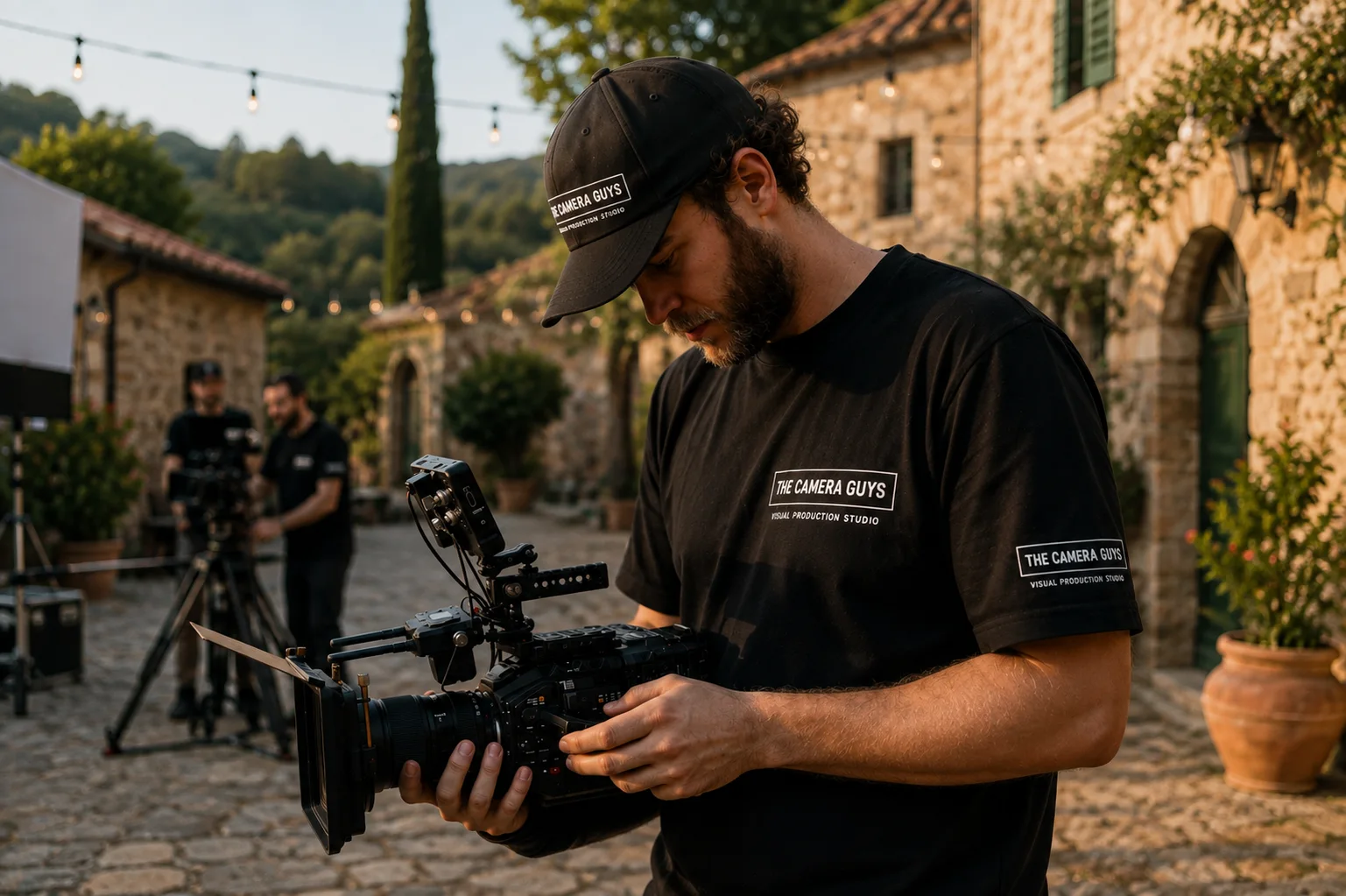
Our Essex Sport Juniors project is a useful example. We planned the filming around five sports classes and captured everything with one videographer in half a day. The project produced five individual class videos and an overall promotional film. Half a day was the filming time, not the entire production and editing process.
The client hired a production company, but the shoot did not need a large crew. The brief and schedule made a smaller setup appropriate.
When one person is a good fit
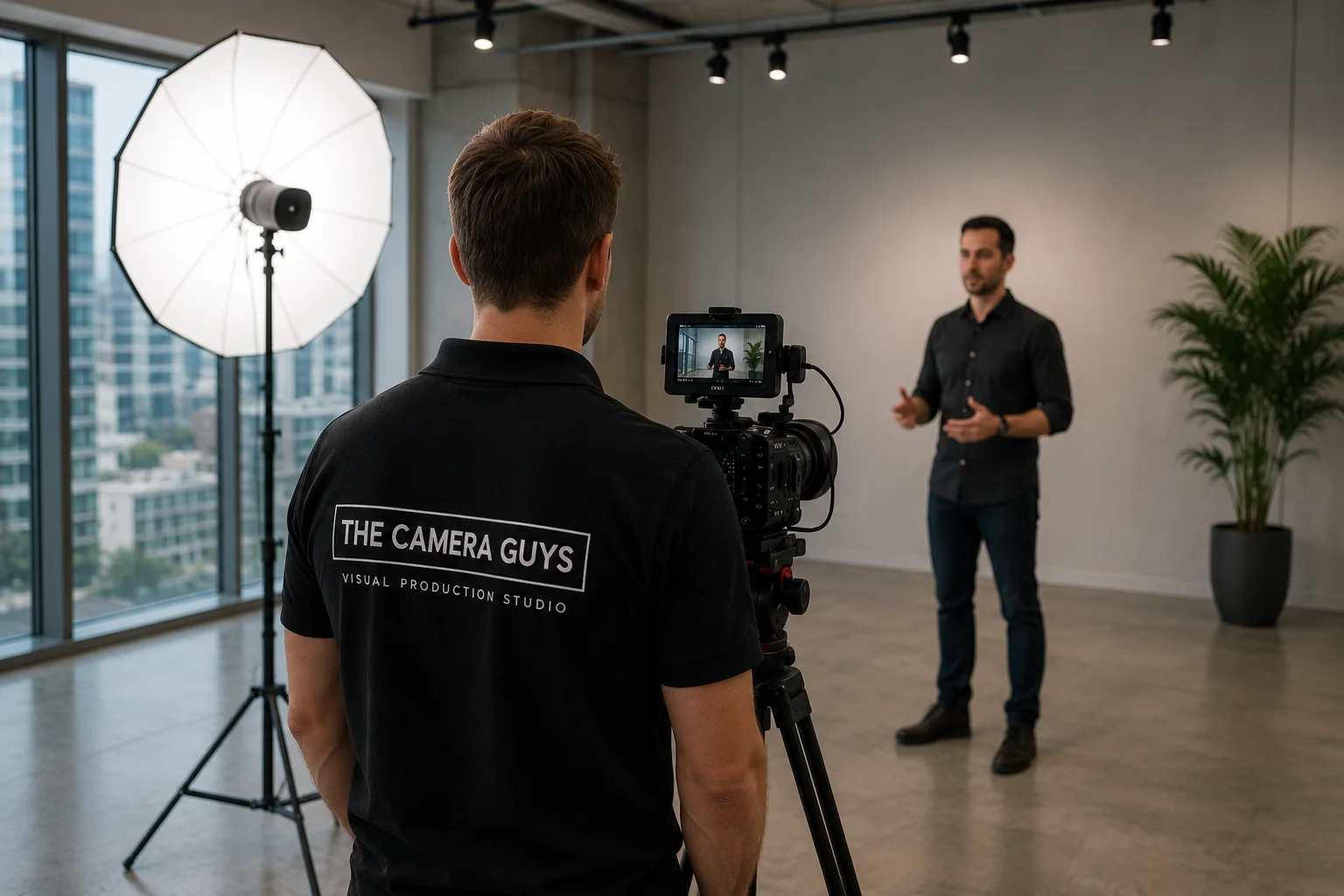
Imagine a customer interview followed by footage of your team at work. The contributor has an agreed appointment, a suitable room is available and the supporting shots can be filmed afterwards. There is time to set up properly and nothing essential is happening elsewhere at the same moment.
That is a sensible project to discuss with an experienced solo videographer, whether you book them directly or through a company.
Working with the same person throughout can be appealing. You can discuss the approach with the person who will film it, and they can carry what they learn on the shoot into the edit. A smaller setup may also suit a tight workspace or somebody who would rather not speak in front of a room full of crew.
Be clear about the planning you need, though. A filming-only booking is different from asking someone to develop the idea, organise contributors and build the schedule. Freelancers can offer that support; it simply needs to be part of the agreement rather than an assumption.
The same applies to your own time. Who will book the rooms, gather brand assets and get colleagues ready? Our explanation of pre-production helps identify the work that needs an owner before filming begins.
When the work needs more hands
Now change the situation. You need a conference presentation recorded in full, interviews in another room and footage of an exhibition that runs alongside both. One person cannot actively cover all three at once, however good their camera is.
For event videography, a running order can reveal more about the crew you need than the event's size. A small event with simultaneous activity may need more coverage than a larger one happening on a single stage.
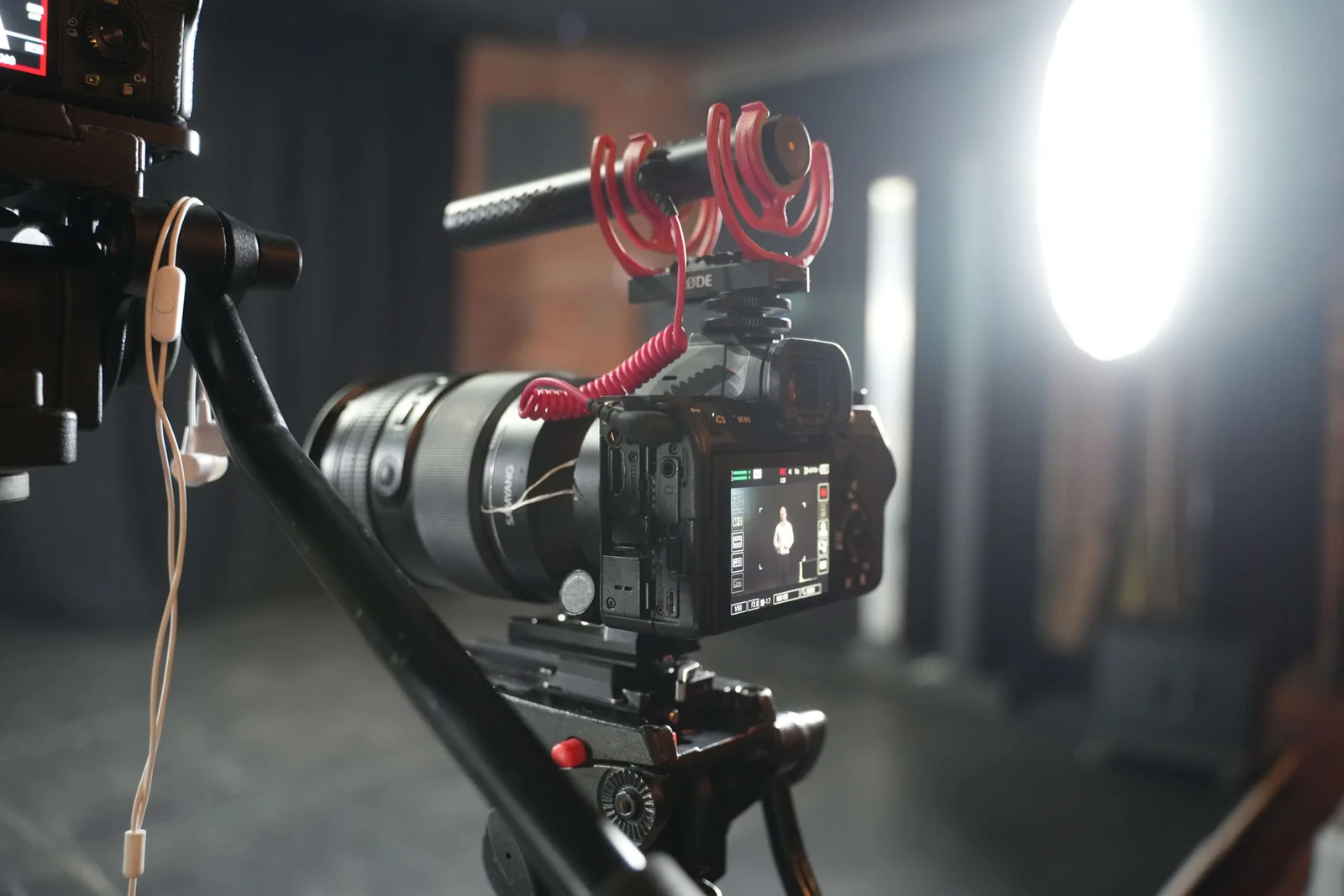
Extra people are not always there to operate extra cameras, either. Someone may need to manage contributors while filming continues, prepare the next lighting setup or concentrate on recording several speakers clearly. Professional audio deserves its own attention when speech is central to the film.
A company can be useful when you need those responsibilities coordinated through one project lead. A freelancer with an established team may offer a similar service. In either case, ask what each proposed person will do and whether their availability is confirmed for your dates.
Do not confuse camera count with crew size. One operator can sometimes manage multiple fixed cameras in a controlled interview; that is not the same as following moving subjects in different rooms. Our guide to how many camera operators a production needs explores that distinction.
Compare the whole job, not just the filming rate
A freelance quote might look cheaper because it includes a smaller service. It might also be genuinely better value for your brief. Equally, a higher company quote might include useful production management, or simply more crew than the job requires.
You cannot tell from the total alone.
Before comparing prices, ask both suppliers to make these details clear:
| Part of the job | What the proposal should explain |
|---|---|
| Preparation | Who develops the approach, prepares questions or a script, coordinates contributors and plans the shoot. |
| Filming | Who attends, what they cover, the booked time, and how setup, travel and additional time are treated. |
| Editing and delivery | The finished films, approximate lengths, graphics, captions and platform-specific versions included. |
| Reviews and deadlines | When drafts arrive, how feedback is gathered, what revisions are included and when final delivery is due. |
| Additional costs | Any location hire, specialist crew, equipment, licensed assets or other expenses not included in the main figure. |
For example, "one day filming" and "one finished company film plus three social edits" are not equivalent purchases. The first may leave all the editing to be arranged separately. The second still needs enough detail to establish what each version contains.
At The Camera Guys, filming and video editing are scoped separately. Our video production pricing page explains the starting rates and what needs a tailored allowance. Compare the complete cost of the agreed work, rather than treating a day rate as the price of a finished film.
Check who will shape the film, not just who will shoot it
Suppose you love a particular videographer's interview films. It matters whether that person will actually direct and edit yours, or whether your booking covers camera operation only.
The same question applies to a company's portfolio. Ask which examples are relevant to the team and service being proposed. A good film is evidence of what was achieved on that project, not confirmation that every future booking includes the same people, time or resources.
Watch complete examples rather than relying entirely on a showreel. Can you follow the story? Do the interviews feel comfortable? Is the speech clear? Does the film explain something, rather than simply show attractive shots?
For repeated work, ask how the approach will stay consistent. One familiar filmmaker can provide continuity, but an agreed style, organised project material and a clear editing brief help when somebody else needs to contribute. These questions also feature in our guide to choosing a video production company.
Find out what happens when the plan changes
Availability deserves more than a yes or no against the filming date. A solo filmmaker may be able to shoot next week but have an editing queue afterwards. A company may have several editors, but none free for your turnaround. Ask for the actual route from filming to first draft and final delivery.
Consider what happens if somebody becomes unavailable, too. A freelancer may have trusted colleagues who can step in. A company may have alternative crew. Neither arrangement is useful unless a replacement can get the brief, access the working material and take over the required responsibilities.
It is reasonable to ask how recordings are backed up, who can continue an unfinished edit and how long material will be retained. Agree which files you will receive rather than assuming that finished videos include all raw footage and editable project files.
Put the other practical details in writing as well: intended use of the films and licensed assets, confidentiality, relevant insurance, payment, cancellation and the process for extra work. These are questions for either supplier, not reasons to trust one business model automatically.
Your side of the schedule matters too. Nominate somebody who can collect feedback and resolve conflicting comments. Booking more production capacity will not settle an internal disagreement about the message.
Start with what you need to hand over
A useful starting question is: "Do we need someone to carry out a defined filming job, or do we need help turning an idea into a finished set of videos?"
Either a freelancer or a company may be able to provide the answer. What changes is the level of creative support, coordination and capacity you need to buy.
Give prospective suppliers the same video production brief: what the film needs to communicate, who it is for, likely locations and contributors, required versions, deadline and budget. Mark anything undecided for discussion. You do not need to design the shoot yourself.
Then compare their proposed approach. Can they explain why one person is enough, or what a larger team would add? Have they accounted for the edit as well as the filming? Is it clear what they need from you?
For our corporate video productions, that can mean a compact interview shoot or a production with additional crew and specialist support. The aim is to match the team to the work, rather than make every project fit the same package.
Send us the outline of what you are planning, including the filming location, deadline and videos you need. We can recommend an approach and explain the people, preparation and editing it involves.