
How Many Camera Operators Do You Need for a Video Production?
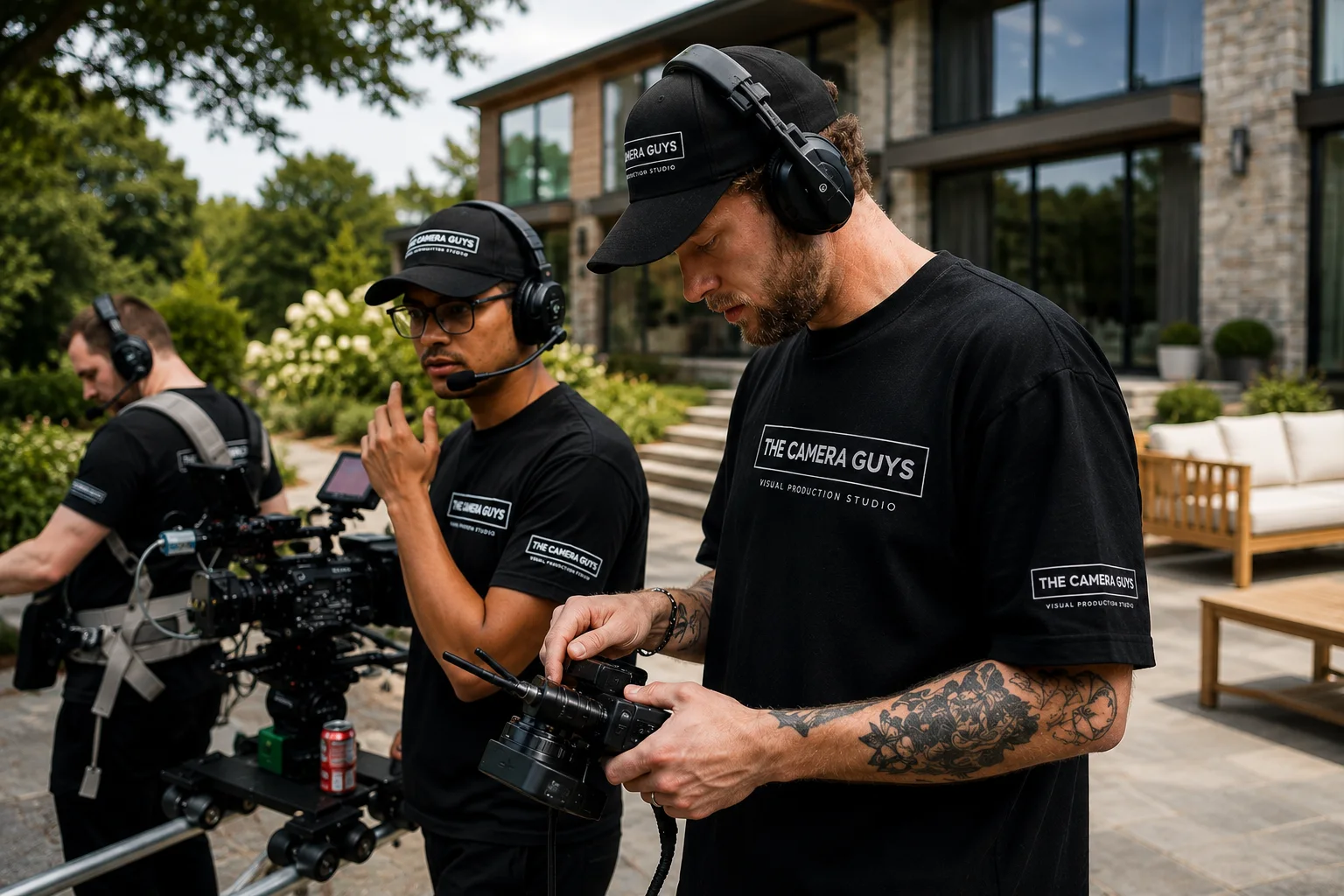
Three cameras do not automatically mean three camera operators.
One experienced videographer can sometimes run a carefully planned multi-camera setup on their own.
Equally, there are productions where two cameras and one operator are not enough, because two important things are happening at the same time and both need someone actively responding.
That distinction is the useful one.
Do not start by asking:
How many cameras would look professional?
Start with:
What can happen simultaneously, what cannot be repeated, and which viewpoints need somebody making decisions in real time?
Those answers tell you much more about crew size than the camera count.
An extra camera and an extra operator solve different problems
A second camera gives you another recording.
A second operator gives you another person who can:
- anticipate what is about to happen;
- change framing;
- follow a subject;
- move to another location;
- react when the programme changes;
- check focus and exposure;
- protect a shot when somebody blocks it;
- cover something happening elsewhere.
That is a much bigger difference than it first appears.
Imagine a seated interview.
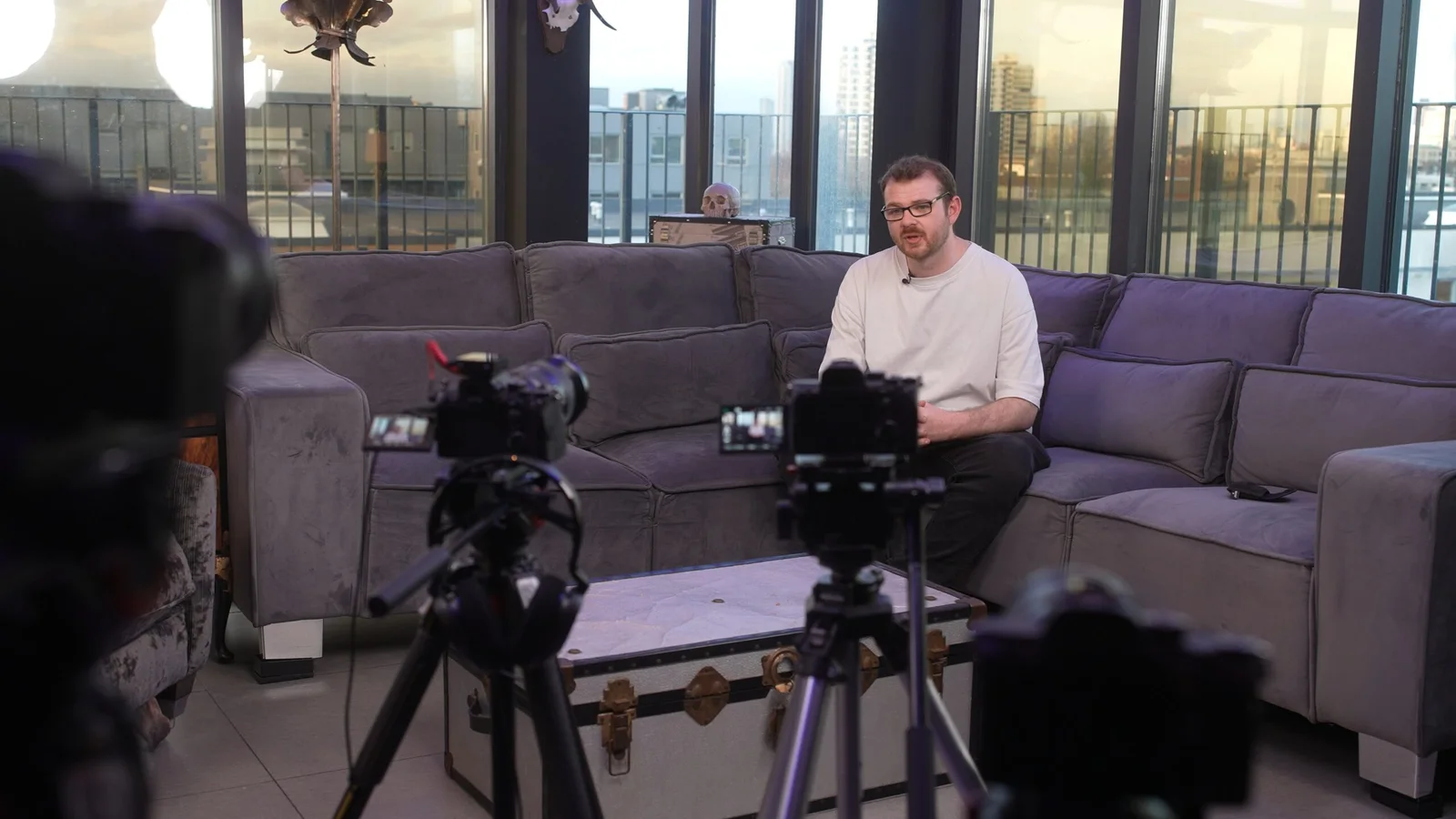
Camera A is a medium shot. Camera B is a tighter angle. The contributor stays in one chair, the lighting is controlled and both cameras are visible from the same position.
One operator can often manage that perfectly well.
Now imagine a conference.
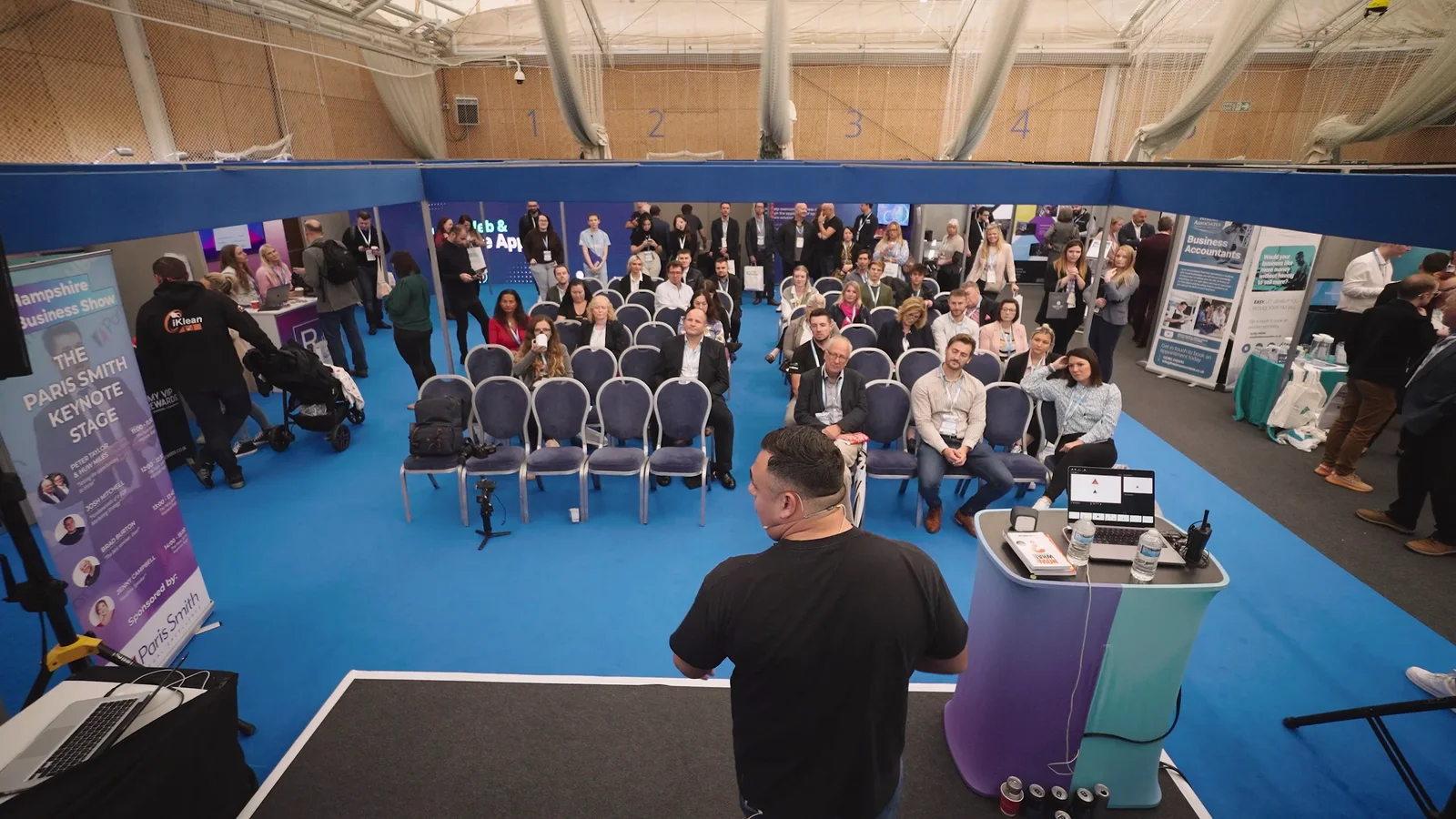
Camera A is covering the keynote speaker. Camera B is supposed to capture audience reactions, but the audience member asking the next question is 20 metres away and turns around before the operator can move.
The second camera existed.
The second viewpoint did not.
That is the point where adding equipment stops solving the problem and adding another person starts to make sense.
One operator can sometimes run three cameras
Our standard video-production setup can include up to three cameras with one videographer where the production suits it.
That does not mean one person is simultaneously hand-operating three moving cameras.
It means the setup has been designed so that some viewpoints can remain fixed, safely framed and monitored while the operator actively controls the angle that needs the most attention.
A simple example might be:
Camera 1 — principal angle
Actively operated.
Camera 2 — wider safety view
Locked off and monitored.
Camera 3 — alternate angle
Fixed or lightly adjusted where the subject and environment are predictable.
This can work extremely well for:
- seated interviews;
- conference talks from a single stage;
- theatre performances with fixed camera positions;
- presentations;
- panel discussions;
- controlled demonstrations.
It is much less suitable when all three subjects or viewpoints are moving independently.
One person can supervise several cameras.
They cannot physically stand in three different places.
A real example: one operator, multiple cameras
Our My Home Life England project is a useful example because the production did not need a large video crew simply because there was multi-camera coverage.
For the organisation's 20th-anniversary event in London, one experienced camera operator worked across video and photography, using a multi-camera setup for the formal conference content.
The conference itself benefited from more than one recorded angle. The stage activity was predictable enough for the setup to be planned around the room, while the wider schedule also included interviews, highlights and event photography.
The key point is not that one operator should always cover a conference alone.
It is that the cameras were doing different jobs within a controlled plan.
The setup fitted the programme.
If the same event had contained three simultaneous breakout rooms that all needed continuous recording, the crew calculation would have been completely different.
The easiest question: can it happen again?
This is one of the quickest ways to decide how much coverage is sensible.
If it can be repeated
A controlled product demonstration can usually be performed again.
A member of staff walking through a process can often repeat the action.
A staged piece of B-roll can be filmed from one position and then repeated for another angle.
That gives a smaller crew more freedom.
One operator can work methodically:
- capture the main version;
- move;
- repeat the action;
- collect detail;
- change the lighting or lens if necessary.
A second operator might make the day faster, but they are not necessarily protecting an irreplaceable moment.
If it cannot be repeated
A keynote speaker saying something important once.
A wedding ceremony.
An awards presentation.
A theatre performance.
A winning goal.
A live product launch.
Now the risk changes.
If the important moment is missed, there may be no second take.
That is when additional cameras, operators or both become less about visual variety and more about coverage resilience.
Our conference filming service is planned around exactly this difference: a complete talk needs dependable continuous coverage, while event highlights require somebody to find reactions, details and activity around the room.
One operator is often enough when the day is sequential
A surprisingly large number of productions can be handled well by one person because the schedule is arranged in a sequence.
For example:
09:00 — set up interview
10:00 — record interview
11:00 — film office activity
12:00 — capture product/process detail
13:00 — exterior and establishing shots
Only one important filming job is happening at a time.
An experienced videographer may be handling cameras, sound, lighting and basic direction, but those responsibilities have been organised so they do not all demand contradictory things at once.
That approach can work particularly well for:
- corporate interviews;
- testimonials;
- training material;
- product videos;
- property filming;
- simple promotional shoots;
- smaller brand films.
A smaller footprint can actually help.
In a compact office, four crew members can create more disruption than value. An interview contributor may also feel more comfortable speaking to one or two people than performing in front of a room full of production staff.
The right crew is the smallest crew that can do the job properly.
Not the smallest crew at any cost.
The second operator becomes valuable when time splits in two
The strongest reason to add a second camera operator is not that the film needs to “look more cinematic”.
It is that the production requires two active jobs at the same time.
Consider a conference.
The keynote is still running in the main room.
At the same time:
- a sponsor demonstration starts in the foyer;
- the next speaker arrives for a short interview;
- delegates begin networking outside;
- an organiser asks for audience reaction shots.
One videographer cannot cover all of those things without leaving something behind.
The second operator gives the production another pair of eyes and another set of decisions.
This can apply to:
- conferences with multiple rooms;
- performances where different camera positions need continuous attention;
- sports;
- festivals;
- large events;
- factory or industrial processes happening in parallel;
- multi-location activity within one venue;
- complex brand or commercial scenes.
For live-event budgeting, the article on event videography costs explains how simultaneous coverage can change the quotation even when the public event length stays exactly the same.
A locked camera is useful — but it is not a camera operator
A static camera can be extremely valuable.
In fact, one dependable wide shot can save an entire edit.
But a locked camera cannot react.
If somebody steps in front of it, it stays blocked.
If the speaker walks outside the frame, it does not reframe.
If the exposure changes, it does not make a judgement.
If the action moves somewhere else, it records the empty place perfectly.
That does not make fixed cameras unreliable.
It means they should be assigned to jobs that suit them.
A locked-off safety angle works brilliantly when:
- the stage position is predictable;
- the important action stays within a known area;
- the frame has been checked carefully;
- recording duration, media and power have been planned;
- somebody can monitor the setup.
It is less useful as a substitute for a human when the subject is unpredictable.
Theatre is a good example of cameras and people being different numbers
For Polkadot Pantomimes' The Wizard of Oz, one videographer ran a three-camera continuous setup across two live performances at the Mercury Theatre in Colchester.
That worked because the camera positions and stage coverage could be planned around the performance.
But the same production also required still photography.
The answer was not to ask the videographer to stop operating the performance setup every time a strong still image appeared.
A dedicated photographer worked alongside the videographer and covered the performance without flash.
That distinction is important:
three video cameras did not require three videographers; video plus photography did require two people with separate responsibilities.
The crew followed the jobs that needed doing, not the number of devices in the room.
Our guide to filming a theatre performance without distracting the audience goes into that production in more detail.
Sometimes the next person should not be another camera operator
If there is budget for another crew member, the most useful person may solve a completely different problem.
Sound
Several radio microphones, panel discussions, venue feeds or complicated acoustics can justify someone concentrating on audio.
A second beautiful camera angle does not help if the important discussion is unusable because nobody was properly managing the sound.
Producer or director
For a larger corporate production, the person creating the most value may be the one:
- managing contributors;
- watching the schedule;
- handling client approvals;
- interviewing speakers;
- coordinating departments;
- protecting the filming team's time.
That allows the camera operators to concentrate on the pictures.
Photographer
If still photography matters while video is being continuously recorded, it often deserves a dedicated photographer.
Trying to switch one person repeatedly between stills and video creates gaps in both.
Drone operator
Aerial filming introduces its own planning, flight responsibilities and attention.
Depending on the operation, the useful extra person may be somebody dedicated to the drone rather than another ground camera.
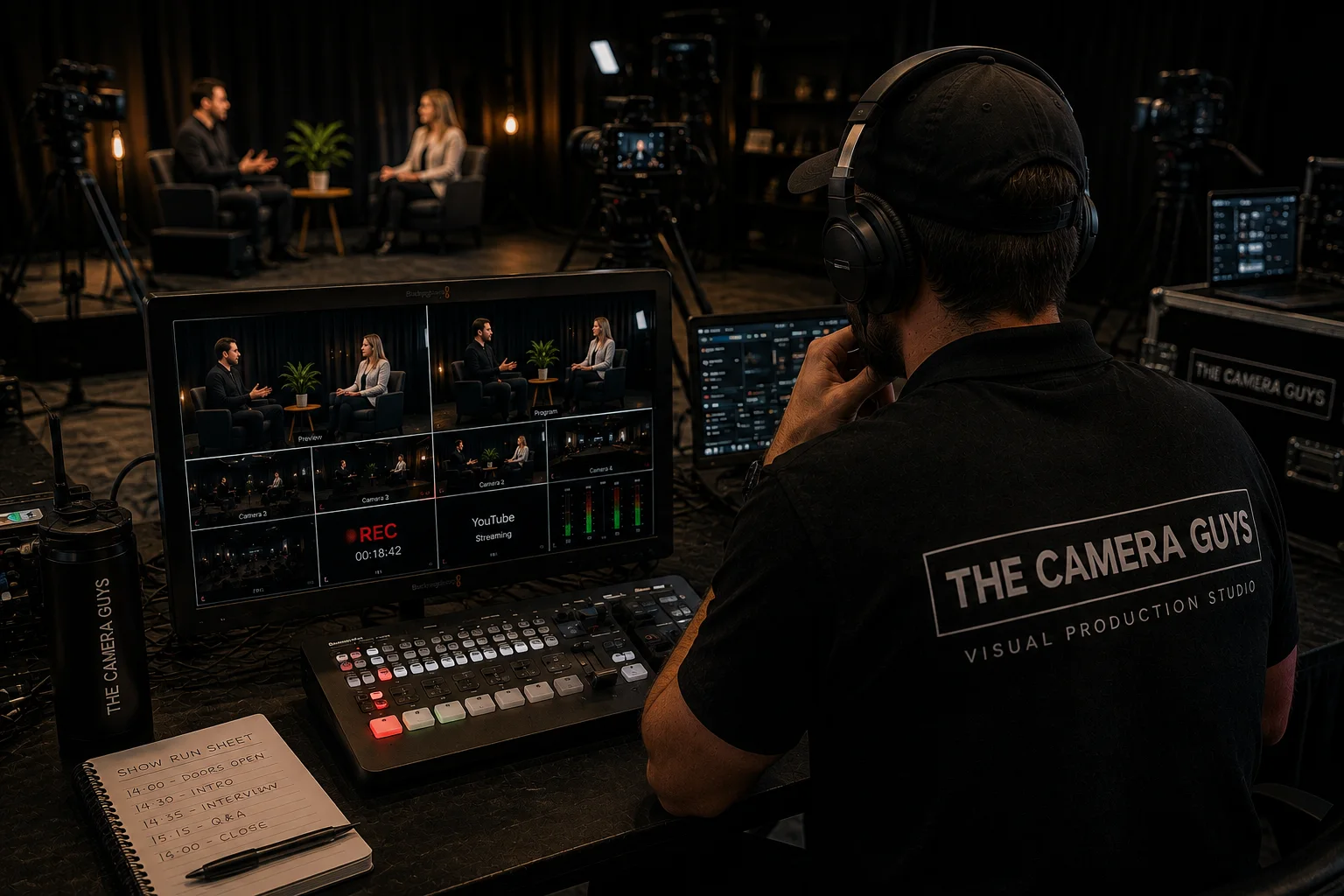
Livestream crew
Live streaming adds another category entirely.
Camera operation may sit alongside:
- vision mixing;
- graphics;
- presentation feeds;
- remote guests;
- audio;
- streaming platforms;
- internet connectivity;
- recording;
- backup systems.
A larger livestreaming production is not simply “normal filming with more cameras”.
The crew should be built around the technical responsibilities.
The venue can create a crew requirement
Sometimes the content sounds simple until you draw the room.
Imagine two conference spaces separated by a long corridor.
The schedule says:
11:00 — keynote in Room A
11:02 — workshop begins in Room B
Technically, the events are in the same building.
Practically, one operator cannot cover both.
The same problem appears in:
- large exhibition halls;
- sporting venues;
- factories;
- campuses;
- agricultural sites;
- festivals;
- theatres with restricted movement;
- secure industrial environments.
Access rules can matter just as much as distance.
The operator may not be permitted to:
- cross a stage during a talk;
- enter a production area once machinery is running;
- move between spectator areas during play;
- leave one controlled zone and re-enter another quickly.
This is why a venue plan and running order can tell us more about crew size than the final video duration.
What does another operator cost?
Our current standard on-location filming rate is £249 for the first hour per operator, then £99 for each consecutive additional booked hour per operator.
That means an additional operator follows the same standard rate structure for straightforward productions.
For example:
| Coverage | One operator | Two operators |
|---|---|---|
| 1 hour | £249 | £498 |
| 2 hours | £348 | £696 |
| 4 hours | £546 | £1,092 |
| 6 hours | £744 | £1,488 |
| 8 hours | £942 | £1,884 |
These figures are on-location operator costs, not fixed prices for a completed film.
Editing is currently priced separately at £49 per hour, while travel, specialist crew, livestreaming, drone work, rentals and other extras have their own rules where applicable.
The current authoritative rates are always on our video-production pricing page.
The cost question should still come second to the coverage question.
There is little value in paying for a second operator who has no distinct responsibility.
There is also little value in saving the second-operator cost if the result is missing the only moment the production was booked to capture.
More cameras also change the edit
Extra coverage does not end when filming finishes.
If three cameras record a 90-minute conference session, the editor does not receive one 90-minute clip.
They receive several simultaneous recordings that need to be:
- transferred;
- backed up;
- synchronised;
- reviewed;
- colour-matched;
- cut between;
- checked for continuity.
That can be absolutely worthwhile.
A wide safety shot can protect edits. A close angle can reveal expression. Audience coverage can stop a presentation film feeling visually static.
But cameras should have a reason to exist.
Two almost identical angles do not become more useful simply because both are 4K.
Plan the filming around the final edit.
Our guide to video post-production explains what happens after the cards leave the cameras.
Three common mistakes when choosing crew size
Mistake 1: counting cameras instead of jobs
“We want three cameras, therefore we need three operators.”
Sometimes yes.
Often no.
Ask what each camera needs to do.
Mistake 2: assuming one experienced operator can do literally everything
A skilled videographer can handle a lot.
They still cannot film a keynote, photograph a sponsor activation and conduct an interview in another room at exactly the same time.
Skill does not remove geography.
Mistake 3: adding crew because a larger production sounds better
More people can create:
- more movement;
- more setup;
- more communication;
- more equipment;
- more cost;
- more pressure on contributors.
Every additional person should solve a real problem.
If they do not, leave them out.
A simple way to work out what you need
Before asking for a crew recommendation, send the production company five things.
1. The running order
What happens, and when?
2. The locations
Are all activities in one room, across several rooms or across different sites?
3. The non-repeatable moments
Which parts absolutely cannot be missed?
4. The deliverables
Do you need:
- a short highlight film;
- complete talks;
- separate interviews;
- vertical social edits;
- photography;
- a livestream;
- several versions?
5. The priorities
If the budget only allows one operator, what must that person protect first?
This last question is especially useful.
A good production company should be able to say:
One operator can record the talks reliably, but we will have limited ability to leave the room for networking coverage.
or:
One operator can handle the two interview cameras, so a second operator would add very little here.
That is much more useful than automatically quoting the largest crew possible.
The answer is usually smaller than people expect — until the action overlaps
For many interviews, corporate films, product shoots and controlled promotional productions, one experienced videographer can achieve a lot.
Several cameras can be incorporated without putting one person behind every body.
Then something changes:
The stage and foyer become active at once.
Two rooms start at the same time.
The performance cannot be paused.
The action moves.
Photography has to happen while video keeps recording.
A livestream needs somebody switching while the cameras are being operated.
That is when another person starts earning their place.
So do not count cameras.
Count simultaneous responsibilities.
If you are planning a production, explore our videography services, see how we approach corporate video production or send us your running order, locations and deliverables. We can recommend the smallest crew that can cover the job properly — and explain exactly why each person is there.