
What Is Pre-Production and Why Does It Matter?
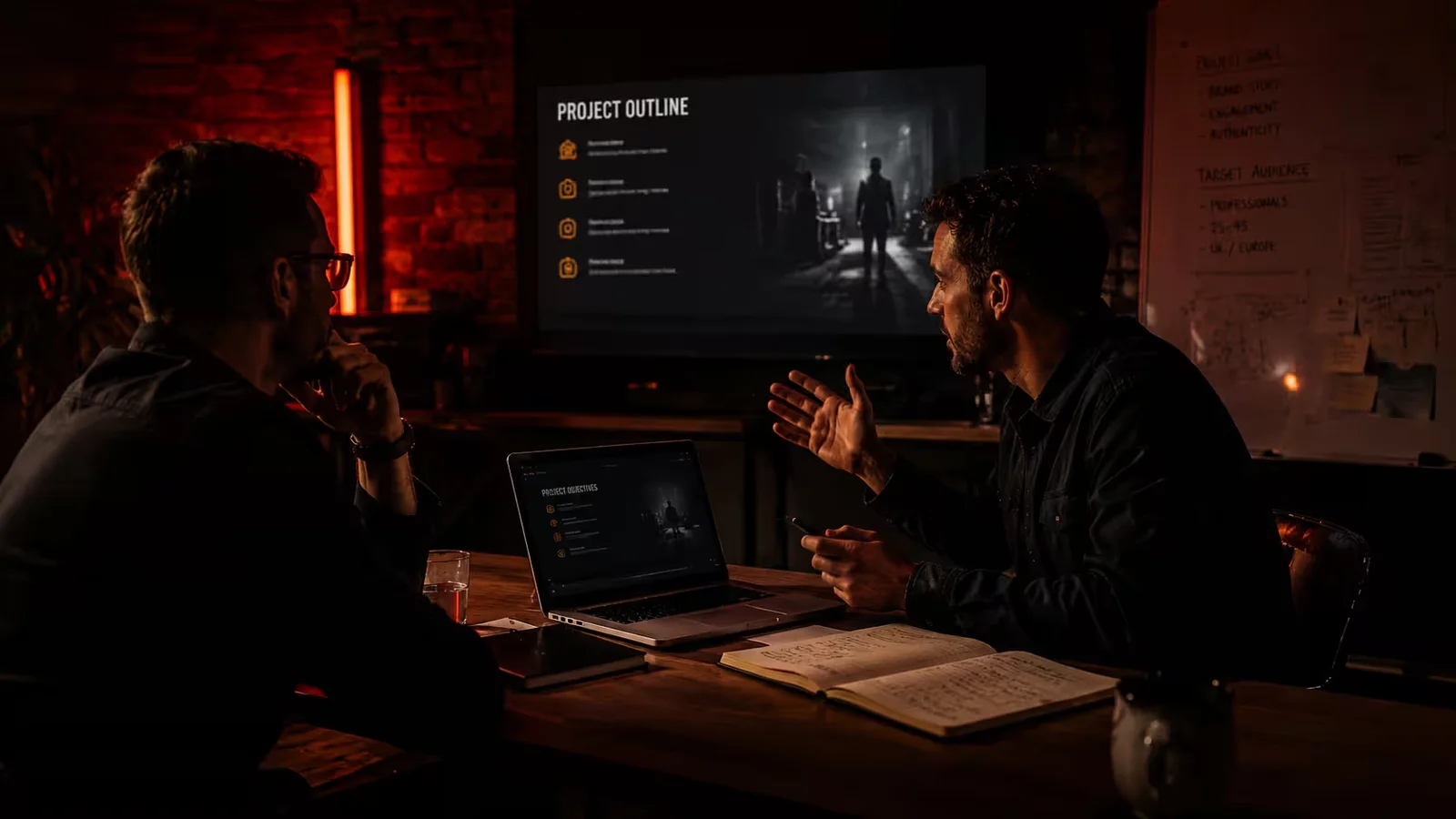
Pre-production is the planning and preparation that happens before filming. It brings together the brief, creative approach, people, locations, shot planning and schedule so everyone knows what the production needs to achieve.
It is also where you catch the practical problems: an interview room that is too noisy, a product that will not be ready, or a key contributor who is only available for half an hour.
For a corporate video production, good preparation does not have to mean a thick folder of documents. It means making the decisions that let the crew, your team and the people appearing on camera get on with the job.
Why does pre-production matter?
Imagine commissioning a recruitment film, then reaching the edit before discovering that marketing wants a broad company introduction while the hiring manager wants a detailed explanation of the role. The footage might look excellent, but the two teams are asking it to do different jobs.
Pre-production is the time to resolve that difference. You can choose a primary audience, agree the message and decide whether you actually need two separate films.
The same thinking applies to practical arrangements. Discover a noisy location in advance and you can look for another room. Discover it with the interviewee already seated and your options are narrower.
Planning cannot prevent every interruption. It can stop avoidable uncertainty from consuming your filming time and budget.
What happens during pre-production?
The amount of preparation should match the project. A single interview and a campaign across several sites will not need identical paperwork, but both need answers to the following questions.
1. What should the video achieve?
Start with the audience and the information they need, rather than a list of shots you would like.
For an illustrative recruitment brief, "show our company culture" is broad. "Help applicants understand what a normal shift involves before they apply" suggests a much clearer film. It points towards employee experiences, real working activity and an honest explanation of the role.
A video production brief gives those decisions a shared home. Include the main message, intended use, deadline, budget and any facts that must be checked. Unknown details can stay open for discussion; they do not need invented answers.
2. What finished content do you need?
Agree the actual videos and versions before working out how to film them.
For example, a website film, two vertical social clips and a caption file are specific deliverables. "Some video for marketing" leaves room for very different expectations.
Different formats may need different framing or material. A wide demonstration showing two people and a product might not survive a narrow portrait crop. Flag captions, translations, voiceover and any requirement to communicate without sound during planning.
Our Social Shakes project included promotional films, seasonal content, short product videos and product photography across several shoots. It is a useful example of why a content brief can extend beyond one main film, rather than treating every other format as an afterthought.
3. Does it need a script, interview questions or a storyboard?
Choose the preparation that suits the way the story will be told.
A presenter-led explanation may benefit from a script, particularly when terminology needs to be precise. A visual concept might need a storyboard: a sequence of sketches showing the proposed shots. A straightforward interview may only need agreed themes and well-prepared questions.
For interview-led films and customer testimonials, prepare contributors to discuss their experience rather than memorise marketing copy. "Can you describe a time that made a difference?" invites something more useful than asking someone to repeat an approved slogan.
Where exact factual wording matters, arrange the right review before filming. You can protect accuracy without scripting every conversational answer.
4. Who needs to appear, and what do they need to know?
Choose contributors for what they can explain, not simply because they are the most senior person available. An employee doing the work may be best placed to describe it; a customer can speak about their own experience.
Tell each person why they are involved, the topics, the intended use of the footage and how much time to set aside. Explain whether they will speak to an interviewer or directly to the camera, and whether anything needs preparing in advance.
Ask about accessibility needs, language support or anything that would help them participate comfortably. Give people a contact for questions rather than leaving them to guess what a filming day involves.
5. Will the location work in practice?
A room can look suitable in a photograph and still be difficult to film in. Check how it sounds, who uses it and whether there is enough space for the planned setup.
A location visit, sometimes called a recce, is one option. For simpler jobs, useful photographs, a video call and a conversation with someone who knows the site may answer the immediate questions.
Confirm access, loading, parking, power, site rules and any safety planning the activity requires. Identify confidential screens or documents that must stay out of shot. Agree responsibility for contributor and location permissions, including explaining and recording the intended use.
For our Sentry exhibition films, production covered working farms across Norfolk and combined ground-level filming with aerial footage. A multi-location brief like that raises different planning questions from an interview in one office: what each site contributes, how the crew moves between locations and what depends on the weather.
6. Which shots will explain the message?
A shot list should describe useful material, not just attractive angles.
Suppose a film needs to explain how a repair service diagnoses a fault. Plan the relevant test, the technician carrying it out and a clear view of the result. A general workshop shot establishes the setting, but it does not explain that process on its own.
This supporting footage is known as B-roll. Planning it alongside the interview questions helps connect what people say with what viewers see.
Check when the activity happens, who can demonstrate it and whether it can safely be repeated. Put the essential material first. An opportunity for an extra creative shot is welcome, but it should not replace the sequence the film depends on.
7. What crew and budget does the plan require?
The crew should follow the coverage, rather than the other way round.
An interview followed by supporting footage can be organised in sequence. Two important activities happening in different rooms at the same time create another problem entirely. This is why the number of camera operators you need should be discussed alongside the schedule and locations.
Review the whole production budget, not just attendance on the filming day. Preparation, travel, specialist requirements, editing and the number of finished versions can all affect the scope. Our video production cost guide explains how those elements fit together.
Ask what planning is included in the quote and which work is additional. Agree who can approve changes before adding a location, contributor or extra edit.
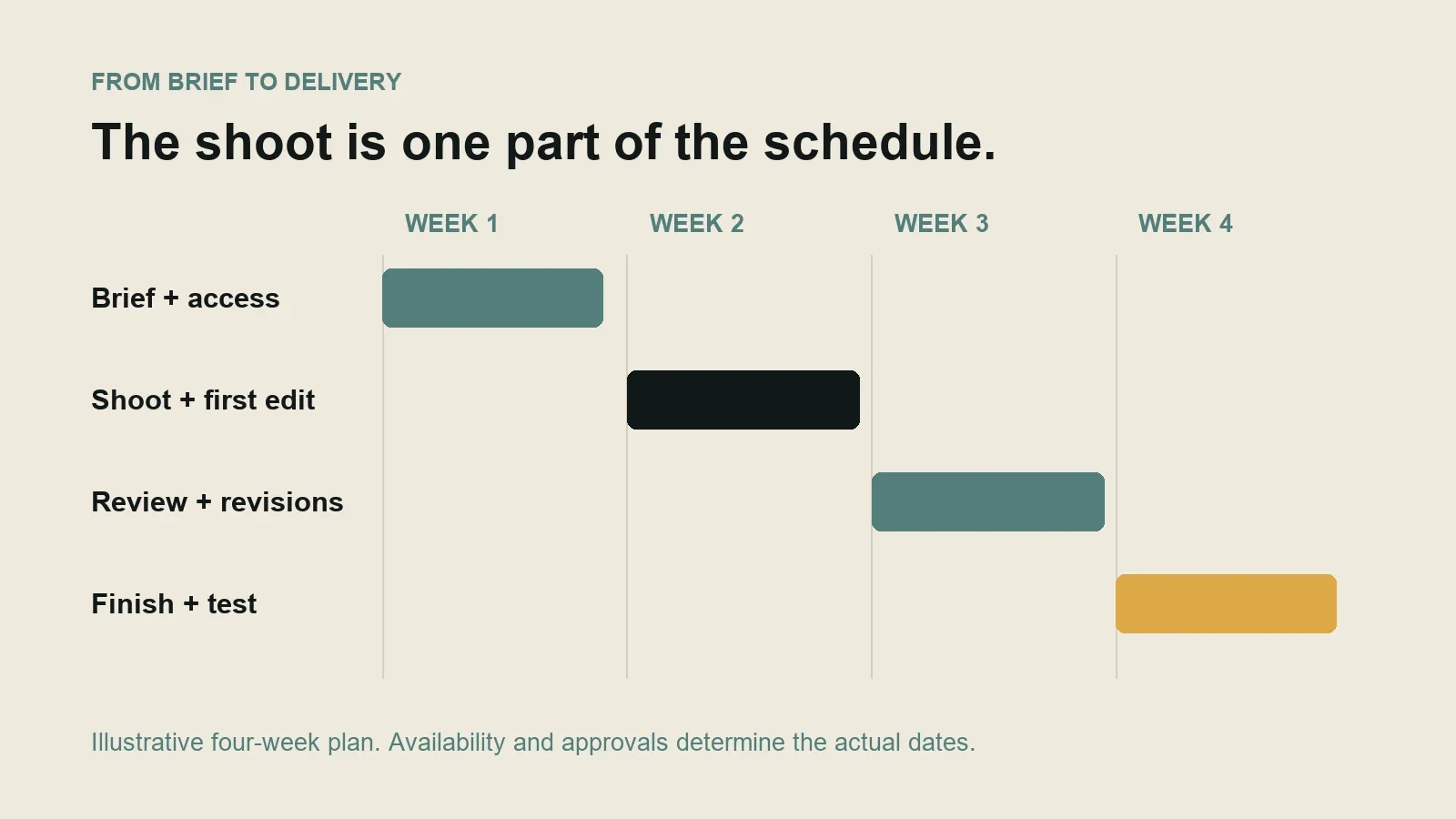
8. Is the schedule realistic, including the edit?
A filming schedule needs more than a list of interview times. Allow for access, unloading, setup, sound checks, room changes, breaks and packing down, as well as recording.
Put fixed commitments into the plan first. A customer available only between 10am and 11am should not arrive at the same time as the crew unless the agreed setup genuinely allows it.
Share one current schedule or call sheet with the relevant timings, addresses, contacts and responsibilities. Include a practical alternative for foreseeable problems, such as an outdoor sequence affected by poor weather.
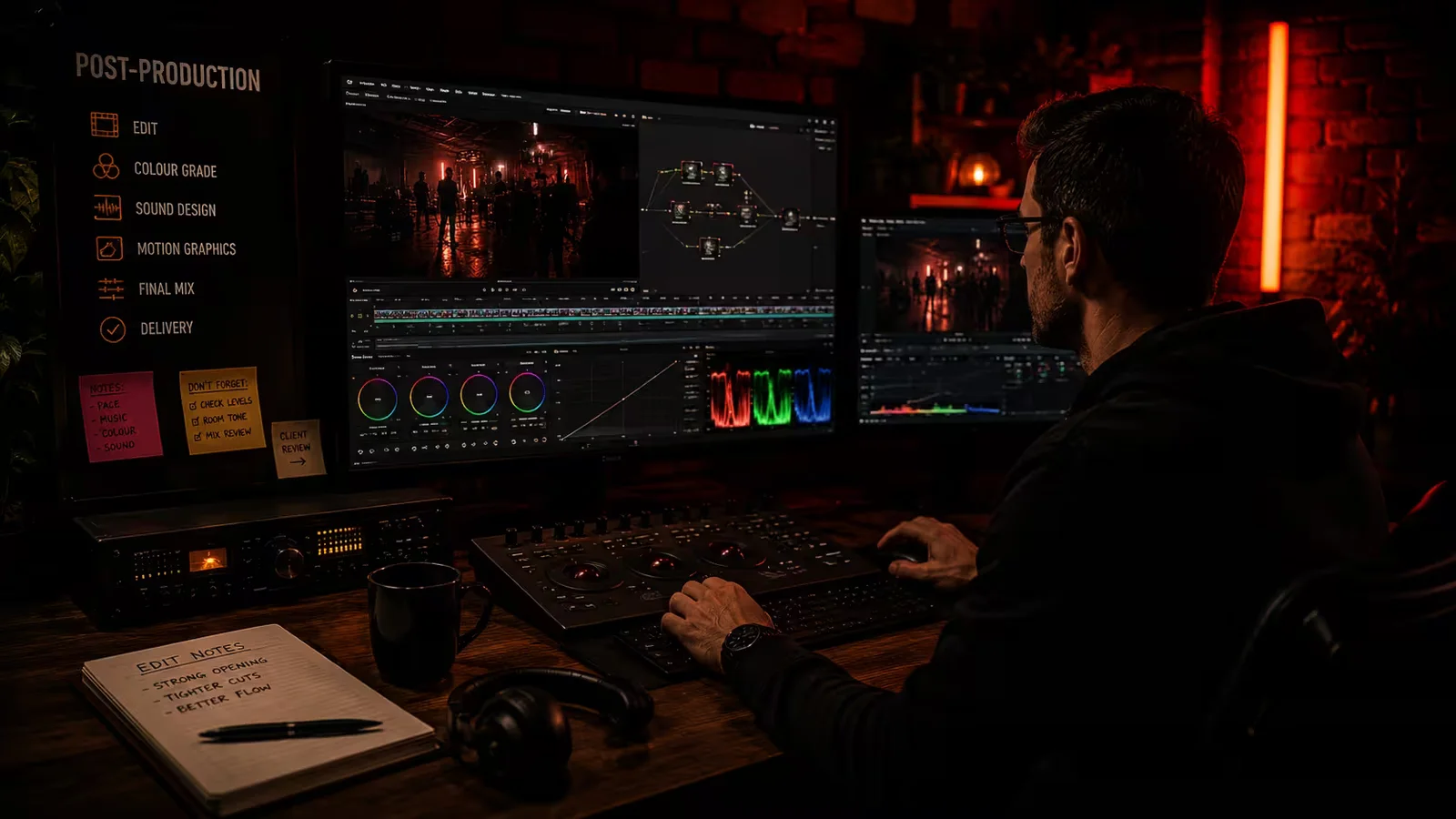
Then look beyond the shoot. Our guide to how long video production takes explains why editing, review and delivery need their own space in the diary. Book the reviewers as well as the interviewees, and allow time to test the finished file when it is destined for an event or display system.

Who is responsible for pre-production?
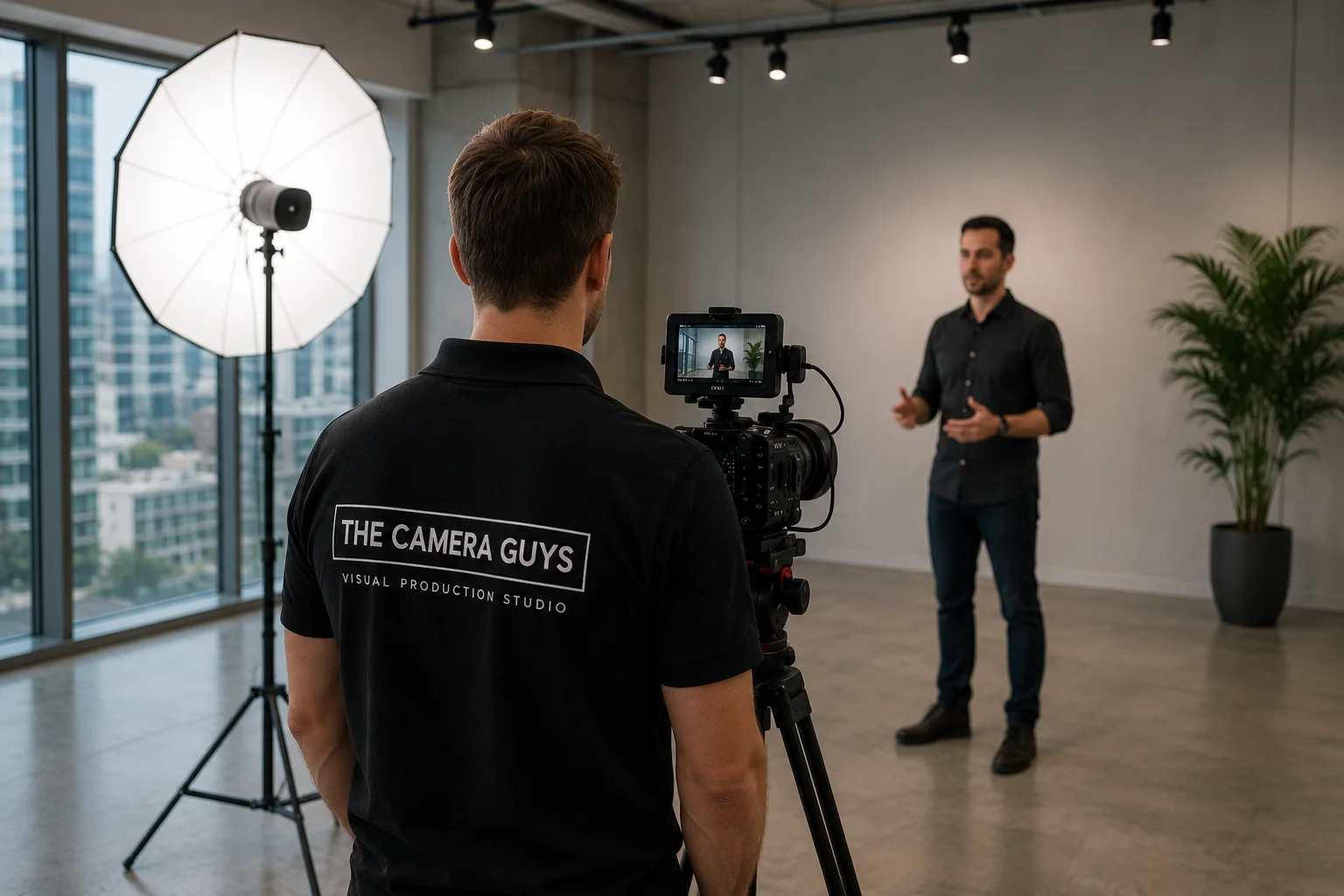
That should be agreed at the start. Some clients bring an approved script and an organised location; others need help developing the idea as well as arranging the shoot.
The production team can advise on the creative approach, coverage, crew and filming logistics. Your organisation provides the business knowledge and access to the people who can approve facts, brand presentation and internal arrangements. Decide who owns each action rather than assuming someone else is handling it.
Our explanation of what a video production company does covers that wider division of work. When choosing a production company, ask it to explain what it will organise and what it needs from you.
How much pre-production is enough?
Enough to make the important decisions and establish that the plan is workable. There is no useful fixed number of planning days for every video.
A straightforward interview may need a brief, questions, a shot list and a schedule. A multi-location production may need scripts, storyboards, location checks and more coordination. The test is not how many documents exist, but whether an unanswered question could still derail something essential.
Keep the plan flexible where it can be. You can agree the interview's purpose without prescribing every answer, and prioritise essential shots without ruling out a good idea on the day.
Before filming, check these three things
- The film is defined. The audience, message, final versions and approval route are agreed.
- The shoot is ready. People, locations, permissions, equipment and essential activity are confirmed, with a workable schedule and relevant safety arrangements.
- The finish is planned. Budget assumptions, review dates, feedback responsibilities and final delivery requirements are clear.
Anything unresolved needs an owner and a decision date, not an optimistic note saying "sort on the day".
Have an idea, but not a filming plan?
You do not need to arrive with a finished script or know which cameras to book.
Bring us a finished brief, a rough idea or simply a problem you need to communicate. We can take it from there.
Tell us about your video project, including the audience, intended use and any deadline you are working towards. We can help turn that starting point into a practical production plan.