
What Does a Video Production Company Actually Do?
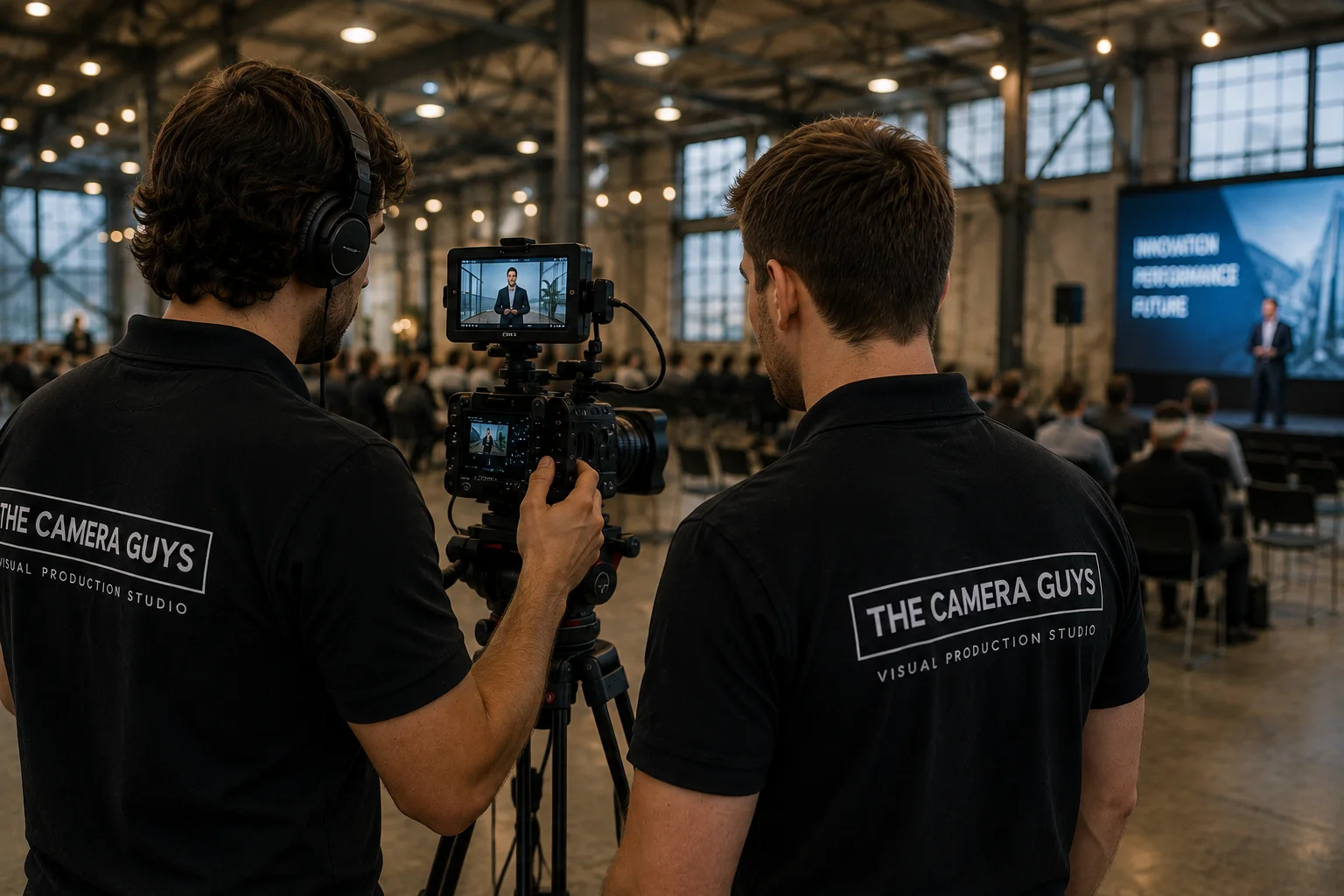
You've been asked to organise a video for your business. There is a launch date in the diary, a few people who could appear in it and a general feeling that it ought to "show what we do". Beyond that, the details are open.
That is a perfectly reasonable point to involve a video production company.
A video production company helps develop the idea, organise the shoot, record the material and turn it into finished videos. You can commission the whole process or bring in support for the parts you cannot handle in-house.
The useful question is not simply whether a company can film something. It is how much responsibility it will take for getting your project from an initial conversation to files you can actually use.
Here is what that looks like in practice, particularly when commissioning video for a business or organisation.
It helps decide what the video should actually say
"A video about our company" leaves a lot of room for interpretation.
A potential customer might need to see how a service works. A job applicant might want an honest picture of the team and workplace. A new employee might need a clear demonstration of a procedure. All three could involve filming at the same premises, but they need different questions, footage and structures.
A production company should help make those choices before anyone starts writing a script.
That might mean recommending a conversation with a customer rather than a speech from the managing director. Or splitting a crowded idea into two focused films instead of trying to fit every department into one introduction. The distinction between an interview and a customer testimonial is a useful example: the person speaking and the reason for listening change the film.
You do not need to arrive with all the creative decisions made. Explain the audience, the message, the deadline and what prompted the project. Our guide to writing a video production brief covers the information worth gathering without asking you to choose lenses or draw storyboards.
A real example: showing a business beyond its office
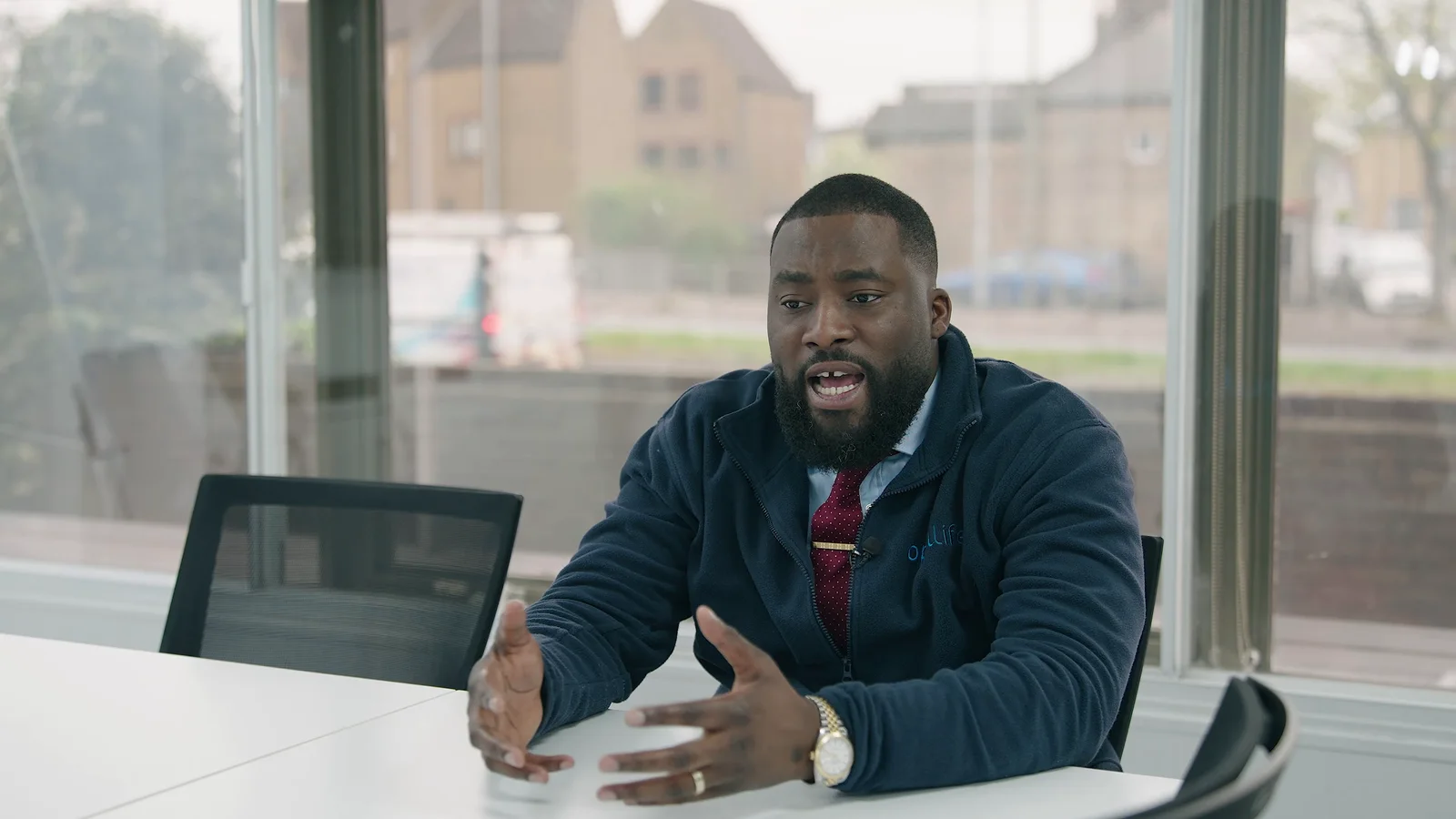
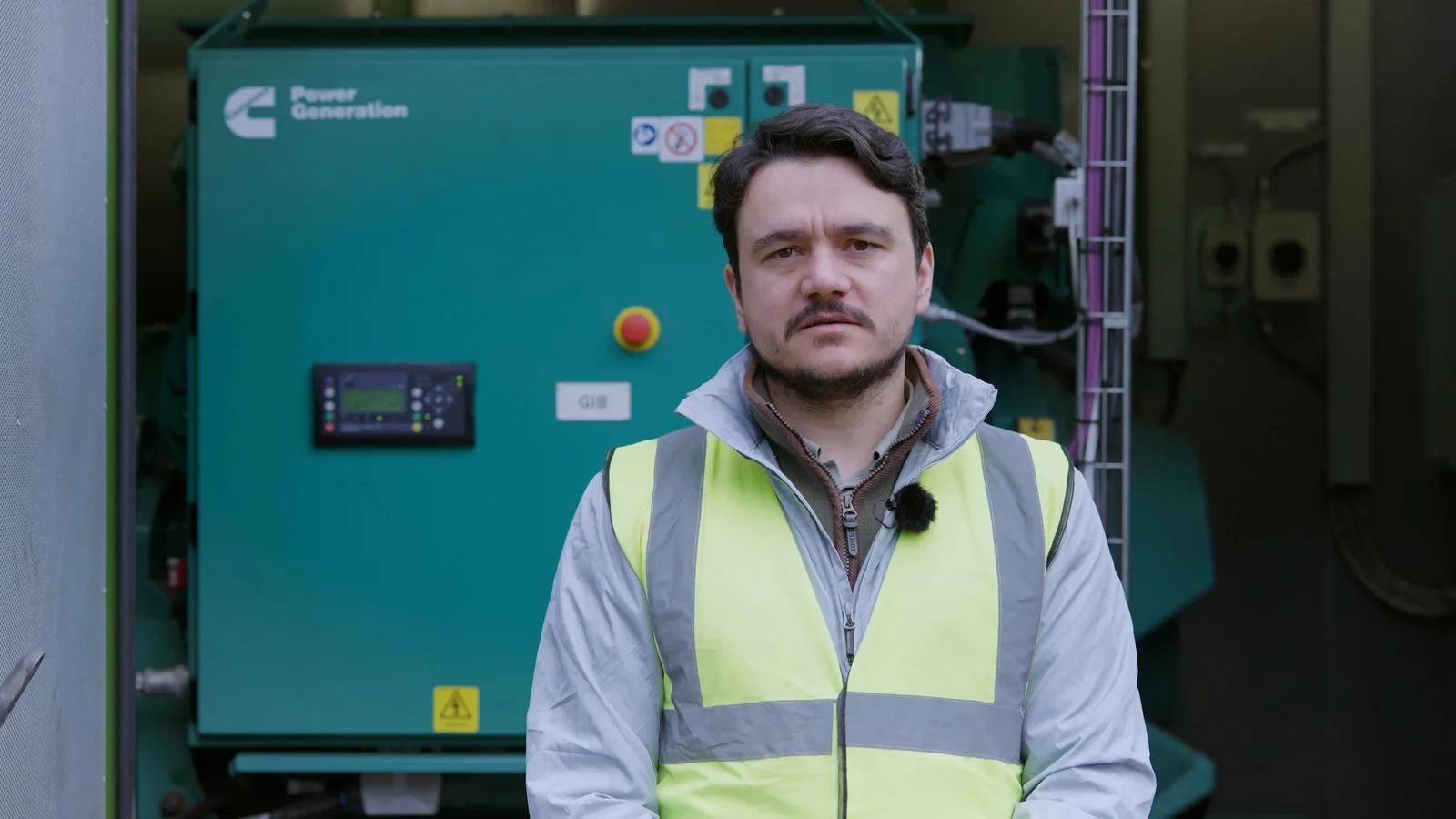
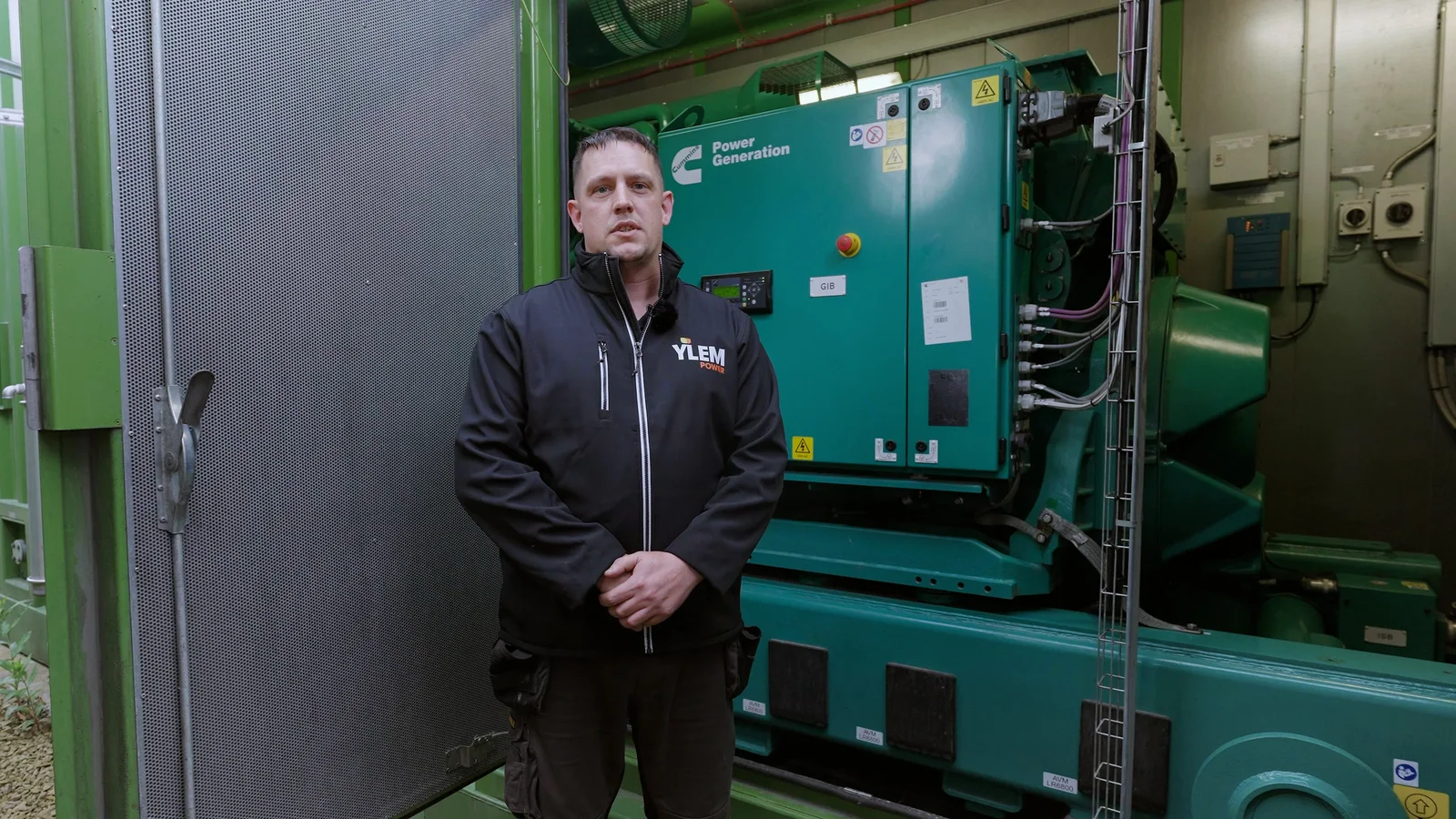
For our Opul Life corporate film, an interview at the company's Chelmsford headquarters was combined with footage of its advisers at church-community outreach events in Chelmsford and Colchester.
The interview explained the business. The location footage showed its people meeting and speaking with the communities they serve. We also captured photography for the company's wider communications.
That is the sort of decision a production company helps with: not just where to point the camera, but what material will make the explanation more convincing and complete.
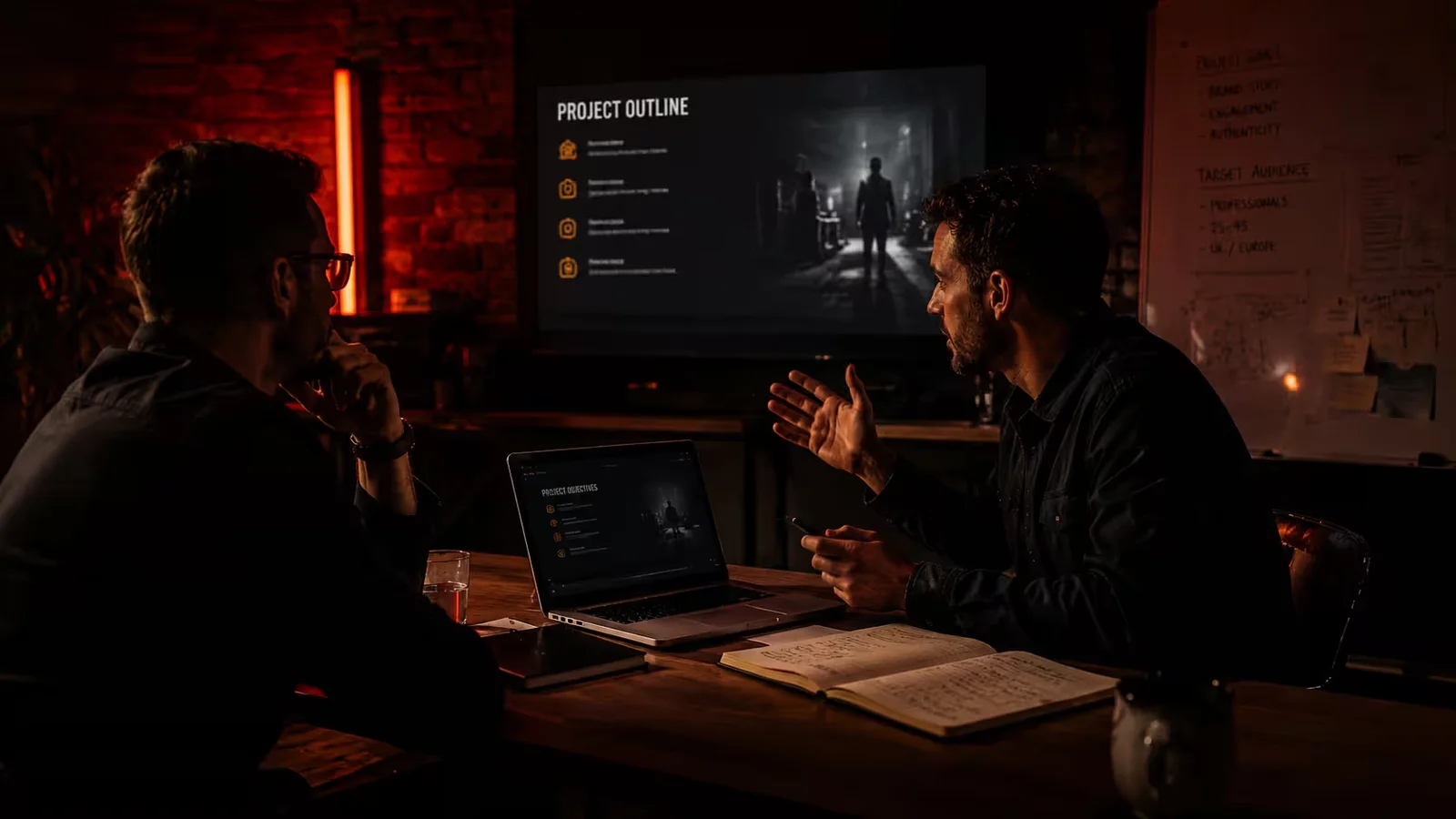
It organises filming around a working business
Once the approach is agreed, somebody has to make it possible.
The person you want to interview may only be available before lunch. The demonstration might need a member of staff who works at another site. Your preferred room could be beside a noisy workshop. A product you need on camera might still be in its packaging when the crew arrives.
Pre-production is where those details are turned into a workable plan. Depending on the job, this includes interview questions, scripts, shot lists, contributor timings, location checks, crew bookings and equipment preparation.
It also means agreeing who will arrange access, confirm permissions and prepare the things being filmed. The production team can coordinate the plan, but it cannot give itself access to your customer's premises or make an unavailable colleague appear.
A simple interview does not need the same paperwork as a multi-location campaign. It does need enough preparation that everybody knows where to be, what is happening and what must be ready.
Good organisation should make the shoot easier for your business, not give you another production job to manage.
On location, it looks after the people as well as the pictures
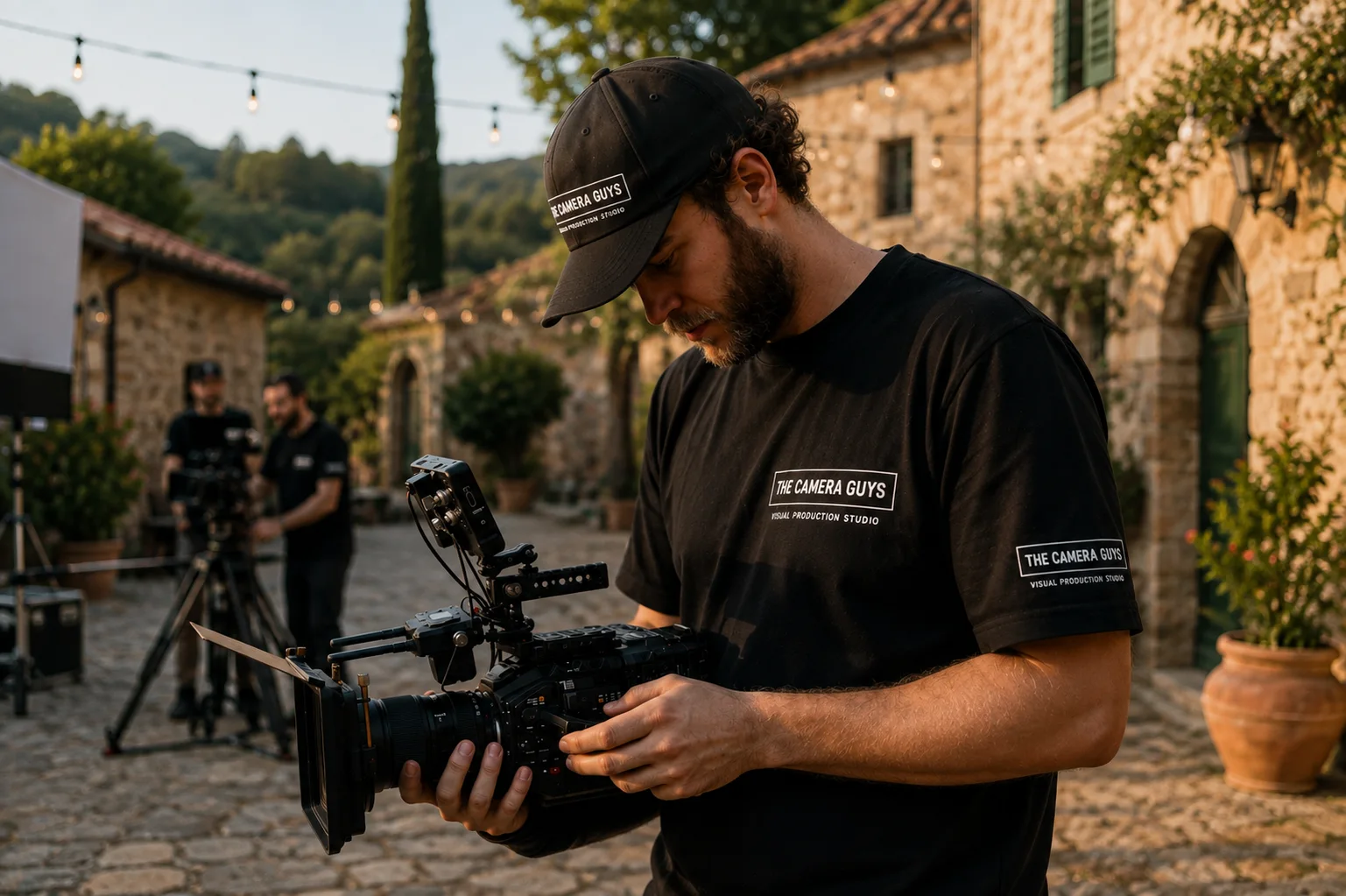
Filming involves much more than asking someone a question and pressing record.
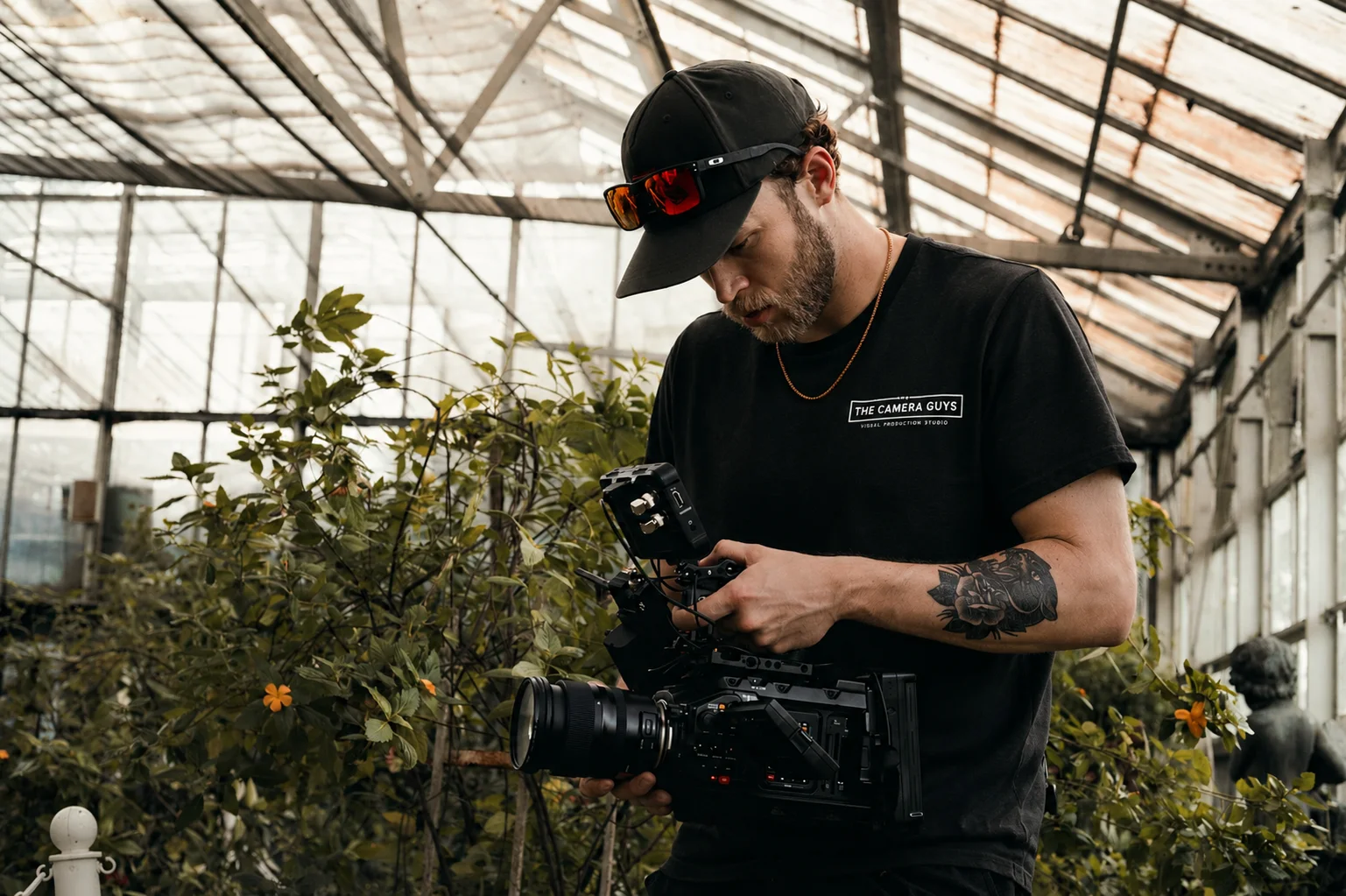
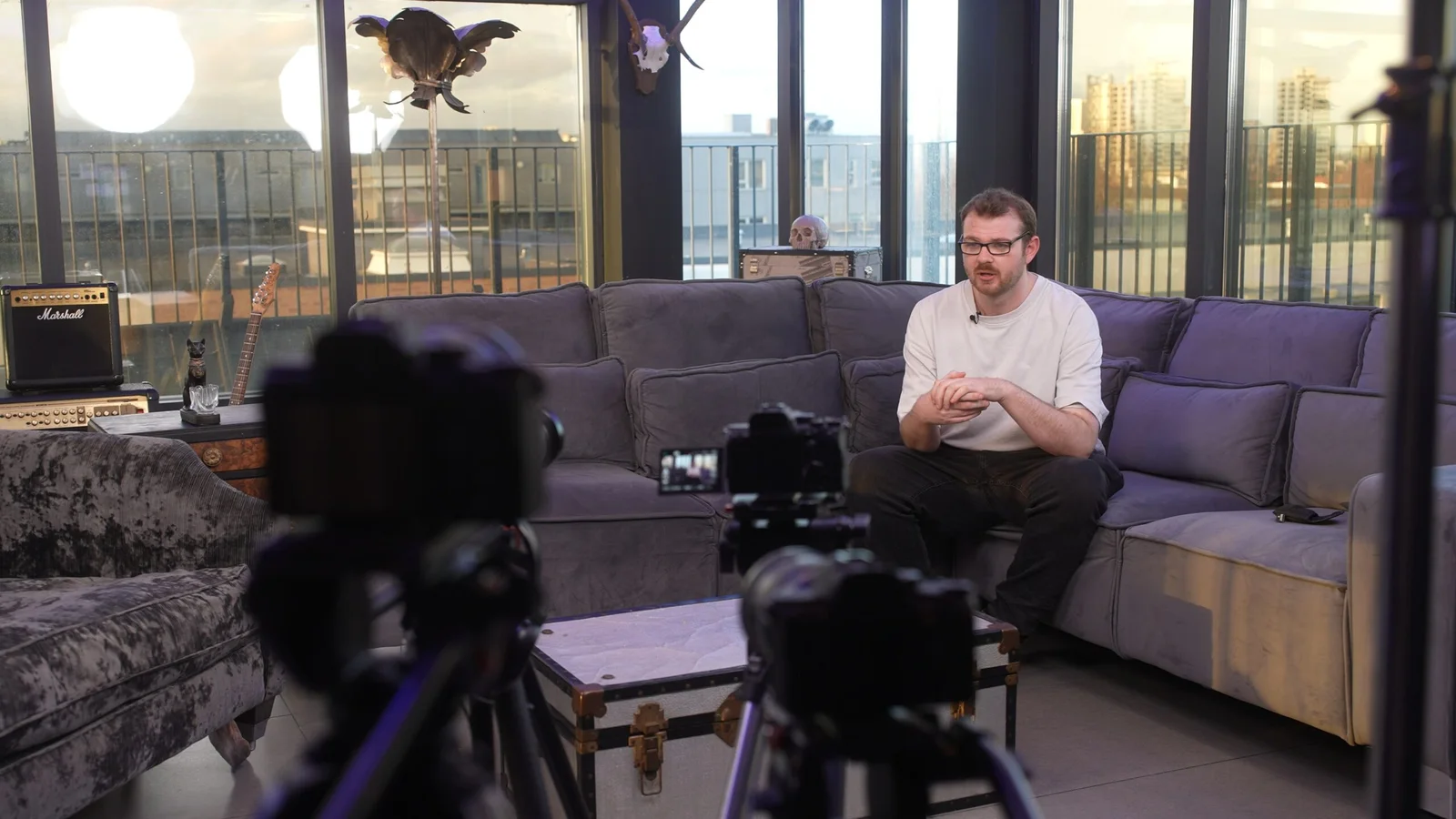
The crew needs to choose the framing, control the light, record usable sound and keep track of what the edit will need. It also needs to help contributors who may never have spoken on camera before.
That can mean explaining where to look, asking a simpler follow-up question or giving someone time to restart without making it an event. For many business films, a natural explanation is more useful than a perfectly memorised paragraph from a brochure.
Meanwhile, someone needs to notice a microphone rubbing against clothing, a distracting reflection or a conversation leaking through the wall. Professional audio is part of the filming plan, not something to leave entirely to the editor.
The team also captures supporting footage, often called B-roll: the product being used, the task being demonstrated or the people doing the work. Those shots give the viewer something relevant to look at while the story develops.
A production company does not necessarily mean a large crew
Our Essex Sport gym induction video was filmed in one day with one videographer. It was made to explain the gym layout, basic equipment safety features and other useful information, for use in reception and on the website.
That was a focused job with a practical purpose. Adding people would not automatically have made it better.
A conference with simultaneous sessions is a different proposition. Planning how many camera operators you need should start with what must be captured and what one person can realistically cover, not a desire to make the crew look impressive.
It makes decisions about the footage, not just cuts
After filming, there may be several versions of an answer, different camera angles and hours of material that will never appear in the finished video.
The recordings need to be copied, checked, backed up and organised. Then the editor works out what belongs in the film and how it should fit together.
A strong answer might be buried halfway through an interview. Two contributors might make the same point, but one explains it more clearly. A beautiful shot might be irrelevant to the story. Editing involves making those choices while preserving the meaning of what people said.
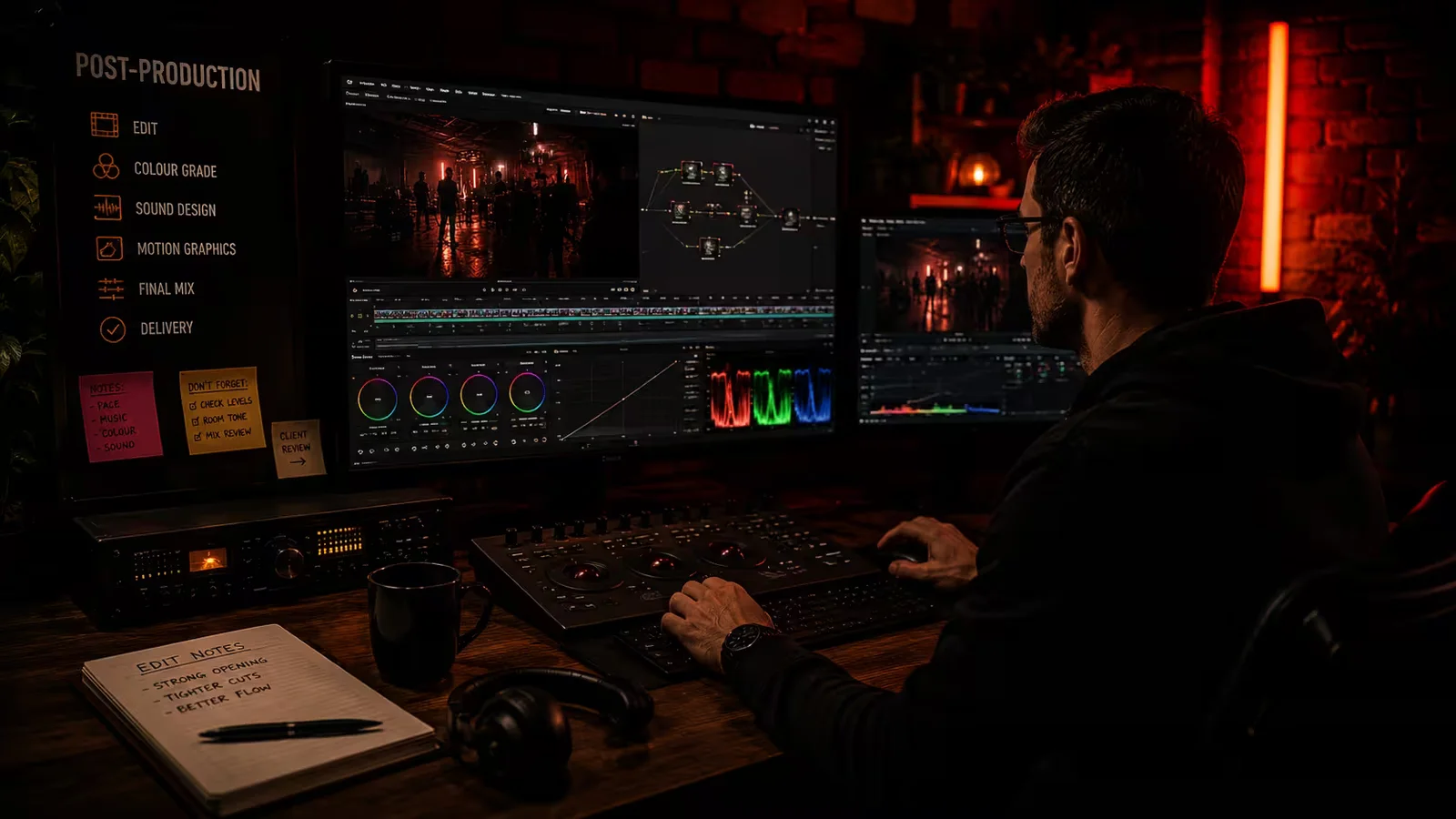
This is the heart of video post-production. The structure and pacing come first, followed by the appropriate sound work, colour correction and grading, titles, graphics, music and captions within the agreed scope.
You should receive a draft with a clear explanation of what is ready to review. If the music is temporary or graphics are unfinished, you need to know that. Otherwise, it is easy to spend a review discussing something the editor already intends to change.
What does that leave for you to do?
A production company can take responsibility for the production. It cannot replace your knowledge of your business.
You know whether a claim is accurate, which customer has agreed to take part and whether a particular detail is confidential. Giving the team that information is not doing its job for it; it is supplying the knowledge the film depends on.
A useful division of responsibilities looks like this. The exact allocation should be confirmed for your project.
| The production team can handle | Your business needs to contribute |
|---|---|
| Developing the approach, script or interview plan | The audience, essential message, approved facts and brand guidance |
| Planning the shoot and coordinating the agreed logistics | Introductions, availability, site information and access you control |
| Directing contributors and managing cameras, lighting and sound | Prepared people, products and spaces, plus an available contact on the day |
| Editing, preparing review versions and making agreed changes | One consolidated response, accurate corrections and timely approval |
One person should collect feedback from your side and resolve disagreements before sending it back. "Remove this interview" and "give this person more screen time" cannot both guide the same revision.
Be specific, too. "The product name at 00:42 is wrong" is something an editor can act on. "It doesn't feel quite right" needs a conversation about what is missing.
Review time also belongs in the schedule. Our guide to how long video production takes explains why the filming date alone tells you very little about when the finished work will be ready.
You do not have to hand over the whole project
Some businesses need help from the first conversation. Others have an experienced marketing team, an approved script and a clear plan, but need someone to film it properly.
You might book event videography while your own editor handles the finished film. Or you might already have footage and need help turning it into something coherent. In either case, agree the handover requirements before work starts: what will be supplied, how it will be organised and who is responsible for the next stage.
A freelance videographer may also be able to plan, film and edit a complete project. Equally, a production company can provide a compact service without sending a large team. Our comparison of a production company and a freelance videographer explains the practical differences without treating either option as automatically better.
Ask who will actually work on your project, what they will handle and who you will speak to. Those answers tell you more than the label on the business.
The quote should describe the work, not just the filming time
A booking for on-location coverage is not necessarily a booking for a finished film. Check where planning, filming, editing and delivery sit in the proposal.
At The Camera Guys, video editing is scoped separately from on-location production. Our pricing page explains the current rates and what is included, while the videographer cost guide shows how filming and editing contribute to a project budget.
The quote should identify the crew and filming time, the finished videos, the editing allowance and the review process. Travel, location hire, specialist equipment, additional versions and other requirements should be included or clearly identified as separate.
Also ask about original camera files, editable project files and storage. Receiving the finished video does not automatically mean receiving every recording or a promise to keep the project indefinitely. At The Camera Guys, RAW/source-file handover is not included as standard, so discuss it before booking when you need the material for an in-house editor.
When choosing a video production company, compare these details alongside relevant examples of its work. Two different totals may simply describe two different jobs.
The handover should match how you will use the video
A website film, a vertical social clip and a conference-screen version are not always interchangeable.
A shorter edit may need a different opening. A vertical version may need shots reframed and graphics moved. Captions need checking, particularly names and specialist terminology. Each agreed version needs its own quality check before delivery.
Plan those uses early. It is much easier to capture a useful standalone answer during an interview than to discover later that every answer depends on a question the viewer cannot hear.
The production company should prepare the agreed files for their destinations. Uploading them, running advertising and measuring campaign performance are separate responsibilities unless included in the agreement. Our guide to getting more from video marketing looks at what happens beyond the finished edit.
A film also needs a home inside your business. Decide who will publish it, share it with the sales team or add it to the training system, rather than leaving it in a download folder after approval.
Start with the job you need the video to do
You do not need to work out the crew, equipment and editing time before speaking to us. That is part of what our video production service is there to help with.
Tell us what people need to understand, who the video is for and when you need it. Mention anything already arranged, whether that is a script, a location, an event or footage you want to use.
Send us the outline of your project and we can work out what needs producing, what you can supply and where our team would be most useful.