What Is B-Roll and Why Is It Important?

SUPPORTING FOOTAGE THAT TELLS THE STORY

B-roll is the supporting footage that helps viewers see what a speaker, presenter or main sequence is describing. In a business film it might show people working, products being used, machinery operating, the premises or close details of a process.

It is not filler gathered to make the filming day look busy. Useful B-roll is planned around the story and gives the editor material that words alone cannot provide.

An interview can explain what an organisation does. Relevant B-roll lets the audience see the people, place and evidence behind that explanation.

Get a quick quote now

Two Camera Guys videographers operating a camera in a city office

A-roll and B-roll in plain English

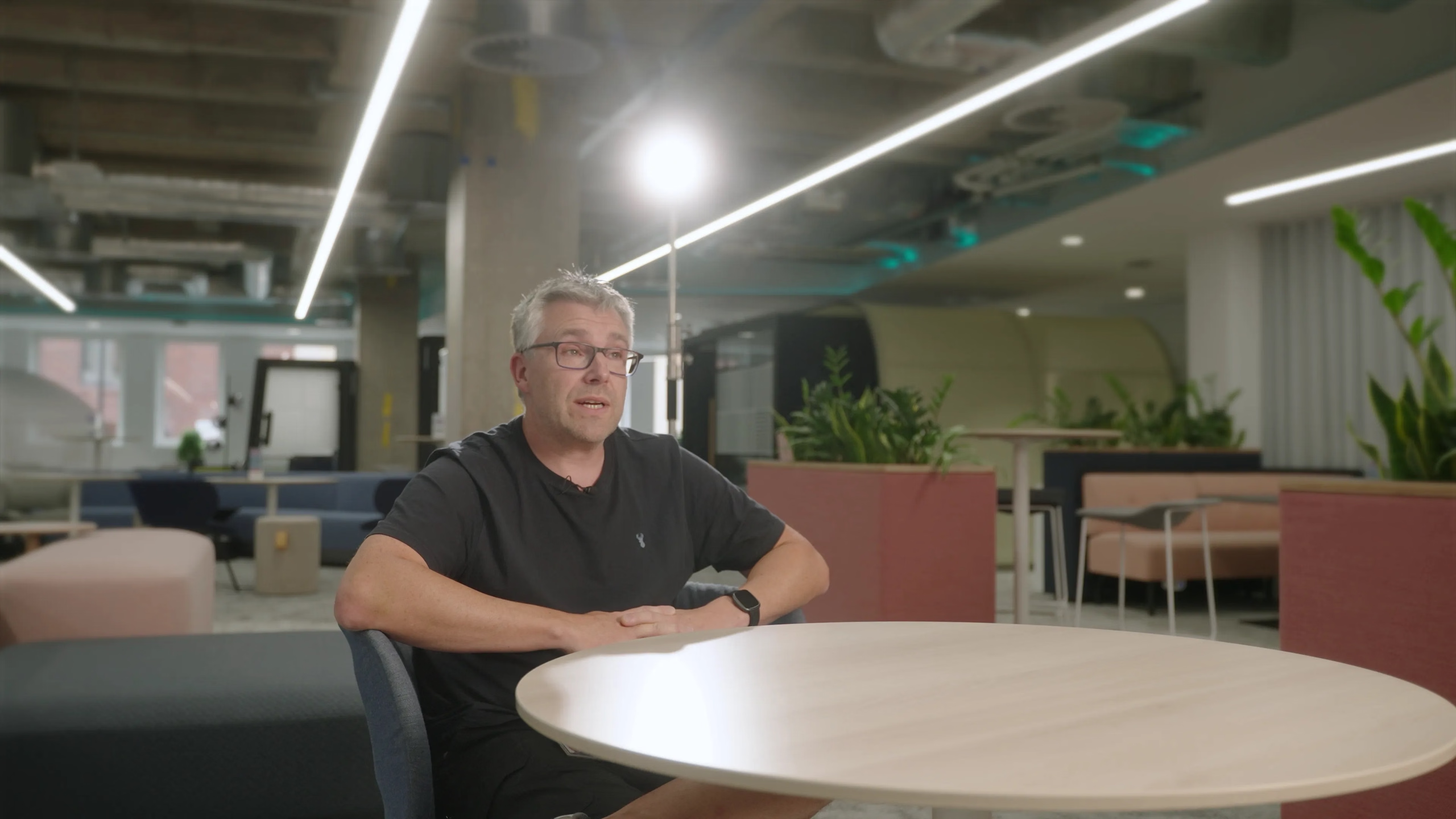
A-roll is the primary material carrying the main narrative: commonly an interview, presenter, conversation or key action. B-roll is complementary footage placed around or over it.

The labels describe editorial roles, not quality. A carefully filmed process shot can be as important as the interview it supports, and some finished films are led almost entirely by observed visuals.

Practical examples of B-roll

Imagine a managing director explaining how the company supports customers. The interview or testimonial provides the voice and argument. B-roll might show staff responding to enquiries, a customer meeting, the product in use, screens with non-confidential information, packaging, machinery or the working environment.

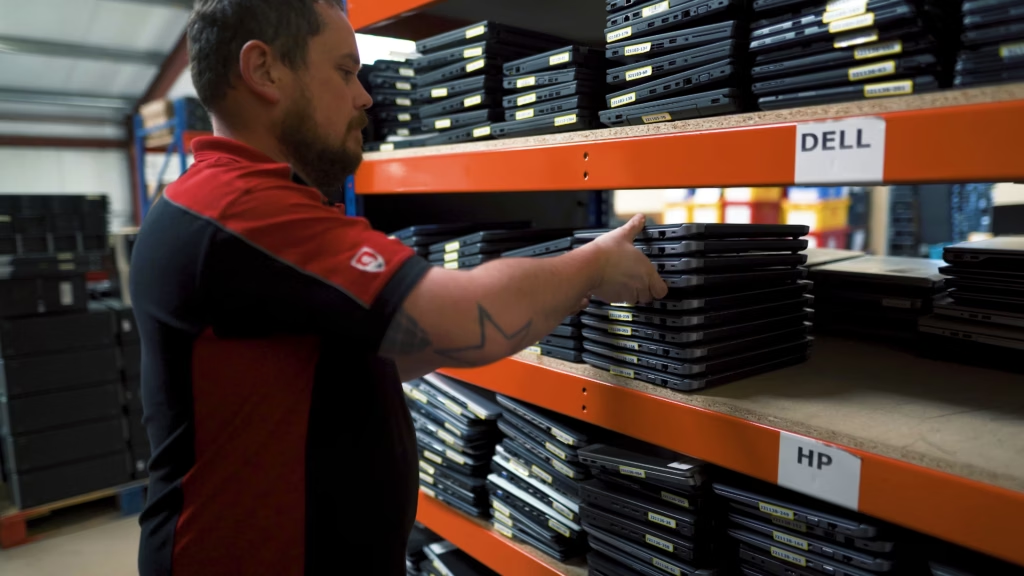
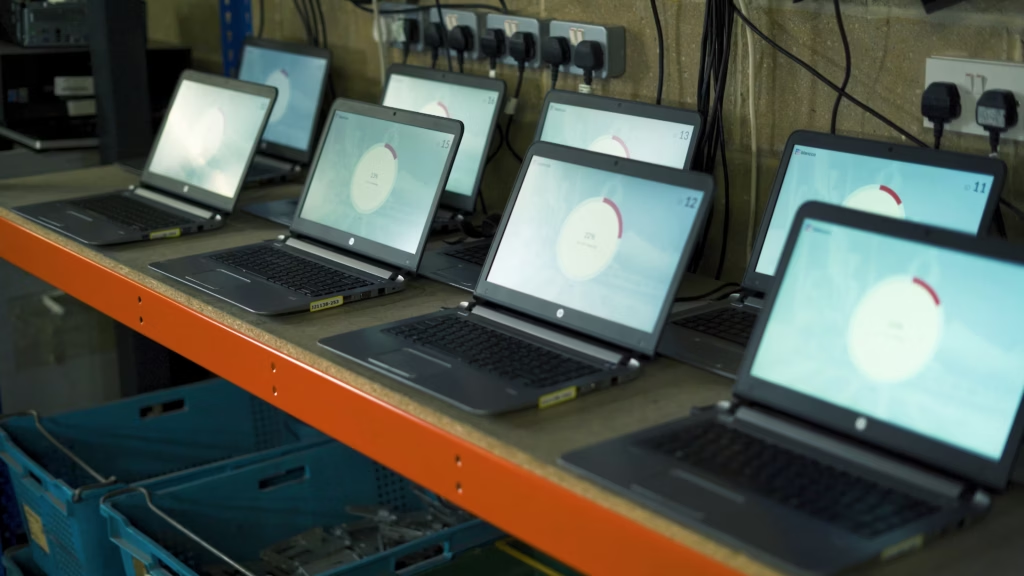
For a manufacturer, useful footage could include raw materials, operators, quality checks, close details and finished products. A professional-services film may use the office, team collaboration, client-safe demonstrations and exterior establishing shots. An event film might combine speeches with registration, networking, audience reactions and venue details.

The strongest choices are specific to what is being said. Generic pictures of somebody typing rarely add value unless that activity genuinely illustrates the subject.

What B-roll does in an edit

B-roll illustrates claims and provides context. If a contributor describes a production line, showing that line helps the viewer understand its scale and operation. If they discuss company culture, genuine interaction gives the audience evidence beyond a polished statement.

It also covers edit points. Interviews are usually condensed: pauses, repeated phrases and less relevant material are removed. Supporting footage can sit over those joins so the answer remains visually coherent. This does not mean hiding misleading edits; the words must still represent what the contributor intended.

Varied images improve pacing, establish location and let the editor move between detail and overview. They also create options for shorter versions, social extracts and introductions where the original speaker may not remain on screen throughout.

Why a five-minute interview can require more filming

A client may only need a short finished interview, yet the production still needs time to record supporting material. The final five minutes might draw from a longer conversation and use dozens of brief visual shots. Each process, person or location takes time to access, prepare and capture properly.

Some activities happen quickly or at fixed times. Others need permissions, safe working distances or cooperation from staff. Filming a real organisation should not create unnecessary disruption, so the schedule may follow normal operations rather than staging every action immediately.

Finished duration measures what the audience watches. It does not measure the variety of source material needed to make those minutes clear and engaging.

How much B-roll do you need?

There is no reliable universal ratio. A direct announcement may need only a few contextual shots. A case study that moves through several locations may depend heavily on visual evidence. The answer changes with finished length, message density, platforms and the variety available.

Start by marking the ideas that deserve to be shown. Then identify essential establishing views, people, processes, products and details. Consider whether the edit needs enough variation to create a main film plus shorter derivatives. Repeating the same three shots across every version quickly becomes obvious.

It is sensible to capture options, but endless coverage is not automatically valuable. Footage without a relationship to the story adds review time without improving the result.

Planning B-roll instead of filming randomly

A useful shot plan links visuals to messages. If an interview discusses quality control, list the real checks that can be filmed. If recruitment is the purpose, identify the teams, environments and interactions candidates need to understand. This approach is more productive than walking around searching for anything that moves.

Locations should be checked for permissions, confidentiality, sound, safety and normal workflow. Products need to be ready and correct. Staff appearing recognisably may need to understand how the footage will be used. Screens and paperwork should not expose private information.

The planning guide for corporate video helps define these requirements before the shoot.

Authentic footage versus stock footage

Genuine footage of the organisation is usually more useful when the video needs to build trust, explain a distinctive process or show what customers and employees can expect. It provides details that generic stock cannot know: the real premises, people, equipment and way of working.

Stock footage can still be appropriate. It may illustrate a location or concept that cannot be filmed safely or economically, support an abstract point, or provide a brief establishing image outside the production scope. It should be licensed correctly and should not imply that a generic person, facility or result belongs to the organisation.

A mixture can work when the distinction is honest and visually coherent. Stock should solve a genuine gap rather than replace every opportunity to show the business itself.

B-roll for shorter and vertical edits

Supporting footage can make derivative edits much more flexible. A social clip may begin with action before introducing the speaker. A vertical version may need tighter views that remain legible on a phone. A website banner may need clean movement without dialogue.

These uses should be planned before filming. A wide shot composed for a presentation screen may crop poorly into a vertical frame, and an interview answer may not make sense as a standalone clip. Capture suitable orientations, openings and visual sequences for deliverables that have a confirmed purpose.

Additional versions also create editing work. The guide to video editing costs explains why selecting, adapting and finishing footage matters.

B-roll checklist for a business production

  • Connect each essential visual to a message.
  • Include establishing, medium and detail views where useful.
  • Show real processes accurately and safely.
  • Confirm people, locations and products are ready.
  • Remove confidential information from screens and paperwork.
  • Allow enough time for activity that cannot be repeated.
  • Plan framing for genuine alternate deliverables.
  • Identify any unavoidable gap where licensed stock may help.

Learn more about corporate video production, explore the corporate service, view the portfolio or discuss the footage your story needs.

Building visual sequences rather than isolated shots

A useful edit often needs more than one view of an activity. An establishing shot shows where it happens, a medium view shows the person and action, and close details reveal the important parts. Together they allow the editor to compress time while keeping the sequence understandable.

For example, a product being prepared might be shown arriving at a workstation, the operator completing several key actions, a close quality check and the finished item. Random close-ups without the wider context can look attractive but leave viewers unsure what they are seeing.

Sequences should remain truthful. The production can repeat an action for coverage where appropriate, but the edit should not reverse cause and effect or imply that unrelated activity proves a claim.

Using people naturally in B-roll

Staff do not always need to perform exaggerated versions of their jobs for camera. Real activity is often more credible when the crew understands the process and positions itself without constantly interrupting it. Some tasks will still need to be demonstrated slowly, repeated or moved for safety and visibility.

Give people a clear action and purpose rather than asking them to “look busy”. Meetings staged only for a silent handshake can feel generic. A real discussion, inspection or demonstration provides details that belong to the organisation.

Check consent and operational impact. Customers, visitors and personal information should not appear merely because they happened to be in the background. Appropriate planning allows the footage to feel authentic without treating privacy as an editing problem.

Organising B-roll for future use

Businesses sometimes want a general library for later campaigns. That can be useful, but the production should still define likely subjects, platforms and shelf life. Branding, uniforms, products and premises may change, making seemingly evergreen footage inaccurate.

Record what was filmed, where releases apply and whether any material has restrictions. Well-labelled footage is easier to find than a drive full of unexplained clips. A future editor also needs access to suitable quality masters rather than compressed files downloaded from social media.

A library complements story-specific coverage; it does not guarantee that every future message will have a relevant visual. Important new claims and services may still need fresh filming.