
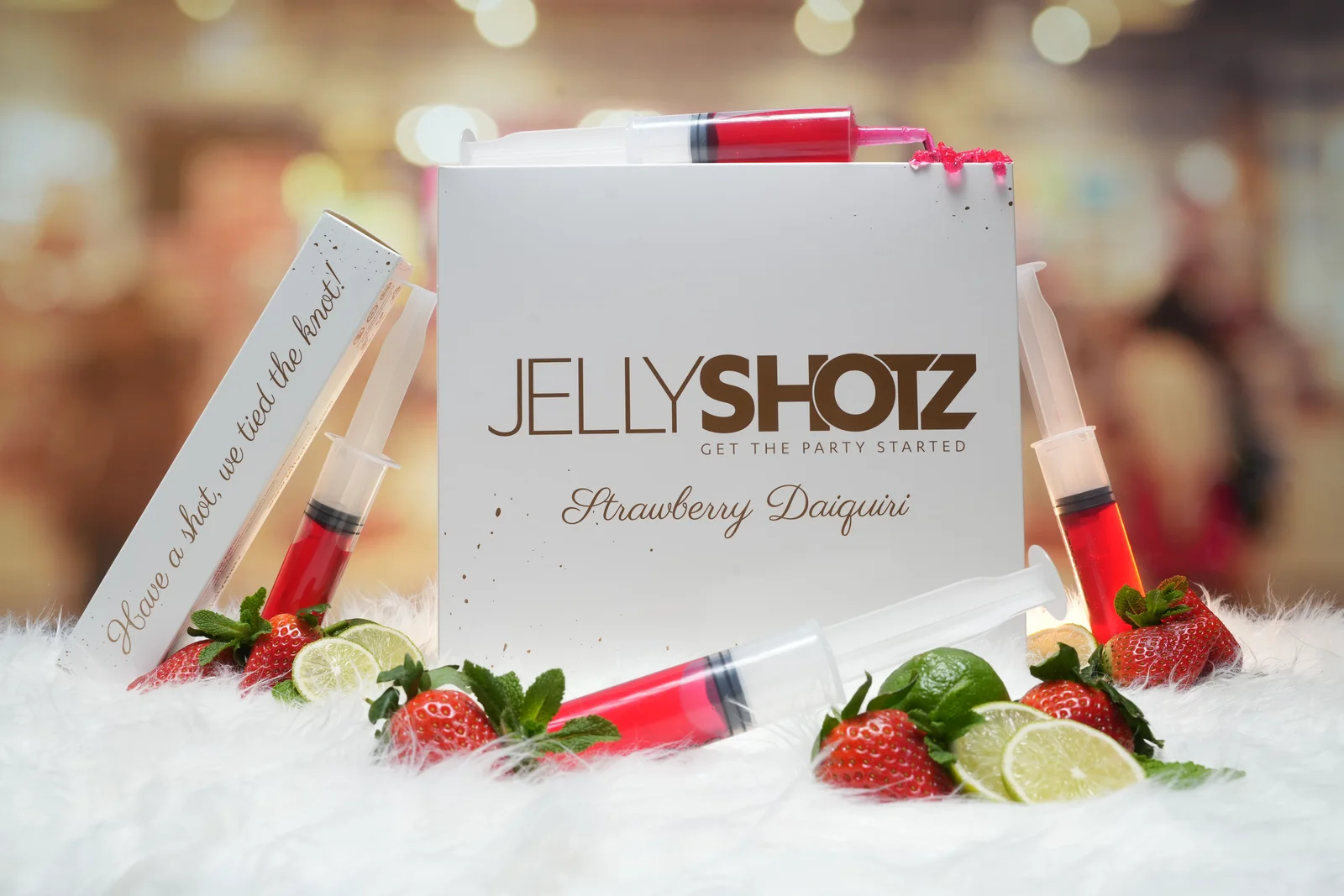
01 / THE PROBLEM TO SOLVE
The launch had a deadline.
I had a broken leg.
I could not get to the studio. We needed to make a studio I could get to.
Jellyshotz had a new product launch to prepare for. I was recovering from a broken leg, housebound and unable to travel to a studio. The products still needed photographing and filming, and there was a deadline to work towards.
So we brought the studio to me. My kitchen became the production space, with the camera, backgrounds, lighting and product setups arranged around the work we needed to make. I spent an entire month shooting dozens of products there.
It is an unusual setting for a commercial shoot, but it explains something important about this project. The finished images show the product world. The phone video below shows the effort and practical decisions behind it.
02 / THE ACTUAL BEHIND-THE-SCENES FILM
Step outside
the camera frame.
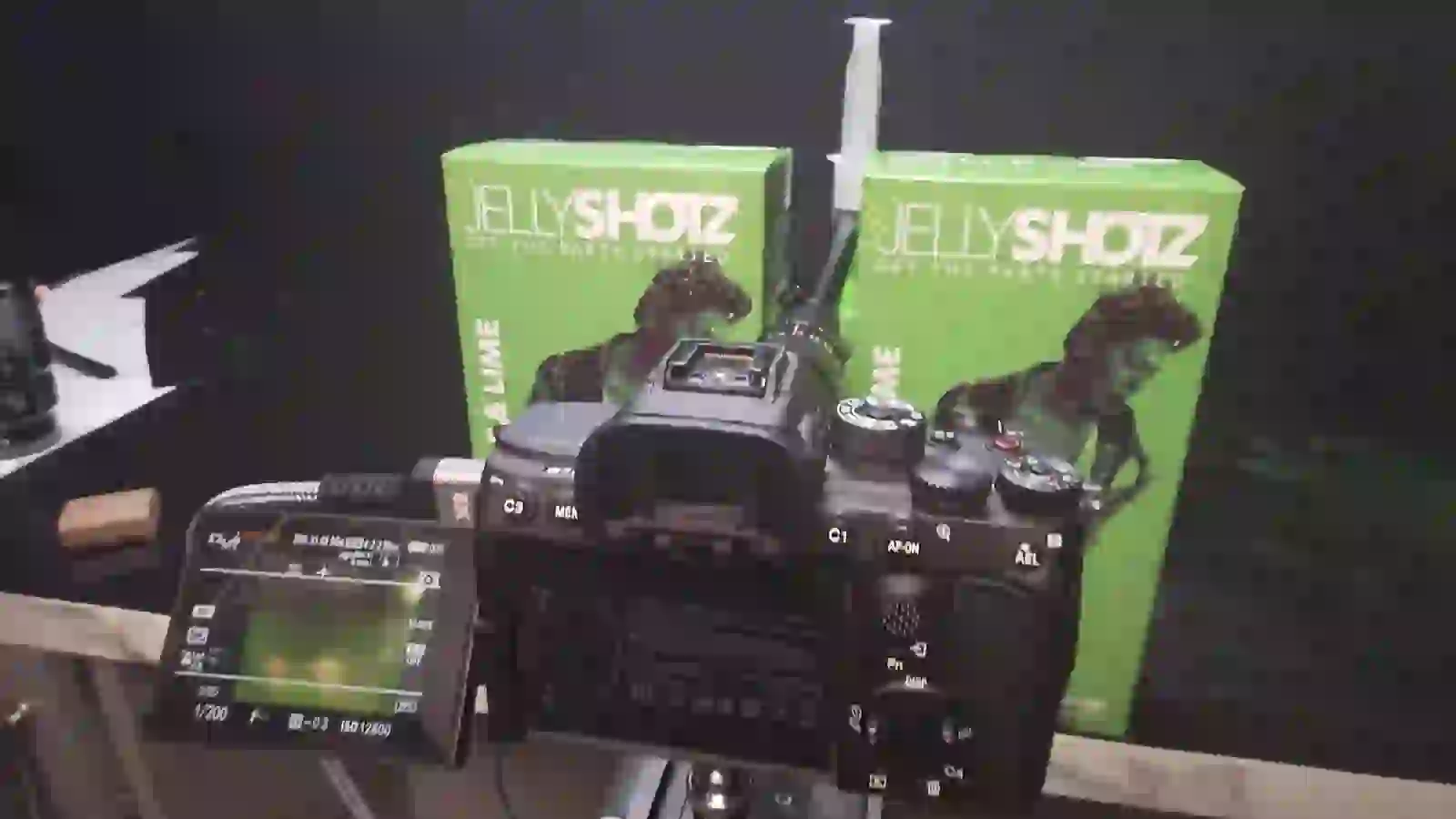
This is phone footage from the shoot. It begins close to the products, then reveals the camera and the lighting filling the room.
Open the original BTS clip ↗
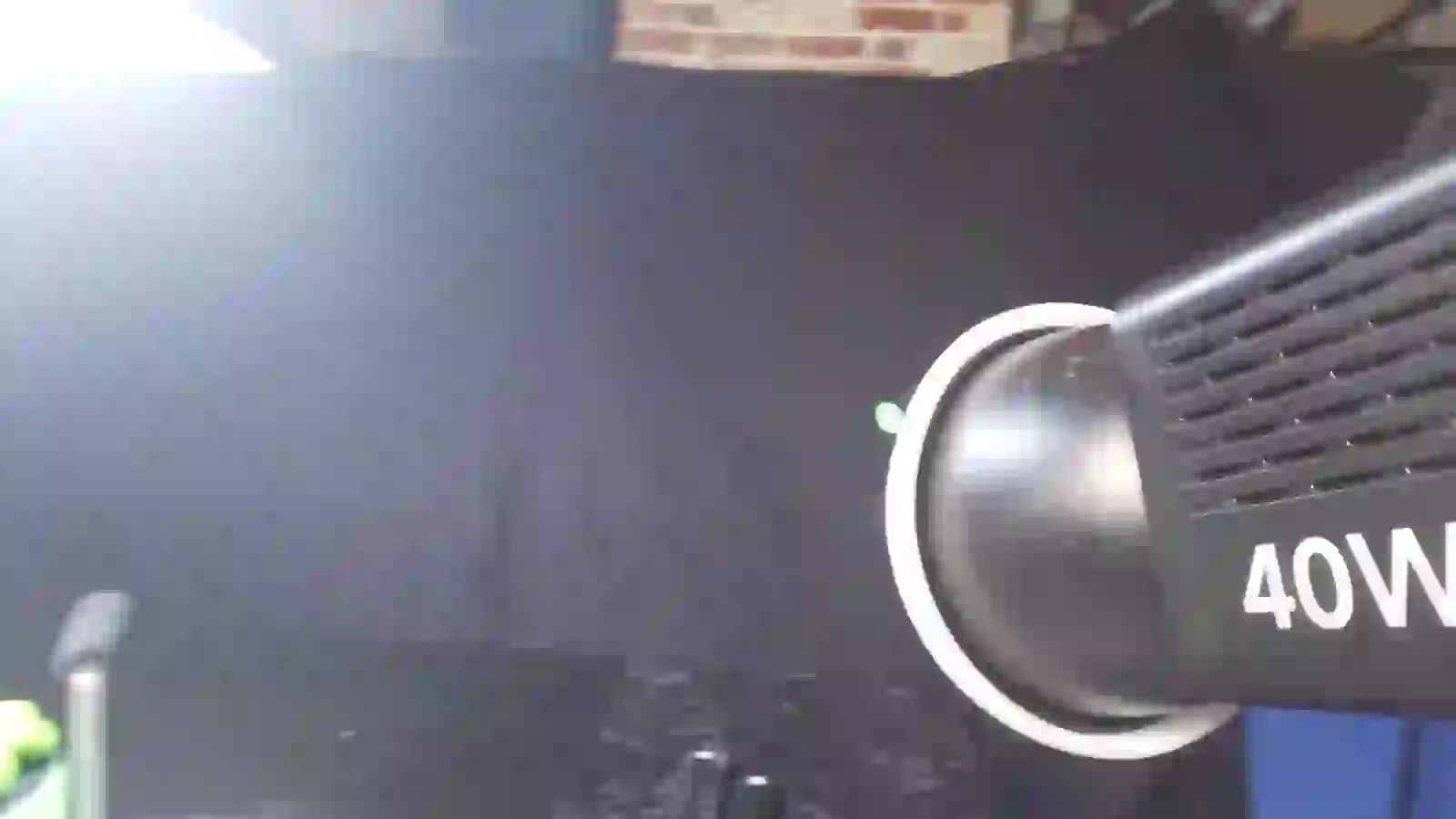
The first view is the small world we were building around the product. As the phone moves away, you see how much sits outside that frame: a probe lens reaching into the set, the Sony camera behind it, black cloth, light modifiers and the familiar features of a kitchen beyond.
That reveal is why I like this clip. It connects the carefully controlled product shot with the very ordinary room it was made in. This is the working setup, filmed at the time, rather than a reconstruction created for the article.
03 / A STUDIO IS A SET OF DECISIONS
The room changed.
The craft stayed.
The filming setup in the clip used a Sony A7S III and a Laowa 24mm probe lens, with the products arranged on a turntable. The camera and lens were only part of the picture. Much of the work involved shaping what the light did around the small set.
Diffusion softened the light. Negative fill helped control unwanted bounce and maintain darker areas. The black cloth provided the background for this setup, while smoke added a practical atmospheric element. Together, those choices let us build the look around the product within the space available.
Sony A7S III
Laowa 24mm probe
The camera and long probe lens visible in the phone footage.
A compact set.
A product turntable.
A physical arrangement built around the products we were filming.
Diffusion.
Negative fill.
Shaping the illumination and controlling the light returning to the set.
Black cloth.
Practical smoke.
A separate video setup from the television-backdrop photography.
04 / ONE PROJECT, DIFFERENT TECHNIQUES
Not every shot
used the same backdrop.
The black cloth in the BTS clip belongs to this particular product-video setup. Elsewhere in the project, we used a 70-inch OLED television to display backgrounds for the styled product photographs.
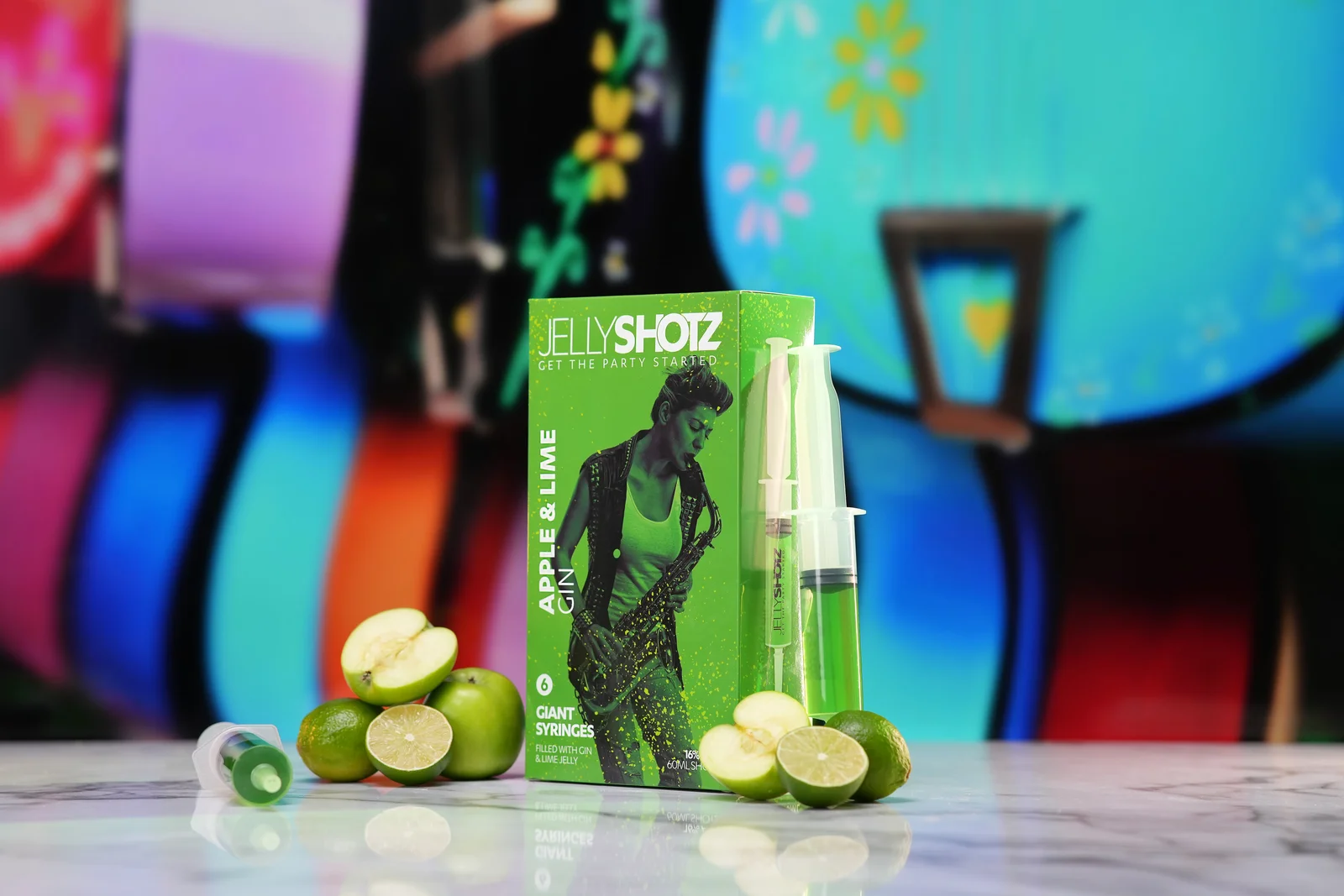
Those photographic backgrounds began in MidJourney and were refined in Photoshop. We then lit and photographed real boxes, syringes, fruit and props in front of the screen. The reflections in the main product images were added in post-production.
It would be easy to see the finished collection and assume it all came from one technique. In practice, we changed the approach to suit the image or movement we wanted to make. The Jellyshotz TV-backdrop photography article explains that separate workflow in more detail.
PHOTOGRAPHS FROM THE SHOOT
A little more of the kitchen.
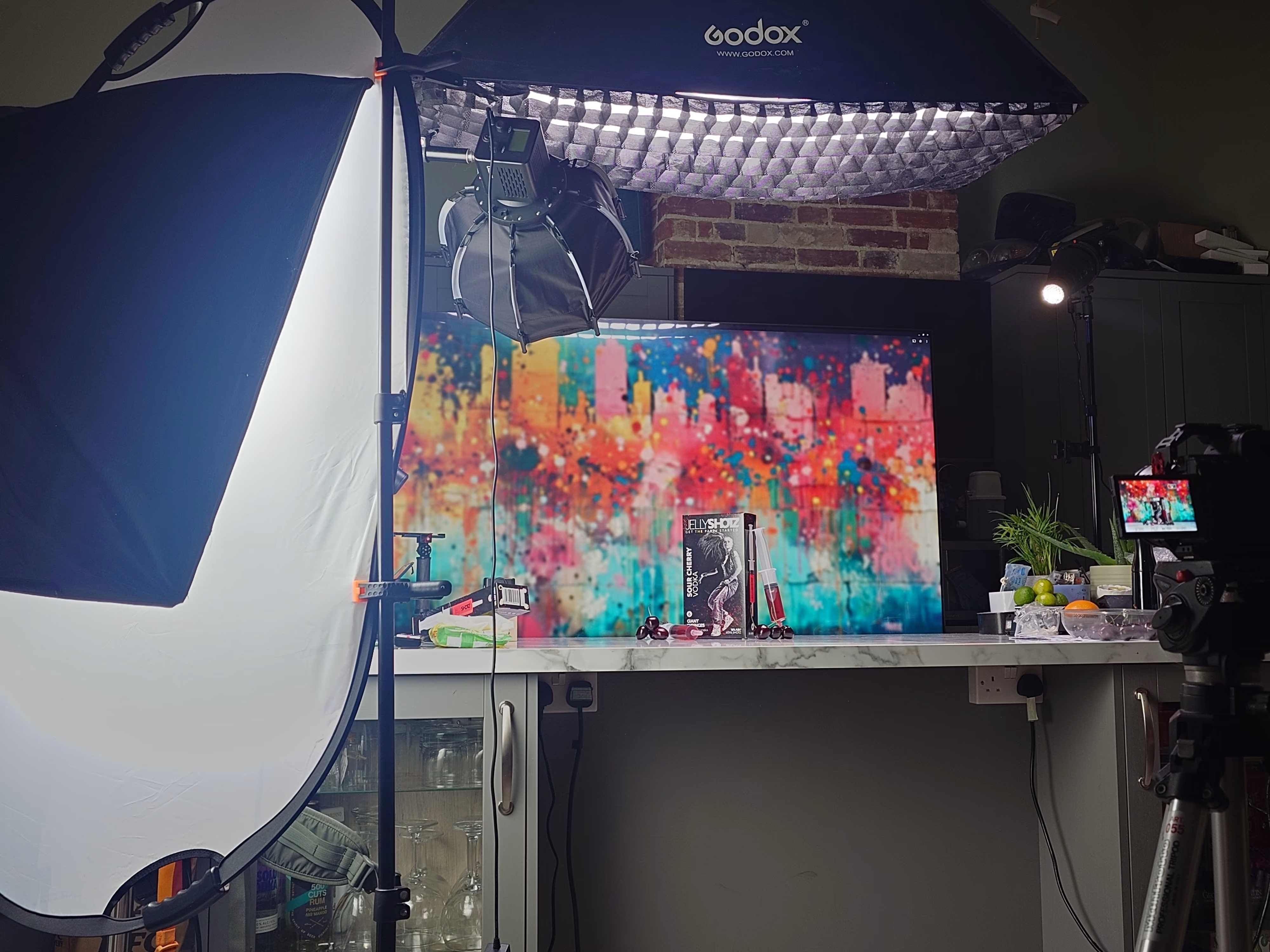
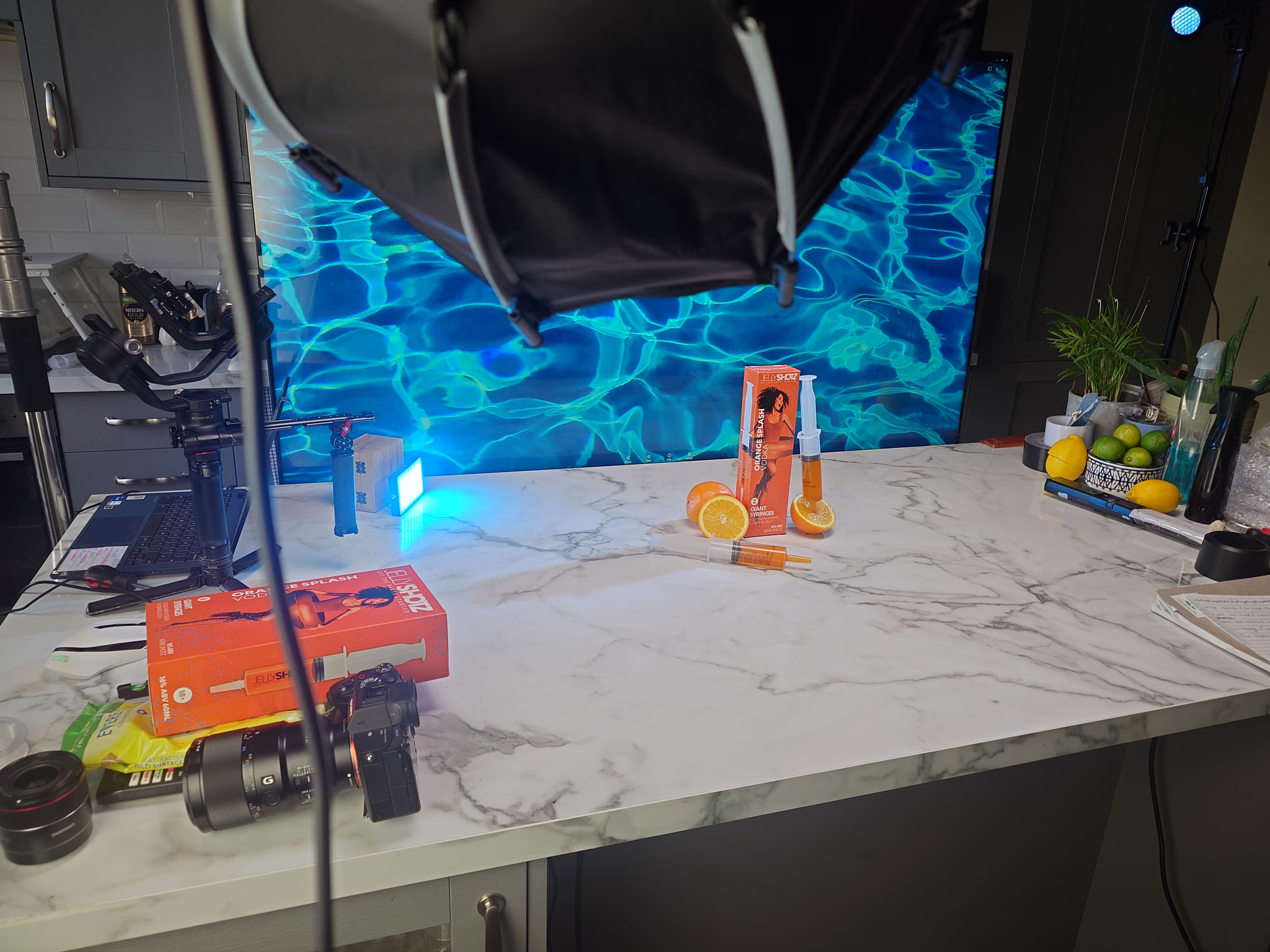
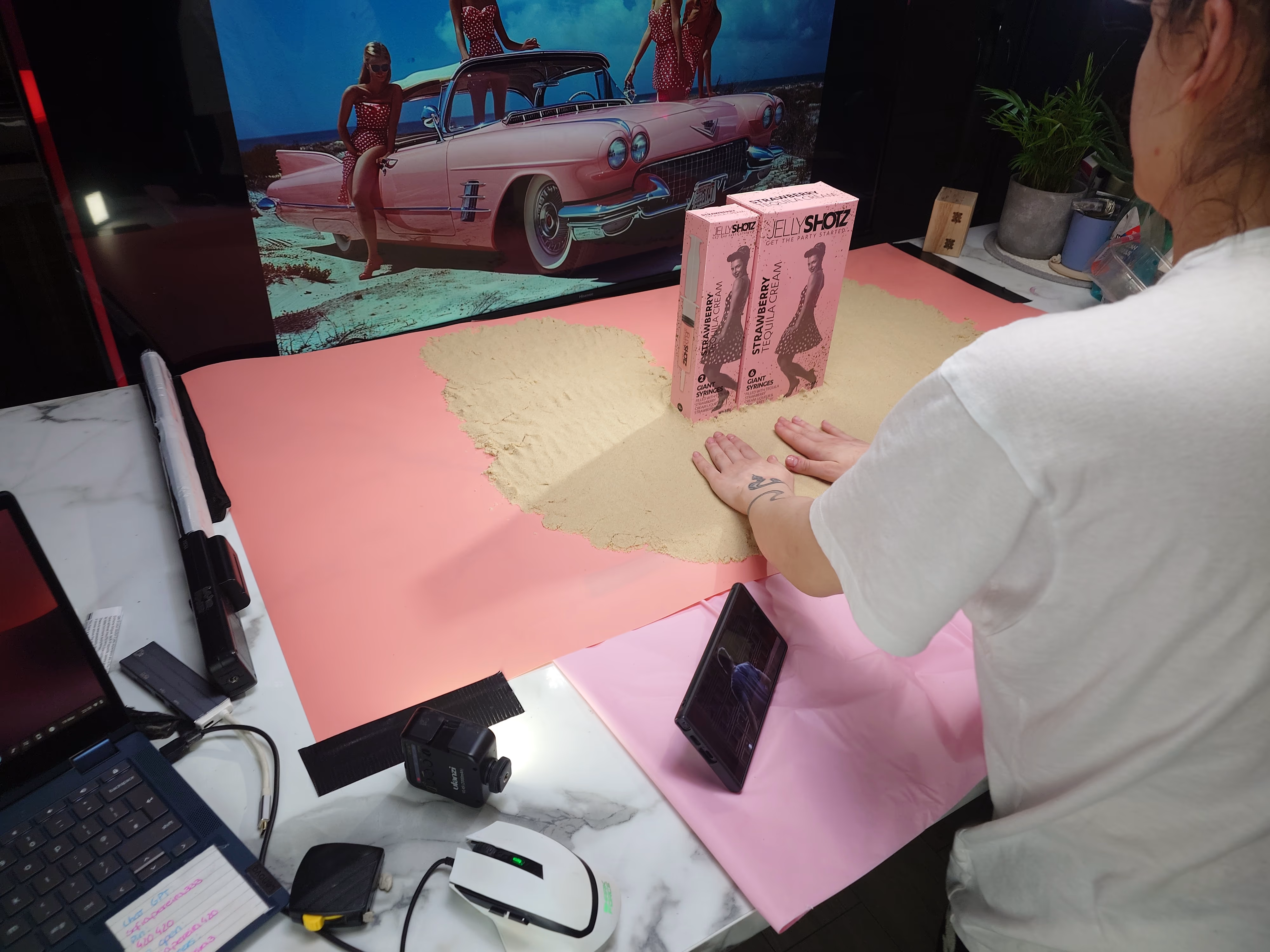
I found these photos after writing this post. They show the still-photography setups, with the television behind the products and lights squeezed around the worktop. You can see the kitchen in all of them: cupboards, spare boxes, fruit waiting to be used and equipment taking up most of the available room.
Moving things a few centimetres at a time.
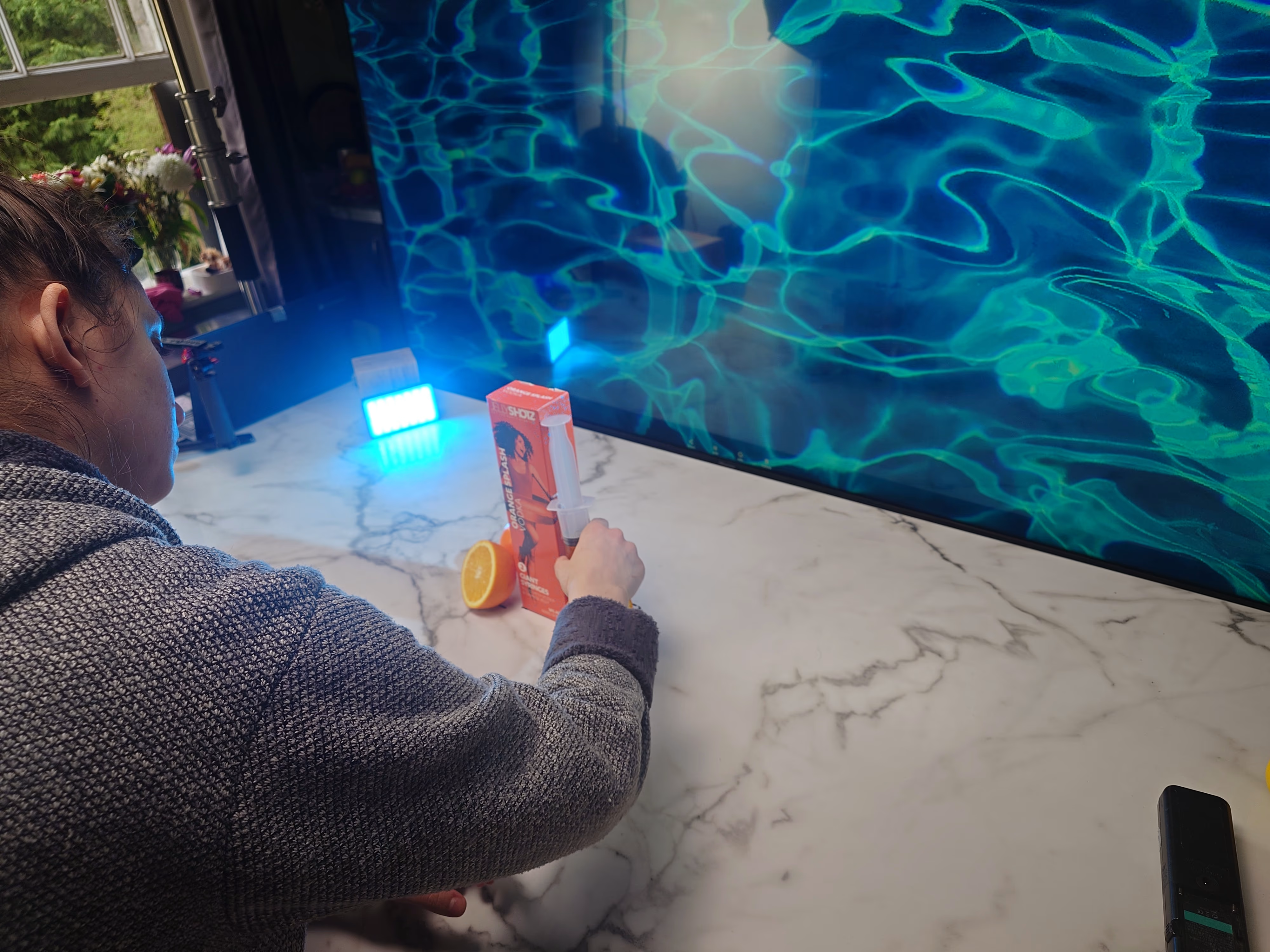
The Orange Splash photos catch the part that takes up so much of a product shoot: arranging the box and fruit, checking the view, then adjusting them again. The wider picture shows how small the actual set was. Just outside it, the worktop was holding spare products, lights and the next things we needed.
The pink setup used a different screen image and a textured surface beneath the box. Changing those few elements gave us another setting without having to move out of the kitchen.
05 / MAKING SMALL PRODUCTS MOVE
Practical filming,
one setup at a time.
Watch on Vimeo ↗
We made the product films before generative video was part of this kind of production. The movements and arrangements were mostly practical, with selected visual effects added later in After Effects.
Across the project, that meant working with physical products, camera moves and effects we could create on set. For Orange Splash, a camera-slider move and a background splash effect carried the pool-inspired idea into a moving reveal. The turntable and probe-lens arrangement in the phone clip show another part of that practical approach.
The finished Apple & Lime film here is one example from the wider range. It is shown alongside the BTS story to connect the production with the output; the phone clip is not a shot-by-shot record of every sequence in the final edit.
For product videography, the subject may be small, but the decisions still add up: how it moves, what the light reveals, where the label sits and how the shot fits the edit. A short finished film can represent a much longer period of arranging and refining.
06 / WHAT A MONTH OF SHOOTING MEANT
Dozens of products.
Repeated attention.
This was not one lucky afternoon with a camera on the kitchen counter.
The work extended across product lines, pack sizes and different kinds of content. We needed styled photography, individual product views and films, with the visual details adjusted for each range. Spending a month on the shoot meant working through that collection rather than treating the first successful setup as the whole job.
Adapting the space let me keep working on the launch while I could not travel. The kitchen location did not define what the client received; the attention given to the products did.
That is the human part of the story I wanted to show. Behind the bright boxes and polished images was a difficult personal situation, a client with a deadline and a practical effort to make the work happen. We changed where we worked so we could keep concentrating on what needed to be made.
It is also a useful planning reminder. When commissioning promotional video production, discuss the number of products and variations as well as the length of the final edit. Our guide to filming and editing costs explains how production time forms part of a quote.
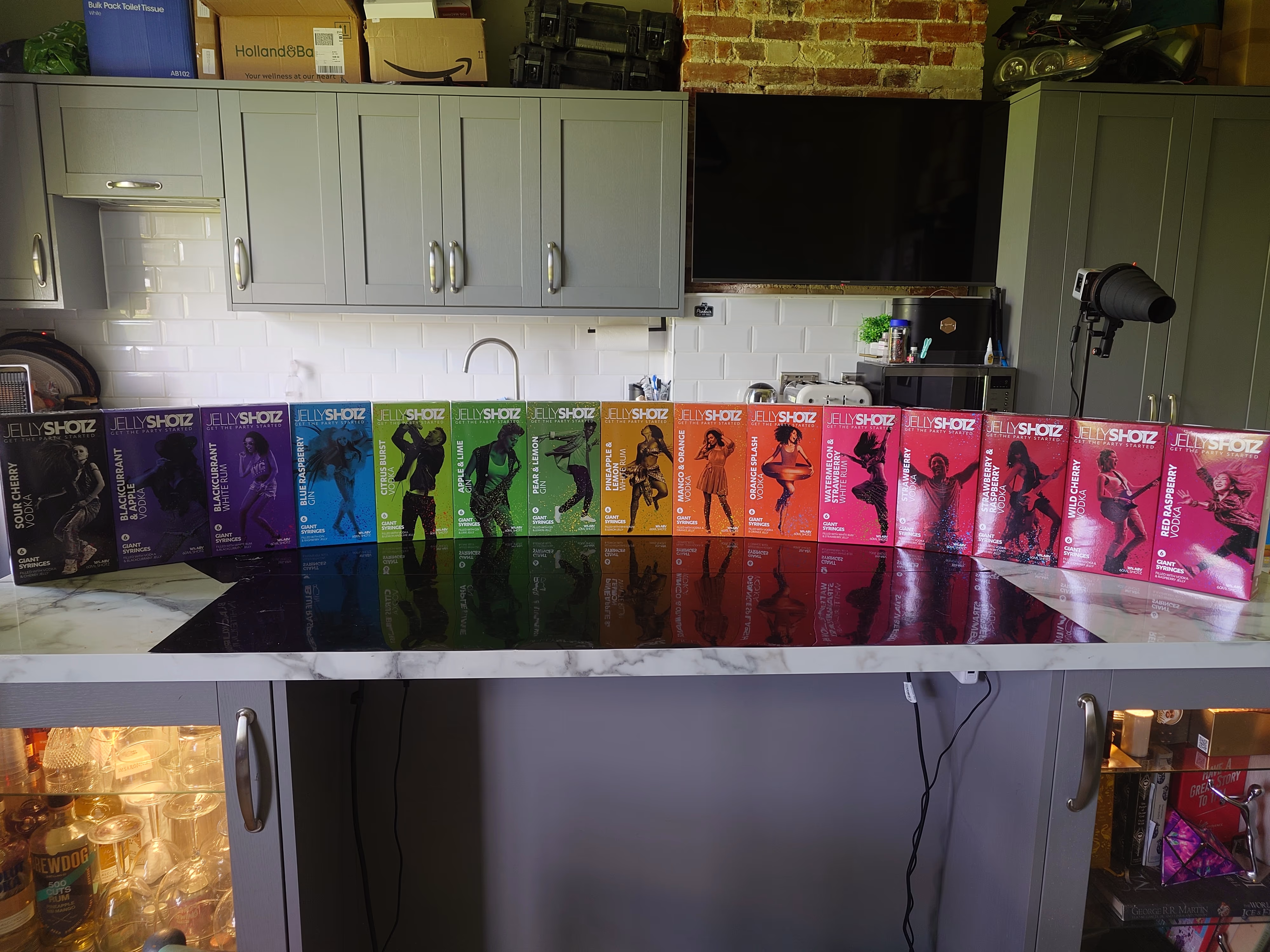
Products everywhere.
And Summer on the fridge.
This line-up gives a better sense of how much we had to work through. Each colour was another product to photograph, with its own packaging and variations.
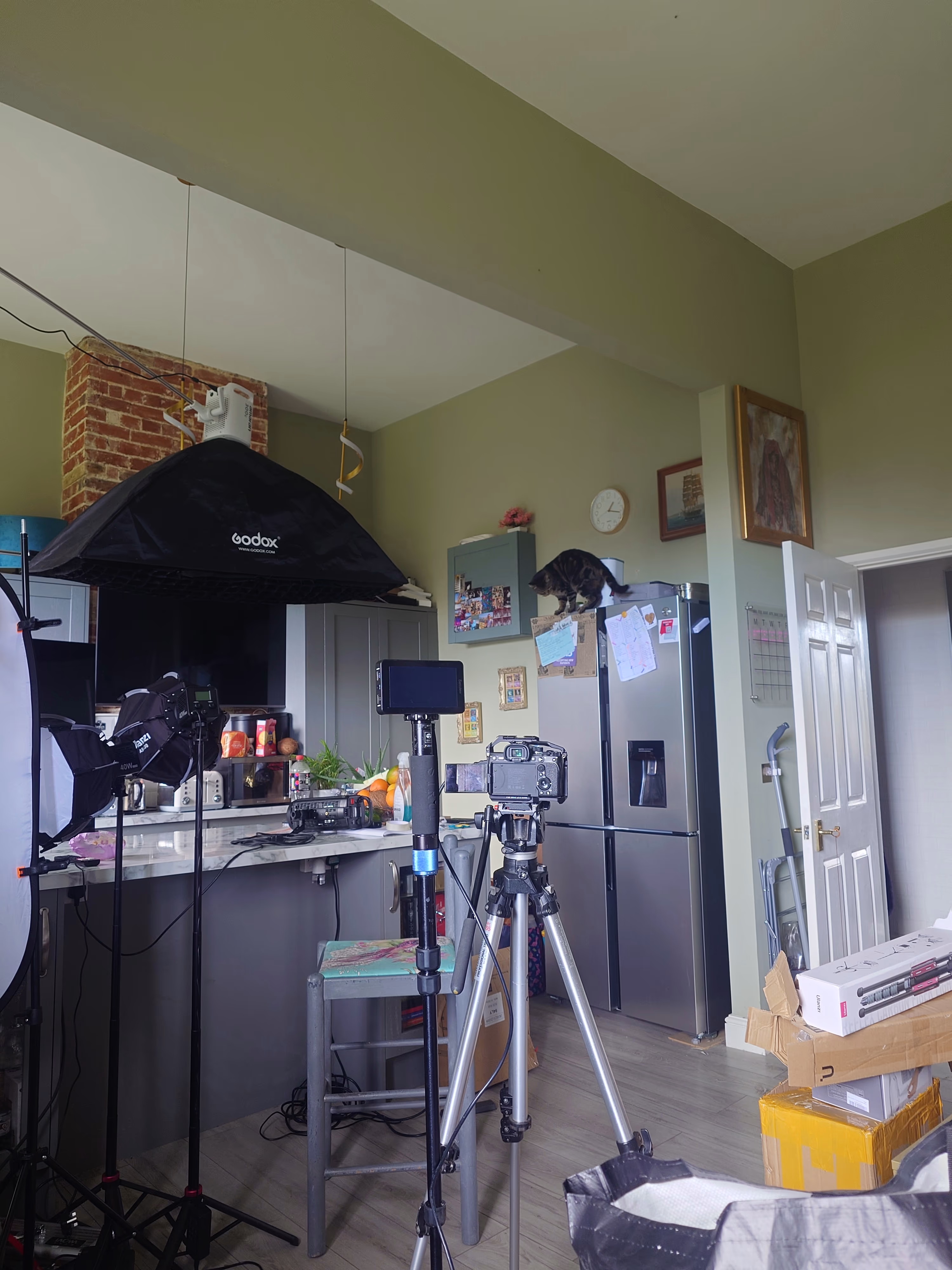
Summer also made an appearance, settling on top of the fridge while the shoot was going on. Apparently the kitchen had room for one more observer.
THE WORK BEYOND THE KITCHEN
A launch project.
A longer relationship.
Our work with Jellyshotz continued for more than a year, spanning the product ranges, social films, retail display content and events around the country. The kitchen shoot was one part of a much larger body of work.
Visit the Jellyshotz product photography, films and festival case study to explore the finished galleries and videos, including the helmet-mounted Jelly Cam we developed for the event coverage.
If you need product photography, a new set of films or content that works across a launch, tell us about the products and the deadline. That is where the production plan begins.