
Newborn Photoshoot: The Week-by-Week Timing Most Parents Get Wrong
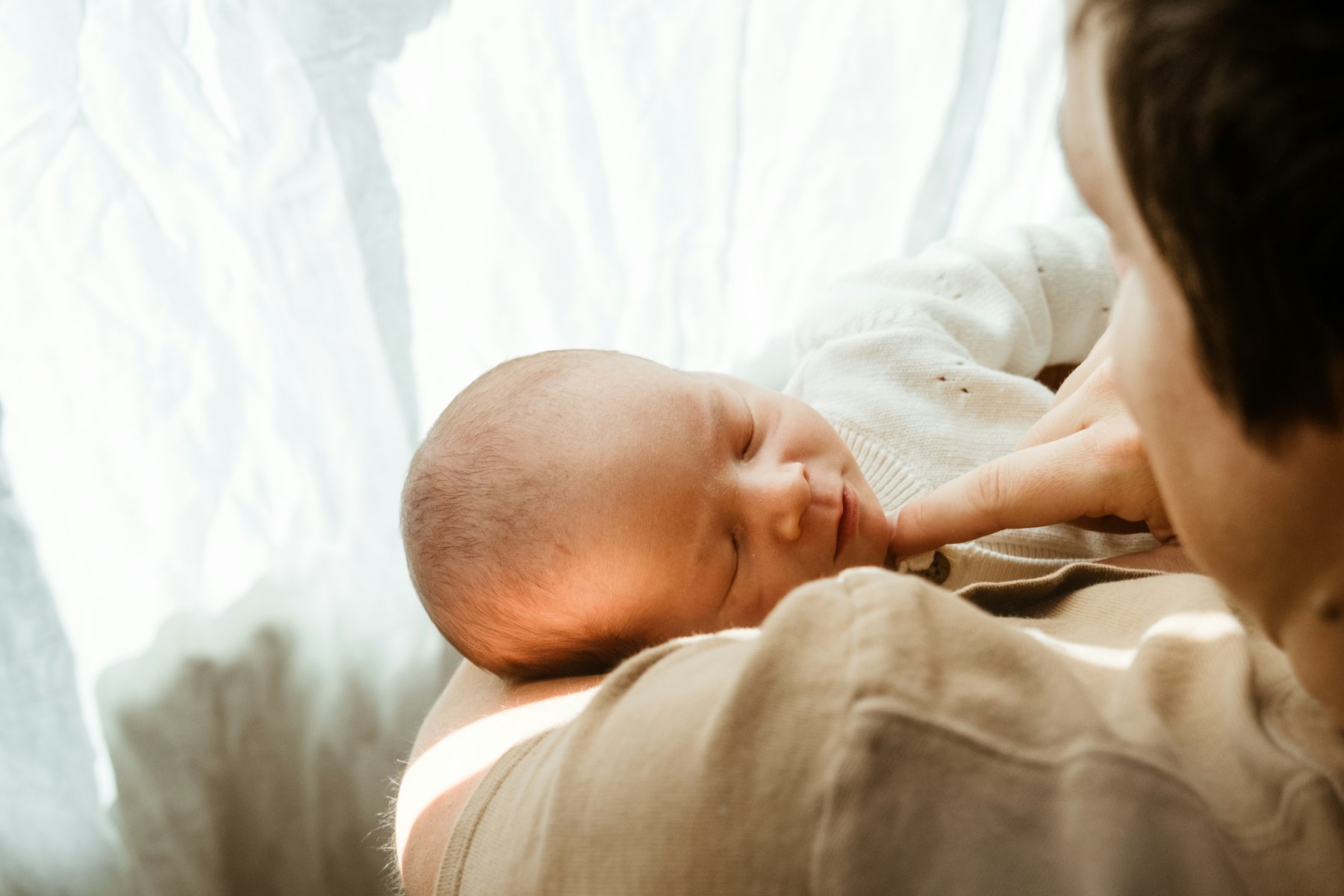
For a posed newborn photoshoot, most specialist photographers aim for somewhere between 5 and 14 days after birth, when babies are at their sleepiest and curl up most easily. Relaxed, natural “lifestyle” newborn photos are far more flexible and work well for the first couple of months. The mistake most parents make isn’t choosing the wrong week. It’s waiting until the baby arrives to book, by which point the ideal window is already closing.
Here’s how the timing works week by week, what changes as your baby grows, and how to plan a session that’s calm for everyone.
When is the best time for a newborn photoshoot?
It depends on the style of photos you want. There are two broad types of newborn session, and they suit different ages.
- Posed newborn sessions: the classic images of a sleeping baby curled on a blanket, wrapped, or tucked into a basket. These are easiest in roughly the first two weeks, because very young babies sleep deeply and are still comfortable in the curled position they had in the womb.
- Lifestyle newborn sessions: natural photos at home, with parents and siblings cuddling, feeding and getting on with life. Because the baby doesn’t need to sleep through careful posing, these work well at any point in the first couple of months.
Plenty of photographers will still do a posed session at three, four or even six weeks. It’s possible, but babies are more alert by then, so the session usually takes longer and you’ll get a different, more wide-awake set of images.
The newborn photoshoot timeline, week by week
Use this as a rough guide. Every baby (and every birth) is different, so treat it as a planning tool rather than a rulebook.
| When | What’s going on | Good for |
|---|---|---|
| During pregnancy | Your due date is known; the baby isn’t here yet | Booking. Many newborn photographers take a provisional booking around your due date and confirm the exact day after the birth |
| Days 0 to 4 | Feeding is being established, everyone is recovering and you may still be in hospital | Phone snaps and family visits. A full session is usually too much for parents this early |
| Days 5 to 14 | Babies sleep deeply and stay curled; the umbilical cord stump often drops off in this window | Posed newborn sessions. This is the sweet spot most specialists aim for |
| Weeks 3 to 4 | More awake time, sometimes the start of baby acne, a little less happy being curled up | Lifestyle sessions, or a posed session with extra time built in |
| Weeks 5 to 8 | Longer wakeful spells, more eye contact, early expressions | Lifestyle and family photos with eyes open |
| Around 3 months and beyond | Better head control, more smiles and reactions | “Milestone” sessions, such as tummy time and propped-up portraits |
Two things in that table are worth knowing. NHS guidance says the umbilical cord stump usually falls off around 5 to 15 days after birth, so if it’s still there on the day, a good photographer will simply pose around it. And according to the NHS, baby acne can appear any time up to about 6 weeks after birth and doesn’t need treatment. It’s harmless, but it’s one reason some parents prefer to shoot before it shows up.
The timing mistakes parents make most often
These are the planning slips that catch parents out most often.
- Booking after the birth. Newborn specialists only have so many slots in a fortnight. If you contact them when the baby is a week old, the posed window may already be full.
- Forgetting babies rarely arrive on time. Ask how the photographer handles early or late arrivals. A provisional booking that moves with the birth is the norm with specialists.
- Booking day 3 because it feels “safest”. Earlier isn’t automatically better. Parents need a few days to recover, especially after a difficult birth or a caesarean, and sessions can take a couple of hours or more.
- Waiting for the “perfect” moment. If your baby needed time in neonatal care, or life simply got in the way, don’t write the idea off. A lifestyle session at six weeks can be just as precious.
- Not allowing for feeds. Newborn sessions run on the baby’s schedule. Plan the day so you’re not rushing off to something else afterwards.
Posed or lifestyle: which newborn photoshoot suits you?
Neither is better; they just give you different memories. A quick way to decide:
- Choose posed if you love the soft, sleepy, studio look with wraps and neutral blankets, and you’re happy to spend a few hours letting a specialist settle your baby between poses.
- Choose lifestyle if you’d rather have photos of your real home, your real cuddles and the chaos of the first weeks, with little or no posing.
- Mix the two if you want a few posed shots of the baby alone plus natural family photos. Many photographers offer this, but ask how long it will take.
Think about where the photos will end up too. If you’re planning a big framed print or an album, ask to see full galleries from previous newborn shoots, not just the highlights on social media.
Newborn photoshoot safety: what a good photographer always does
Posed newborn photography looks effortless, but the best images are built carefully. Some of the most famous poses, such as the baby resting their chin on their hands, are usually made as composites: two or more photos taken with a hand supporting the baby, then blended in editing. The baby is never balanced unsupported.
When choosing a newborn photographer, ask:
- What newborn safety training have you done? Organisations such as the Baby & Newborn Photography Association (BANPAS) offer safety training for newborn photographers.
- Who spots the baby? Whenever a baby is in a prop or a raised position, someone (an assistant or a parent) should have a hand within reach.
- How do you keep the room warm and the baby comfortable? Newborns can’t regulate their temperature well, so expect a warm room and plenty of breaks.
- How do you handle hygiene? Clean wraps and blankets for every baby, washed hands, and no session if the photographer or a helper is unwell.
- Are you insured? Any professional photographer should be happy to confirm their insurance.
If a photographer brushes these questions off, keep looking. A calm, safe session also tends to produce better photos, because a comfortable baby sleeps more soundly.
How to prepare for the day
A little preparation makes the session far more relaxed.
- Feed close to the start time, or when the photographer suggests. A full, warm baby sleeps better.
- Dress the baby in something loose that comes off easily, so there are no marks from tight poppers or waistbands.
- Bring spare everything: nappies, wipes, muslins and a change of clothes for you as well as the baby.
- Keep your own outfits simple. Soft, plain colours work best for family shots, and comfortable clothes mean you can feed or settle the baby without fuss.
- Plan for siblings. Toddlers usually do best photographed at the start, then taken out for a walk or a snack while the baby is posed.
- Be kind to yourself. Nobody expects new parents to look rested. Photographers are used to stopping for feeds, changes and cups of tea.
Family photography with The Camera Guys
We’re based in Sudbury and Colchester and work across Suffolk, Essex, Cambridgeshire, Norfolk, Hertfordshire and London. Fully posed newborn work is a specialist area, so if that’s the style you want, choose a photographer with dedicated newborn safety training. For the family moments that come next, such as christenings, naming days and welcome parties, take a look at our private event photography or ask about a private celebration film. If you’d love to put your new arrival’s photos next to old baby pictures of their parents or grandparents, our photo restoration service can bring faded prints back to life. See our pricing or get in touch.
Frequently asked questions
How old should a baby be for a newborn photoshoot?
For posed sleepy shots, most specialists aim for about 5 to 14 days old. Lifestyle newborn photos at home work well at any point in the first couple of months.
When should I book a newborn photoshoot?
During pregnancy. Many newborn photographers take a provisional booking around your due date, then confirm the exact day once the baby has arrived.
Is it too late for newborn photos at 4 weeks?
Not at all. Some photographers still offer posed sessions at this age, though babies are more awake and it can take longer. A lifestyle session is a great option too.
How long does a newborn photoshoot take?
It varies by photographer and style. Posed sessions often take a few hours to allow for feeds and settling, while lifestyle sessions are usually shorter. Ask when you book.
Are newborn photoshoots safe?
They are when done by a trained photographer who supports the baby at all times, uses composites for tricky poses, keeps the room warm and stops whenever the baby needs a break.