Write a separate mini-brief for every location
Give each stop its own purpose, contributors, messages, shots and finished outputs. A combined day still contains distinct productions. If the second location is described only as “get some footage while you are there”, it will usually receive whatever time remains rather than the coverage it needs.
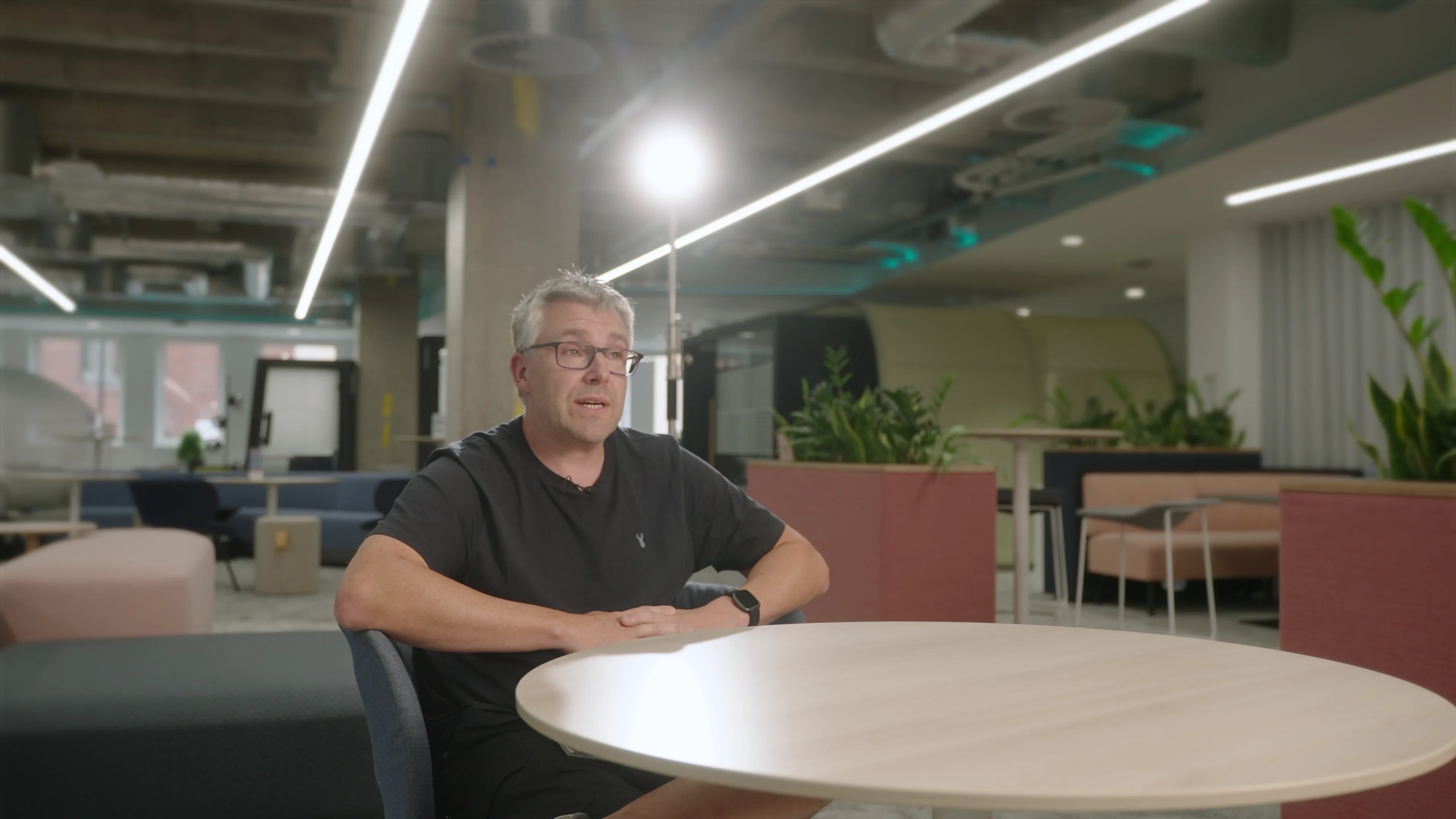
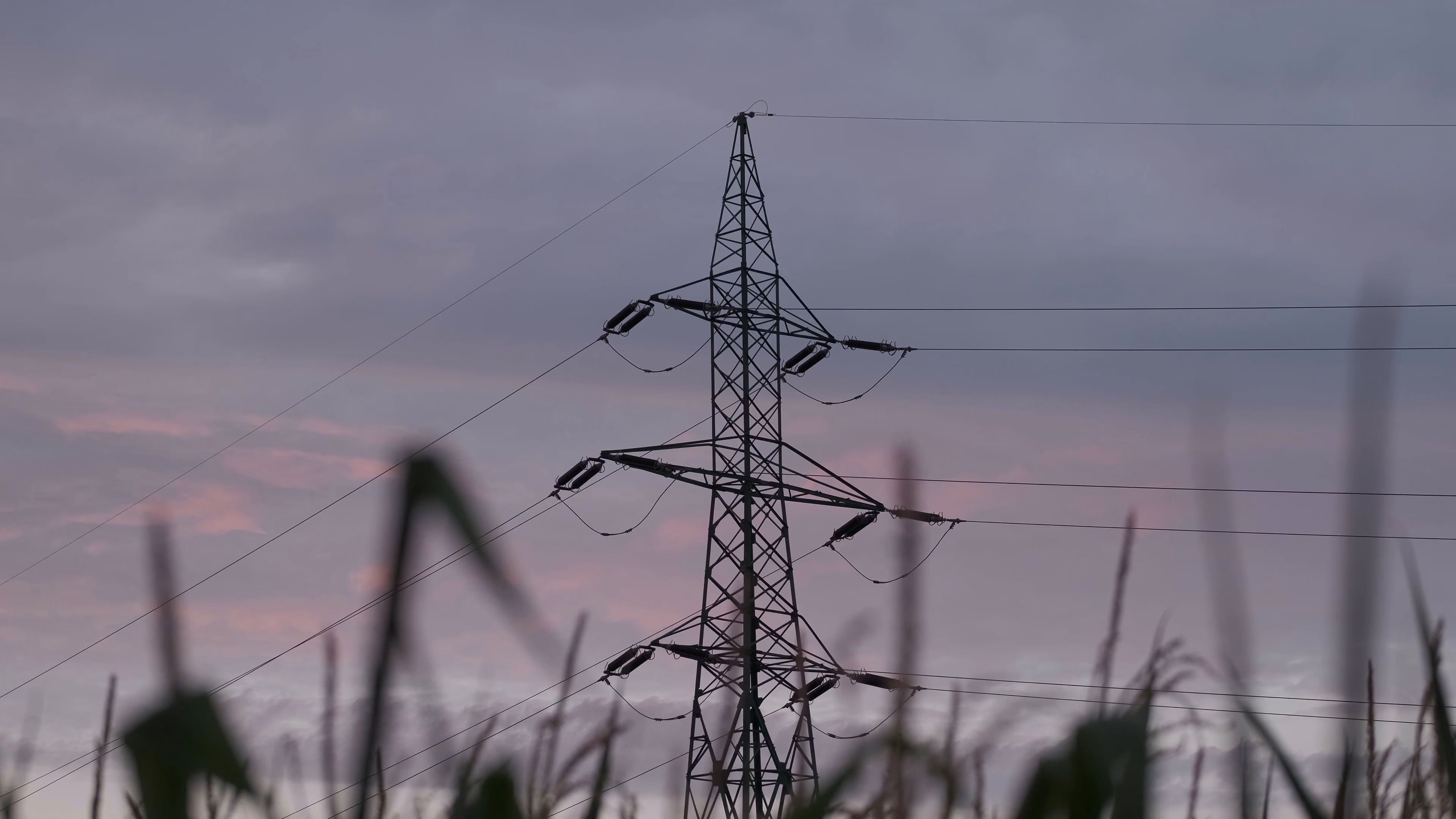
At Tillingdown, Enock Semakula spoke from an engineering perspective, while Sarah Lightfoot explained the development work. Together their updates covered the site’s phases, plans and longer-term direction. The later South Essex Wildlife Hospital visit had a separate partnership story and its own visual priorities.
Budget the fixed time before the filming time
A two-hour interview stop does not mean two hours of recorded answers. Arrival, signing in, safety induction, unloading, choosing a background, setting lights, fitting microphones, rehearsing, packing and loading all occupy the schedule.
List those fixed tasks first. Add realistic travel based on the time of day, parking and the distance from the vehicle to the filming position. Then protect a buffer. The best multi-location plan has spare time on paper because real locations rarely behave exactly as expected.
Use one crew and equipment plan across the day
Efficiency comes from avoiding unnecessary changes. If one videographer can deliver both briefs, keep the camera, sound and support kit consistent. Pack equipment in the order it will be needed and separate anything unique to the second stop so it is not buried after the first pack-down.
One operator was appropriate for the Root-Power schedule because the Tillingdown pieces were controlled presentations and the second project could follow afterwards. Where simultaneous action, complex access or several contributors must be covered at once, adding crew may be the more economical decision.
Prepare scripts before the travel day
Technical project updates often need precise terminology. Finalising the wording in advance lets contributors concentrate on delivery rather than remembering every sentence. It also lets the production team estimate duration and identify passages that sound natural on paper but feel difficult aloud.
A teleprompter supported Enock and Sarah at Tillingdown. It helped maintain the agreed structure while allowing the camera setup to remain compact. Our guide to using a teleprompter on camera explains when prompting helps and when a guided interview may feel more appropriate.
Separate reusable overhead from location-specific work
Travel planning, equipment preparation and crew booking can serve the full day. Location permissions, risk information, contributor coordination and site-specific shot lists cannot. Treating everything as shared preparation creates gaps that only appear when the camera arrives.
The commercial benefit of a combined day is avoiding repeated call-outs and making fuller use of booked production time. It should not depend on skipping a recce question, reducing sound checks or giving contributors one rushed take.
Plan outputs for internal and public audiences
The same filming can support different viewers, but the edit may need different emphasis. An internal audience may understand project terminology and want operational detail. Public communications may need more context, a shorter opening and clearer explanation of why the work matters.
Agree whether one master film must serve both groups or whether short and extended versions are required. Root-Power uses its updates internally and publicly, so the production gathered clear speaker-led explanations alongside enough site context to make the message understandable beyond the immediate project team.
Know when two locations should not share a day
Do not combine shoots when the schedule depends on best-case travel, when daylight requirements conflict, when a delay at the first site would lose an unrepeatable event at the second, or when the equipment change is so extensive that little filming time remains.
Access rules can be decisive on infrastructure projects. Separate inductions, restricted working windows, escorts and weather-dependent operations should be confirmed before promising a second location. Good corporate video production planning protects the deliverable first and finds savings within that constraint.
Use return visits to show genuine progress
A development story is stronger when the camera returns at meaningful stages. Establish consistent reference views during the first visit, record the date and phase accurately, and note shots that should be repeated later. Matching viewpoints can reveal change without relying on explanatory graphics.
Root-Power intends to commission another Tillingdown video once the site is complete. The first visit therefore works as a useful communication asset now and as the beginning of a longer visual record.
A multi-location filming-day checklist
- Define each film independently. Confirm its audience, message, contributors and outputs.
- Compare production needs. Group locations that can share crew and equipment.
- Confirm access. Include inductions, parking, escorts, permissions and opening windows.
- Count setup and pack-down. Do not treat the booking as continuous recording time.
- Protect travel and buffer. Build the schedule around realistic movement between sites.
- Prepare contributors. Finalise scripts, prompts and availability before the day.
- Set a stop time. Know when the first location must wrap to protect the second.
See the finished approach in our Root-Power Tillingdown video case study. If several sites need filming, send us the locations and required outputs and we will assess whether one day is practical.