Wedding Photography Trends Couples Are Choosing
A wedding gallery does not need one visual personality from beginning to end.
The quiet photograph of somebody getting ready does not have to look like the dancefloor at midnight. A carefully composed couple portrait does not somehow cancel out the candid photographs around it. A few frames with direct flash can sit perfectly well beside soft daylight, black and white and photographs where the movement is allowed to blur.
That mixture is one of the more interesting things happening in wedding photography in 2026.
The Bridebook UK Wedding Report 2026, based on data from more than 7,000 UK couples, still identifies natural and candid imagery as the most popular photography style. Around that foundation, couples are also seeing — and choosing — more editorial portraiture, deliberate flash, analogue formats and expressive movement.
The important part is not collecting every current look.
It is knowing which moments benefit from which approach.
Start with how you want the wedding to feel
Before discussing film stocks, flash or shutter speeds, picture the day itself.
Do you want to spend twenty minutes building a set of carefully directed portraits, or would you rather be back with your guests after five?
Are you planning a packed dancefloor where bold flash photographs would make sense?
Is your venue visually important enough that you want wider, more composed frames?
Would you enjoy a few deliberately imperfect film photographs, or would the uncertainty bother you?
Those choices affect the experience as well as the gallery.
Our guide to documentary versus editorial wedding photography goes into the two approaches in more detail, but they are not mutually exclusive.
A wedding can be mostly observed and still make space for ten minutes of deliberate portraiture.
In fact, that combination is increasingly useful.
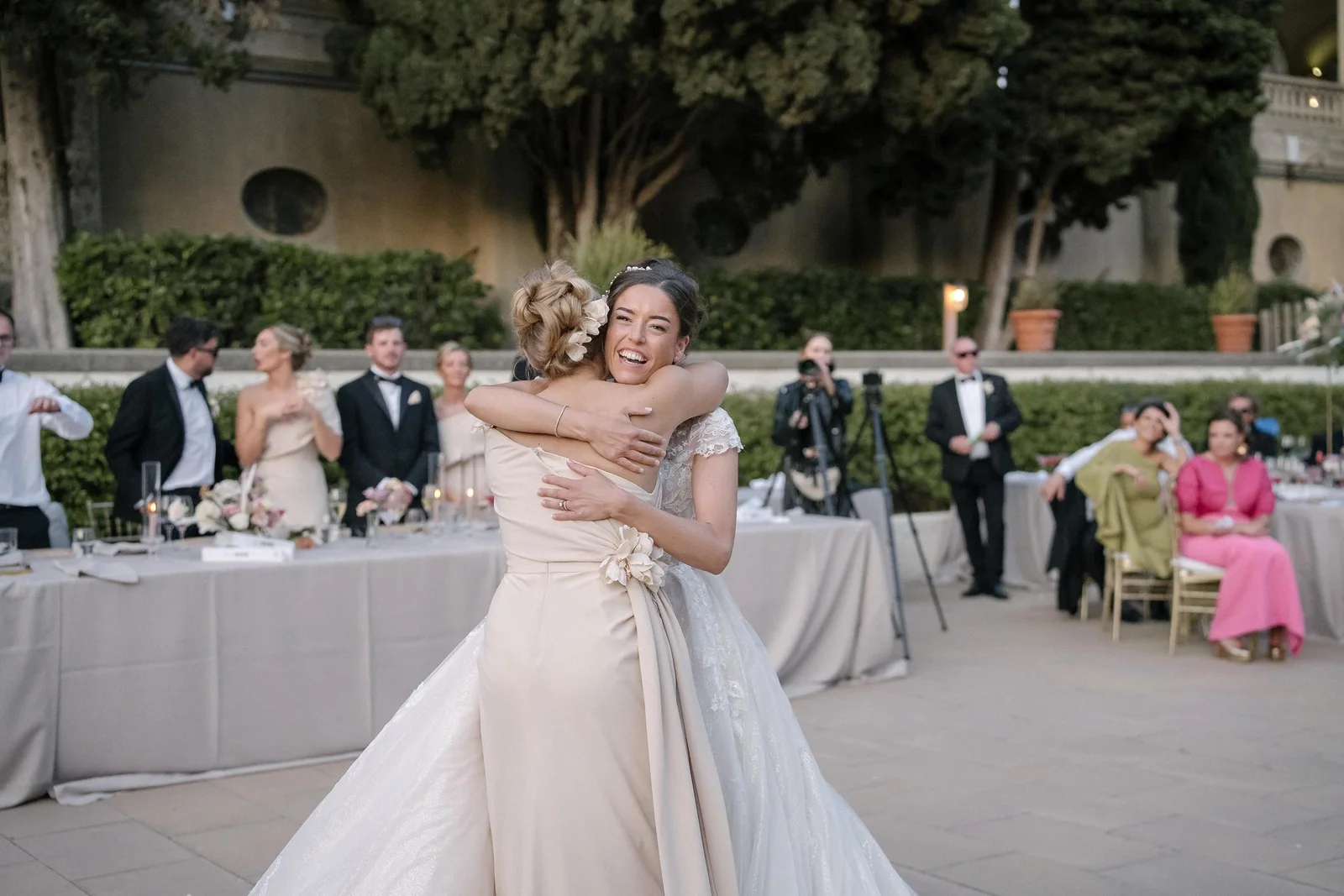
Candid photography is less of a trend than a foundation
Natural photography continues to appear in trend reports because couples continue to ask for it.
But “candid” is a slightly misleading word if it suggests the photographer is simply wandering around pressing the shutter whenever something happens.
Good documentary coverage is active.
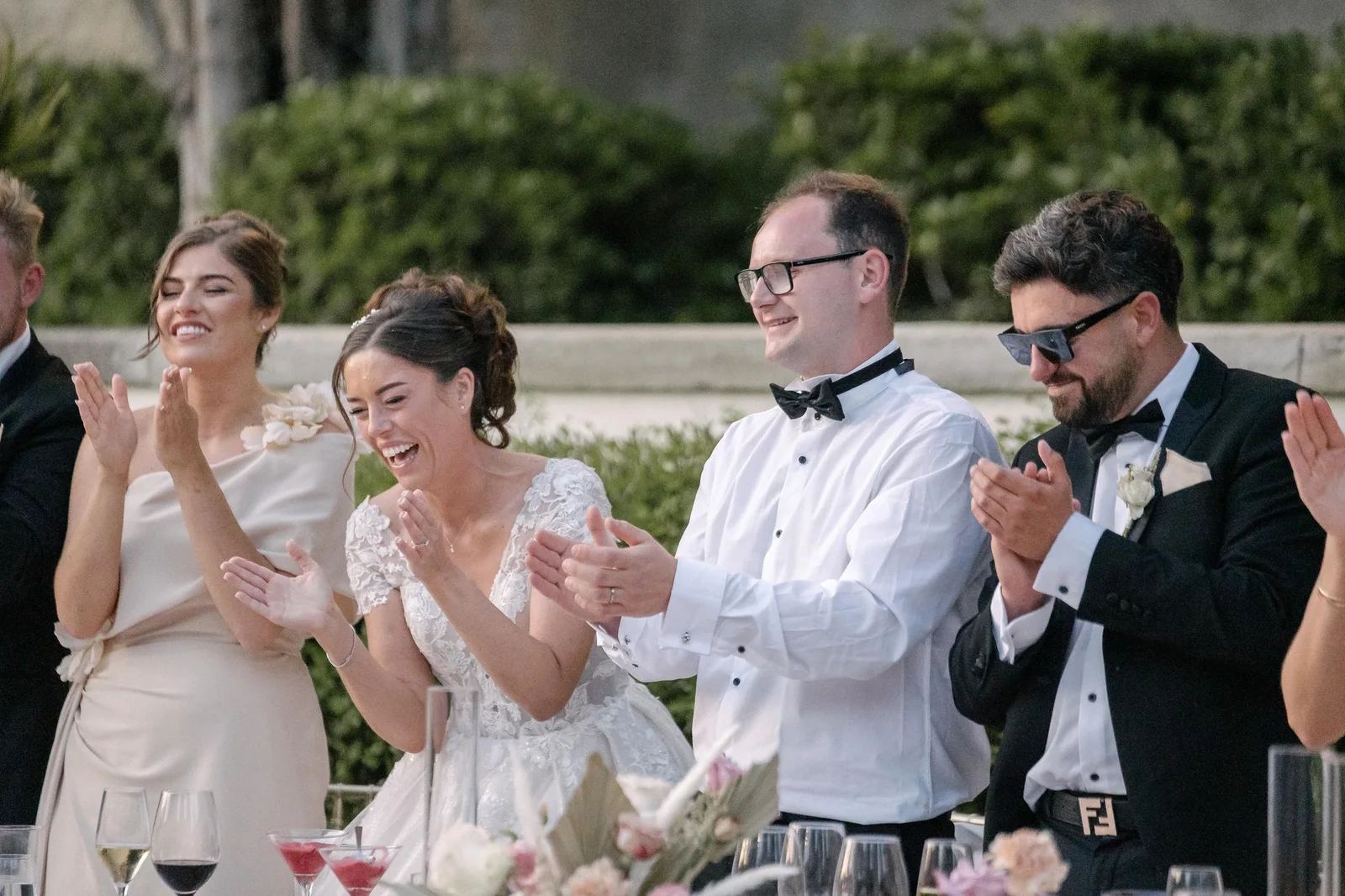
The photographer is watching relationships, anticipating reactions, choosing where to stand and deciding which background will still make sense when somebody laughs, hugs or turns around unexpectedly.
What changes is the level of interference.
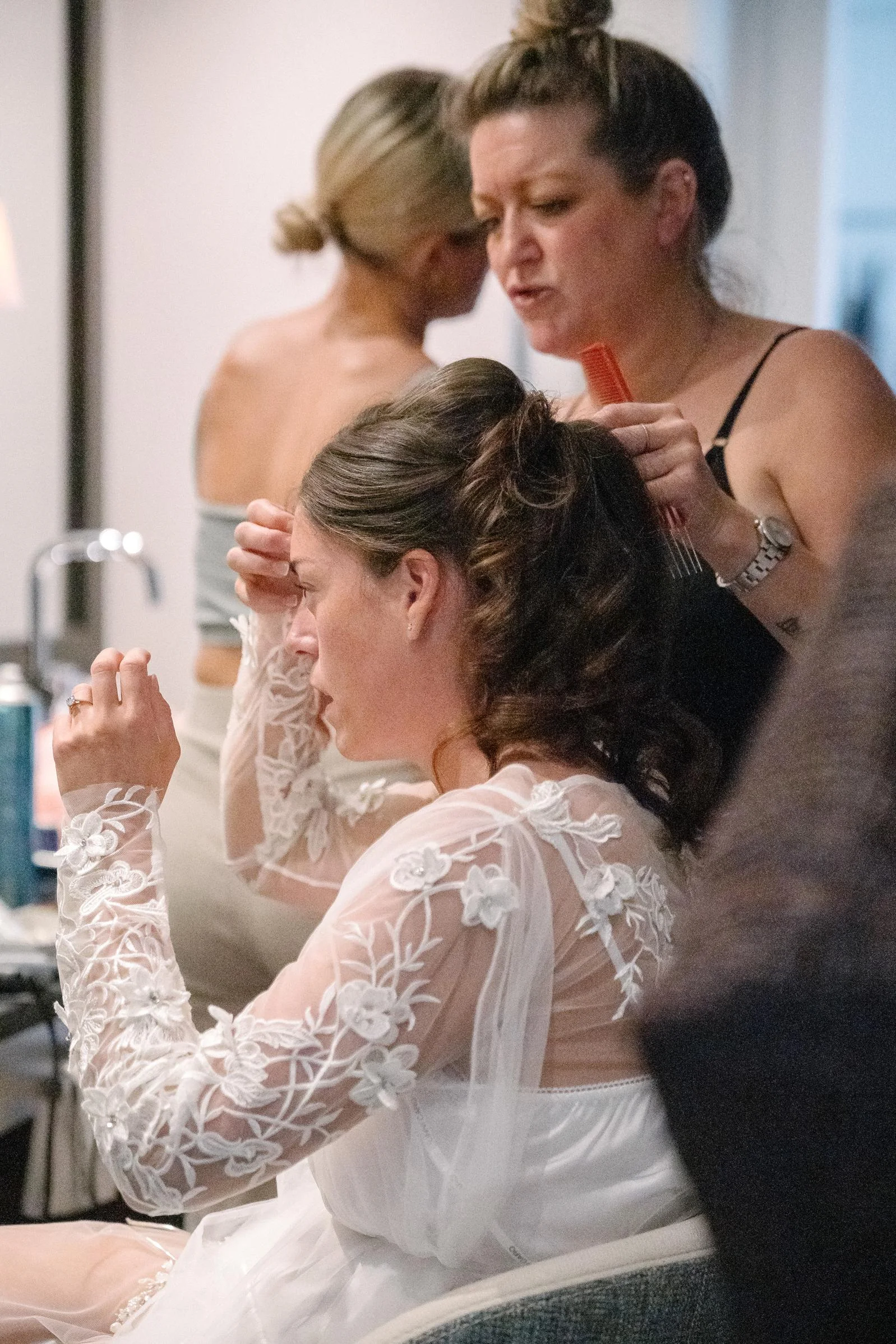
Instead of repeatedly stopping the day to manufacture photographs, the photographer lets much of the wedding happen and works around it.
That suits moments such as:
- preparations where several conversations are happening at once;
- reactions during the ceremony;
- hugs immediately afterwards;
- children behaving like children;
- guests talking over drinks;
- laughter during speeches;
- the less predictable parts of the dancefloor.
If that is the sort of photography you are drawn to, our guide to why candid wedding photography often feels best explains why access, timing and people matter more than a long list of supposedly spontaneous shots.
There is still room for direction.
Family groups usually need organising. Couple portraits benefit from knowing where the good light is. A dress, suit or veil may need a tiny adjustment.
Natural photography does not require the photographer to pretend they are not there.
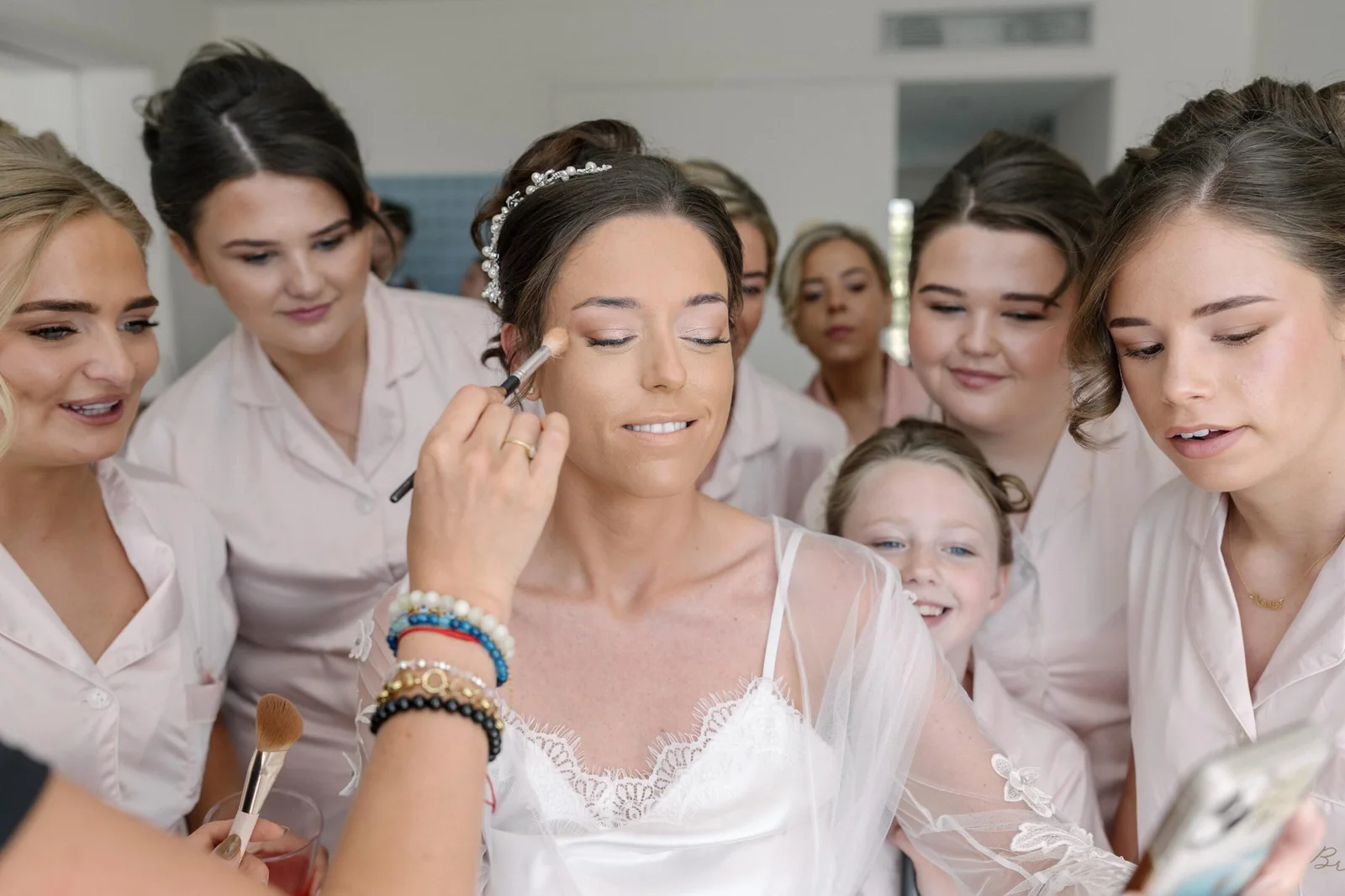
Then make a few photographs that could never happen by accident
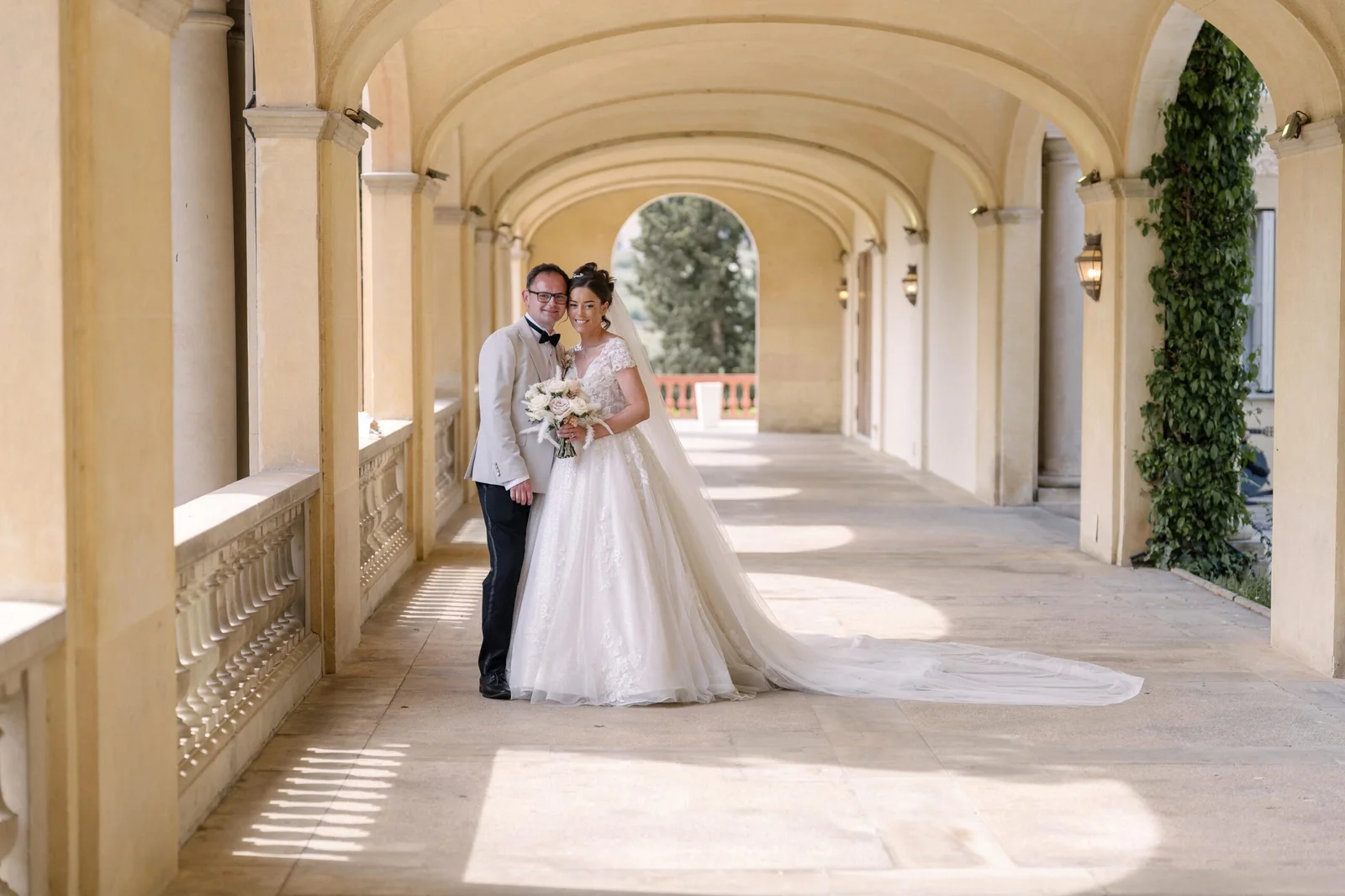
At the other end of the spectrum, editorial wedding photography has become increasingly visible.
This is the part of a gallery where composition becomes more deliberate.
The photographer may choose a specific location, refine the couple's position, work carefully with architecture or light and create a photograph that feels closer to a magazine portrait than an observed moment.
That can look fantastic.
The mistake is assuming an entire wedding has to be photographed that way because you liked three editorial images on Instagram.
A polished portrait can take time.
The venue may need to be cleared. A light may need to be positioned. Clothing might need adjusting. The photographer may need to wait for guests to move through a background.
If you love that kind of photograph, make room for it in the timetable rather than expecting it to appear between two scheduled events in 45 seconds.
The interesting 2026 combination is not candid or editorial.
It is often:
Let most of the wedding breathe, then deliberately create a small number of photographs worth slowing down for.
That gives the gallery contrast without turning the day into a photoshoot.
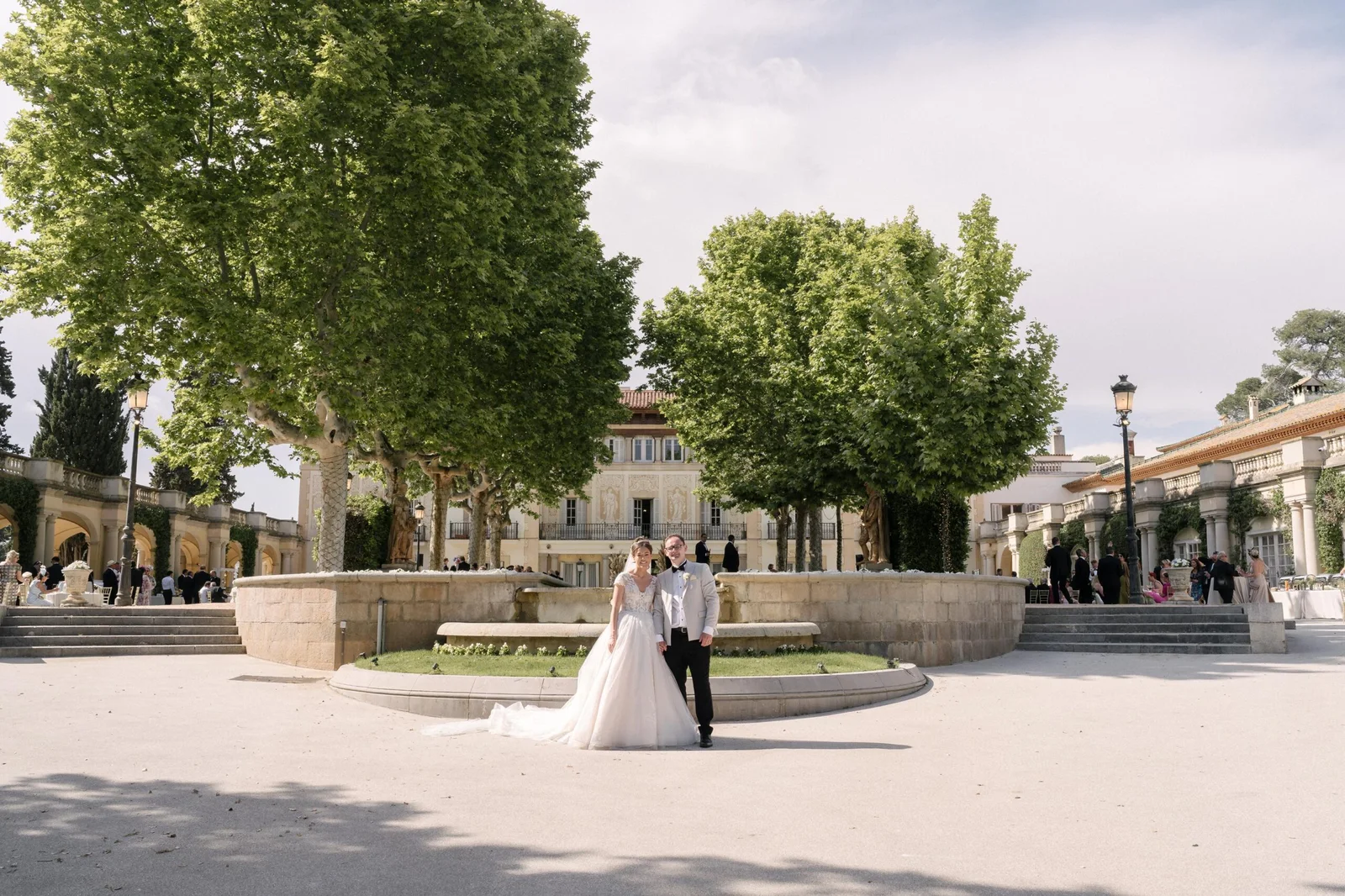
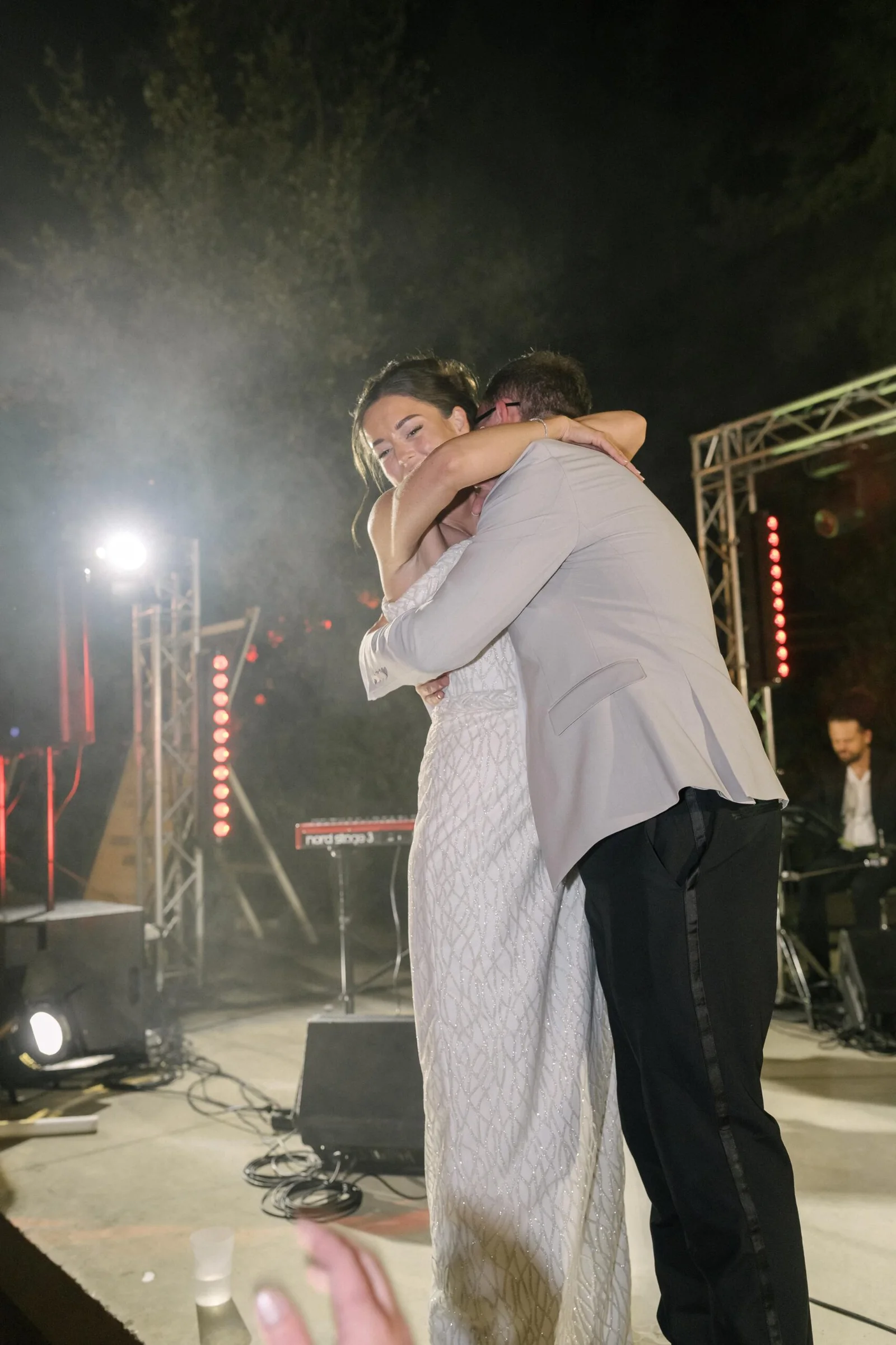
The reception can have a completely different visual language
A softly lit ceremony and a crowded dancefloor are not the same photographic problem.
They do not have to look the same.
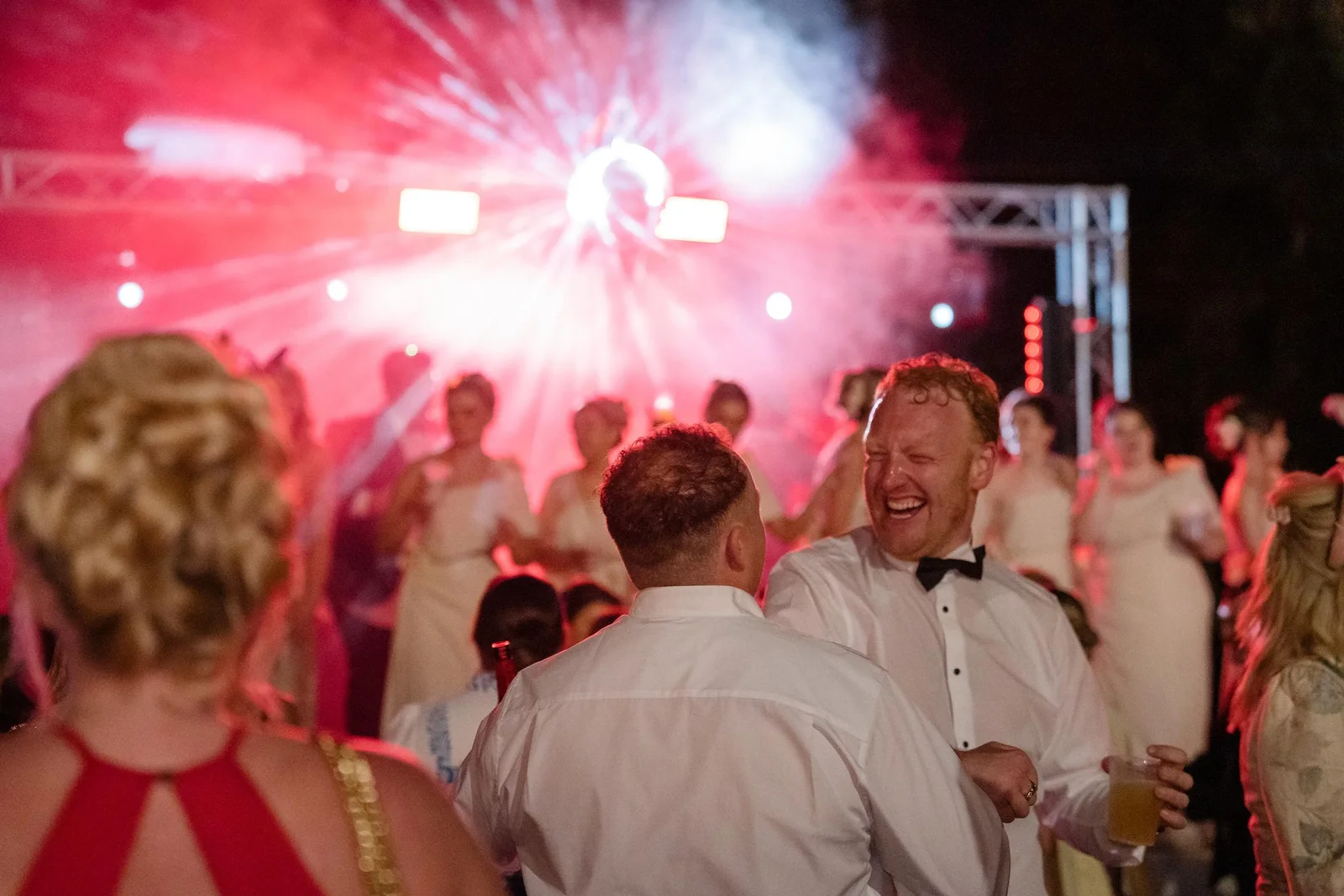
Direct on-camera flash is one of the most visible current wedding-photography looks. It creates a bright foreground, harder shadow and an immediate, slightly paparazzi or nightlife feeling.
Current 2026 industry coverage continues to identify direct flash as a significant reception style, usually with the important qualification that it works best with restraint rather than becoming the treatment for every photograph.
That makes sense.
At 2pm, a hard direct flash may fight against the atmosphere of a quiet ceremony.
At 10.30pm, with people dancing, moving between tables and leaning into the camera, that same visual character can feel completely appropriate.
It can be particularly effective for:
- dancefloor photographs;
- close groups of friends;
- entrances;
- evening portraits;
- guests reacting directly to the camera;
- moments where the slight chaos is part of the picture.
If you like the look, ask to see a whole wedding, not only a reel of the photographer's best flash photographs.
You need to know what the rest of the day looks like too.
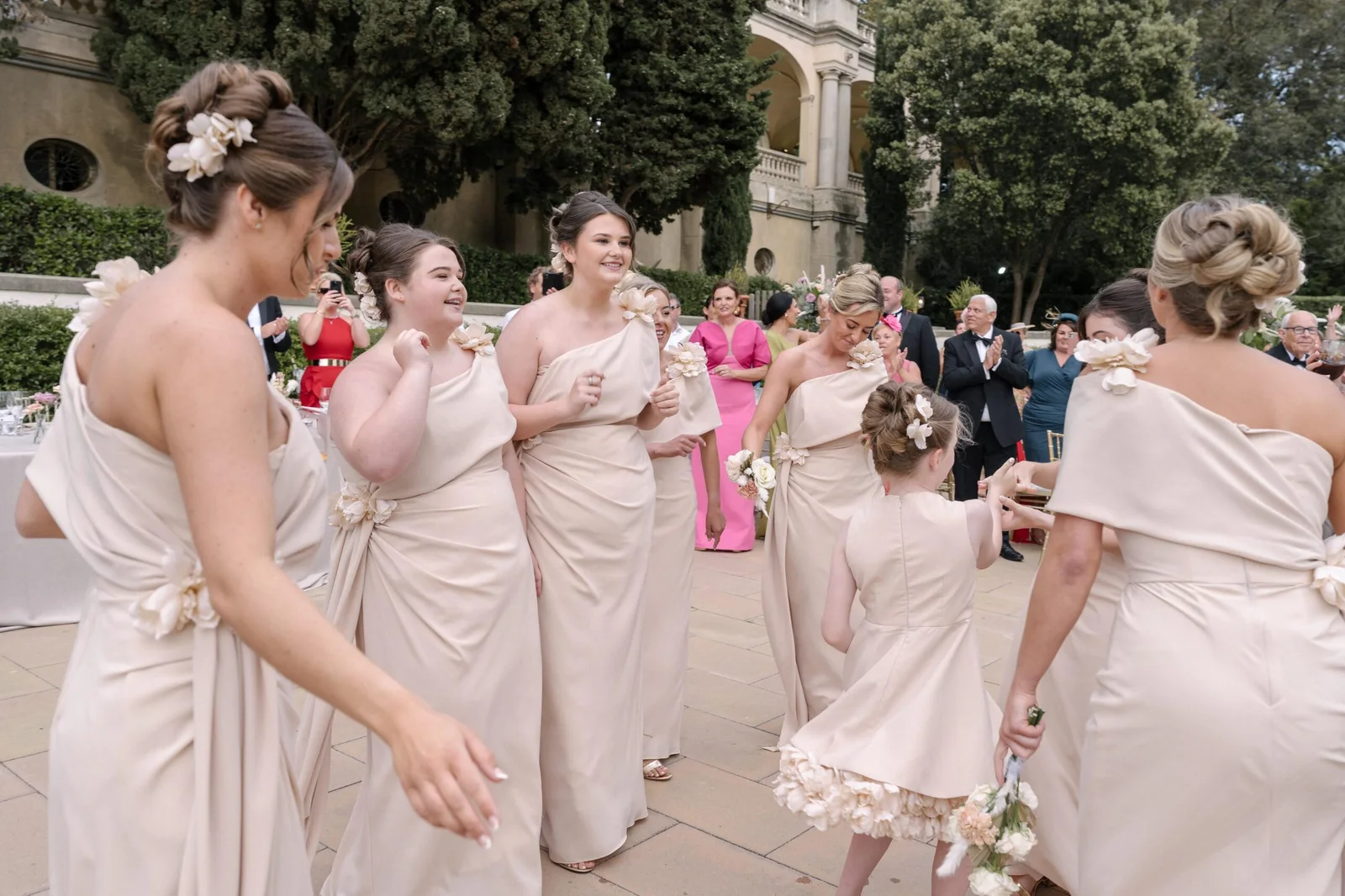
Not every blurred photograph is a mistake
Another look appearing frequently in current galleries is intentional motion blur.
The technical idea is simple: instead of using a shutter speed that freezes every movement, the photographer allows some movement to register during the exposure.
A dancer may remain recognisable while the room streaks around them. A moving dress can retain its shape but gain a sense of motion. Lights can stretch through the frame.
Used well, it can make an image feel much closer to the experience of being in a busy room than an entirely frozen photograph.
Used badly, it is just a blurry photograph.
That distinction matters.
A gallery still needs sharp photographs of important people, expressions and moments. Motion blur works because it interrupts that clarity occasionally.
It should be expressive, not an excuse for missing focus.
This is a good example of why trend labels are less useful than complete galleries. Two photographers can both describe their work as “documentary with motion”, while one may deliver a handful of expressive frames and the other may use the effect throughout the reception.
Look at the balance.
Film is two different decisions
“Film photography” can mean at least two things.
One is actual analogue photography: rolls of 35mm or medium-format film, exposed at the wedding, developed and scanned afterwards.
The other is digital photography edited with a film-influenced finish: grain, softer contrast, warmer colour, muted highlights or other characteristics associated with analogue photographs.
They are not the same product.
Real film introduces physical stock, a fixed number of frames, development and scanning. It also brings genuine unpredictability and a different shooting rhythm.
A film-inspired digital edit changes the appearance without changing the capture process.
Neither is automatically more authentic.
What matters is knowing which one you are buying.
If analogue photographs are important to you, ask:
- Is actual film included or available as an extra?
- Which parts of the day are normally photographed on film?
- Are the film photographs delivered alongside the digital gallery?
- Are development and scanning included?
- What happens if a roll is damaged or does not expose as expected?
- Will the photographer still cover important moments digitally?
Film works beautifully as part of a mixed gallery when its limitations are understood.
It is less useful when couples assume a preset and a physical negative are interchangeable because both have been described as “film style”.
Black and white works best when it has a reason
Black-and-white wedding photography has existed far longer than any current trend cycle.
What changes is how it is used.
Removing colour can simplify a complicated frame and pull attention towards expression, gesture, light and shape. It can be particularly effective where mixed artificial lighting would otherwise dominate the photograph.
But converting every image to monochrome does not automatically make a gallery timeless.
Colour can carry information too.
Flowers, clothing, décor, cultural details, lighting and the venue itself may all matter.
A strong gallery uses black and white where the image benefits from it rather than supplying a monochrome duplicate of every photograph simply to increase the file count.
When you review a photographer's work, look at why the black-and-white frames work.
If you would prefer important details to remain available in colour, say so before the wedding.
Guests are creating another layer of the record
Disposable cameras, Instax prints, shared phone albums and dedicated wedding content creators have made the professional gallery only one of several visual records couples may receive.
That is not necessarily competition.
A guest's slightly wonky phone photograph may matter because of who took it.
A disposable camera can show a table after the photographer has moved elsewhere.
An instant print can become part of the evening itself rather than something delivered afterwards.
The professional photographer has a different responsibility: reliable coverage of the moments, people and groups that should not depend on chance.
You can have both.
In fact, there is something appealing about allowing guest photographs to stay imperfect rather than expecting them to imitate professional coverage.
The same principle applies if you are also booking video. Photography and filmmaking should each be given the space to do their own job. Our photography-side guide to booking wedding photography and videography together explains what to check when both services are working around the same moments.
Faster does not automatically mean better — but previews are useful
Phones have changed the emotional timeline of a wedding.
By breakfast the following morning, dozens of guest photographs may already be in WhatsApp groups and on social media.
The professionally edited gallery quite reasonably takes longer.
That gap has made preview galleries increasingly useful.
A small selection can give the couple something polished to share while the photographer continues the slower job of selecting, colour-correcting and finishing the complete wedding.
If fast previews matter to you, make them a real package question:
How many preview images are delivered?
When are they normally sent?
Are they fully edited?
Does this change the delivery timetable for the main gallery?
Do not assume “sneak peeks” means the same thing with every photographer.
The wider principle applies when choosing a wedding photographer too: compare actual deliverables and complete work, not just labels.
A trend can change your timetable
This is the part that is easy to miss while saving photographs on Pinterest.
Some visual choices require almost no extra time.
Others do.
A few direct-flash frames during the reception can happen while the reception is already happening.
A carefully lit editorial night portrait may require the couple to leave the room, walk to another part of the venue and spend time setting the photograph up.
Film may affect how selectively a photographer shoots.
A large formal list can consume the time that would otherwise produce candid guest photographs.
Two preparation locations may create a genuine case for having two wedding photographers.
And an enormous inspiration-board shot list can make documentary photography much harder because the photographer spends the day trying to reproduce somebody else's moments.
If you want to protect particular people and details without programming the whole day, use a short, useful wedding-photography shot list instead.
The best time to discuss all of this is before the final timeline is fixed.
Try the ten-year test
Wedding photography trends are fun.
They give photographers new references, revive old techniques and help couples describe things they may not have had words for before.
But your gallery will outlive the trend report.
Before making a current look a major part of the brief, ask:
Would we still want this if nobody called it fashionable?
Then ask a few more useful questions.
Would we enjoy the process needed to make it?
Does it suit our venue and time of day?
Does the photographer use it well across complete weddings?
Will the gallery still contain clear photographs of the people who matter?
Are we choosing an effect because we genuinely like it, or because we keep seeing it?
That does not mean choosing only “timeless” photography.
Timeless is itself a style label.
If you love direct flash, use direct flash. If you want real film, have real film. If a blurred dancefloor photograph feels more like you than a technically perfect one, brilliant.
Just choose it because you want the picture, not because a 2026 trend list told you to collect it.
Build a gallery with range, not a trend checklist
A wedding can begin quietly and end loudly.
The photography can do the same.
Candid coverage can carry the story. A short editorial session can create a handful of deliberate portraits. Film can add a different texture. Direct flash can change the feel of the evening. Motion can be allowed into the frame when the room becomes energetic.
None of those choices has to dominate the wedding.
The strongest galleries usually feel coherent not because every photograph was made the same way, but because the photographer understood when to observe, when to direct and when to change the visual language.
Start there.
Then use the trends you actually like.
You can continue with our guides to documentary and editorial wedding photography, choosing a wedding photographer and planning a sensible wedding shot list. You can also explore The Camera Guys' photography work or get in touch about photography and video for the same wedding.