Start with the question the address cannot answer
A buyer can find an address on a map. A film can introduce the feel of its surroundings: the route through a village, the activity on a high street or the relationship between a garden and the countryside beyond it. Those details help explain what the interior photographs cannot.
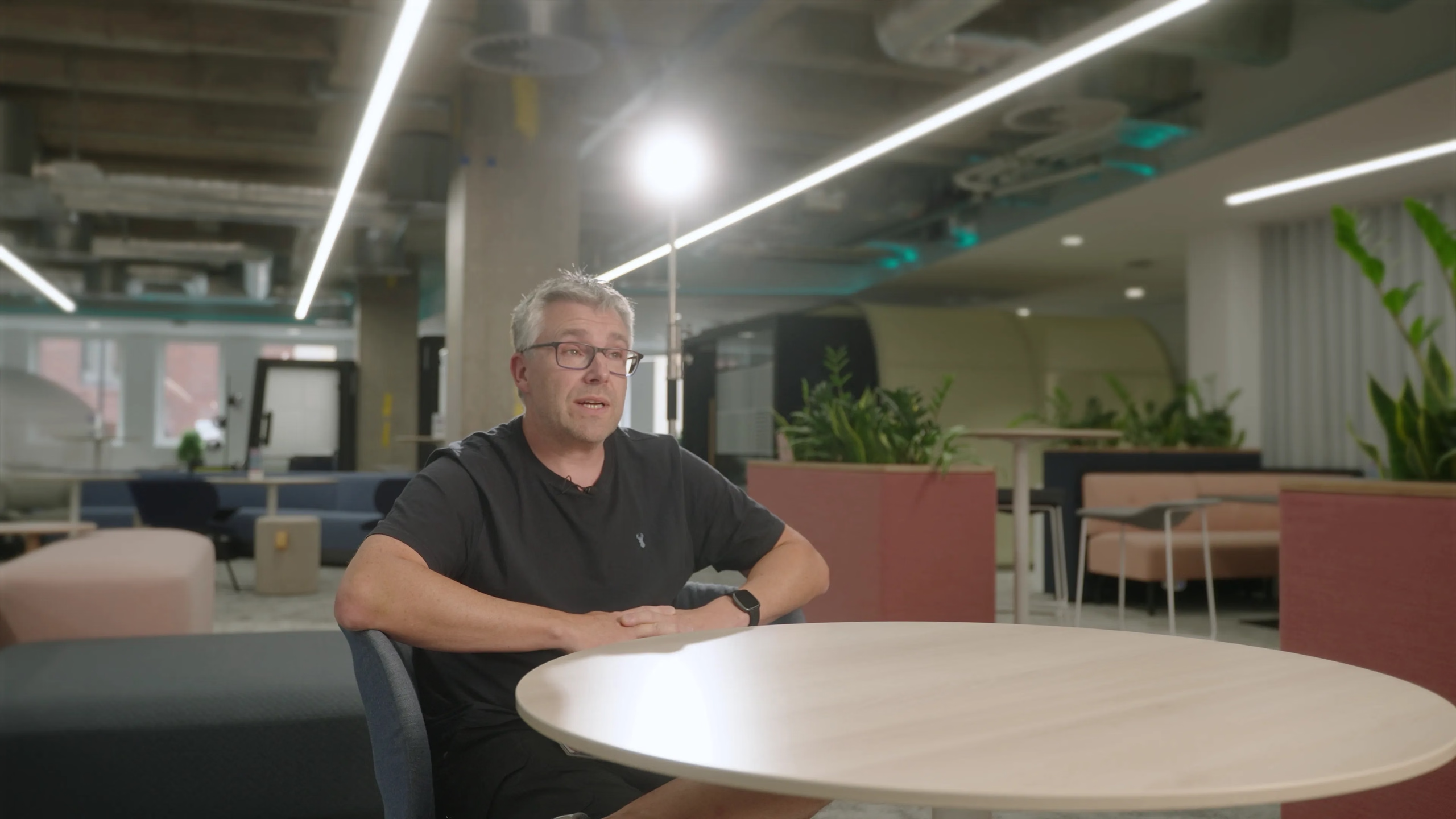
Our property film and photography work for Edd Callegari followed that idea across several projects. Edd spoke to camera, introduced the local area and then guided viewers towards the property. We filmed and edited the tours, with drone coverage and still photography included in the work.
The planning lesson is to identify a few meaningful location details early. What would someone considering this home want to understand about the area? That answer should influence the shot list before filming begins.
Give local claims something visible to connect with
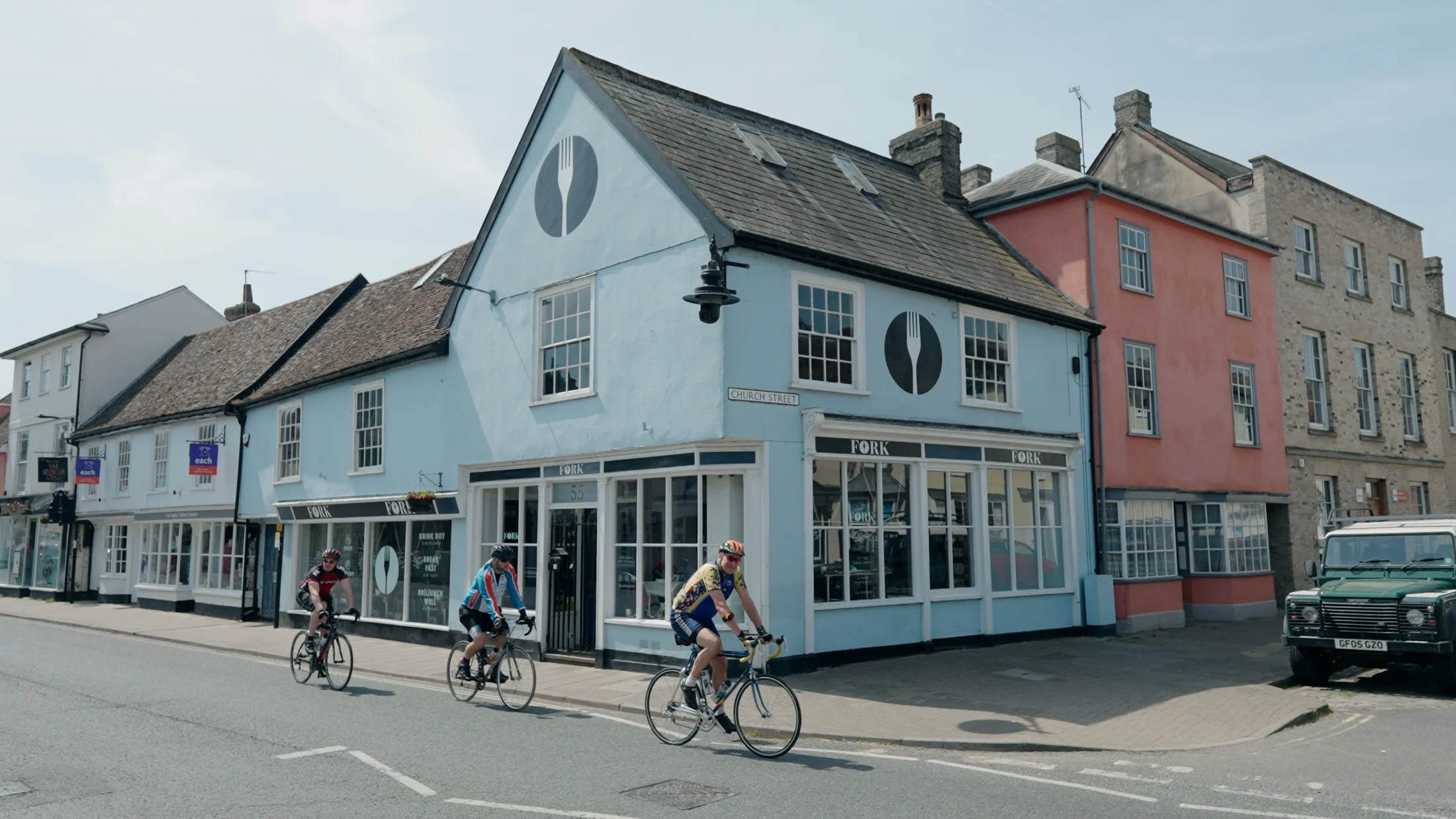
In Hadleigh, our footage included a street corner with passing cyclists, a café frontage, the church, the river and views across the town. These were concrete subjects for the area introduction. They allowed the film to move between Edd’s presentation and recognisable details of the place.
The bridge sequence is especially useful as an example. It puts the presenter within the setting he is introducing. The river and surrounding greenery supply context without needing a separate explanation for every shot.
For an estate agent planning a shoot, a short list of specific places is more useful than a request to capture the local lifestyle. Share the landmarks, amenities and routes that are relevant to this property. Check factual statements before recording, particularly claims that can change, such as travel times or facilities.
Let the location change the emphasis
The Cavendish introduction centres on village character and community. Vancouver, the property in Brockley, calls attention to its gardens and rural setting. Those are different stories, even though both films use a presenter and a property tour.
Repeating an identical list of shots at every home would miss that distinction. A garden-led property may need time outside. A home marketed around village life may benefit from a stronger sequence around the local centre. The building, its setting and the intended message should determine the balance.
Our property video production and photography service brings those requirements into one brief. Location coverage is best treated as a planned part of that brief, with enough time to travel between the chosen places and record the presenter where the story needs them.
Use aerial views to explain a relationship
A drone shot is most useful when it answers a spatial question. How does the house sit within its grounds? What surrounds the garden? Where does the built-up area give way to open countryside? These are reasons to choose a particular view.
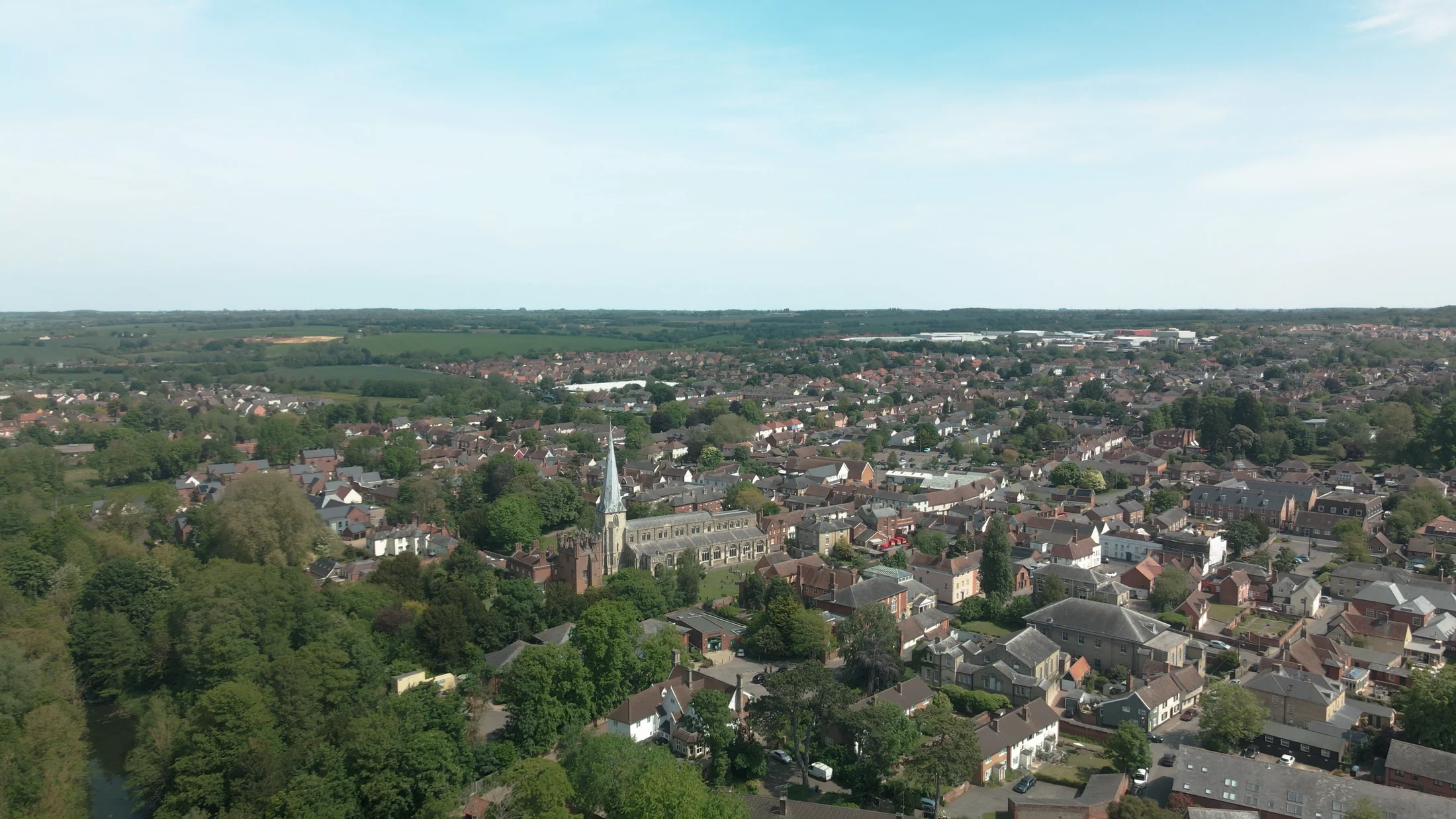
Our aerial frame over Hadleigh shows the church within the wider town and the countryside beyond. In a property sequence, the same change of scale can connect a building with its plot before the edit returns to a closer view.
Plan aerial filming and photography around the information you want the viewer to take away. A wide shot should add context to the tour, with the presenter and ground-level coverage carrying the more personal details.
Keep photographs useful in their own right
Video gives an agent time to explain and guide. Photographs let a buyer look at a single space for as long as they choose. The two formats work together, but they need separate attention during production.
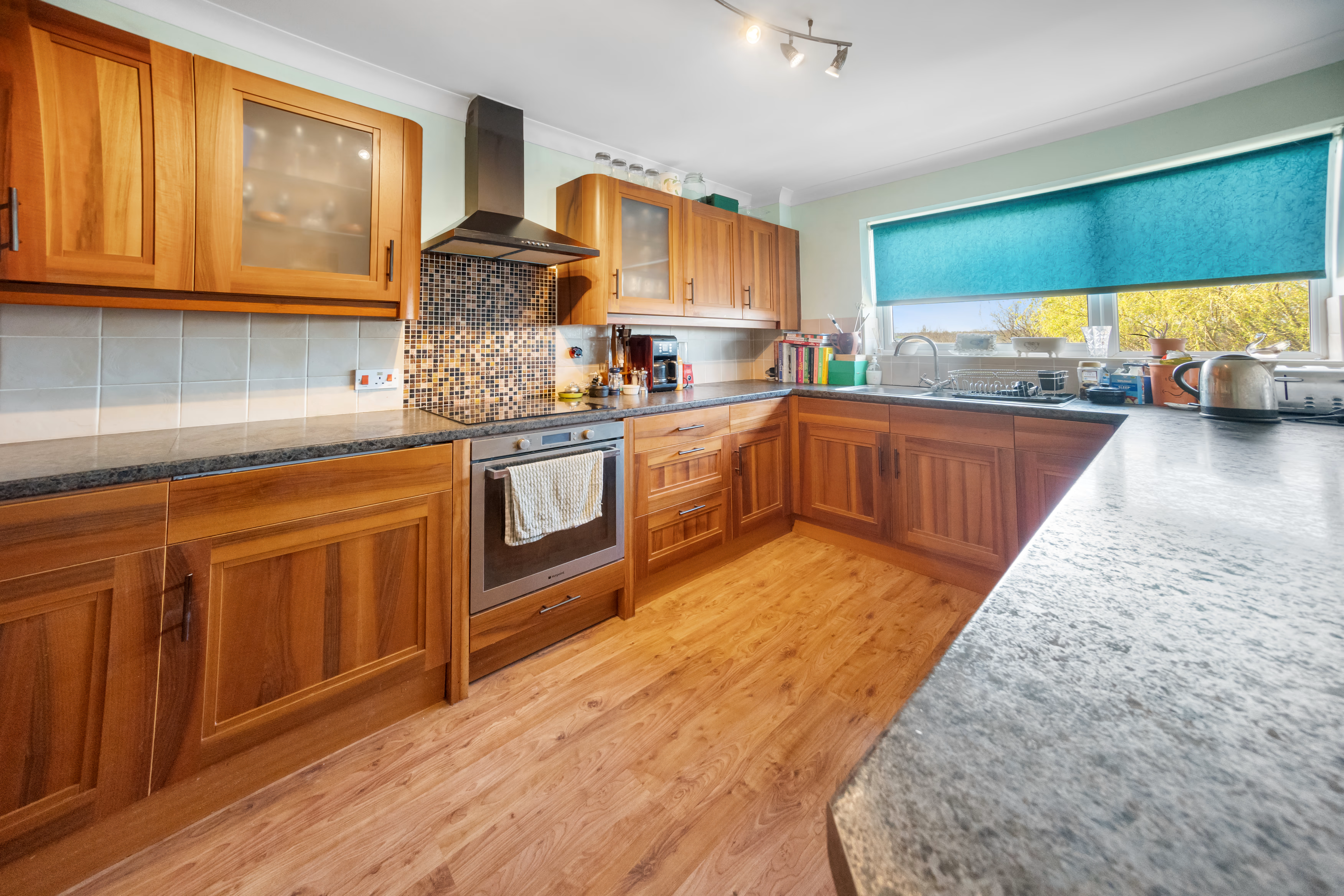
For Edd’s properties, we also made multi-exposure, bracketed photographs. Indoors, that meant recording different brightness levels to support the final photographic edit. The delivered room views could then sit alongside exterior and garden images in a standalone collection.
The Furness Close, Cavendish and Vancouver galleries on the portfolio page illustrate this division of purpose. Each set belongs to a specific home, and each can be browsed without watching a film first. When commissioning professional property photography, agree which rooms, features and views the collection needs to include.
Plan the journey from the area to the home
Before the shoot, agree where the introduction will happen, which local details deserve coverage and how the film will move into the tour. Give the presenter clear points to communicate at each stage. The edit then has a purposeful route to follow.
It also helps to distinguish the campaign from the format. Our Marquis film used a property-tour style for a competition promotion. The spaces and presentation still mattered, but the intended response differed from a residential listing. A familiar filming approach should always serve the actual brief.
Mountains Farm near Great Dunmow needed a different solution again. Its five-minute film used a clone effect: three versions of Edd set off to introduce different parts of the estate. The visual joke also created a structure, separating the farmhouse from the outbuildings and grounds. For a larger home, chapters can help the audience follow the tour while preserving room for a creative idea.
For a new project, send us the address, the proposed presenter, the surrounding locations and your photography requirements. We can discuss the filming and editing time needed and shape a shoot around the material you will use. Tell us about your property film to start planning.