
Best Places to Fly Drones in the UK (Legally, With Stunning Results)
Search for the best places to fly drones and you’ll get lists of beauty spots. Many of them are places where flying is restricted, banned by the landowner or simply a bad idea. We fly drones for a living, filming events, property, construction sites and roof surveys across Suffolk, Essex and beyond. In our experience, the best place to fly is decided less by the view and more by three questions: who owns the land, who’s nearby, and what’s overhead.
This guide covers the kinds of places that work in the UK, the places that catch people out, and the 2026 rule changes you need to know before you take off.
First, the rules that decide where you can fly (2026 update)
The UK drone rules changed on 1 January 2026, and the change affects far more hobby pilots than before.
- Flyer ID is now needed for drones of 100g or more (it used to be 250g). That includes the small “sub-250g” drones many people bought specifically to avoid paperwork.
- Operator ID is needed if your drone weighs 100g or more and has a camera, which is nearly every drone worth flying for photos.
- New drones carry UK class marks (UK0 to UK6). The class mark, or the weight of an older “legacy” drone, decides how close you can fly to people.
- The long-standing limits still apply: stay under 120m (400ft), keep the drone in sight, and keep out of airport flight restriction zones unless you have permission.
The short version: register with the CAA before you go anywhere. It’s done online and takes less time than charging your batteries.
The best places to fly drones in the UK (by type)
1. Quiet stretches of coastline
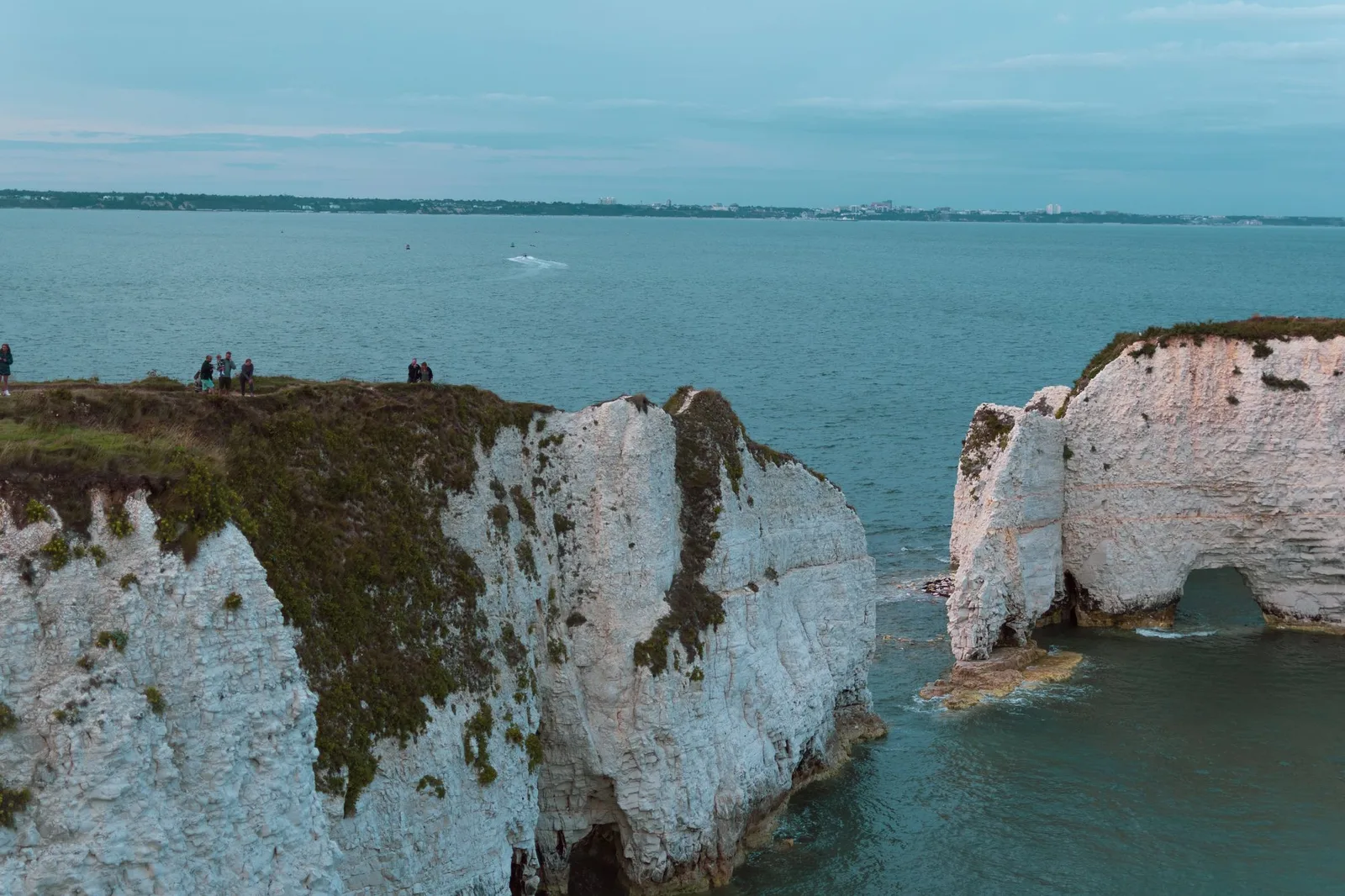
Beaches and cliffs give you the shots that make drone footage worth having: lines of surf, rock patterns, long shadows at sunset. Choose quieter stretches out of season, away from groups of people. The Suffolk and Norfolk coasts are full of wide, empty beaches in the cooler months. Watch for nature reserves and nesting seabirds, which are often protected, and for local byelaws on promenades.
2. Farmland and open countryside (with permission)
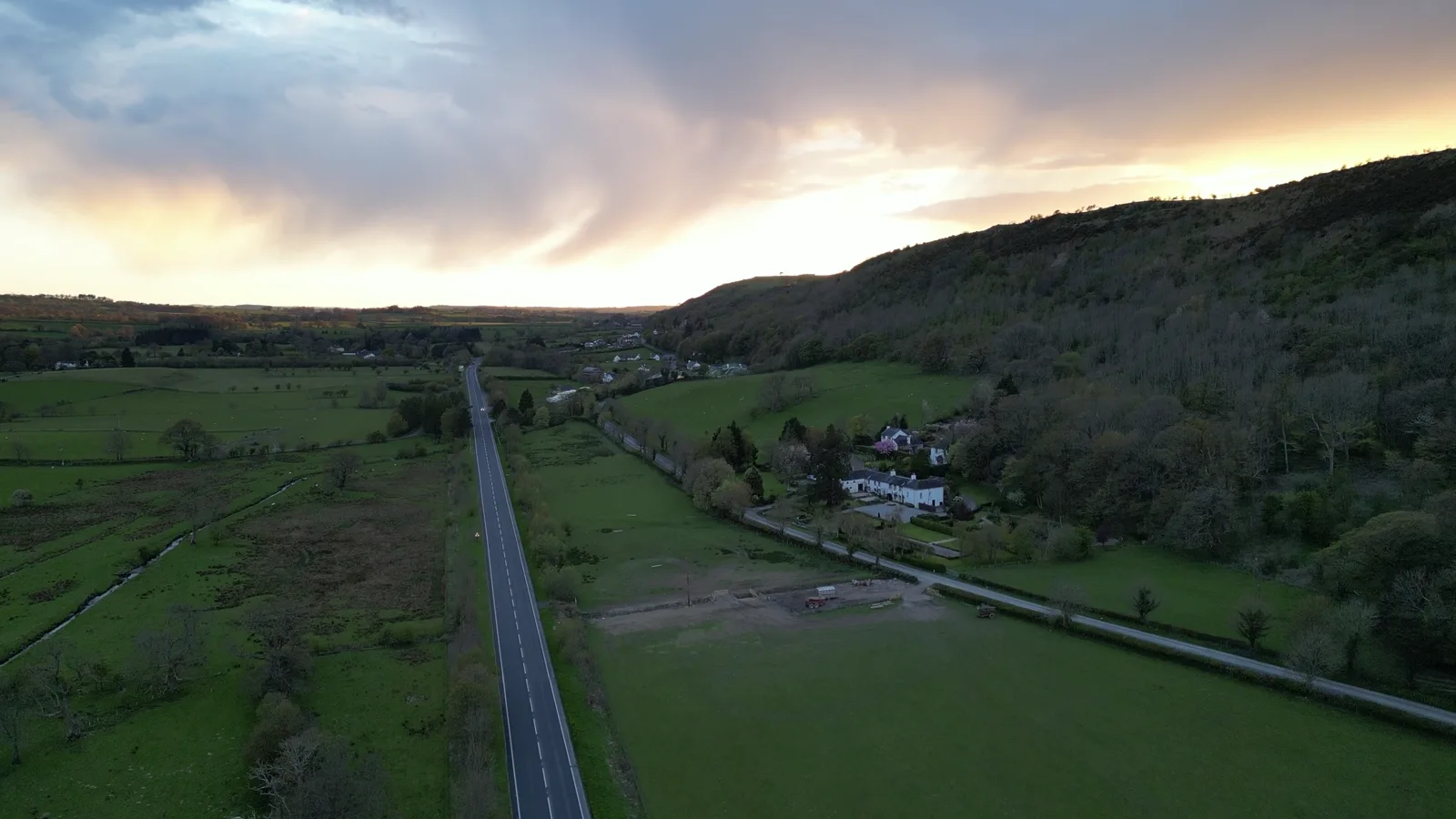
Open fields, hedgerows and rolling hills are some of the easiest and safest places to fly. You can take off from public land such as a footpath, but asking the landowner if you can launch from their field is polite and sensible. Most farmers say yes if you explain what you’re doing. Autumn colour and frosty mornings make fields look spectacular from above.
3. Flying club fields and model aircraft sites
If you’re new, a model flying club is genuinely one of the best places to learn. You get open space, no members of the public wandering through, and experienced pilots who’ll spot your mistakes before they cost you a drone.
4. Your own land, or a friend’s
Underrated. A garden, a paddock or a family farm lets you practise orbits, reveals and smooth pans without an audience. That practice matters more than any location when it comes to getting good footage.
5. Lakes, reservoirs and rivers (carefully)
Reflections and winding rivers look fantastic from above, but water is where drones are most often lost. Check who manages the site (many reservoirs are run by water companies with their own rules), keep plenty of battery in reserve, and never fly low over water in strong wind.
Places that look perfect but usually aren’t
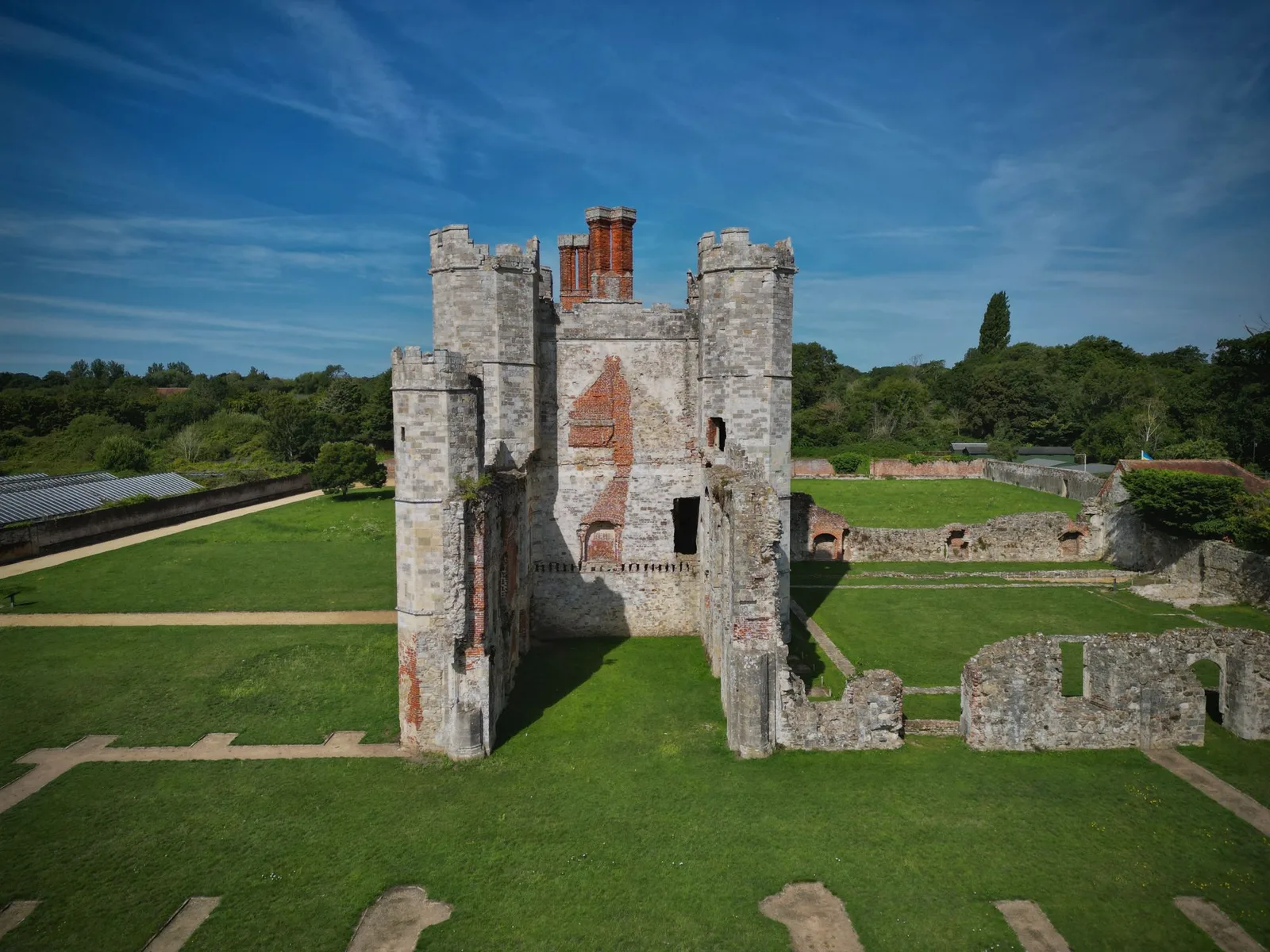
- National Trust and English Heritage sites: both generally don’t allow drones to take off or land on their land without permission. You need to ask in advance.
- The Royal Parks in London: drones are banned.
- Many council parks: plenty have byelaws against flying. Check the local council website before you go.
- Anywhere near an airport or airfield: flight restriction zones extend well beyond the runway. Check a live map first.
- Crowded tourist spots: even where it’s technically allowed, flying over or close to crowds is restricted and rarely worth the hassle.
- Prisons, military sites and some critical infrastructure: restricted airspace, and not somewhere to test the rules.
How to check a location before you go
- Check the airspace with an official drone map app (the CAA points pilots to the Drone Assist app from NATS and similar tools). Look for flight restriction zones, temporary restrictions and danger areas.
- Check the landowner. Who owns the take-off point? National Trust, council, water company, private estate? Look up their drone policy or ask.
- Check the people. Will there be uninvolved people nearby? Visit at a quieter time, or pick a spot where you can keep your distance.
- Check the weather. Wind at 120m can be double what you feel on the ground. If it’s gusty at head height, it’ll be worse up there.
- Check your paperwork. Flyer ID, Operator ID with your number on the drone, and insurance. Insurance isn’t legally required for most hobby flying, but it’s sensible.
Tips for better footage wherever you fly
- Fly at golden hour. Low sun gives long shadows and texture that midday light flattens.
- Move slowly. Slow, steady movements look cinematic; fast swoops look like a test flight.
- Use height for a reason. The highest shot isn’t always the best. Some of the most striking drone shots are 10 to 20 metres up.
- Plan one “reveal” shot. Start on something close (a gate, a tree, a cliff edge) and rise or push past it to show the view.
- Shoot more than you think you need. Batteries and daylight run out faster than you expect.
When to call in a professional drone team
If you need aerial footage for a business, an event, a property listing or a building survey, the location question gets harder. You’ll often need landowner consent, risk assessments, flying near people or buildings, and proper insurance. That’s what we do every week, from event drone coverage and property aerials to drone roof and building surveys. We carry £10m public liability insurance and plan every flight before we arrive.
See our aerial filming work, or tell us about your project and we’ll tell you honestly whether drone footage is worth it.
Frequently asked questions
Can I fly a drone anywhere in the UK?
No. You must follow the CAA rules (registration, height, distance from people and restricted airspace) and you need the landowner’s permission to take off and land on their land.
Do I need permission to fly over a field?
Flying over land is generally allowed within the rules, but taking off from or landing on private land needs the owner’s permission. If in doubt, ask.
Can I fly a drone on the beach?
Often yes, if the beach isn’t covered by a local byelaw or a nature protection order and you keep away from people. Quieter beaches outside the summer season are the easiest.
Do I need a Flyer ID for a drone under 250g?
Since 1 January 2026, yes, if it weighs 100g or more. If it has a camera, you’ll need an Operator ID too.