What counts as a corporate video?
The phrase covers most planned video made for a company, charity, public body or other organisation. Some films introduce the organisation as a whole. Others solve one specific communication problem: explaining a complex service, helping new employees understand a process, showing prospective recruits the working environment or giving a customer credible evidence before a purchase.
Common formats include company-profile films, executive interviews, customer testimonials, case studies, recruitment and employer-brand videos, training resources, internal communications, product or service demonstrations, event content, presentations, explainers and short social-media edits. A single production can create several of these outputs when that is planned before filming.
Corporate content does not have to make exaggerated claims. Often its most useful role is to make something clearer: who the organisation helps, how a service works, what a workplace is like or why an existing customer chose it.
Who is the video for?
The first important distinction is between internal and external audiences. External content may be aimed at prospective customers, existing clients, investors, partners, job applicants or the wider public. Internal content may support onboarding, training, leadership updates, safety communication or organisational change.
Audience affects almost every decision. A customer evaluating a service may need proof, plain-English explanation and a clear next step. A new employee may need accuracy, repeatable instructions and accessible captions. An investor presentation may need evidence and controlled wording. A social audience may need a concise opening that makes sense without sound.
“Everyone” is rarely a useful audience definition. A film becomes easier to plan when the business can name the people it needs to reach and the decision or action the content should support.
Business objectives corporate video can support
Explain
Show how a product, service or process works without asking the viewer to interpret dense written material.
Build confidence
Use real people, environments and customer experiences to provide credible evidence.
Recruit and train
Introduce culture, roles, procedures and expectations consistently across a workforce.
Promote and distribute
Create campaign, website, presentation and social assets around one clear proposition.
A video should normally have one primary job even when it supports secondary goals. Trying to explain the entire organisation, recruit staff, sell every service and record an event in one film usually produces a confused result.
How corporate video production works
The broad process moves from idea and brief to planning, filming, post-production and delivery. The brief describes the business problem, audience and required result. Planning develops the format, contributors, locations, schedule and deliverables. Filming captures interviews, demonstrations, activity and supporting footage. Post-production turns that material into a coherent story through selection, editing, sound, colour, graphics, captions and review.
Delivery is more than sending one file. Website, LinkedIn, YouTube, presentations and internal learning platforms can require different aspect ratios, durations, captions or technical specifications. These decisions are most efficient when made early.
This overview is deliberately concise. Businesses preparing a project can follow our practical guide to planning a corporate video rather than treating the camera booking as the starting point.
Corporate video versus casual social content
Informal phone footage can be exactly right for a quick update, immediate behind-the-scenes moment or personal message. Professional production becomes more valuable when the content represents the organisation for a long time, needs reliable picture and sound, involves several contributors, records an unrepeatable event or will receive meaningful advertising spend.
The difference is not that professional content must look expensive. It is that the communication, technical quality, permissions, data handling and deliverables are planned. A deliberately natural interview can still use careful lighting, clean sound and considered editing while feeling relaxed.
Businesses can use both approaches. Frequent informal content and fewer durable professionally produced assets often serve different parts of the communication plan.
Does corporate video need to feel corporate?
No. “Corporate” describes the commissioning context, not a compulsory tone. A law firm, manufacturer, charity, technology company and leisure brand will have different audiences and personalities. The style should feel credible for the organisation and appropriate for the subject.
Some messages benefit from controlled scripts, formal locations and precise graphics. Others are stronger when employees speak conversationally, activity is observed as it happens and the edit leaves room for personality. The decision should be based on trust and clarity rather than copying a fashionable style.
Reference films are useful when they identify qualities—pace, warmth, visual detail or level of formality—rather than requesting an imitation of another company.
When is a simple production enough?
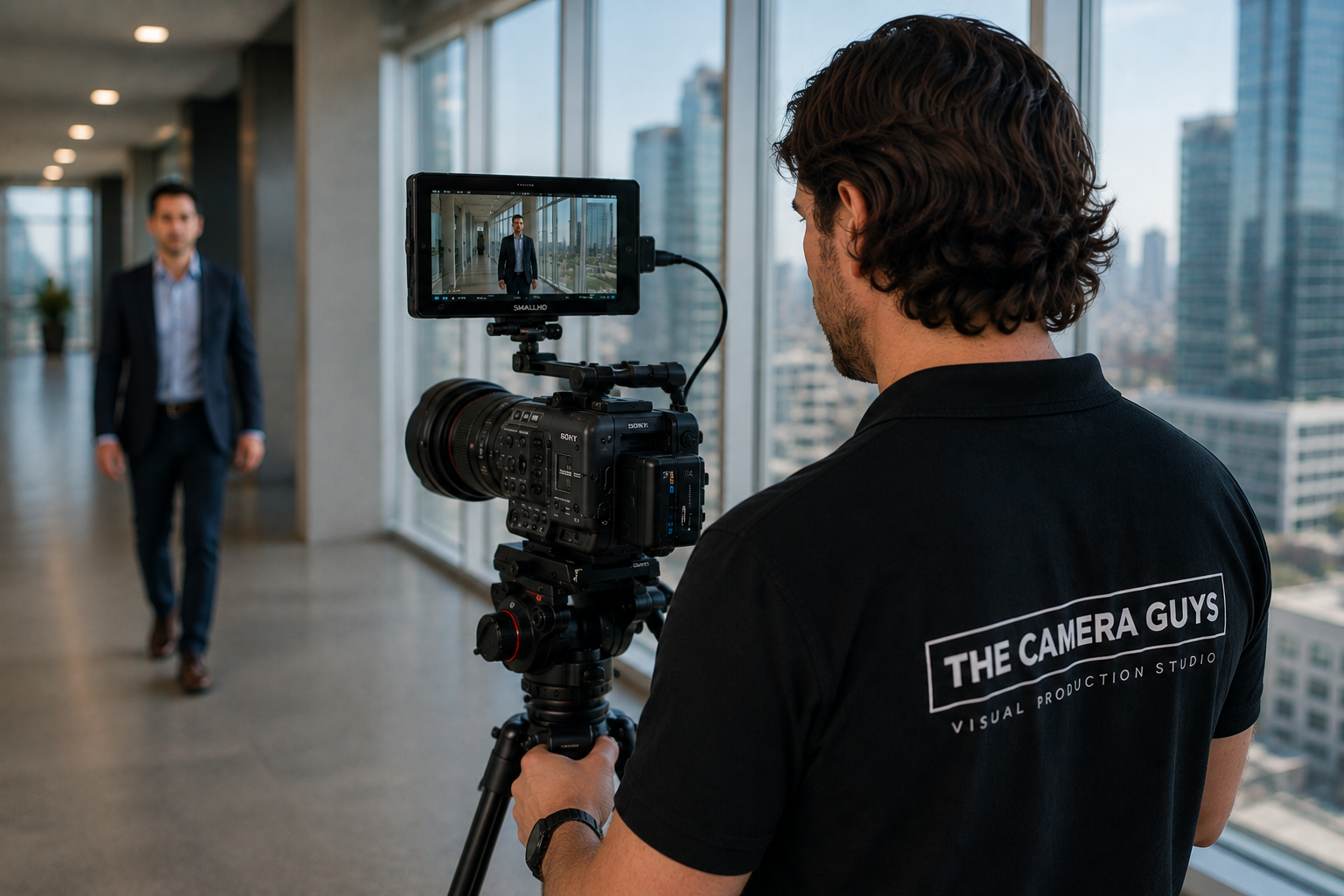
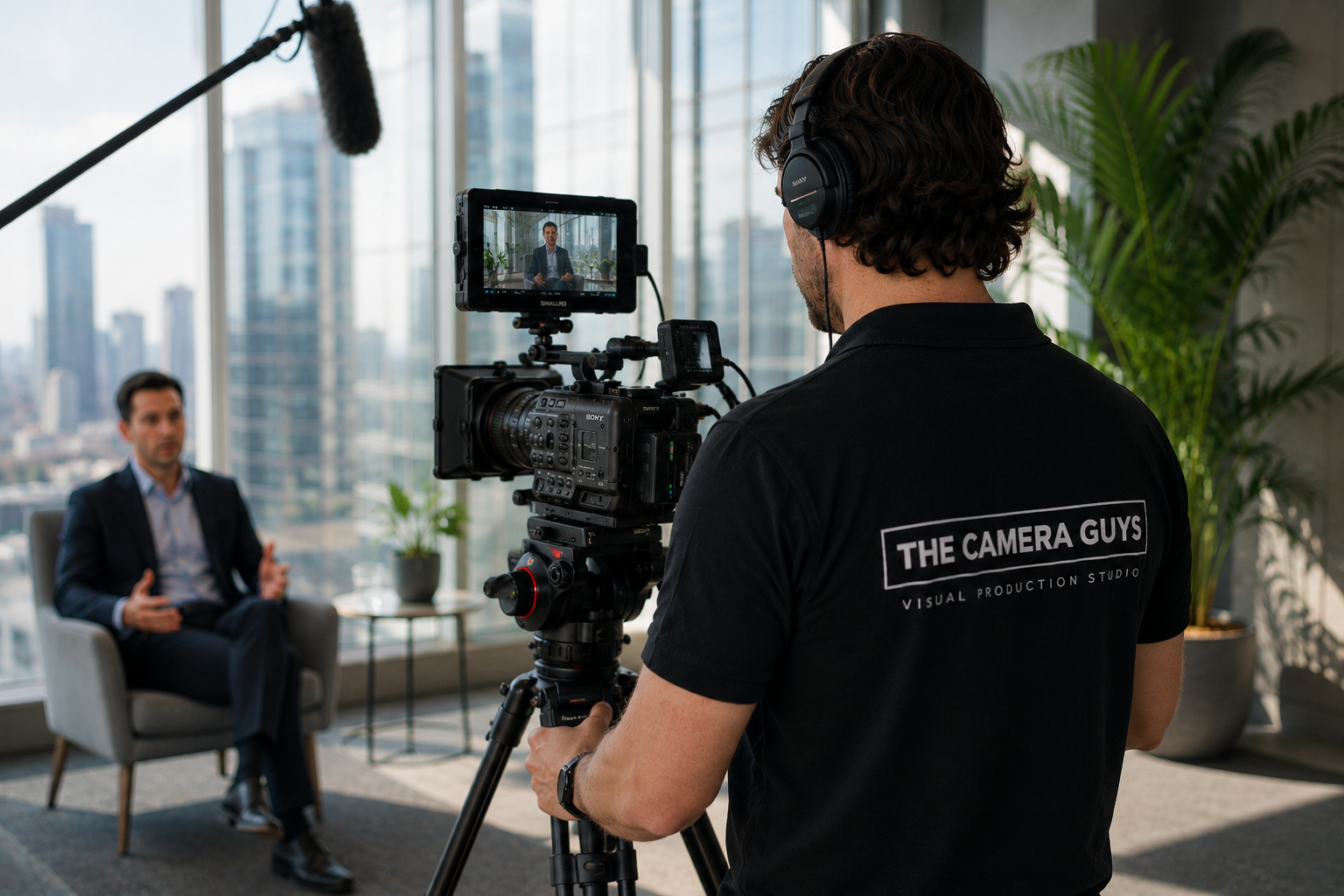
A focused interview in one prepared location may only need one experienced operator, a compact lighting and sound setup and an efficient edit. Simplicity works when the message is clear, contributors are available and the required outputs are limited.
More complexity can be justified when activity happens simultaneously, several locations must be shown, a campaign needs many versions, specialist sound or lighting is required, or the creative idea depends on controlled scenes. Complexity should solve a communication problem; it should not be added merely to make the production feel substantial.
For current cost factors, see the guides to corporate video costs and UK video-production costs.
Creating several assets from one shoot
One filming day can sometimes produce a website film, individual interviews, customer proof, recruitment clips, short social edits and still frames. This works best when every deliverable has a genuine destination and the crew knows before filming which orientations, openings and calls to action are required.
Repurposing is not simply cutting the same film shorter. A vertical social edit may need tighter framing and a faster opening. A presentation version may need context that a website supplies elsewhere. An internal edit may include operational detail unsuitable for public release.
Planning the family of content together helps the crew capture suitable material without assuming that every possible version is worthwhile.
Corporate video production FAQ
What is the purpose of a corporate video?
Its purpose is to help an organisation communicate with a defined audience. That might mean explaining, promoting, training, recruiting, documenting or building confidence.
Is a testimonial a corporate video?
Yes. Customer testimonials and case studies are common corporate formats because they combine a real experience with evidence of the service or outcome.
How long should a corporate video be?
There is no standard duration. It should be long enough to do its job on the intended platform without including material the audience does not need.
Can one shoot create social-media content too?
Often yes, provided the social deliverables and framing requirements are planned before filming.
Explore The Camera Guys’ corporate video-production service and recent work, or discuss a project.
Examples of internal and external corporate content
Internal video often succeeds by being useful rather than promotional. A safety film can demonstrate a procedure consistently. An onboarding series can introduce teams and systems before a new employee’s first week. A leadership update can explain a decision directly, while recorded presentations make specialist knowledge available beyond one meeting.
External video has a different relationship with context and trust. A company profile helps an unfamiliar viewer understand the organisation. A customer case study supports a claim with experience. Product demonstrations show details that are awkward to explain in still images, while recruitment content gives applicants evidence about roles and environment.
The same footage should not automatically be used for both audiences. Internal information may be confidential or assume prior knowledge. Public content may require explanation, permissions and a clearer introduction. When one production supports both, the distinction should be built into interview questions and deliverables.
What makes corporate video effective?
Effectiveness begins with relevance. The viewer should quickly understand why the film matters to them. Specific examples, recognisable problems and real environments are usually more persuasive than broad statements about quality or passion.
Sound matters because unclear speech undermines confidence even when the pictures are attractive. Structure matters because a collection of interviews and B-roll is not automatically a story. Accessibility matters because captions and readable graphics help people watching without sound or with different needs.
Distribution completes the work. A strong film hidden on an unvisited page cannot achieve much. Decide who will publish it, where it will be embedded, how sales or recruitment teams will use it and whether shorter supporting assets are needed. Production and distribution do not have to be managed by the same supplier, but they should be planned as parts of the same objective.