
How Long Should a Video Production Company Keep Your Raw Footage?

A finished two-minute video might be only a few hundred megabytes.
The project behind it could be hundreds of gigabytes — sometimes much more.
That difference is why “do you keep our footage?” is not as simple as it sounds.
A production company might retain the finished masters, the editing project, the camera originals, separate audio, graphics and licence information for different lengths of time. It may keep none of them indefinitely. The client may also have its own copy of some or all of those files.
So the useful question is not:
How many years should raw footage be kept?
It is:
What might we realistically need to do with this project later, and which files would make that possible?
There is no universal retention period that suits every production. A one-off conference, an evergreen customer interview and a five-year construction project have completely different reasons for keeping source material.
The sensible approach is to agree the purpose, files and end date while everybody still knows what the project contains.
Start with the future change, not the storage period
Imagine you come back to a film eighteen months after delivery.
The company logo has changed. A member of staff has left. The website URL at the end of the film needs replacing.
That could be a very easy edit — if the right files still exist.
Now imagine you want to create a completely new 30-second advert from interview answers that never appeared in the original film.
That requires something different.
Or perhaps you want a vertical version for social media, but the original film was delivered only as a finished landscape MP4 with graphics already baked into the image.
Again, the files you need are different.
This is why a retention conversation should begin with foreseeable uses such as:
- updating a logo, job title, URL or call to action;
- creating shorter or platform-specific versions;
- returning to unused interview answers;
- making a new campaign from existing footage;
- documenting progress across several years;
- creating an anniversary or retrospective film;
- replacing licensed music or graphics;
- handing a project to another editor.
Once the likely future use is clear, the archive can be planned around it.
“The video” is several different things
Businesses often talk about “the footage” as though it is one file.
It is usually a collection of assets with very different future value.
| File type | What it is useful for later |
|---|---|
| Final master | Re-uploading or redistributing the approved film |
| Clean master | Creating some revised versions without baked-in titles, captions or certain graphics |
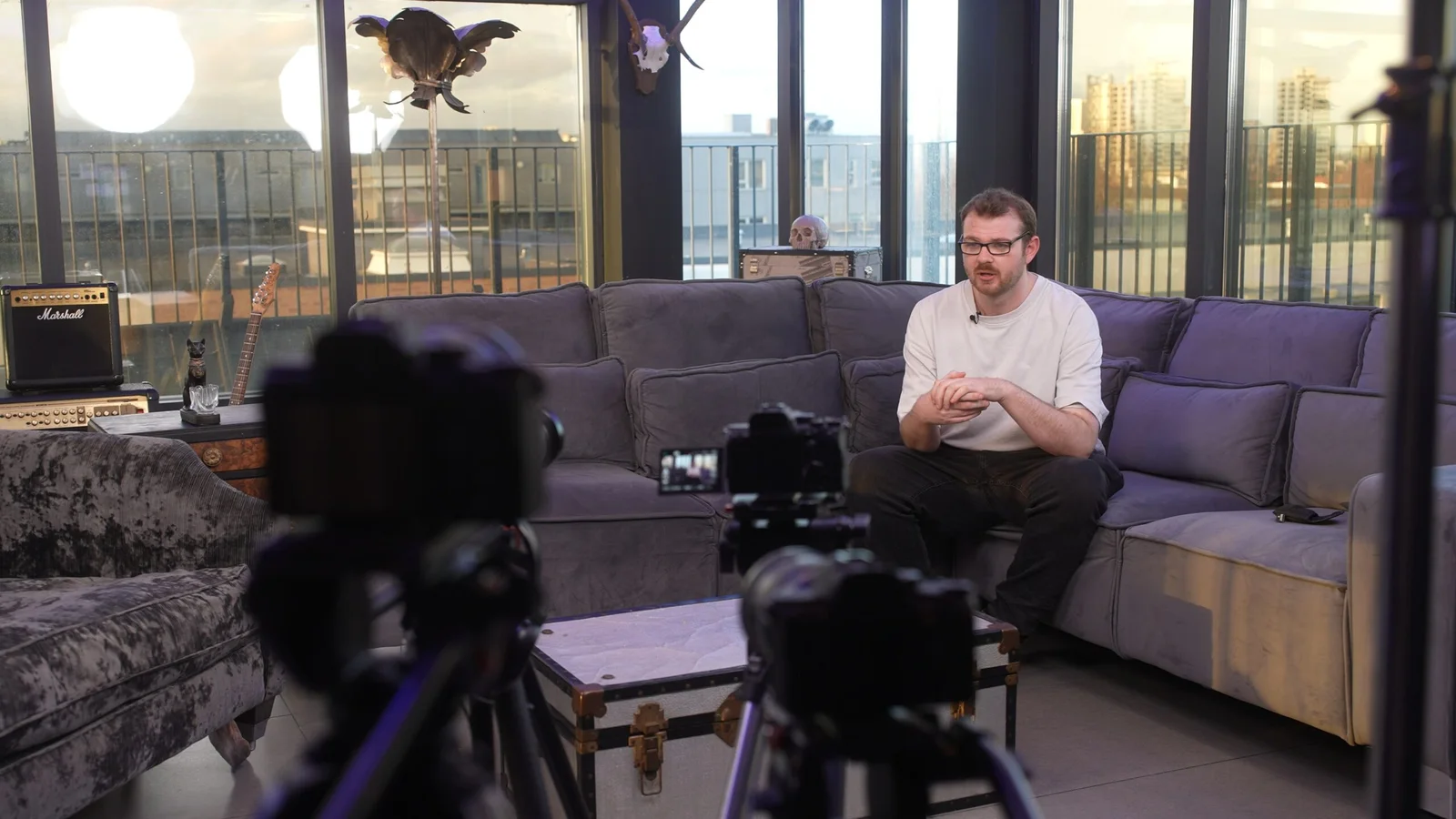
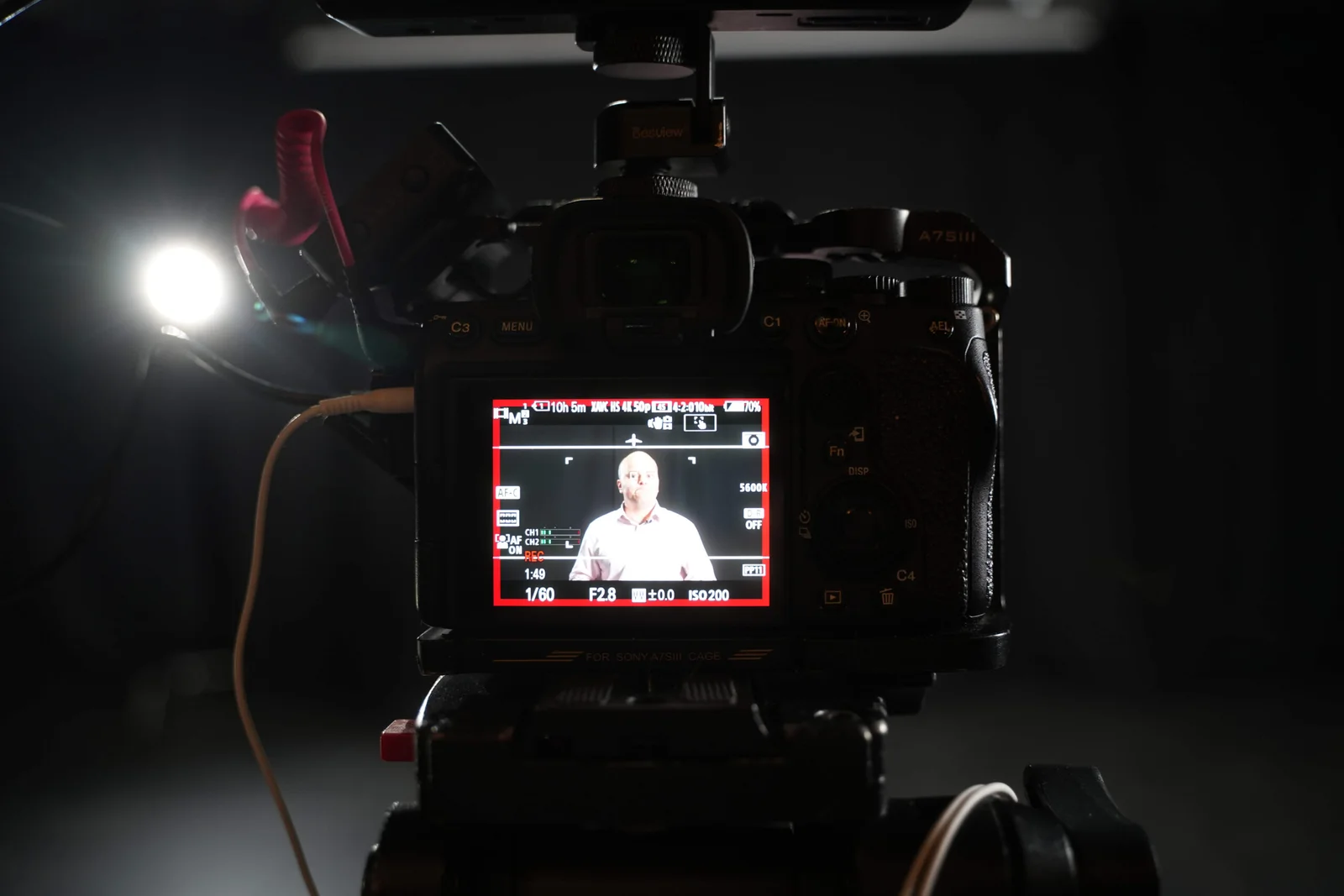
| Camera originals | Finding unused shots, alternative takes and new edit material |
| Separate audio | Reworking interviews or improving a new edit where sound was recorded independently |
| Editing project | Reopening the original edit structure, assuming linked media and software still work |
| Graphics / source assets | Updating titles, motion graphics or design elements |
| Captions / transcripts | Accessibility, translations, search and quicker text-based review |
| Licence / release records | Understanding what can legally be reused and under what conditions |
Keeping one of these does not mean you have kept all the others.
A finished MP4 is extremely useful if somebody simply needs to upload the same film again. It does not restore an unused interview answer.
An editing project can preserve weeks of decisions, but it is not very useful if the linked camera files have gone.
Camera originals preserve the recorded material, but they do not automatically include the edit structure, fonts, graphics, music licences or the decisions that produced the approved film.
If future re-editing matters, define what the future editor would actually need.
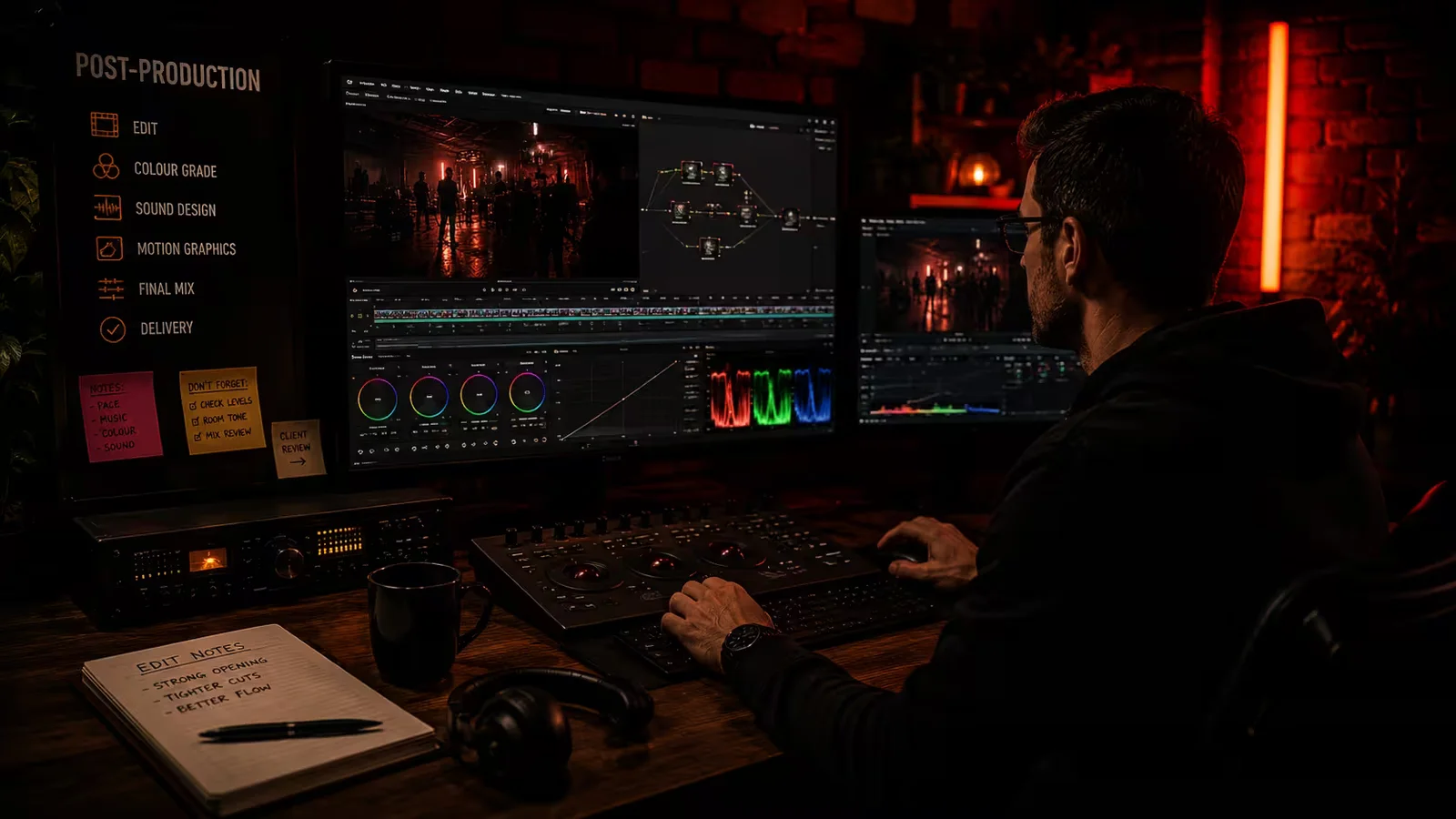
Our guide to what video post-production includes explains how those source files, editing decisions, graphics, sound and finishing stages fit together.
A backup is not the same thing as an archive
This distinction matters.
During an active production, backups exist to protect the work from loss while the project is being made.
An archive exists because somebody has intentionally decided that selected material should remain available after the project is finished.
Those are different jobs.
A production can be very well backed up during editing and still have a perfectly reasonable policy of deleting working material after an agreed retention period.
Likewise, a hard drive sitting on a shelf is not automatically a good archive. If nobody knows what is on it, whether the files are readable, what rights apply or when it should be reviewed, it is simply old storage.
Our separate guide to how professional video footage is backed up and stored covers ingest, verification, independent recovery copies, proxies and archive principles in more detail.
For retention, the important point is simpler:
Keeping files should be a deliberate service decision, not an accident.
So how long is sensible?
There is no single number, but these are useful planning patterns.
A short-lived campaign
Suppose a business commissions a film for a specific launch or temporary campaign.
Once the campaign is finished, approvals are complete and the client has securely downloaded the final deliverables, there may be little reason to retain every camera original for years.
It may still make sense to keep agreed masters or selected reusable footage for a defined period, especially if campaign variations are expected.
But indefinite retention should not be the default simply because deletion feels irreversible.
An annual event
An annual conference, awards night or festival creates a different question.
Last year's footage may be valuable when the next event is announced. It could support a teaser, sponsor film, retrospective or sales presentation.
That suggests aligning the retention review with the next event cycle rather than picking an arbitrary number of months.
If the footage has still not been reused after the next cycle, ask whether its future value is real or merely hypothetical.
An evergreen interview or case study
Interviews often contain much more useful material than appears in the final edit.
If the contributor, organisation and statements are likely to remain current, unused answers can have genuine future value.
That does not mean every interview should be kept forever.
People change roles. Products change. policies change. Claims become outdated.
The useful review question is not only “do we still have the files?” but also:
Would we still be comfortable publishing this material today?
A multi-year project
Construction, infrastructure, regeneration and long-term development work can justify much longer continuity.
Footage from an early stage may become more valuable once the project is complete because it shows change that can no longer be recreated.
In that situation, retention is part of the production strategy.
The archive should be organised around dates, locations, milestones and useful subject matter so a future editor can actually find the material.
A one-off recording with little future value
Sometimes the answer is much simpler.
A dated internal message, obsolete product demonstration or superseded presentation may have no realistic reason to remain in a production archive once the agreed project and retention period are complete.
Deleting it can be the responsible decision.
Storage being technically available does not make every file worth preserving.
Storage size matters more than the duration of the finished video
The finished film tells you very little about the size of the source project.
A two-minute corporate film might have come from:
- a 45-minute interview;
- two camera angles;
- separate audio;
- several hours of B-roll;
- drone material;
- high-frame-rate footage;
- graphics;
- photographs;
- proxies and render files.
Our guide to how much raw footage a video shoot can produce includes worked examples based on bitrate and camera-hours.
This becomes important when a client asks for “everything”.
A raw-footage handover may involve hundreds of gigabytes or several terabytes. It may need a physical drive, a long upload, verification and a clear explanation of the folder structure.
That is not a reason to refuse a handover.
It is a reason to define what is being handed over and price the storage, transfer and preparation honestly.
Keeping raw footage is not the same as owning or being able to use it
Retention, ownership and usage rights are separate questions.
A file can exist in an archive without automatically becoming part of the client's contracted deliverables.
Likewise, receiving camera originals does not necessarily transfer copyright in every element or remove restrictions attached to music, stock footage, fonts, templates or other licensed assets.
The Camera Guys' current terms and conditions state that raw footage, camera originals and editable project files are not automatically included unless specifically agreed. They may be supplied separately where technically possible and consistent with third-party licence restrictions.
The same terms also state that we do not guarantee indefinite retention unless an archive arrangement has been agreed.
The project-specific quotation or agreement should always take precedence where it says something more specific.
What about footage containing people?
Recognisable people in video can constitute personal data.
That means a retention policy can also have a data-protection dimension.
UK data-protection law does not set one universal period for keeping personal data. The Information Commissioner's Office says organisations should be able to justify how long they retain it based on the purpose for which it is being processed, review it appropriately, and erase or anonymise material when it is no longer needed.
The ICO's current storage limitation guidance is the right place to check current requirements.
That does not mean all footage containing people must be deleted quickly.
It means “storage is cheap, so we keep everything forever” is not a retention policy.
The organisation responsible for the data should have a defensible reason for the period it chooses, particularly where footage contains employees, customers, children, patients or other identifiable contributors.
This article is practical production guidance, not legal advice. Where the footage raises specific regulatory or legal issues, those should be considered separately.
If you want to keep the footage yourself
A client-owned archive can be a very sensible solution.
But do not make the production company send a drive, put it in a cupboard and assume the problem is solved.
At handover, confirm:
- what has actually been supplied;
- whether the camera-card folder structure has been preserved;
- whether separate audio is included;
- whether project files are included;
- whether graphics and fonts can legally be transferred;
- whether music or stock assets have separate restrictions;
- which file is the final approved master;
- what software or codec may be needed;
- whether the transfer was verified;
- who inside your organisation now owns responsibility for the archive.
Then create another copy.
A single portable drive is not a long-term storage strategy.
Your organisation should also know where the archive is, who can access it and when it should be reviewed.
This is particularly important when staff change. The only copy of an expensive video project should not disappear with an old laptop, a former employee's cloud account or a forgotten download link.
If you may want future edits, say so before filming
Future use can affect what gets recorded in the first place.
If you know you may need several campaigns from the same shoot, tell the production team.
They may choose to:
- hold interview answers for longer;
- capture more generic B-roll;
- avoid baking temporary wording into certain shots;
- create clean masters without titles;
- record alternative calls to action;
- frame material with several aspect ratios in mind;
- organise the archive around products, people or topics;
- include transcripts or logging.
That planning can be much more valuable than asking for “all the raw footage” after the production is already finished.
Our guide to writing a video production brief explains how future versions and deliverables can be built into the project from the start.

What should the retention agreement actually say?
It does not need to be a complicated legal document.
It does need to remove ambiguity.
For a project where future access matters, define:
What is retained?
Camera originals? Audio? Project files? Final masters? Graphics? Captions?
When does the period start?
The shoot date? Final delivery? Client approval?
How long is included?
A defined number of months or a review date.
What happens at the end?
Automatic deletion? A review? An offer to extend the archive? A handover window?
How is material retrieved?
Online transfer, physical drive or a new editing brief.
Are there costs?
Archive fees, retrieval time, drive costs, transfer preparation or new editing work.
Who is responsible after handover?
Once the client receives the archive, who maintains the client copy?
A useful request sounds like this:
We expect to create a revised campaign next year. Please retain the interview originals, separate sound, approved master and editing project until then, and tell us what retrieval or extended archive costs would apply.
That is much easier to plan than:
Keep everything just in case.
What if you ask for the footage years later?
Ask anyway.
Do not assume the files have been deleted simply because the original download link has expired.
Equally, do not assume they still exist because somebody once said a project had been backed up.
Give the production company enough information to identify the job:
- project or client name;
- approximate filming date;
- location;
- contributors;
- title of the finished film;
- original delivery link if you still have it;
- what you now want to create.
Then establish what actually survives before promising a new version internally.
If only a finished master remains, some changes may still be possible.
If camera originals and the editing project remain, considerably more may be possible.
If neither survives, no amount of editing can recreate an unused answer or camera angle that was never preserved.
The client should always keep the files it has paid to receive
Whatever archive arrangement exists with the production company, download your agreed final deliverables.
Open them.
Check them.
Keep them somewhere managed by the organisation.
Do not treat a temporary review platform, old email link or producer's archive as your only copy of the finished work.
For important films, it can also be useful to retain a simple record containing:
- the approved master filename;
- delivery date;
- where it is stored;
- usage/licensing notes;
- captions or transcripts;
- current owner inside the organisation;
- planned review date.
That small amount of organisation can save hours years later.
Keep what has a purpose. Review what does not.
Raw footage can be extremely valuable.
It can also become a large, expensive collection of outdated material nobody can find, confidently reuse or justify keeping.
The answer is not to delete everything after delivery.
It is not to promise to keep everything forever either.
Plan retention around the future job:
What could we realistically need to change or create?
Then keep the files that make that possible for an agreed period, make sure the client has its own delivered assets, document any rights or restrictions, and review the archive when that purpose ends.
If future edits, long-term project coverage or a raw-footage handover matter to your production, raise it at the beginning. You can explore our video production services, read more about professional editing costs or tell us what you need to retain and why. We can then build the storage and handover requirements into the scope rather than leaving them to assumption.