Short-Form vs Long-Form Video: What Should Your Business Create?

Your marketing team has two ideas.
One is a 20-second video answering a question customers ask all the time.
The other is a five-minute customer story showing what happened before, during and after a project.
Which one is better?
Neither, until you know what you need the viewer to get from it.
A short video can be brilliant at making one point quickly. A longer film can do something short-form simply does not have room to do: build context, show evidence and let somebody explain the part that actually matters.
The mistake is treating them as competing formats.
For most businesses, the useful answer is not short-form or long-form.
It is deciding which ideas deserve a quick, self-contained video and which ones need enough time to become convincing.
Some ideas should be over quickly
If somebody asks, “Can this product do X?”, the useful video might be nothing more complicated than showing it doing X.
You do not need an animated logo, company history, founder interview and sweeping drone shot before reaching the answer.
A short video works particularly well when the viewer only needs one thing from it: one answer, one demonstration, one misconception corrected, one announcement or one useful moment from something larger.
The key word is complete.
A 25-second clip that starts halfway through somebody’s answer because it was ripped from a longer interview is technically short-form. It may also be confusing.
A much better version might begin:
“Yes, we can install this without closing the whole site. Here’s how we normally phase the work.”
Now the clip has a subject even if the viewer has never seen anything else from the business.
Short-form works best when it respects that somebody may encounter the video completely out of context.
That is why our guide to creating a month of social media content in one filming day starts with customer questions rather than a target number of reels. The subject gives the video a reason to exist.
Some ideas fall apart when you squash them
Now imagine that the customer’s real question is:
“What is it actually like to move our entire operation onto your system?”
That probably needs more than a snappy answer.
A useful film might need the customer to explain what they had before, why they decided to change, what implementation involved and what happened afterwards. You may also need to show the system, their workplace and the people involved.
Cut that down too aggressively and you can remove the very detail that makes the story believable.
The same applies to a proper product demonstration, a detailed recruitment film, a training resource or a recorded conference session. Sometimes the viewer has chosen to watch because they genuinely want the explanation.
Long-form video still needs editing.
It does not earn the right to be boring simply because the audience has shown more intent.
Remove the repeated answer. Lose the unnecessary opening montage. Do not keep three people saying essentially the same thing because they were all interviewed.
The useful runtime is whatever remains once the film contains the information, evidence and breathing room it actually needs.
Our guide to how long a corporate video should be looks at runtime in more detail. The important point here is that duration should come out of the idea, not be decided before it.
Jellyshotz: the same brand, completely different jobs
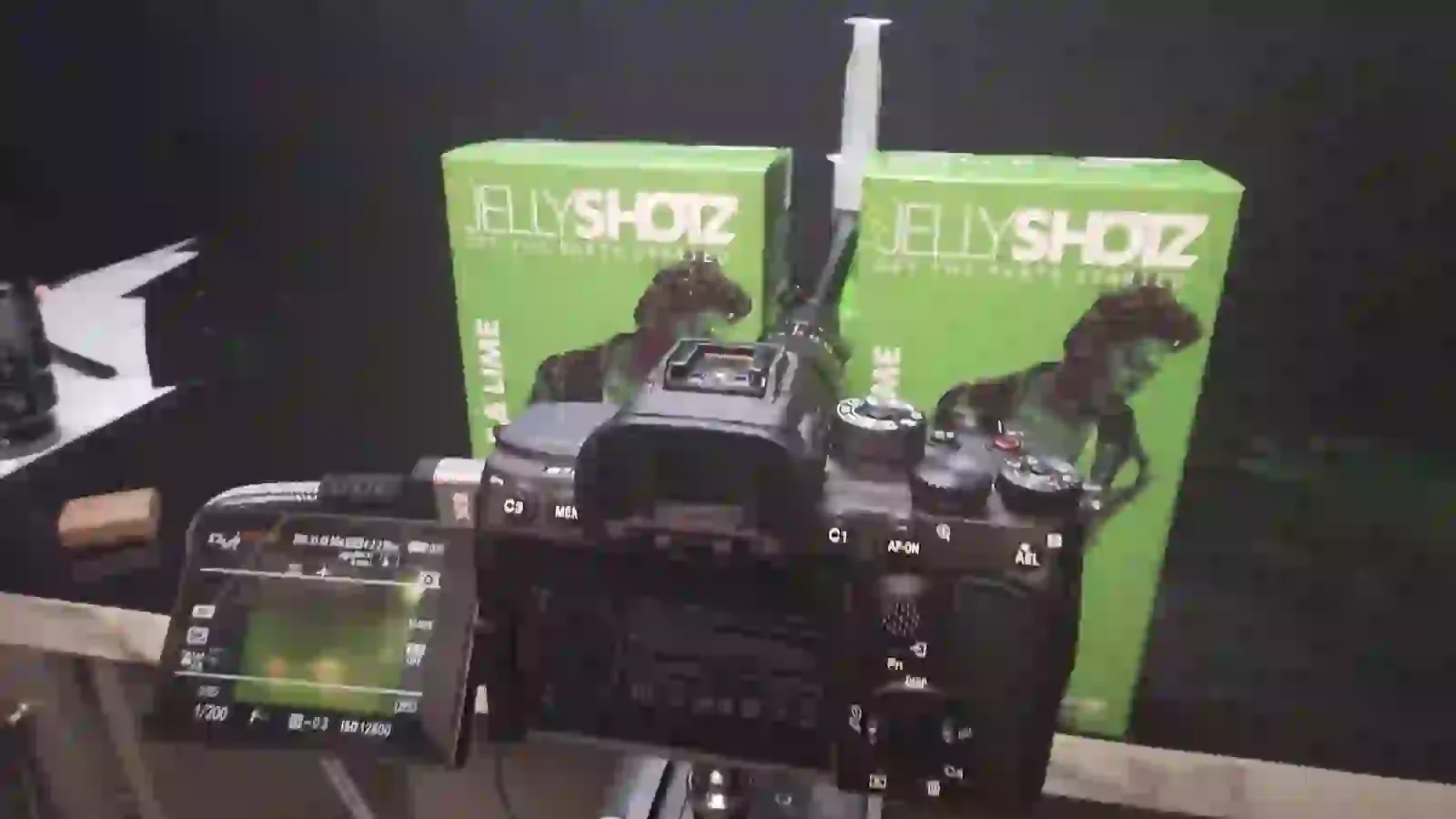
Our work with Jellyshotz is a good example of why this is not an either-or decision.
Over more than a year, we created product films, photography, festival coverage and a library of social content around the brand.
Some pieces had room to build a story.
The Jelly Cam film, for example, runs for a little over two minutes and puts the viewer into the middle of a festival day. It has time for the atmosphere, customer reactions and the slightly ridiculous perspective of wearing a camera on your head while handing out giant syringes full of jelly shots.
Other pieces needed to work quickly on social media.
Standalone vertical videos could focus on one crowd moment, one reaction, a product or a short exchange at the unit. They did not need to retell the whole festival story every time.
Both forms belonged to the same brand.
They just did different jobs.
That is a much more useful way to plan a content library than asking whether the company should “focus on reels” or “make proper videos”.

The short version is not necessarily the long version with bits chopped off
Suppose you make a four-minute customer case study.
The opening takes twenty seconds to introduce the customer and explain what their business does. That is perfectly reasonable in the full film.
Now somebody asks for a 30-second version for LinkedIn.
If you simply take the first 30 seconds of the master, most of the social video could disappear before the customer reaches the point.
The short version may need a completely different opening.
You could begin with the strongest problem:
“We were losing nearly a day every week doing this manually.”
Then give enough context for the statement to make sense and point people towards the full case study if they want the whole story.
That is not dishonest editing. It is a different piece of communication built from the same subject.
But it works much better when it is considered before filming.
If the customer only ever explains the result by saying “as I mentioned earlier”, the editor has a problem. If the shot is framed very wide with two people at opposite edges of the image, a vertical crop may be useless.
When we know shorter versions are part of the brief, we can record clean standalone answers, alternative openings and supporting shots that give the editor somewhere to go.
Repurposing starts during production, not when somebody opens the editing software three months later.
One filming day can feed both
Our Southwold Maize Maze project was built around exactly that idea.
One videographer spent six hours filming the maze, activities, café, walks and surrounding site. The finished content library contained more than 100 pieces of content.
That figure needs some context.
It did not mean we scripted and shot 100 unrelated videos in six hours.
The library included a main attraction film, separate promotional material, activity edits, social content and useful drone footage. The same well-planned coverage could support more than one piece.
A zip-line sequence might appear briefly in the main film and also give the marketing team material for a short standalone edit about that activity.
A café sequence could contribute to the wider attraction film while also supporting a separate film for the café and walks.
That is where volume becomes useful: not by forcing dozens of random ideas into the day, but by filming important subjects thoroughly enough that the material can work in several places.
If your business wants both a substantial main film and ongoing short-form content, tell the production team that before the shoot.
It may change what we film, how we frame it and how much time we give each subject.

Do not let the platform write the whole creative brief
Where the video will appear absolutely matters.
A piece intended primarily for a vertical social feed may need a tighter composition, a faster route into the subject, captions and room around important text for platform controls.
A film embedded on a service page can work differently because the page itself may already give the viewer some context.
A YouTube viewer arriving through a specific search may willingly spend several minutes with a detailed answer because they actively wanted that information.
A film playing at an exhibition has another set of considerations again. Sound may be difficult to hear, so the visuals and captions have to carry more of the message.
Plan for those viewing situations.
Just do not let “we need something for Instagram” become the entire idea.
The platform is where the content appears. It is not what the content is about.
Our article on why video works so well on social media looks at the social side separately.

Short and long video should not be judged by the same number
Imagine a 20-second clip gets 40,000 views.
A four-minute case study gets 600.
It is tempting to conclude that the short content worked and the long content did not.
But what was each one supposed to achieve?
The short film might have been designed to introduce the business to people who had never heard of it.
The case study might have been sent directly to prospective customers already considering a purchase.
If ten of those 600 viewers are exactly the organisations the sales team wanted to reach, the smaller audience may be doing a much more valuable job.
That does not mean views are useless. It means they need context.
For short content, you might care about whether the right people stopped, watched, visited the profile or moved to the next piece.
For a longer film, you may care about how it supports an enquiry, answers a repeated sales question or helps somebody make a more informed decision.
A training video has another measure again: can people actually follow the process afterwards?
Do not make the creative team stretch every video towards the metric that produces the biggest-looking dashboard.
So what should your business actually create?
Start with the subjects, not the runtimes.
If an idea can be completely useful in 20 or 40 seconds, let it be short.
If the audience needs context, evidence, a sequence of steps or a real conversation, give the film enough time to provide it.
And if the same subject has both a quick discovery job and a deeper explanation job, make both — but plan them as two useful pieces rather than one proper film plus an afterthought.
A business could quite reasonably have:
- a substantial customer case study for the website and sales team;
- a short standalone answer from the same customer;
- a vertical clip showing one specific result;
- a main product demonstration;
- and several focused videos answering individual product questions.
That is not five different marketing strategies.
It is one subject being used intelligently at different points in the customer journey.
At The Camera Guys, our video production can be planned around a single finished film or a wider family of content. For corporate video production, we often agree the main film, shorter edits, vertical versions and supporting material before filming so the production day gives us the right source material for each.
If you are not sure whether your idea should become one longer film, a series of short videos or both, send us the subject and where you want people to watch it.
We can work out the runtime after we know what the video actually has to say.