
Why Video Works So Well on Social Media
A person scrolling social media is not sitting down to watch television. They are moving through photographs, opinions, adverts, messages, updates and recommendations, often with very little commitment to any one of them.
Video has an advantage in that environment because it can show change, carry a human voice and reveal an experience over time. A machine can move. A chef can finish a dish. A customer can explain what happened. A crowd can react. A member of staff can demonstrate something that would take three paragraphs to describe.
That does not mean video automatically performs better than everything else.
A dull video is still dull. A beautifully filmed clip with no point can still be ignored. And plenty of information is quicker to understand as a photograph, graphic or sentence of text.
The useful question is not “Should we be posting more video?” It is:
“What can the viewer understand, see or feel in motion that they would lose if this were a still image?”
That is where good social video starts.
Video can make the subject immediately understandable
Some things are simply easier to understand when you can see them happen.
Imagine a manufacturer explaining how a component is assembled. A photograph can show the finished product. A written post can describe the steps. A short film can show the component being positioned, fitted, checked and completed in a matter of seconds.
The same principle applies far beyond manufacturing:
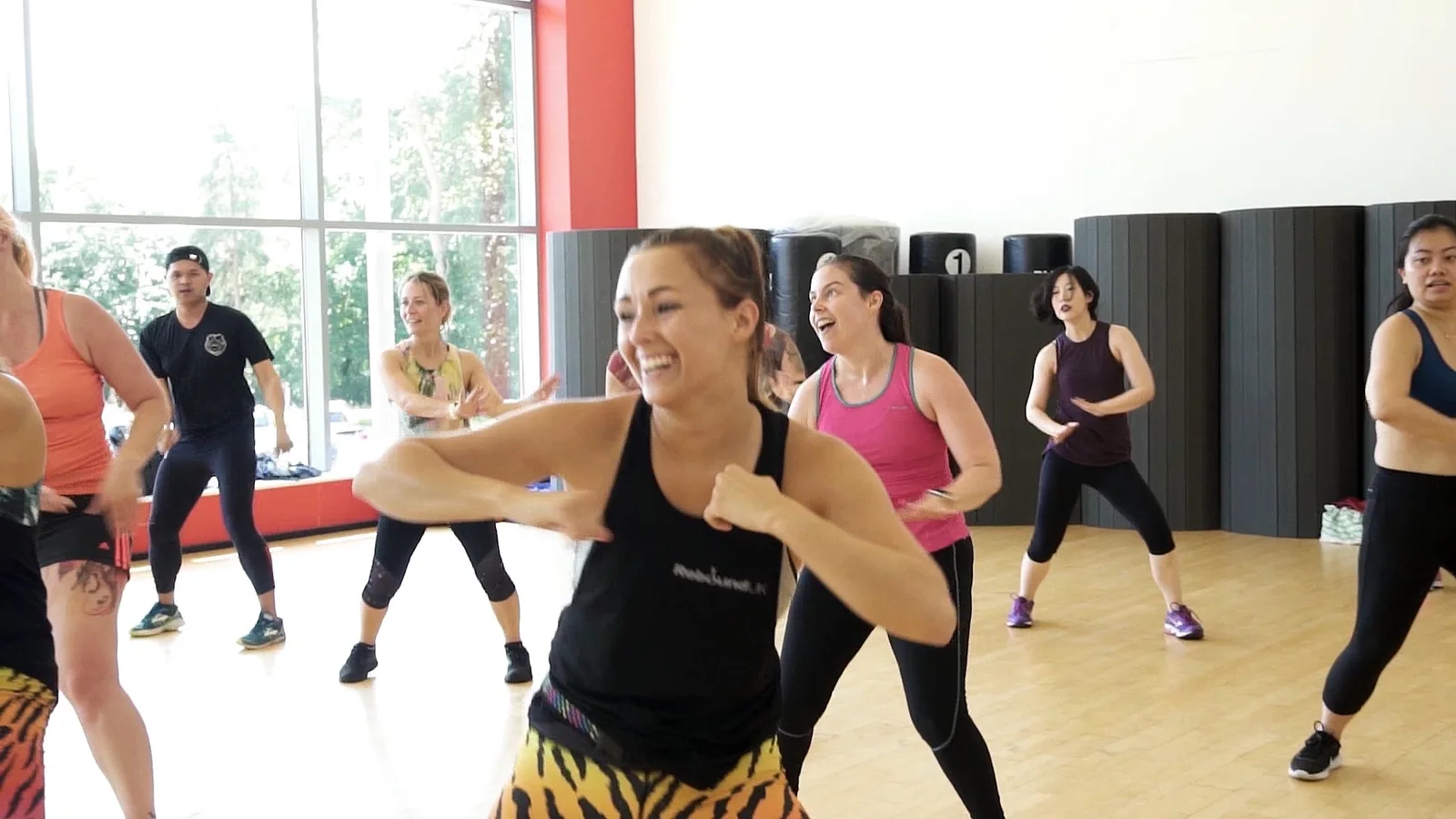
- a fitness coach can demonstrate a movement rather than describe it;
- a venue can show the transition from an empty room to a busy event;
- a restaurant can show ingredients becoming the finished dish;
- an engineer can point to the exact part being discussed;
- an attraction can show what visitors actually do when they arrive;
- a service business can let one of its experts answer a question in their own words.
This is why we tend to plan useful B-roll around the information a film needs to communicate rather than collecting random attractive shots.
If someone is talking about a process, the supporting footage should ideally show that process. If they are describing a product feature, show the feature clearly. If they are talking about the atmosphere of an event, give the audience enough real moments to judge that atmosphere for themselves.
Movement is useful when it contains information.
People are more convincing when they are allowed to be people
Social media is full of brand language that could have been written by almost any company.
“We are passionate about customer service.”
“We pride ourselves on quality.”
“We go the extra mile.”
Those statements are not necessarily false, but they are difficult for an audience to evaluate on their own.
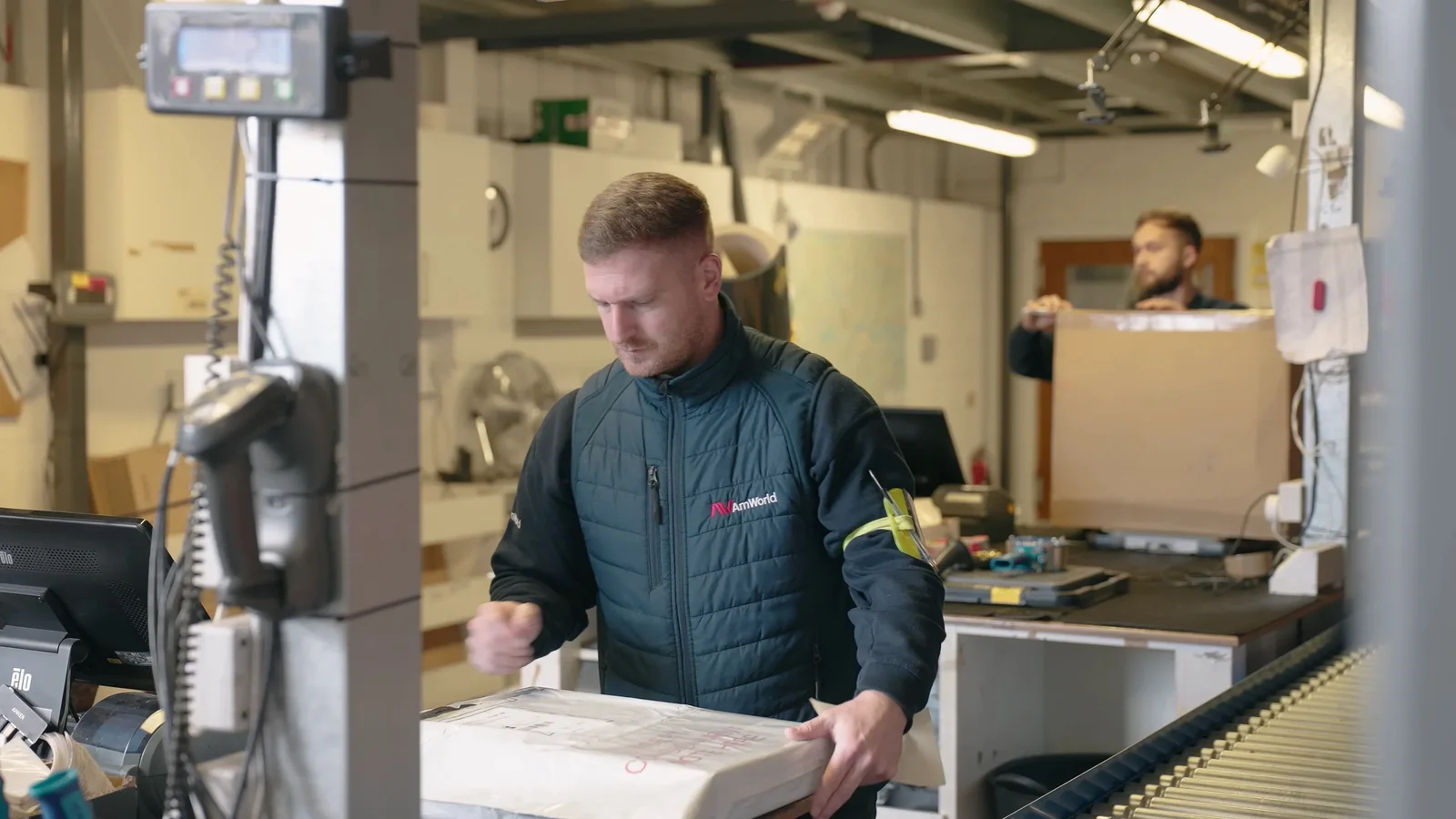
A person explaining a real problem, showing how they approach it or answering a specific customer question gives the viewer more to work with. Their expression, timing and tone become part of the communication.
That does not mean every social video should be somebody talking to camera. It means real voices are one of the things video can do particularly well.
Instead of asking a director to deliver a polished corporate paragraph, ask a useful question:
- What do customers usually misunderstand about this service?
- What should somebody prepare before they contact you?
- What is the first thing you check when this problem occurs?
- When would you advise someone not to choose this option?
- What happened on this particular project?
The answer usually sounds much more natural because the person is explaining something they genuinely know.
For businesses planning several of these pieces at once, our guide to creating a month of social media content in one filming day shows how to build the shoot around audience questions instead of recording eight versions of the same introduction.

Social video can sell an experience without describing it to death
There are subjects where the feeling of being there matters almost as much as the facts.
An event, festival, visitor attraction, hospitality venue or live performance is a good example. You can write that the atmosphere was energetic. Video can show people arriving, moving through the space, reacting, laughing, participating and leaving with something in their hands.
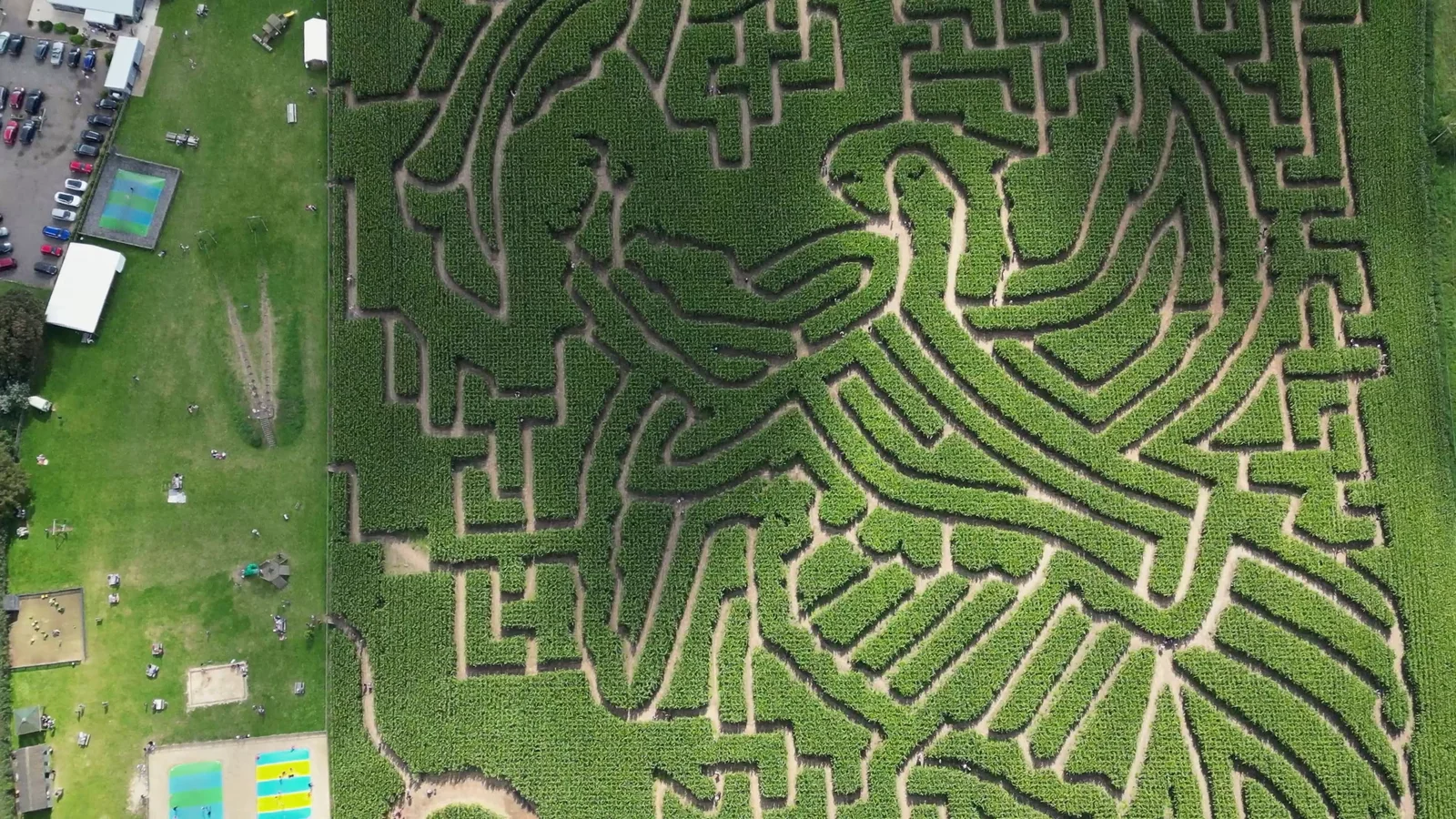
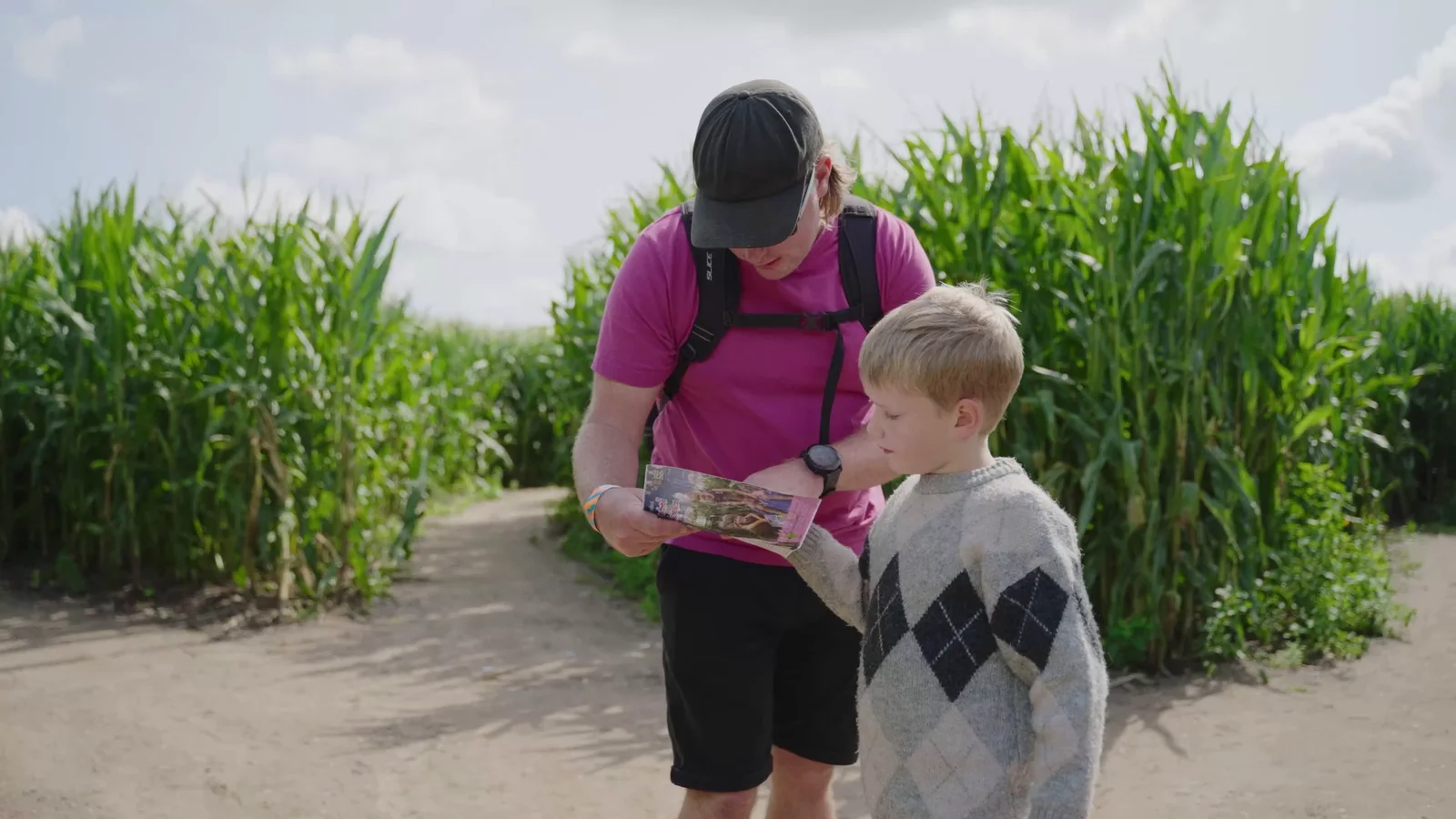
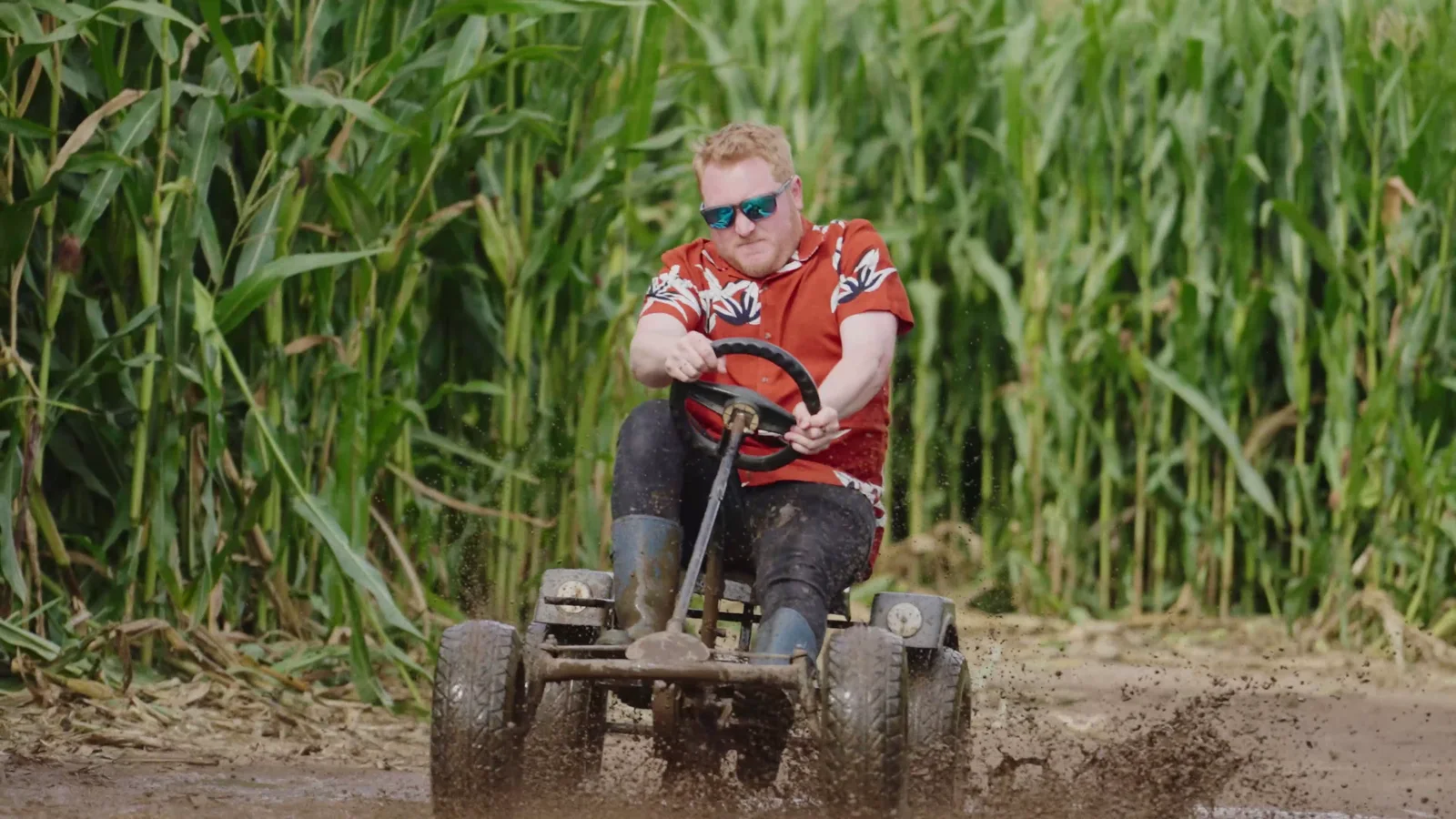
That difference shaped our work for Southwold Maize Maze. One videographer spent six focused hours filming the attraction, covering the maze, adventure play, zip line, pedal go-karts, water activity, café and surrounding walks.
The shoot was not planned around a single finished film. It was planned as a content bank, ultimately producing more than 100 pieces of usable material across promotional films, activity edits, social content and drone footage.
That is a useful distinction.
If social media is part of the brief, it is often better to capture for social media during the shoot than to finish one landscape film and later ask an editor to somehow manufacture twenty unrelated posts from whatever happens to be left over.
The first few seconds should start the idea, not delay it
There is endless advice online about “the three-second rule”, “hooks” and increasingly aggressive ways of stopping the scroll.
The better principle is simpler:
Start where the useful or interesting part starts.
If the video is about a common mistake, show or name the mistake early.
If it is a demonstration, begin close to the action.
If a customer has a strong observation, consider opening with that rather than making the viewer wait through a branded title sequence.
If the first frame is visually unusual, let it do some work before explaining everything.
This does not require shouting, manufactured controversy or captions such as “YOU WON’T BELIEVE THIS”. It means respecting the fact that the viewer has not yet decided to give you much time.
A logo can still appear. A company introduction can still matter. It simply does not have to occupy the most valuable opening moments of every social edit.
Good social video still needs to work without perfect listening conditions
Sound can make video significantly more powerful. A voice adds personality. Natural sound can make a place feel present. Music can control rhythm and mood.
But social viewing conditions are inconsistent. Somebody may be watching on a train, in an office, beside a sleeping baby or with their phone muted.
That is why important spoken content should normally have readable captions, and why the pictures should contribute meaning rather than relying entirely on narration.
A good test is to watch the finished edit once with the sound off.
Can you still tell what the subject is?
Can you understand who is speaking?
Can you follow the important action?
Then watch it again with sound and ask a different set of questions. Is the dialogue clear? Is music fighting the voice? Does natural sound add something, or is it simply noisy?
Professional audio matters even for small-screen content. Our guide to why professional audio matters more than you think explains why microphone placement and recording conditions are difficult to rescue after the fact.
Vertical video is not just landscape footage with the sides chopped off
A 9:16 frame is a genuinely different composition from a 16:9 frame.
That matters if the film contains two people, a wide product, a piece of machinery, text, a demonstration or an environment where the surrounding space is important.
Our vertical versus horizontal video guide shows the maths: a full-height 9:16 crop from a 16:9 image retains only a relatively narrow section of the original width.
Sometimes a central subject can survive that perfectly well. Sometimes the vertical crop removes the second person, the product being discussed or the action the viewer actually needs to see.
If vertical delivery matters, plan it before filming.
That might mean:
- keeping essential action inside a protected area;
- capturing selected shots twice with different framing;
- using a second camera for important unrepeatable moments;
- recording closer supporting shots specifically for vertical edits;
- leaving sensible space for captions and platform interface elements.
The aim is not to film every moment twice. It is to know which moments cannot simply be cropped later.

One shoot can produce a family of social content
One of the biggest advantages of planning social video properly is that the shoot does not need to produce only one asset.
A useful filming day might give a business:
- one main promotional film;
- several short expert answers;
- product or process demonstrations;
- vertical clips;
- customer or staff soundbites;
- event moments;
- a bank of clean B-roll;
- photographs captured alongside the video where the crew and schedule allow it.
We saw this develop over a longer creative relationship with Jellyshotz. The work included product photography, product films, festival coverage and a library of short videos for social media. At events, individual crowd moments, reactions and short exchanges could become standalone vertical pieces rather than existing only as fragments inside a longer montage.
That is a much more useful way to think about repurposing.
The objective is not to upload the exact same file everywhere. The objective is to capture strong source material and then make each version work in the place it is going to be watched.
Our guide to repurposing one video across Instagram, TikTok, LinkedIn and YouTube goes into that process in more detail.


Short does not automatically mean better
Social video is often short because the idea itself is small.
One question. One demonstration. One misconception. One reaction. One product detail.
That is very different from taking an idea that genuinely needs two minutes and compressing it into twenty seconds because somebody has heard that attention spans are disappearing.
A short video should complete one useful job quickly.
A longer video earns its runtime when the audience needs context, evidence, several steps or a more complete story. Our short-form versus long-form video guide explores that distinction.
On social media, the shorter piece may introduce the question while a longer film, article or case study resolves it. Those pieces are not competing with each other; they can be different stages of the same journey.
Sometimes a photograph or a sentence is better
Not every social post needs to move.
If the message is “we close at 3pm on Friday”, text is probably doing the heavy lifting.
If you need somebody to compare four prices, a table may be more useful than a video that forces them to pause on each figure.
If a beautifully lit photograph shows a finished product perfectly, adding an unnecessary camera orbit does not automatically make the communication stronger.
If you are announcing one date, one location or one vacancy, clarity may matter more than cinematic production.
The format should reduce effort for the audience, not increase it.
This is also why a good content plan usually includes a mixture of video, photography and written material rather than trying to make one medium perform every job.
What about the statistics saying video gets more engagement?
There is genuine evidence that video is heavily consumed on social platforms. LinkedIn, for example, currently reports a 36% year-on-year increase in video views on its platform and says video achieves an engagement rate three times that of static posts.
Those figures are useful context, but they need sensible limits.
LinkedIn is reporting performance on LinkedIn. It is also a platform selling advertising and video products. Its published headline does not mean every business will triple its results by replacing static posts with video, and engagement is not the same thing as an enquiry, a sale or profit.
Treat platform statistics as a reason to test, not a promise.
The more useful evidence will eventually come from your own audience, subject matter and distribution.
Measure the job the video was supposed to do
A social video can receive thousands of views and still achieve very little for the organisation that paid to make it.
Equally, a niche B2B clip may receive modest viewing numbers and start exactly the right conversations.
Before publishing, decide what the piece is meant to do.
| If the video is designed to… | Useful things to examine might include… |
|---|---|
| Introduce the business to new people | Relevant reach, profile visits, follows from the intended audience |
| Explain a product or service | Watch behaviour, saves, useful questions, progression to the relevant page |
| Generate enquiries | Qualified clicks, form submissions, calls and the quality of resulting leads |
| Support recruitment | Visits to the role page, suitable applications, questions from candidates |
| Promote an event | Ticket-page visits, registrations, enquiries and remarketing audiences where appropriately measured |
| Build a reusable content series | Repeat viewing, useful comments, subjects people ask for next, production efficiency |
Do not use the table as a promise that one number proves causation. It is simply a better starting point than celebrating view count in isolation.
For commercial campaigns, our guide to measuring video marketing ROI explains how to connect the content to a defined outcome without pretending every later sale was caused by the video.
A simple brief for your next social video shoot
Before the cameras arrive, write down six things:
1. Who should care?
Be more specific than “our followers”. Is this aimed at existing customers, prospects, applicants, event attendees or people discovering the company for the first time?
2. What should each video help them understand?
Give every planned piece one clear job.
3. What can we actually show?
List the people, processes, products, locations, demonstrations and real activity that make the subject visible.
4. Where will it be published?
Identify the platforms and placements that matter so framing and versions can be planned before the shoot.
5. What action makes sense afterwards?
The answer may be visiting a page, asking a question, saving the post, registering, enquiring or simply watching the next part of a series.
6. How many finished versions are actually required?
Eight ideas in two aspect ratios are sixteen exported files, not “just eight videos”. Captions, reframing, graphics and review all add post-production work.
That short brief immediately gives the filming day more direction.
The reason video works is also the reason bad video fails
Video gives you movement, timing, sound, expression, sequence and atmosphere.
Those are powerful tools when the subject needs them. They are also more opportunities to waste the viewer’s time when it does not.
The strongest social films tend to make their value obvious quickly and then deliver on it. They show the real process. They let somebody explain something useful. They reveal an experience. They demonstrate the detail that matters.
They do not work simply because the file happens to be an MP4.
If your business needs a regular bank of films rather than a single post, we can plan professional video production around the actual channels, formats and subjects you need. For larger campaigns, we can also build social edits alongside corporate video production or a brand film so the material is captured properly from the start.