
How to Film a Professional Customer Testimonial Video
A customer saying you were great to work with is a nice endorsement. A customer explaining what they needed, what worried them and how the work turned out gives a prospective buyer something more useful.
Filming that story takes preparation, but it does not require turning your customer into a presenter. The job is to create a comfortable conversation, record it clearly and gather the pictures that help someone else understand the experience.
Here is how to approach a customer testimonial video, from choosing the person to checking the finished edit.
Find the experience your audience needs to hear about
Before approaching a customer, decide which question the film should answer. Perhaps prospective clients worry about disruption during an installation. Perhaps they understand your product but cannot picture how it would fit into their working day.
That gives you a reason to choose one story over another. The customer who dealt with implementation may have more useful detail than the director who signed the contract. For a different film, the director's explanation of the original decision might be exactly what you need.
Have a short conversation before arranging the shoot. Establish what happened, which parts the person experienced directly and what they are comfortable discussing. A story does not need a spectacular financial result: a well-explained change in someone's daily work can be valuable too.
Our guide to why customer testimonial videos build trust explores the audience side of this. For filming, turn that thinking into a simple brief: who will watch, what they need to understand and what this particular customer can explain.
Make the arrangements clear before the camera arrives
Tell the customer what the conversation will cover, who will attend and how much time to set aside. Explain that you will edit the interview, so they do not need to deliver a finished speech in one take.
Share themes rather than proposed praise. Ask them to think of a particular incident, a decision they remember or an example they can show you. Useful preparation is remembering the experience, not learning your company's preferred adjectives.
Agree where the film may appear, whether you need shorter extracts or paid advertising versions, and the intended period of use. Identify who can authorise participation, filming at the premises and use of the customer's organisation name or logo. The interviewee and their employer may have different approval responsibilities.
For UK non-broadcast marketing, ASA/CAP guidance on testimonials explains the requirements around permission, evidence that an endorsement is genuine and keeping the contributor's contact details. Relevant commercial interests or incentives should not be hidden. Sector-specific requirements may also apply; this is a production starting point, not a substitute for appropriate legal or compliance advice.
Allow time for setup, microphone fitting and supporting footage as well as the interview itself. Our guide to preparing for a corporate video shoot covers the access, clothing and workplace arrangements worth sharing with everyone involved.
Choose the room for sound as well as appearance
A glass meeting room overlooking a busy office might look impressive. It is less useful when every answer comes with an echo, a coffee machine or a conversation from the corridor.
Listen in the proposed room before committing to it. Check ventilation, nearby machinery, deliveries and anything likely to interrupt the recording. Ask the site contact what can safely be paused and what needs to remain running. A quieter room for the interview, followed by footage of the operational space, is often a sensible compromise.
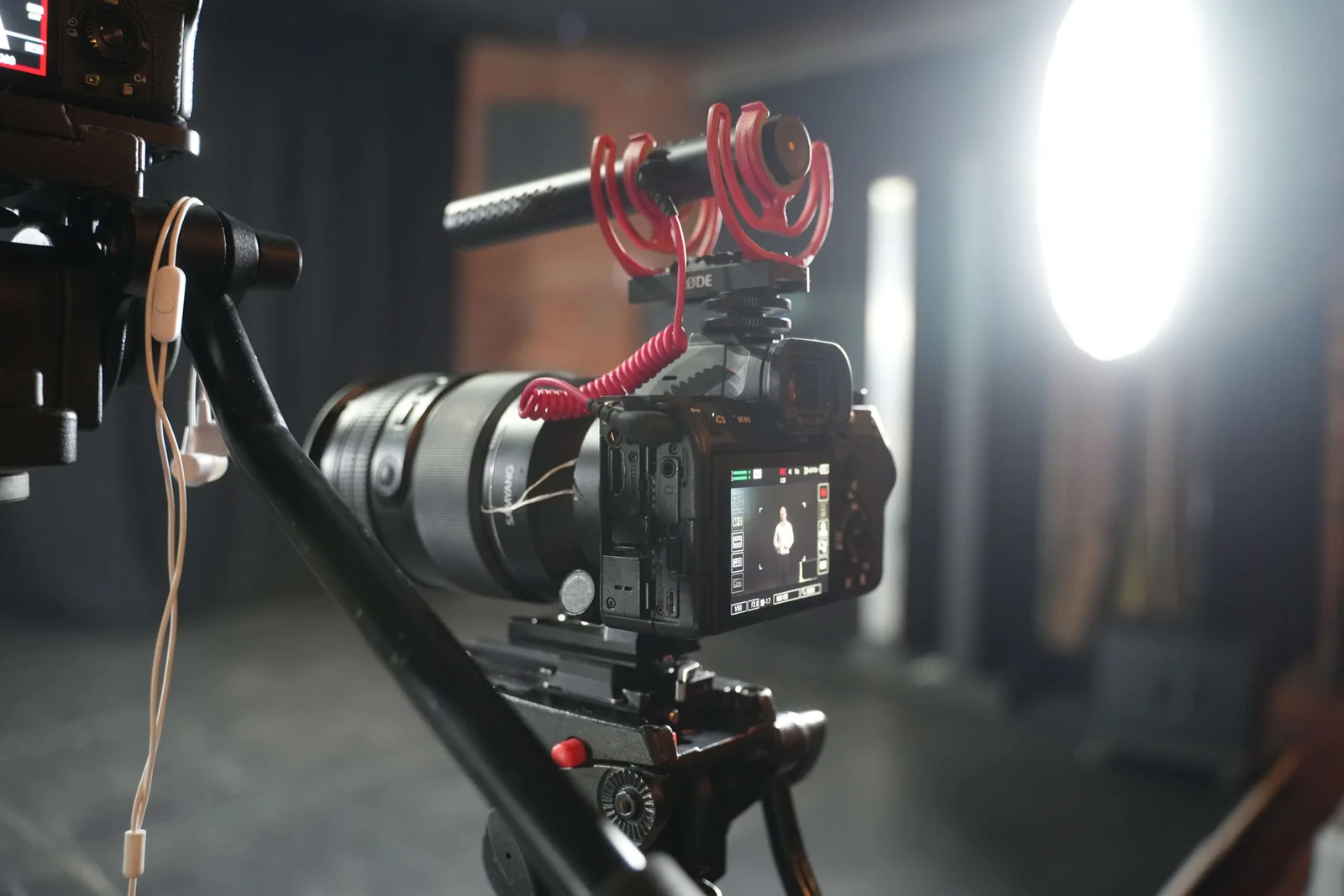
Put the microphone close enough to do its job. A camera across the room is not a good place to rely on an onboard microphone. A properly positioned clip-on microphone or a suitable microphone just outside the frame gives you more control over the voice. Check for clothing rubbing against a clip-on mic, and listen through headphones during recording, not just when setting up.
Record and play back a short test with the customer speaking normally. Our explanation of why professional audio matters covers why microphone placement and the room deserve attention before the edit.
For the picture, start with a stable camera around eye level and a background that says something relevant without competing with the speaker. Keep confidential screens, paperwork and unrelated people out of view. Use soft, controlled light on the face, check focus and avoid exposure or white balance visibly changing during an answer.
A second camera gives the edit another angle, but it is not essential. One well-recorded view with useful supporting footage is a better starting point than two views nobody is properly monitoring.
Ask for the story, then follow the interesting answer
An interview plan should help you listen, not force the customer through a rigid questionnaire. Cover the situation, the decision, the working experience and the outcome, then follow up where something needs explaining.
These prompts are starting points to adapt, not a script to read word for word:
| What you need to understand | A possible question |
|---|---|
| The original situation | What was the team finding difficult before the project began? |
| The decision | What did you need to be confident about before going ahead? |
| The experience | Could you talk me through how the first stage worked from your side? |
| A concrete example | Is there a particular day or incident that sums up the experience? |
| The outcome | Looking at the way you work now, what has changed and what has stayed the same? |
Ask one question at a time. Three questions bundled together make it easy to miss the part you actually need.
When an answer is vague, follow the customer's words rather than supplying a stronger claim. Here is an illustrative exchange, not a quotation from one of our projects:
Customer: “The communication was really good.”
Interviewer: “How did they keep you informed while the work was happening?”
That follow-up gives the customer room to describe what good communication meant. It does not assume there were daily updates, a dedicated contact or any other detail they have not mentioned.
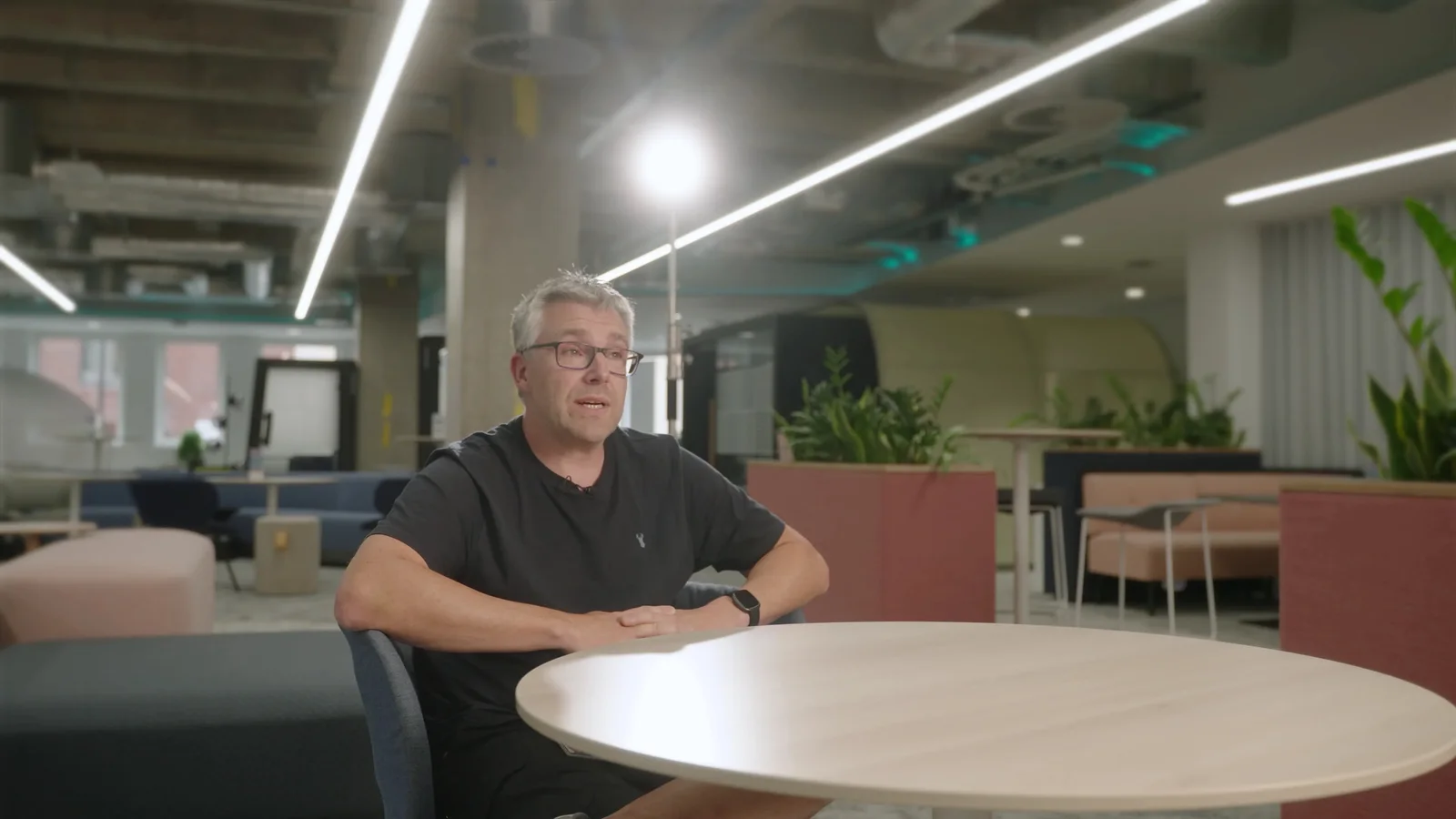
For a conversational interview, have the customer look towards the interviewer beside the camera. Direct-to-camera delivery can also work, but agree the approach so their attention is not shifting between people in the room.
Stay quiet while they answer. A nod is more useful to the recording than repeatedly saying “yes” over their voice. Leave a pause before the next question, and explain that restarting an answer is entirely normal.
Where the interviewer will be removed from the edit, encourage answers with enough context to stand alone. The customer can name the project or service naturally without mechanically repeating every question.
Film what the customer is talking about
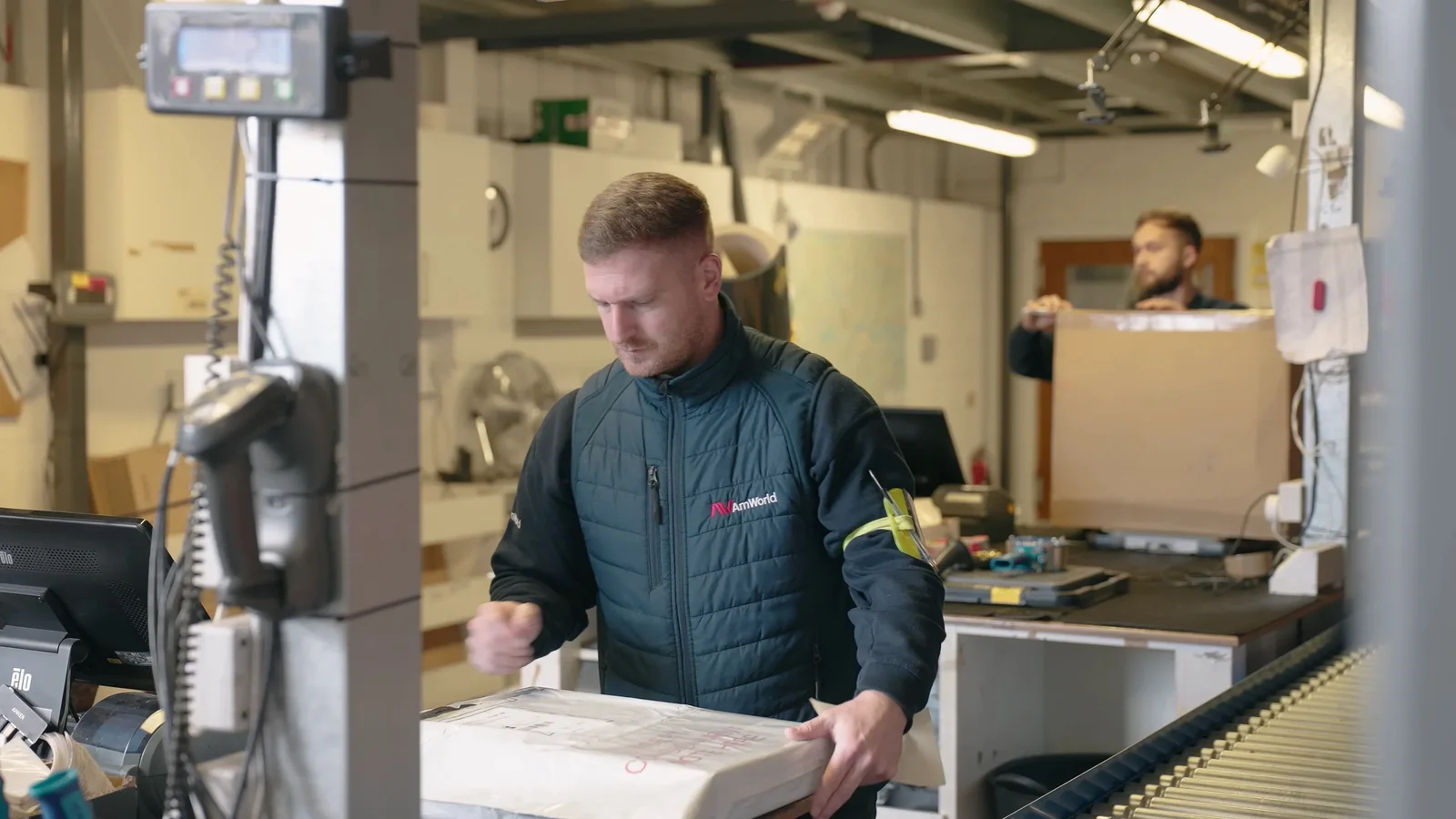
Supporting footage, often called B-roll, should make the account easier to follow. A customer describing a new piece of equipment gives you a reason to show it being used. A discussion about a working relationship might be supported by an actual meeting, demonstration or visit.
Prepare a small shot list from the likely interview themes, then adjust it when the customer mentions something useful. Capture the setting, the activity and closer details rather than collecting lots of unrelated office shots. Leave each shot running long enough to give the editor a choice of where to use it.
A real example: Sony and AMWORLD
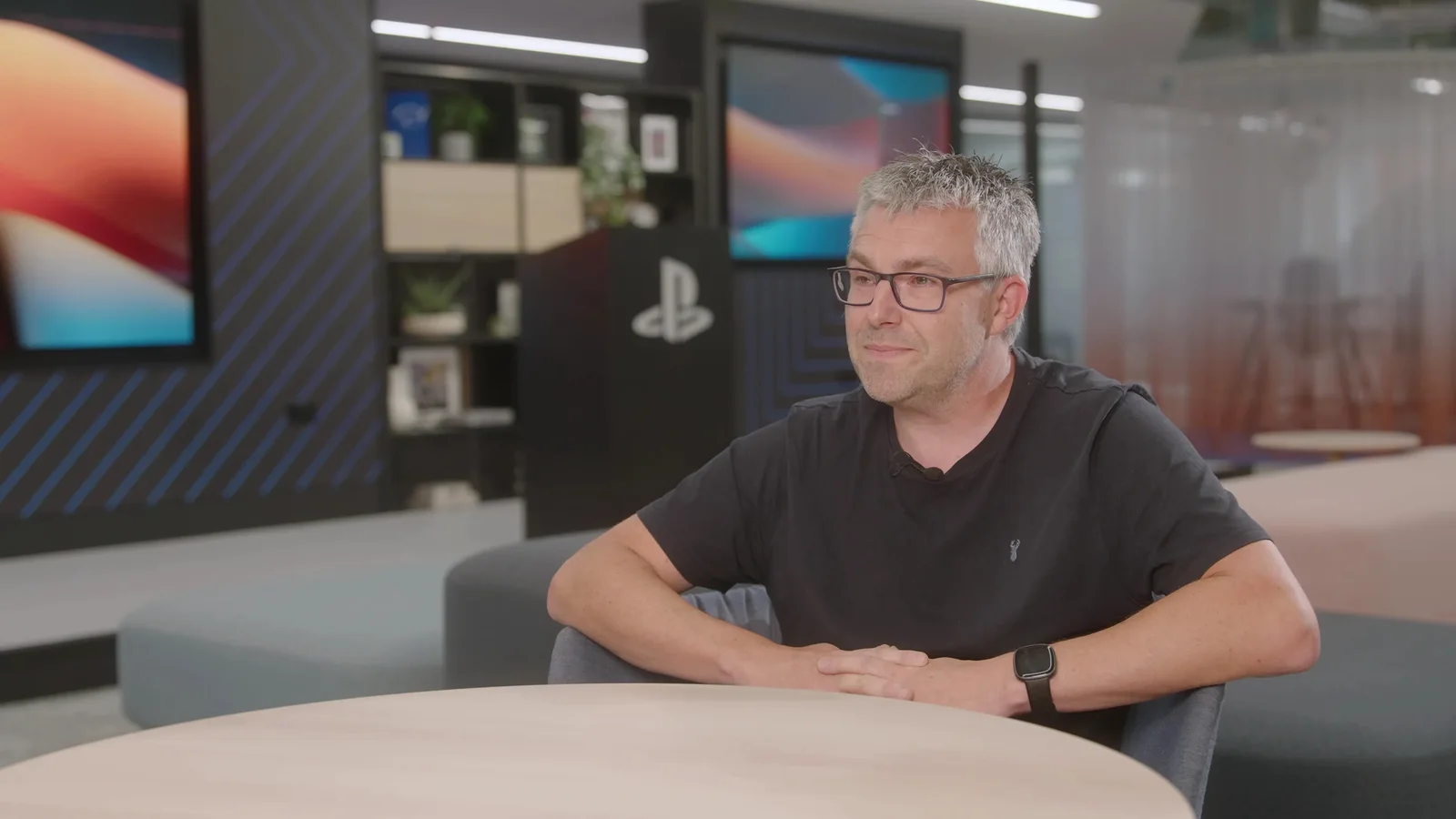
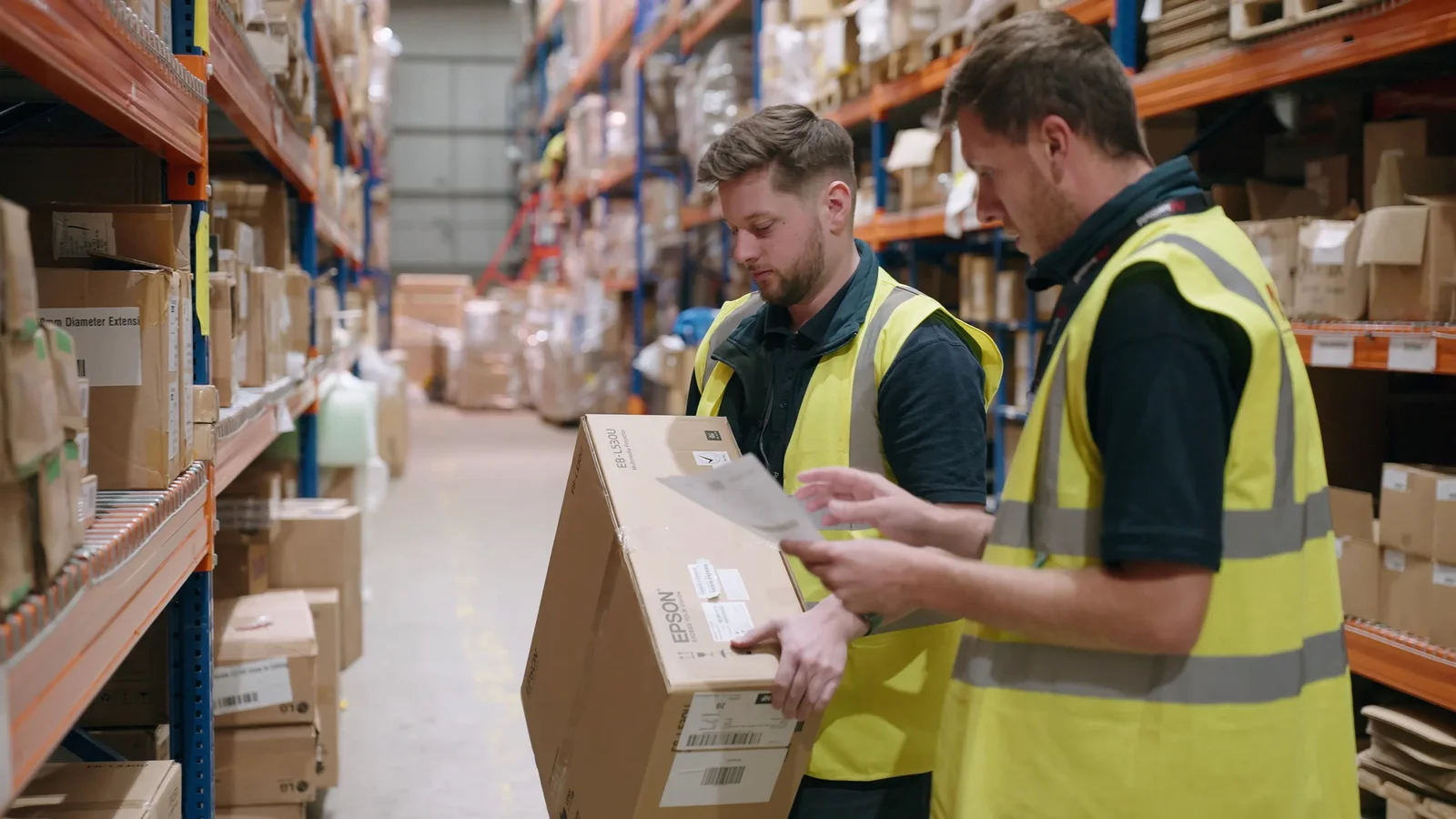
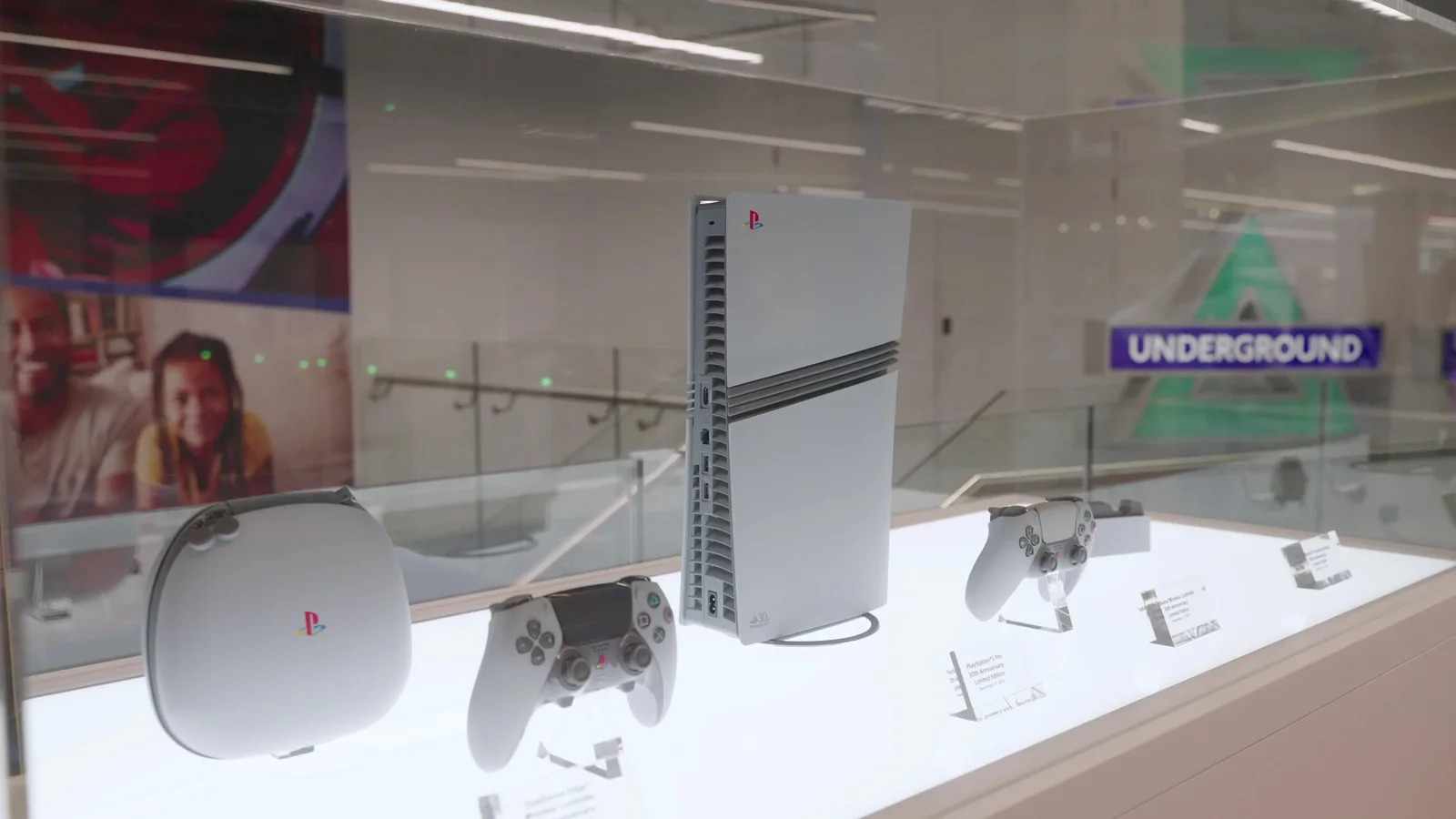
For our Sony and AMWORLD corporate testimonial, commissioned via AMWORLD / Mitchell & Stones, we filmed Darren from Sony discussing the logistics relationship at Sony Europe's London headquarters.
The production combined a two-camera interview with supporting footage around the offices. Asking Darren to show the visiting AMWORLD team around gave everyone a shared activity rather than an instruction to look busy. The tour provided opportunities to film people interacting while establishing the location.
We discuss that approach further in our article on filming natural corporate interviews and B-roll.
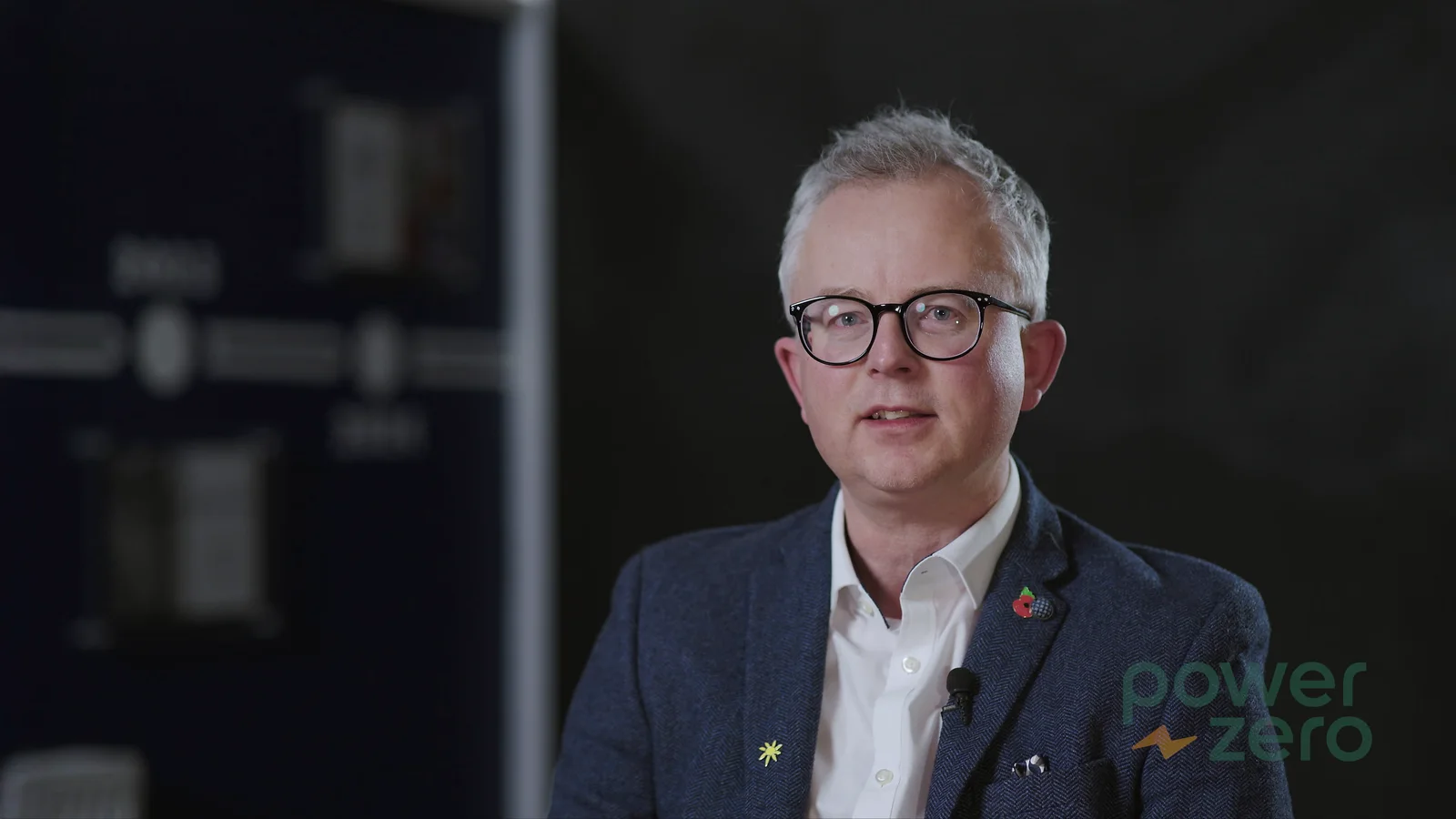
A different setting calls for different pictures. Our Mail Solutions testimonial for Power-Zero combined a leadership interview with manufacturing footage and aerial views of the rooftop solar installation. Those images helped explain the setting and the project; they were not a substitute for evidence behind any performance claim.
Do not recreate an outcome that never happened or present unrelated stock as the customer's premises. Where a real activity is repeated for the camera, keep it representative of what actually takes place and safe for the people involved.
Shorten the conversation without changing the account
The edit rarely needs to follow the order in which the questions were asked. You might open with a useful observation, establish who is speaking, then explain the situation that led to it.
Remove repeated points and material that does not help the viewer. Keep qualifications that affect the meaning. A result achieved by one department during a trial should not become a promise about every customer, simply because the shorter sentence sounds stronger.
If a customer mentions a saving, a percentage improvement or another measurable result, check the supporting information and the comparison being made. ASA/CAP guidance on claims within testimonials makes clear that a testimonial alone does not substantiate objective advertising claims. A sincere statement can still need evidence.
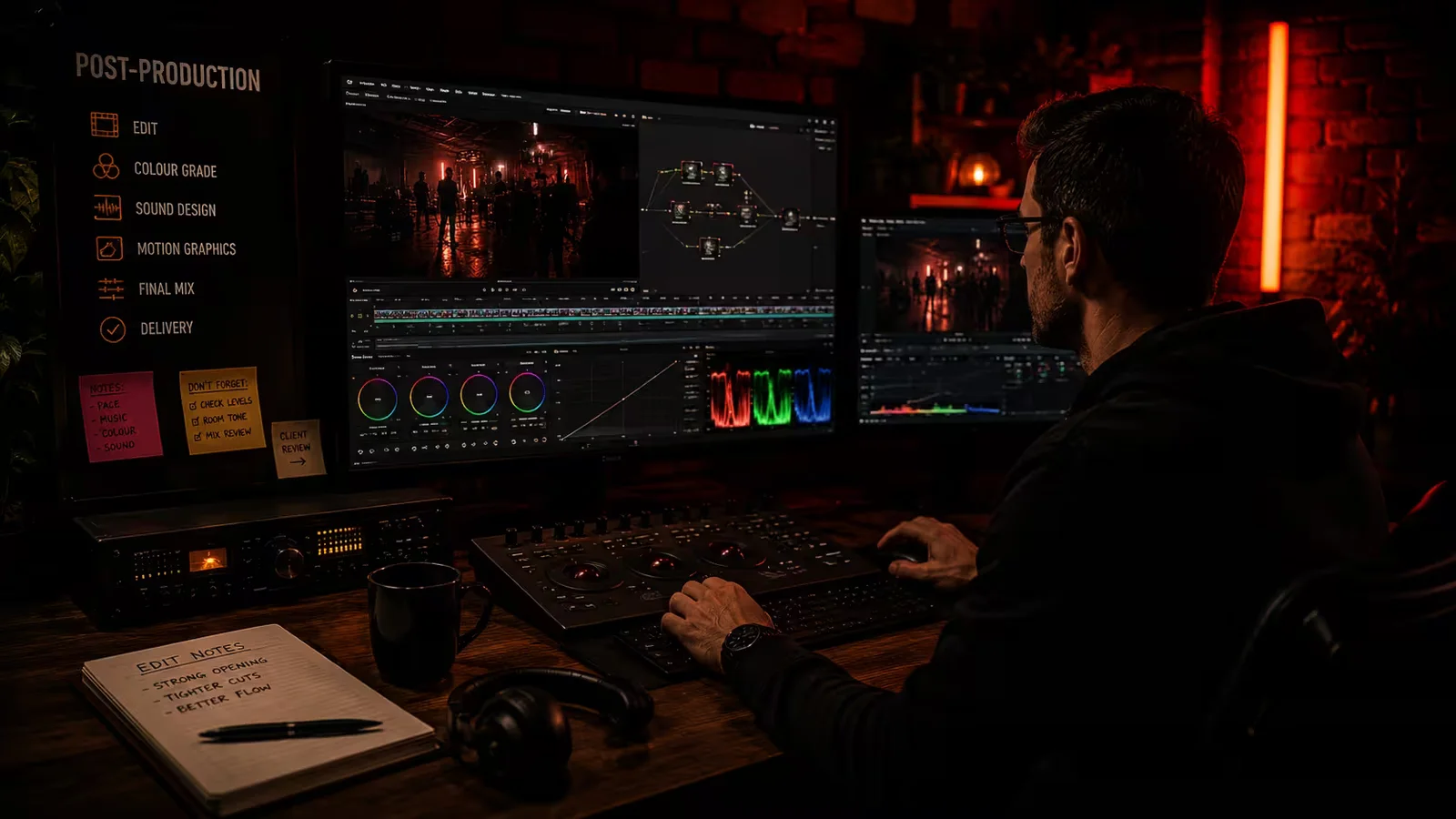
Use supporting footage and alternate angles to make necessary edits flow, not to hide a change in meaning. Check names, job titles and company details, and keep music at a level that leaves speech easy to follow. Aim for consistent, believable pictures; our colour grading guide explains how matching and finishing fit together.
Agree the review route before filming. One person should gather feedback from your team and the customer, separating factual corrections from preferences. Customer approval should confirm that the film represents their experience, not turn every natural phrase into a marketing slogan.
Plan the finished versions, not just the main film
There is no single duration that makes every testimonial effective. A detailed website case study and a short extract answering one sales question do different jobs. Give each version enough time to make its point without retaining material simply because you filmed it.
Specify the destinations before the shoot. A landscape website film, a vertical social edit and a presentation version may need different framing, titles and introductions. A short extract must still make clear who is speaking and what they are discussing; do not remove an important condition just to meet a duration target.
Include captions in the delivery discussion. Check names, technical terms, timing and any meaningful non-speech information rather than publishing automatic captions unchecked. The W3C guidance on captions explains their accessibility role. Preview each version on the screen size where people will actually watch it, with captions clear of faces and titles.
Before publication, check that the customer has approved the agreed uses and that the files match those uses. Keep an organised record of permissions, approved edits and supporting information. Revisit older films when the product, service or relationship changes enough to make their presentation misleading.
For the wider commissioning decisions, our complete corporate video production guide covers scope, review stages and handover.
Recording the interview yourself?
A phone can be a practical option when access or budget makes a crew difficult. The same priorities apply: a quiet location, a steady frame, suitable lighting and clear sound. Test the complete recording setup before using your customer's time, and check that the device is actually recording the microphone you intend to use.
Discuss the planned edit before recording, especially when you need several formats. Capture supporting footage and keep the original files, rather than only sending compressed copies through a messaging app. Our Film It Yourself service brings customer-recorded footage into a professionally edited film, with the scope agreed around the material and versions needed.
For a managed shoot, our corporate video production service can bring the interview and supporting coverage together. Tell us about the customer story, where filming could happen and where the finished video will be used. That is a useful starting point for planning the production around the customer's time and experience.