
Scripted vs Unscripted Corporate Video: Which Fits Your Message?
A corporate video does not have to choose between two extremes: a presenter reciting every approved word, or somebody being put in front of a camera and told to "just talk naturally".
Most good business films sit somewhere between the two.
Some parts of a message need precise wording. A technical update, safety instruction, product claim or formal announcement may need to be agreed before the camera rolls. Other parts become far more convincing when the person speaking can explain what happened in their own words.
The useful question is not simply scripted or unscripted? It is which parts of this film need control, and which parts need room to breathe?
That decision affects far more than the contributor. It shapes the filming schedule, interview questions, teleprompter setup, B-roll, approvals and the amount of flexibility available in the edit.
If you are planning a wider business film, our corporate video production service covers the whole process from brief and creative direction through filming, editing and delivery.
Unscripted does not mean unplanned
This is the distinction that matters most.
A well-run interview may be completely unscripted at sentence level, but it should still have a purpose, a set of themes and an interviewer who knows what the finished film needs.
Before filming, we might know that a contributor needs to explain:
- what their organisation does;
- who it helps;
- why a particular project mattered;
- what changed during the work; and
- what the audience should understand afterwards.
What we do not necessarily need is a paragraph they have memorised word for word.
Instead, the contributor can answer questions from experience. A useful interviewer can then ask for an example, clarify jargon or follow an unexpected detail that turns out to be more interesting than anything in the original brief.
That is very different from arriving with no preparation and hoping something useful happens.
Our guide to corporate video interview questions goes deeper into how we structure questions to get specific, usable answers rather than vague corporate language.
Start with what cannot afford to be wrong
A simple way to decide how tightly a section should be controlled is to ask what happens if the wording changes.
| Type of message | Useful starting point | Why |
|---|---|---|
| Technical or project update | Scripted or hybrid | Dates, milestones and terminology may need precise approval |
| Safety or process instruction | Scripted | Sequence and wording may have practical consequences |
| Founder or employee story | Interview-led | Personal experience usually sounds stronger in the speaker's own language |
| Customer testimonial | Interview-led with factual review | The customer should describe their genuine experience, not repeat supplied praise |
| Product or service announcement | Often scripted | The offer, qualification and next action may need to be exact |
| Brand or company film | Often hybrid | Core messages can be controlled while people and activity provide personality |
This is why one method should not be applied automatically to an entire production.
A film may need a carefully approved opening, a conversational interview in the middle and a scripted call to action at the end. That is not a compromise. It is often the most sensible structure.
When a script earns its place
Scripts are useful when the actual wording matters.
They give everyone something concrete to review before filming. Legal, technical, marketing and leadership teams can see the same sentences rather than approving a rough description of what somebody might say on the day.
They also make it easier to estimate duration. As a rough planning tool, spoken scripts can be timed before filming, which helps when a film has to fit a defined slot or when graphics and supporting footage need to align with specific sections.
For projects with multiple versions, a script can also make changes easier to track. Perhaps the same video needs a UK and international version, or separate endings for different audiences. Knowing which words are fixed makes those variations easier to plan.
There is a cost, though: the work moves earlier in the process.
The script has to be written, reviewed and rewritten before the shoot. If five stakeholders all have different ideas about one sentence, the camera cannot solve that disagreement for them.
A late script change can also affect more than the person speaking. It may alter graphics, captions, planned shots, timings or the structure of the edit.
A script should be written for speaking, not reading
One of the most common problems with corporate scripts is that they sound like website copy.
Long sentences, nested clauses and formal phrases may survive perfectly well on a page but become difficult to say naturally while looking into a lens.
Read the script aloud before filming. If the contributor repeatedly loses the sentence halfway through, the problem may be the writing rather than the presenter.
Shorter phrasing, contractions and a more conversational rhythm normally help. The goal is not to make somebody sound casual if the subject is serious. It is to make the words sound as though a human being would actually say them.
A teleprompter can then remove the memory task while keeping the contributor close to the camera's eyeline. Our guide to what a teleprompter is and when to use one explains the setup in more detail.
A real example: Root-Power project updates
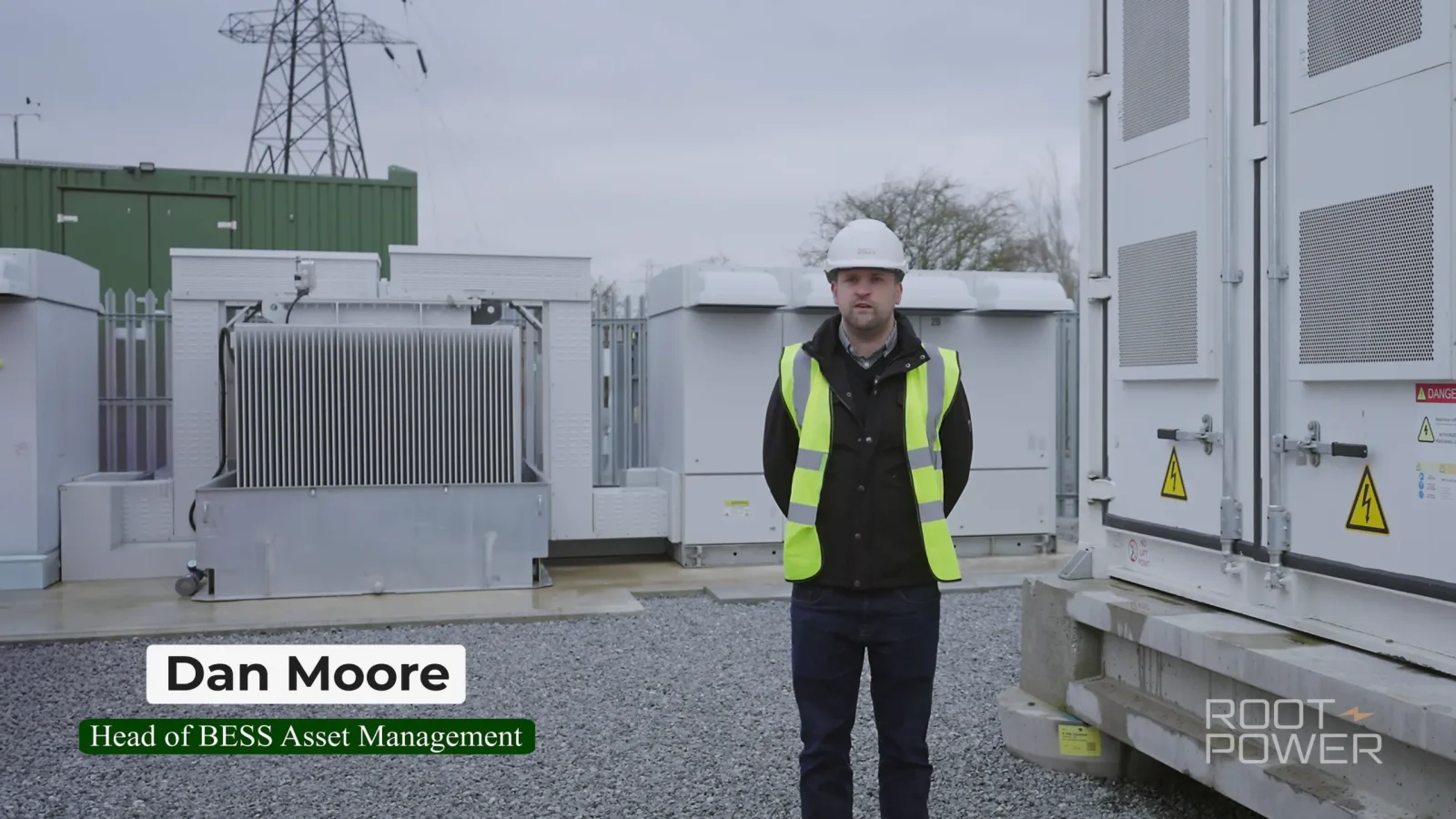
Our work with Root-Power at Coryton BESS is a good example of scripting being used for a clear reason rather than because "corporate videos should be scripted".
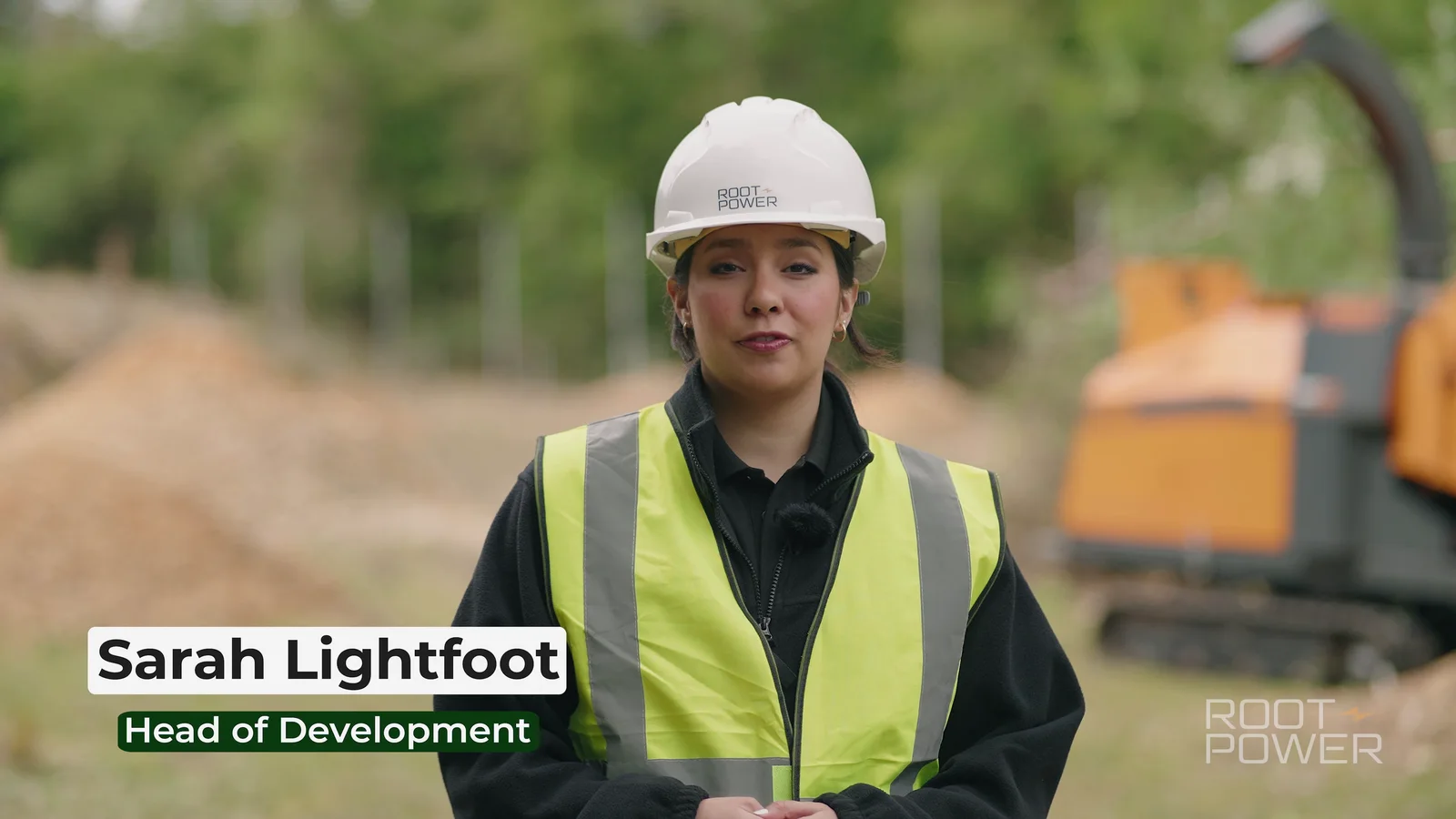
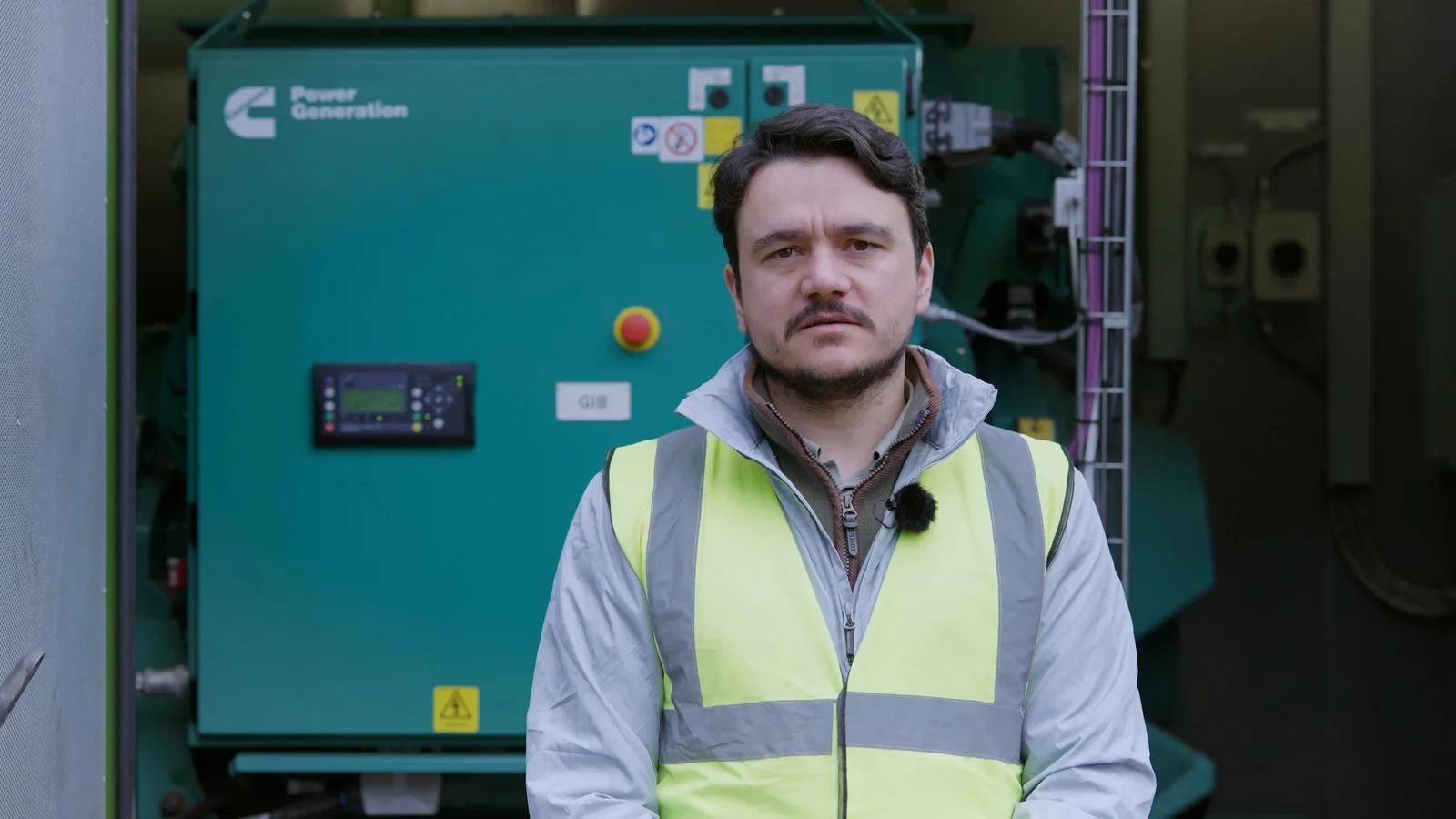
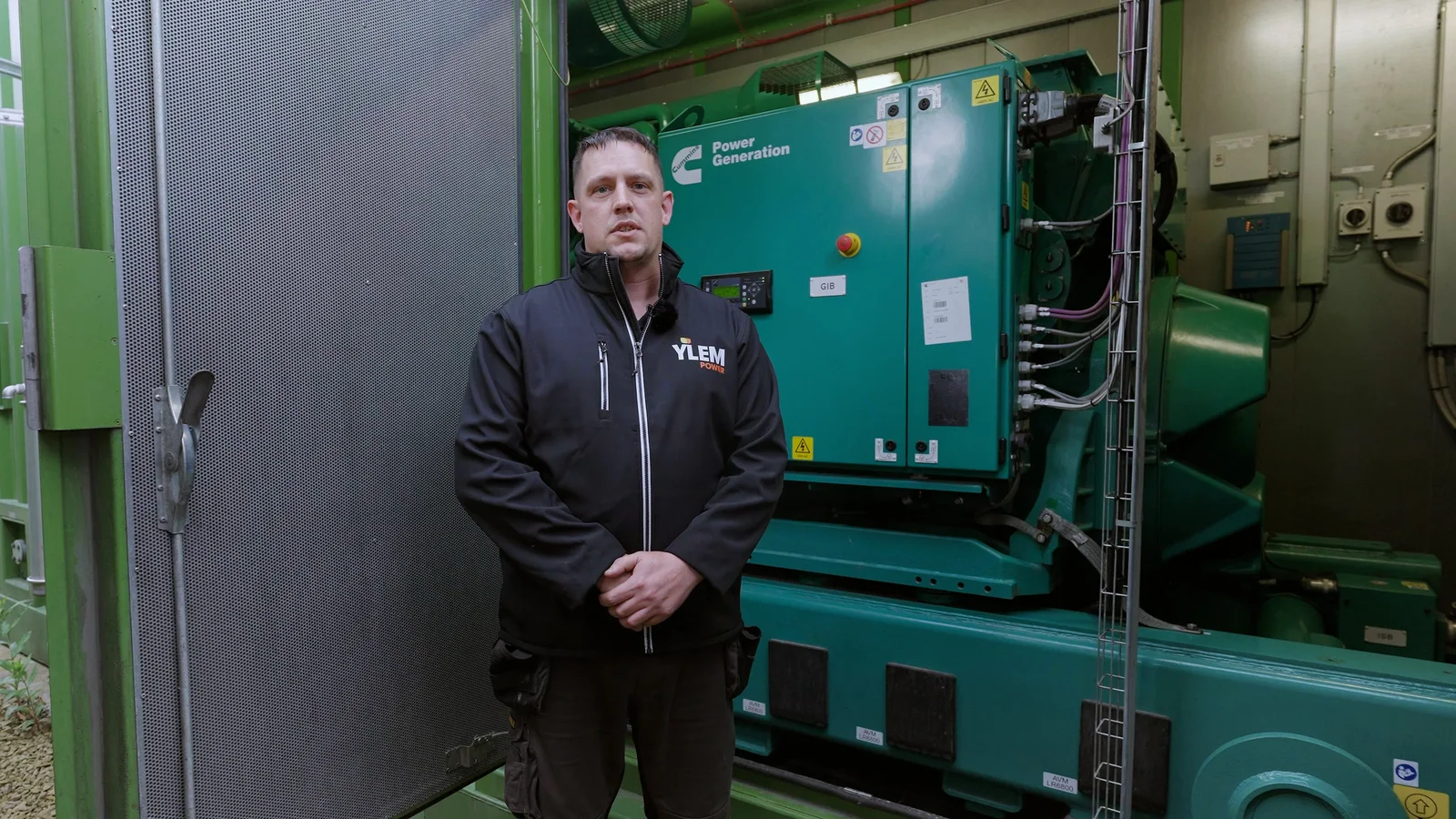
The return visit involved detailed project updates from people close to the development. The information needed structure and accuracy, so we used a professional teleprompter for direct-to-camera delivery.
That did not make the whole production rigid. The spoken sections provided the controlled explanation, while ground footage and drone filming showed the site and its progression visually.
A later Root-Power project at Tillingdown used the same principle: agreed wording for technical project communication, delivered by the people actually involved in the work.
The prompter was a tool for the message. It was not the creative concept.
When an interview is stronger than a script
If you need somebody's experience, judgement or point of view, writing every sentence for them can remove the thing you wanted them for in the first place.
A subject specialist may be able to explain a difficult idea brilliantly when asked a precise question, yet sound wooden when reading a paragraph written by somebody in marketing.
A founder may tell a better company story when describing what actually happened than when trying to remember a polished origin story word for word.
And a customer testimonial should sound like the customer. Supplying them with praise and asking them to perform it undermines the value of using a real customer in the first place.
Our customer testimonial filming guide covers that distinction in detail.
Interview-led filming also gives the interviewer permission to follow useful detail.
Suppose somebody says:
"The original plan changed halfway through the project."
A script simply moves to the next sentence. An interviewer can ask:
"What changed, and what did you do differently because of it?"
That follow-up may produce the most useful part of the film.
The trade-off moves into the edit
Unscripted material gives you flexibility during filming, but somebody has to shape that material afterwards.
A contributor may answer the same point three different ways. They may explain the useful example before giving the context. A stronger sentence may appear twenty minutes into a conversation rather than in response to the question where you expected it.
The editor has to find the clearest structure while preserving what the contributor actually meant.
This is why an interview-led production needs enough recording time and enough post-production time. "We will just ask them a few questions" is not automatically the cheap or simple option.
A real example: Opul Life
Our Opul Life corporate film used a different balance from the Root-Power projects.
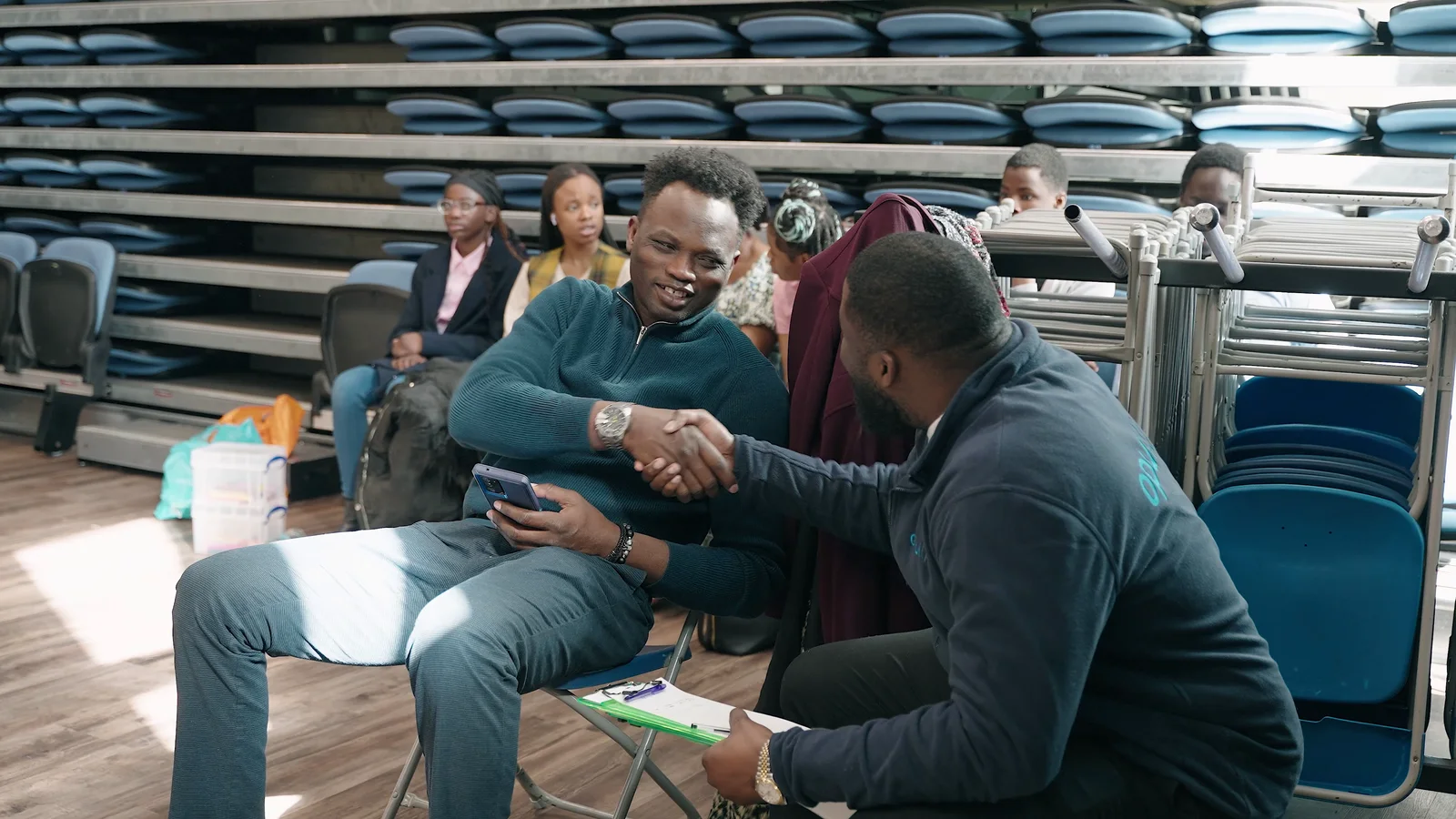
The film needed to explain the company clearly, but it also needed to show its advisers working with real communities in Chelmsford and Colchester.
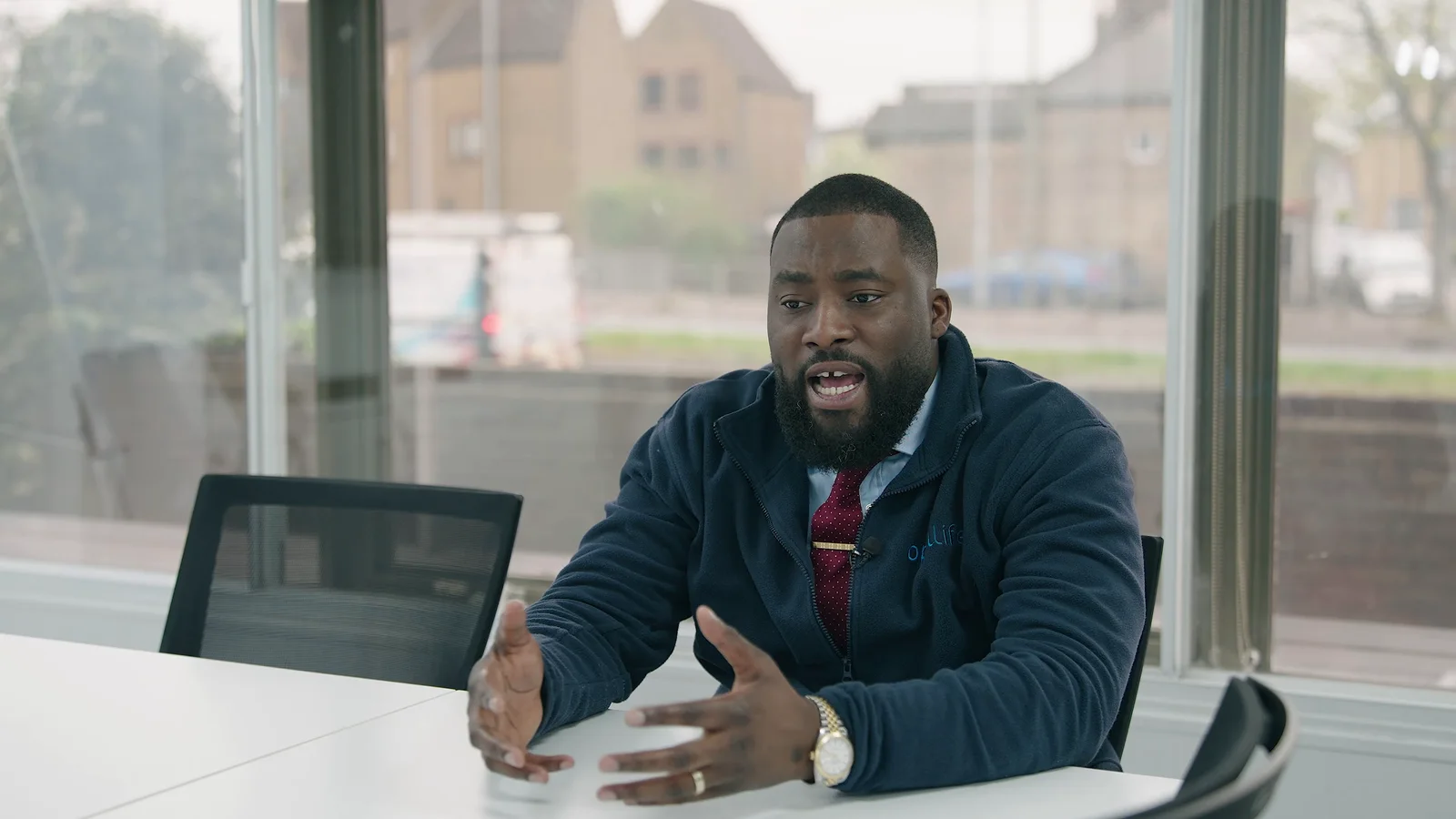
An interview with CEO Henry Dankwa gave the film a dependable spoken structure. The outreach sessions, however, were filmed much more observationally. Genuine conversations and community activity were allowed to happen without turning every moment into a staged scene.
The result came from combining controlled and uncontrolled elements: a prepared interview to explain the business, and natural footage to show some of that work in practice.
That is often what a strong brand film needs. Not pure improvisation, and not a two-minute commercial read. A clear voice supported by something real happening on screen.
Hybrid is often the most useful answer
For many corporate productions, scripted versus unscripted is the wrong binary.
Imagine a film introducing a new professional service.
The opening might be scripted so the service is defined correctly in one concise sentence. An expert could then answer interview questions about a real problem the service solves. Supporting footage could show the work happening. The closing line could return to an approved script so the next step is unambiguous.
The same principle works for recruitment, case studies, project updates and internal communications.
You can decide section by section:
Fix the wording where precision matters. Let the person speak where their perspective matters.
This is also why pre-production is valuable. The format should come from the communication job, not from whichever piece of equipment happens to be available.
What if the contributor is nervous?
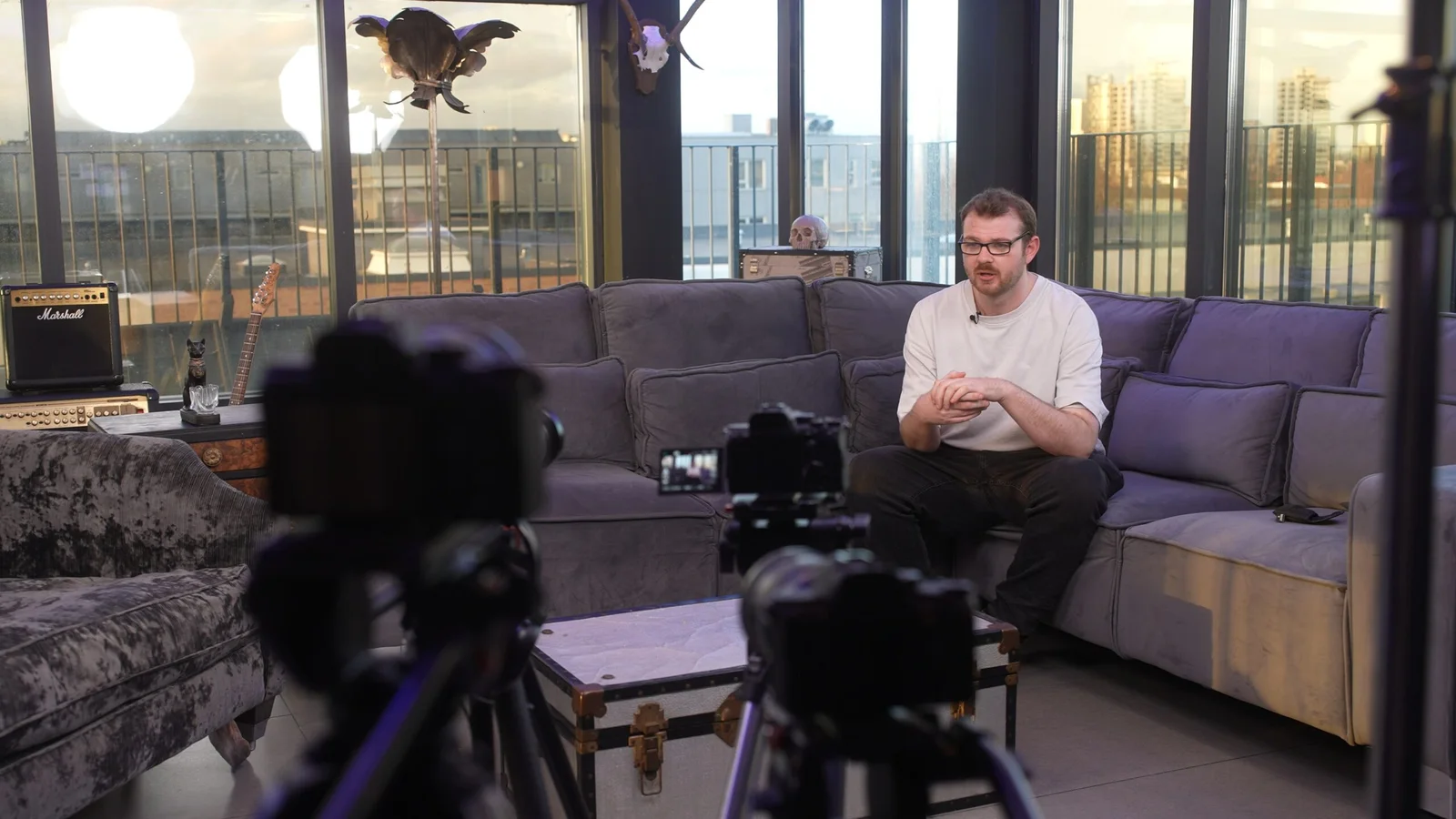
Nervousness does not automatically mean somebody needs a script.
In fact, giving a nervous employee a full page of exact wording can create a second problem: they now have to deal with the camera and perform language that may not feel like their own.
A better test is to try both approaches before the filming day.
Ask them to read a short paragraph aloud. Then put the script down and ask them a question covering the same point.
Which version is clearer? Which sounds more like them? Where do the facts become less precise? Where does the scripted version become stiff?
You can then adjust the production around the person rather than labelling them as "good" or "bad" on camera.
We have a separate guide on helping employees feel more comfortable on camera if contributors are a concern during planning.
Direct to camera or speaking to an interviewer?
This decision is related to scripting, but it is not the same thing.
A contributor can deliver an unscripted answer directly to the lens, and a scripted presenter could theoretically speak slightly off-camera. In practice, however, the two common combinations are:
- direct to camera + script/teleprompter for announcements, explainers and formal updates;
- off-camera eyeline + interviewer for conversational interviews, testimonials and case studies.
Direct eye contact can feel authoritative and immediate, but it also makes the contributor more aware of the performance. Speaking to an interviewer can feel more natural because the person is having a conversation rather than addressing a piece of glass.
Neither is automatically more professional. The choice should support the tone of the film.
Our interview videography page shows how interviews can be used for company stories, expertise, case studies and customer perspectives.
Think about B-roll before choosing the words
A corporate video becomes much easier to watch when the pictures do some of the explaining.
If a contributor describes a manufacturing process, show it. If they talk about community work, film the community activity. If they explain a site development, show the site from useful ground and aerial angles.
This matters to both scripted and unscripted productions.
A tightly written voiceover or presenter script can be planned against specific images. An interview can generate unexpected details that suggest additional shots to capture later in the day.
The mistake is treating the spoken section and the visuals as separate jobs.
When we plan corporate video production, we are thinking about what the audience needs to hear and what they need to see at the same time.
Approval works differently for each approach
With a fully scripted film, most wording can be approved before filming. That can make sign-off straightforward, but it also means substantial wording changes after the shoot may require a pickup.
With an interview-led film, the exact wording does not exist until the contributor has spoken. Stakeholders therefore review the meaning in the edit rather than approving every sentence in advance.
That does not mean the edit should manufacture a preferred answer.
If somebody said, "This reduced part of the process from around three days to two," the edit should not transform that into "We cut the process by 50%."
The job is to remove repetition and build a clear sequence without increasing certainty, changing cause and effect, or stripping away important qualifications.
For customer stories in particular, the contributor's experience should remain theirs. Our guide to interview videos versus testimonial videos explains why those formats need slightly different treatment.
The quickest way to decide
Before commissioning the film, take the important messages and put each one through three questions:
Does this wording need formal approval?
If yes, scripting may make sense.
Do we need this person's genuine experience or expertise?
If yes, an interview will usually give them more room to provide it.
Could the pictures communicate part of this better than another sentence?
If yes, plan the footage rather than making the contributor explain everything.
You may discover that the film needs all three approaches.
That is normally a better sign than trying to force the whole production into one category.
Script the facts. Leave room for the story.
The strongest corporate films are not necessarily the most tightly scripted or the most spontaneous. They are the ones where the method fits the message.
Use scripts where accuracy, timing and approval matter. Use interviews where a person's knowledge, experience or personality is the reason they are on screen. Combine the two when the film needs both control and humanity.
Most importantly, make that choice before the filming day. It gives contributors a fair chance to prepare, gives stakeholders a sensible approval process and gives the production team time to plan the pictures around what is actually going to be said.
You can explore more examples in our video production portfolio or talk to The Camera Guys about your corporate film. Bring us a finished brief, a rough idea or simply the message you need to communicate, and we can help decide whether it should be scripted, interview-led or a combination of both.