
Video Production in Bury St Edmunds: A Guide for Local Businesses

Bury St Edmunds has plenty of visual character, but a good business film should never become a sightseeing reel with a company logo added at the end.
The town centre, Abbey Gate, surrounding countryside and recognisable Suffolk architecture can all help establish where a business is based. They are useful when location is part of the story. But for most organisations, the more important footage is still the work itself: the people, process, service, customers, product or experience that gives somebody a reason to choose you.
That is the starting point for useful video production in Bury St Edmunds. Decide what the audience needs to understand first. Then choose locations, contributors and shots that prove it.
Start with the business, not the backdrop
A hotel, manufacturer, professional practice and visitor attraction can all be based in Bury St Edmunds, but they should not end up with the same film simply because they share a postcode.
A hospitality business may genuinely need exterior arrival shots, interiors, food, rooms and guests enjoying the space. A manufacturer may be better served by showing a process from raw material to finished product. A professional service may depend on clear interviews, client relationships and the people behind the company.
Before building a shot list, write down three things:
- what the audience should understand by the end;
- what they should see that supports that message;
- what you want them to do next.
That gives the production something more useful to work from than “we need a promotional video in Bury St Edmunds”.
For a broader look at how this fits into a business production, see our corporate video production service or the complete guide to corporate video production.
Use Bury St Edmunds as context where it earns its place
There is nothing wrong with showing the town. The question is whether the shot helps.
A recognisable exterior can quickly tell a viewer where the business is. A street sequence can make sense for a venue, retailer or organisation serving the local community. A countryside view may be relevant for a rural business, estate, tourism brand or food producer.
But location footage should usually support the main story rather than replace it.
If half of a filming morning is spent chasing attractive establishing shots, that is half a morning not spent recording the people or work the audience actually needs to see. A handful of strong local images will normally do more than a long montage of generic town footage.
This is especially important in a brand film. Place can give the film identity, but the people and purpose behind the organisation still need to carry it.
A town-centre shoot needs a practical access plan
Bury St Edmunds is compact enough that several useful locations can appear close together on a map. That does not mean equipment can move between them instantly.
For every filming position, work out:
- where the production vehicle can legally stop or park;
- how far the equipment must be carried;
- whether there are stairs, lifts or restricted entrances;
- when the location becomes busy;
- whether deliveries or customer access need to continue;
- how much time is needed to pack down before moving again.
If the film only needs a few exterior shots, a lighter camera setup may be much more efficient than moving a complete interview package through the town centre.
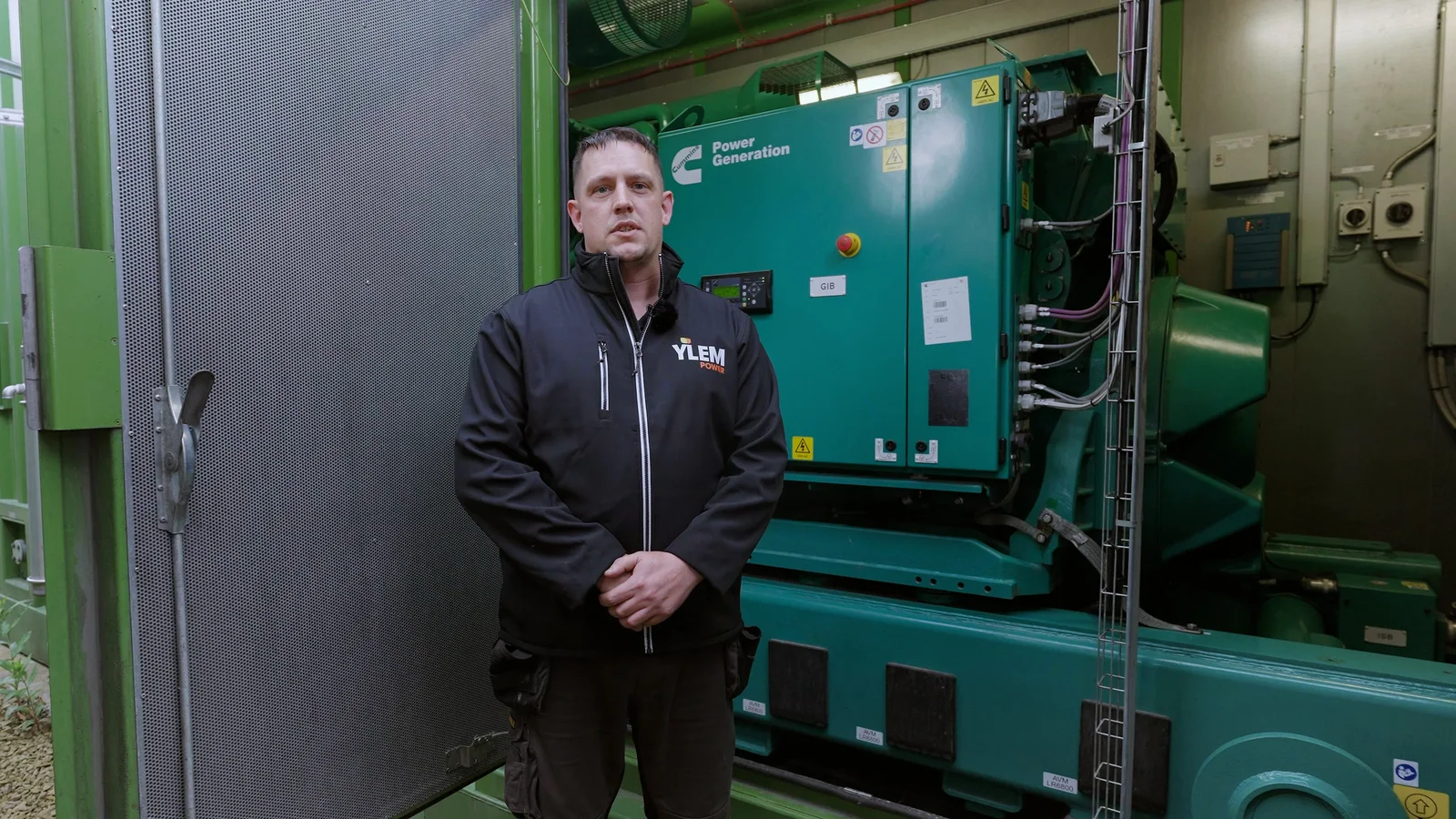
The opposite applies once you are indoors. A properly lit interview with reliable sound takes time to prepare. It is usually better to build one strong interview position and bring contributors through it than to dismantle the setup after every person simply to create a different background.
Treat public filming and private access as separate questions
Permission from the business you are filming does not automatically cover every place visible from its front door.
A pavement, park, managed shopping area, car park, road or heritage site may be controlled by somebody else. If the production needs to occupy public space rather than simply film inside private premises, check the current requirements before the day.
Screen Suffolk manages the county's FilmApp route. Its current guidance says productions should apply for permission regardless of crew size when filming on the county's streets, and it requires proof of £10 million public-liability insurance for commercial filming or photography in public areas.
That does not mean every camera inside a privately owned office needs a public filming permit. It means the production should identify who controls each location instead of assuming one permission covers everything.
Provide accurate information about the crew, equipment, timings and likely effect on the public. A videographer carrying one camera is a very different proposition from a larger setup involving stands, lighting and several crew members.
Do not choose an interview room by appearance alone
Some of the prettiest rooms are the worst places to record somebody speaking.
Hard walls, high ceilings and large windows can create echo. Town-centre rooms may pick up traffic, deliveries, bells or pedestrian noise. Hotels and hospitality spaces can have background music or refrigeration that cannot easily be switched off. Offices may have air conditioning, printers or adjoining meetings.
Listen to the room before deciding.
A visually simpler space with clean speech is usually a better choice than a spectacular room where every answer needs aggressive audio repair afterwards. Professional microphones help enormously, but they cannot make every environment behave like a studio.
Our guide to why professional audio matters in video production explains why microphone choice, placement and monitoring need to be considered while filming rather than left entirely to the edit.
Build the filming day around activity that cannot be repeated
Most business shoots contain two kinds of material.
Some things are flexible. An interview can often move by half an hour. An exterior can sometimes be recorded later. Detail shots of a workspace may be gathered around other activity.
Other things are fixed. A delivery arrives once. A production line runs at a particular time. A class starts at ten. A customer demonstration is only available before lunch. A senior member of staff has a 25-minute gap between meetings.
Build the day around those fixed moments first.
For example, a sensible schedule might look like this:
| Time | Coverage |
|---|---|
| 08:30 | Crew arrival, unload and interview setup |
| 09:15 | Director or founder interview |
| 10:00 | Fixed operational activity or customer-facing work |
| 11:00 | Supporting process footage and details |
| 12:00 | Second contributor interview |
| 12:45 | Lunch / room reset / move |
| 13:30 | Additional workplace footage |
| 14:30 | Town or exterior establishing shots |
| 15:15 | Social-first or vertical material |
| 16:00 | Final pickups and pack down |
That is only an example, but the principle matters: do not put a repeatable establishing shot in the slot where the one unrepeatable activity happens.
If you are trying to work out how much can realistically fit into a day, our guide to how many videos you can film in one day looks at the difference between recording time and finished deliverables.
A real Suffolk example: follow the process instead of staging generic activity
Not every useful production example has to be in Bury St Edmunds itself.
For Secure ITAD in Sudbury, we spent a full day following the organisation's actual IT asset-disposition process: collection, incoming equipment, sorting, data-erasure work, secure destruction and downstream handling. The sequence of real activity gave the film its structure.
See the Secure ITAD process-film case study.
The relevance for a Bury St Edmunds business is simple. If your work contains a process that customers would benefit from understanding, film the process properly. Do not replace it with a handful of people walking through corridors, typing at laptops or pretending to have a meeting.
Real operational footage gives an edit something to say.
Rural locations around Bury need more than a postcode
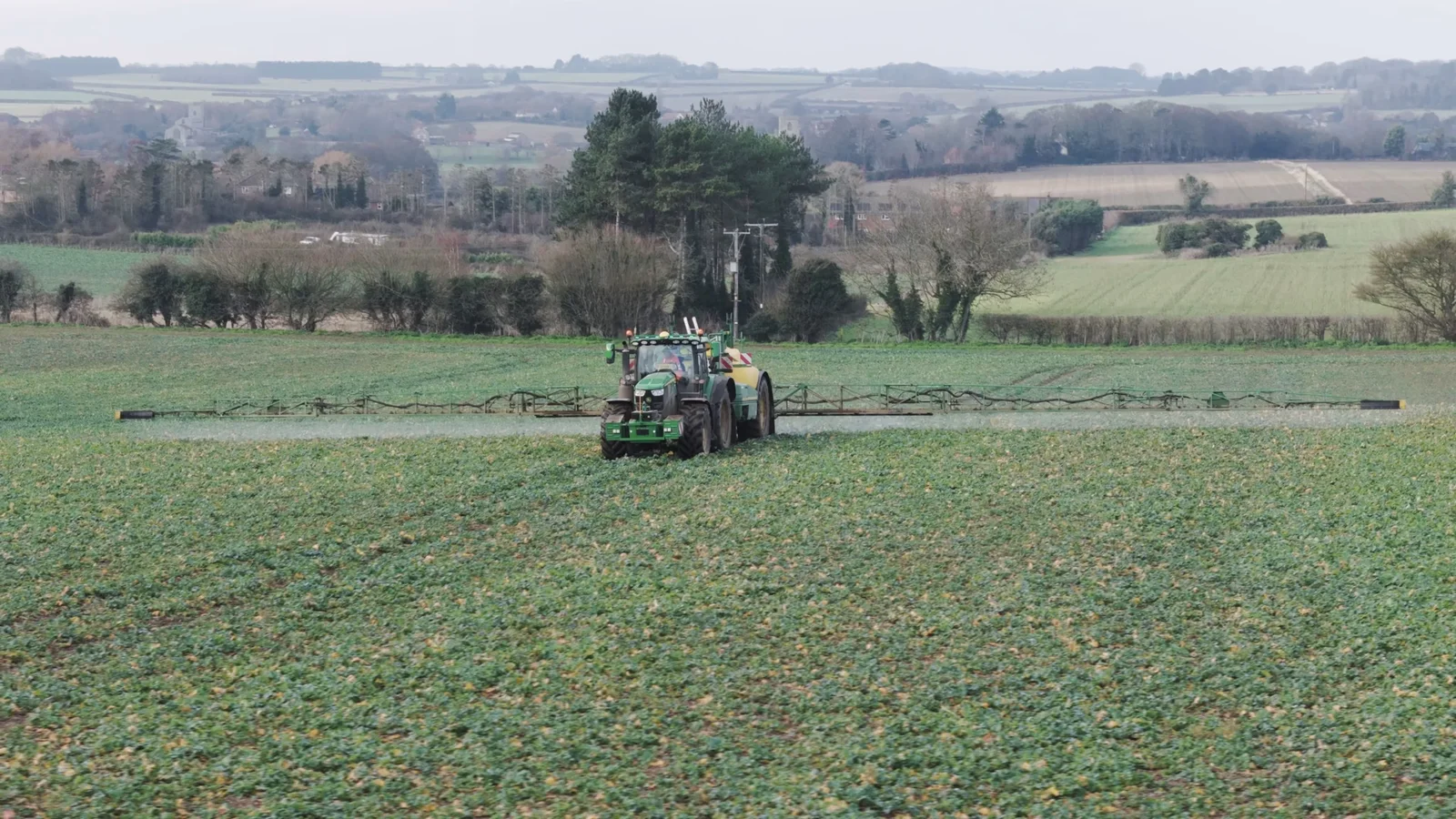
A company described as being “in Bury St Edmunds” may actually need filming at a farm, estate, workshop, venue or client site outside the town.
For rural shoots, send the crew a map pin for the actual entrance rather than relying only on the postcode. Confirm where vehicles can go, whether gates are locked, what the surface is like and how far equipment must travel after parking.
It is also worth checking:
- available power;
- mobile signal;
- toilets and welfare;
- shelter if the weather changes;
- whether any activity is seasonal or weather dependent;
- whether a site induction or PPE is required.
Two rural locations can look close on a map but still consume a large part of the day once loading, driving and setup are included.
Our Suffolk video production guide goes into the wider county logistics in more detail.
Decide whether you need one film or a bank of content
One of the easiest ways to waste a production day is to decide what the deliverables are after filming has finished.
If the same shoot needs to create a website film, vertical social clips, a recruitment edit, customer answers and a bank of B-roll, the camera operator needs to know that before recording begins.
It changes framing. It changes the questions. It changes how long actions are allowed to play. It may change which people need to be available.
This does not mean trying to squeeze an absurd amount of content out of every booking. It means planning the useful outputs deliberately.
A good example is our work for Southwold Maize Maze, where one six-hour filming day was planned to produce a main attraction film, a separate café-and-walks film, activity edits, drone footage and a much wider bank of marketing content.
Explore the Southwold Maize Maze production.
That approach works because the deliverables were considered while the day was being planned. The crew could capture complete activities, alternate angles and material that could stand on its own instead of hoping every final edit could be rescued from the same generic footage.
If your aim is specifically to promote a business, service or experience, our promotional video production page shows how that can be structured around a campaign rather than a single isolated film.
Give staff enough information without scripting every word
Most people appearing in a business film are not professional presenters.
They usually perform better when they know what will happen, why they are being filmed and roughly what subjects will be discussed. They often perform worse when somebody hands them a polished paragraph and asks them to memorise it.
Before the shoot, tell contributors:
- where and when they are needed;
- roughly how long their part will take;
- what topics will be discussed;
- where the film will be used;
- whether clothing guidance matters;
- who they can speak to if they have concerns.
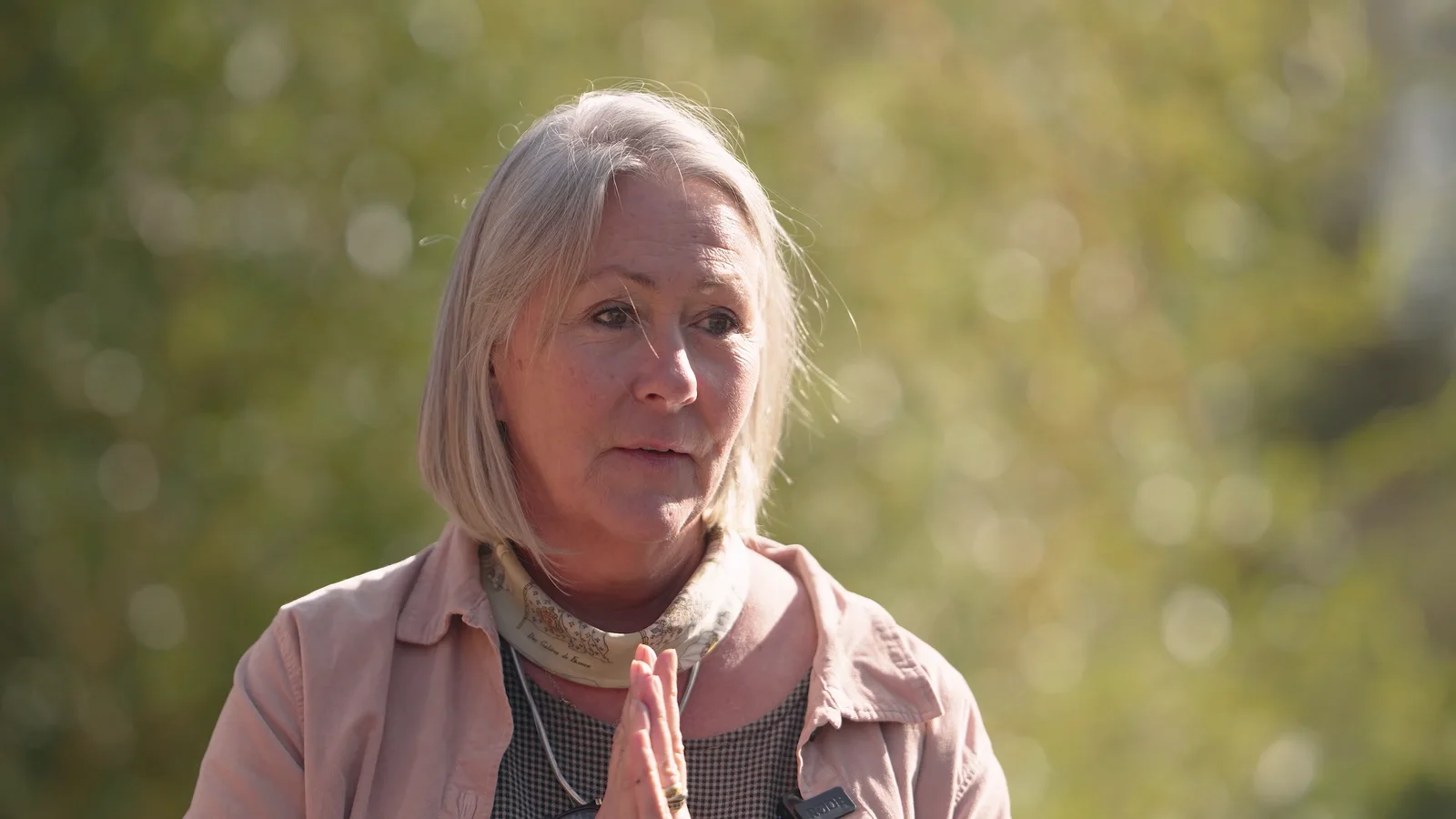
For an interview, prepare useful prompts rather than idealised answers. Follow-up questions can then explore the interesting parts of what the person actually says.
That is particularly important for customer testimonial videos, where credibility depends on the customer sounding like themselves rather than reciting somebody else's marketing copy.
If photography is needed too, plan it before the day
A business film often creates the perfect opportunity to update still imagery at the same time. The people are present, the workplace is prepared and the activity has already been scheduled.
But photography should not be treated as “grab a few stills if there is time”.
Decide which photographs are genuinely needed: staff portraits, working images, website banners, product details, team photographs or social content. Then build those into the production schedule.
Our guide to preparing for a corporate photography shoot covers the practical preparation in more detail.
What to include when asking for a quote
A useful enquiry does not need to be a formal production brief. It just needs enough information to remove the biggest unknowns.
For example:
We are a Bury St Edmunds engineering business and want a short film for our website and LinkedIn. We would like one interview with the managing director, footage of the workshop and a customer installation about 20 minutes away. We are aiming for a two-minute main film plus three short social edits. The workshop is available on Tuesdays and Thursdays, and we would ideally like everything ready before our November trade show.
That is far more useful than “how much is a corporate video?” because it identifies the purpose, locations, contributor, outputs and deadline.
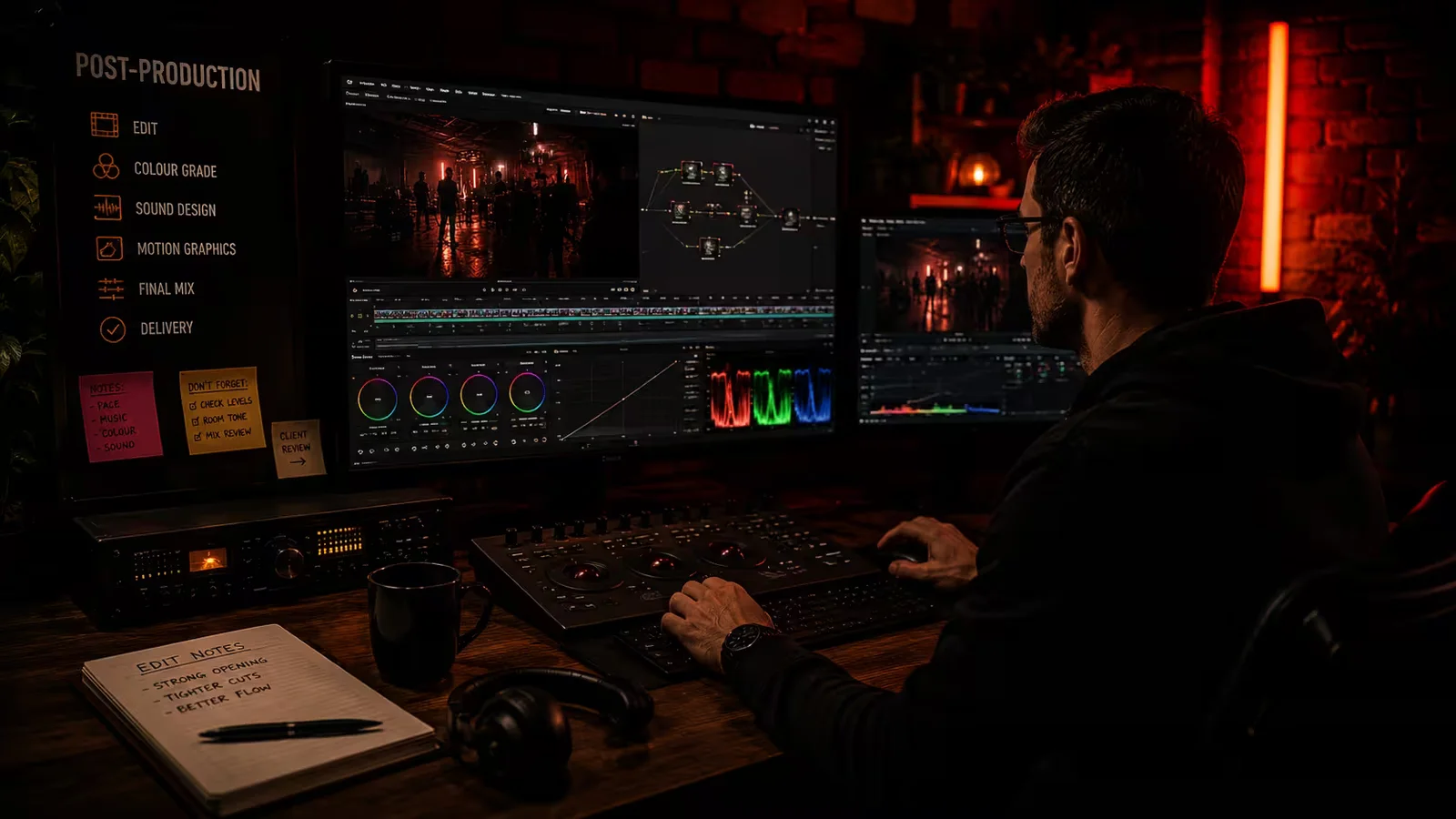
You can then discuss whether the scope fits one filming day, whether additional crew or photography would help, and how much post-production the deliverables are likely to need.
Our pricing page explains the current filming and editing rates for straightforward work, while larger productions are quoted around the actual brief.
Choosing a video production company in Bury St Edmunds
Local knowledge is useful, but it should not be the only reason to hire somebody.
Look at complete work that resembles the problem you are trying to solve. If interviews matter, listen to the sound and see how comfortable the contributors appear. If you need a process explained, check whether the finished film makes that process understandable. If several versions are required, ask how they will be planned during filming rather than simply cropped afterwards.
It is also worth asking:
- who will actually attend the shoot;
- who edits the work;
- what is included in the quote;
- how feedback and revisions are handled;
- what happens if the schedule changes;
- how the final files are supplied.
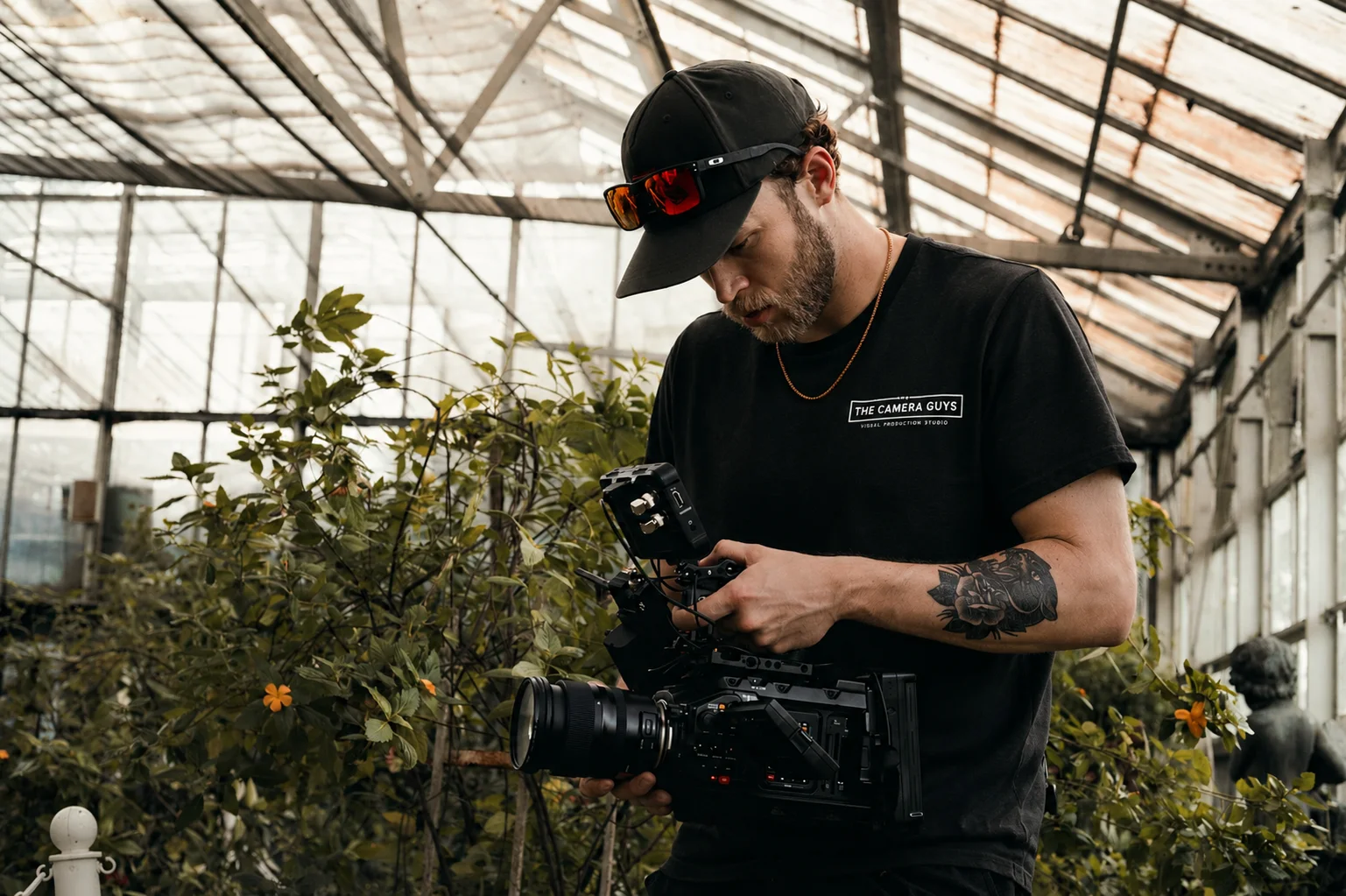
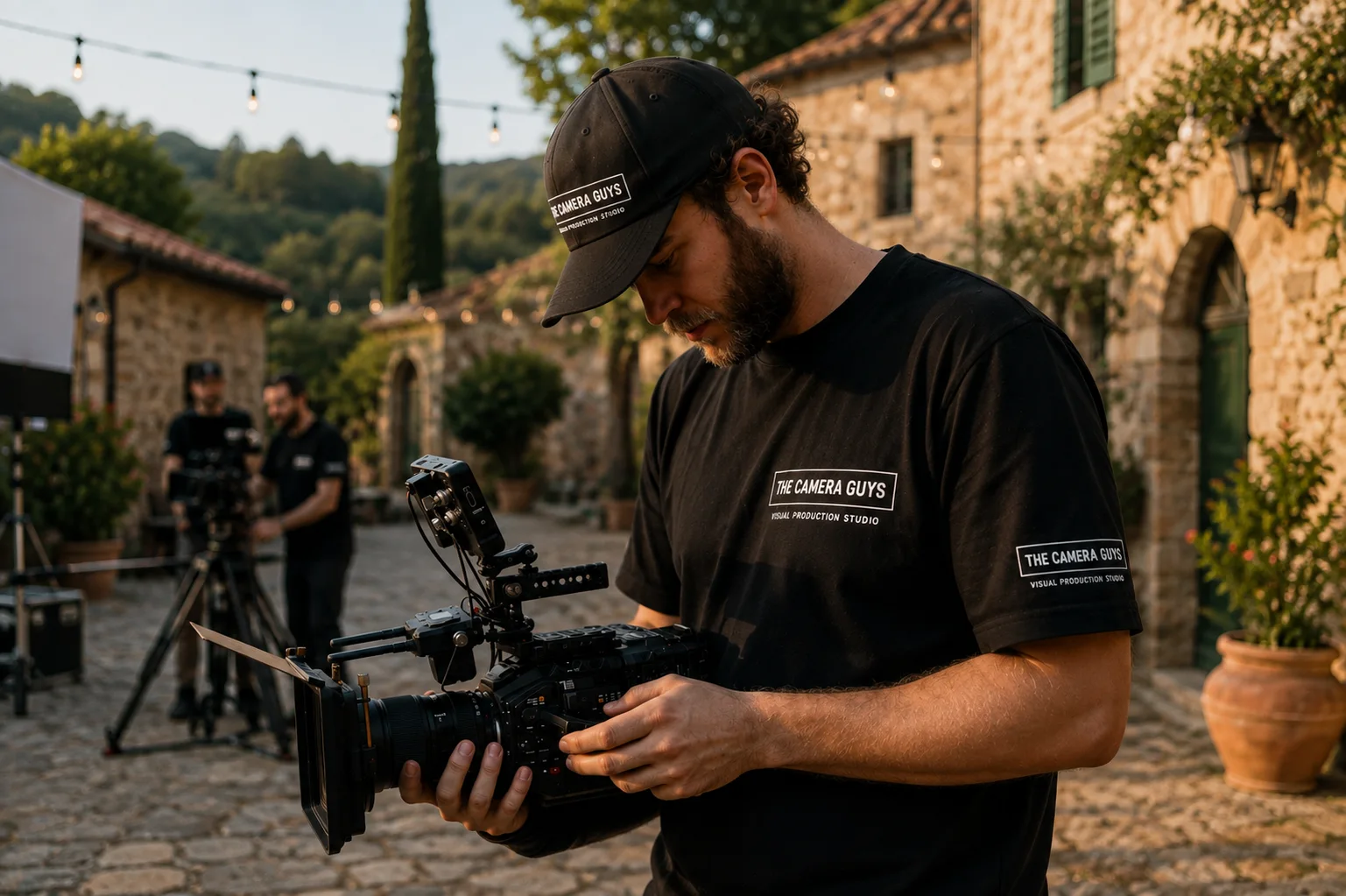
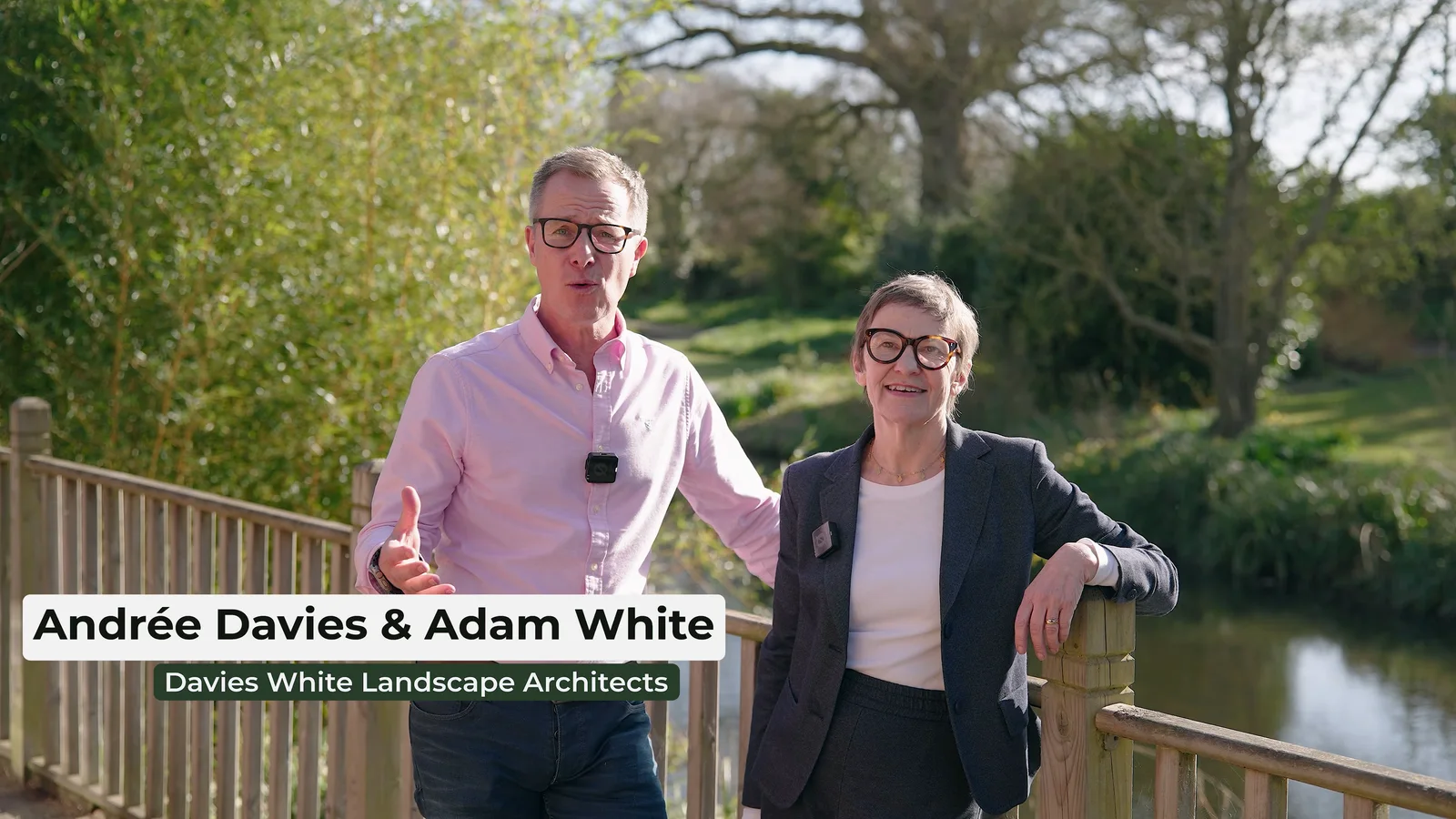
The Camera Guys is based near Sudbury and regularly works across Suffolk, including Bury St Edmunds, Ipswich and Newmarket. A local base helps with travel and familiarity, but the production still has to be built around the brief.
You can explore our wider videography services and recent production work, or tell us about a Bury St Edmunds project.