
Filming a Corporate Video in Chelmsford: How to Plan a Useful Shoot
A polished office does not automatically make an interesting corporate video.
You can have a good-looking meeting room, a tidy reception and a team willing to be on camera, then still come away with footage that could belong to almost any business in the country.
A useful corporate film needs more than a location. It needs people who can explain the business and footage that shows what they are talking about.
That is the approach we would take when planning a corporate video production in Chelmsford: start with what the finished content needs to communicate, then build the filming day around the people, places and activity that can show it properly.
This guide covers the practical side of doing that — from interviews and office access to B-roll, filming permissions and getting several useful pieces of content from one production.
Start with the finished videos, not the filming day
Before choosing rooms or writing a shot list, decide what you actually need to leave the project with.
A company may say it wants “a corporate video”, but that could mean very different things:
- a two-minute company film for the homepage;
- a founder or leadership interview;
- a customer testimonial;
- recruitment content;
- several short videos for LinkedIn;
- a case study about one project;
- an internal communications film;
- event or conference content;
- a library of video and photography for ongoing marketing.
Those outputs should shape the shoot.
If the main goal is a company film, you might need one strong interview plus footage showing the team, workplace and service in action. If the goal is recruitment, the people doing the jobs may matter more than the managing director. If you need a series of short social films, it may be more efficient to plan several concise contributions rather than one long interview.
Our guide to how many videos you can film in one day explains why the useful number depends on setups, contributors and locations rather than an arbitrary daily target.
The earlier those deliverables are agreed, the easier it is to make the filming day productive.
Use the workplace to explain the business
Chelmsford has plenty of offices, commercial premises, venues and working businesses, but the most useful filming location is usually the one that tells the audience something.
That might be your own workplace.
A real office can establish scale, show the team and make an interview feel connected to the organisation. A workshop, showroom, warehouse or customer-facing environment can reveal even more.
The key is not to fill the film with generic activity simply because it looks “corporate”.
People typing at laptops, shaking hands or pretending to have a meeting rarely tell the viewer very much on their own.
Instead, look for activity connected to the message of the film.
If somebody says the business offers personal service, can we show a genuine interaction?
If a speaker describes a technical process, can the camera see part of that process?
If the company talks about its team, can we meet some of those people rather than relying entirely on one senior interview?
This is where purposeful B-roll becomes useful. The supporting footage should help the viewer understand what is being said, not simply cover cuts in an interview.
A Chelmsford example: Opul Life
Our work with Opul Life is a good example of why a corporate film does not have to stay inside the office.
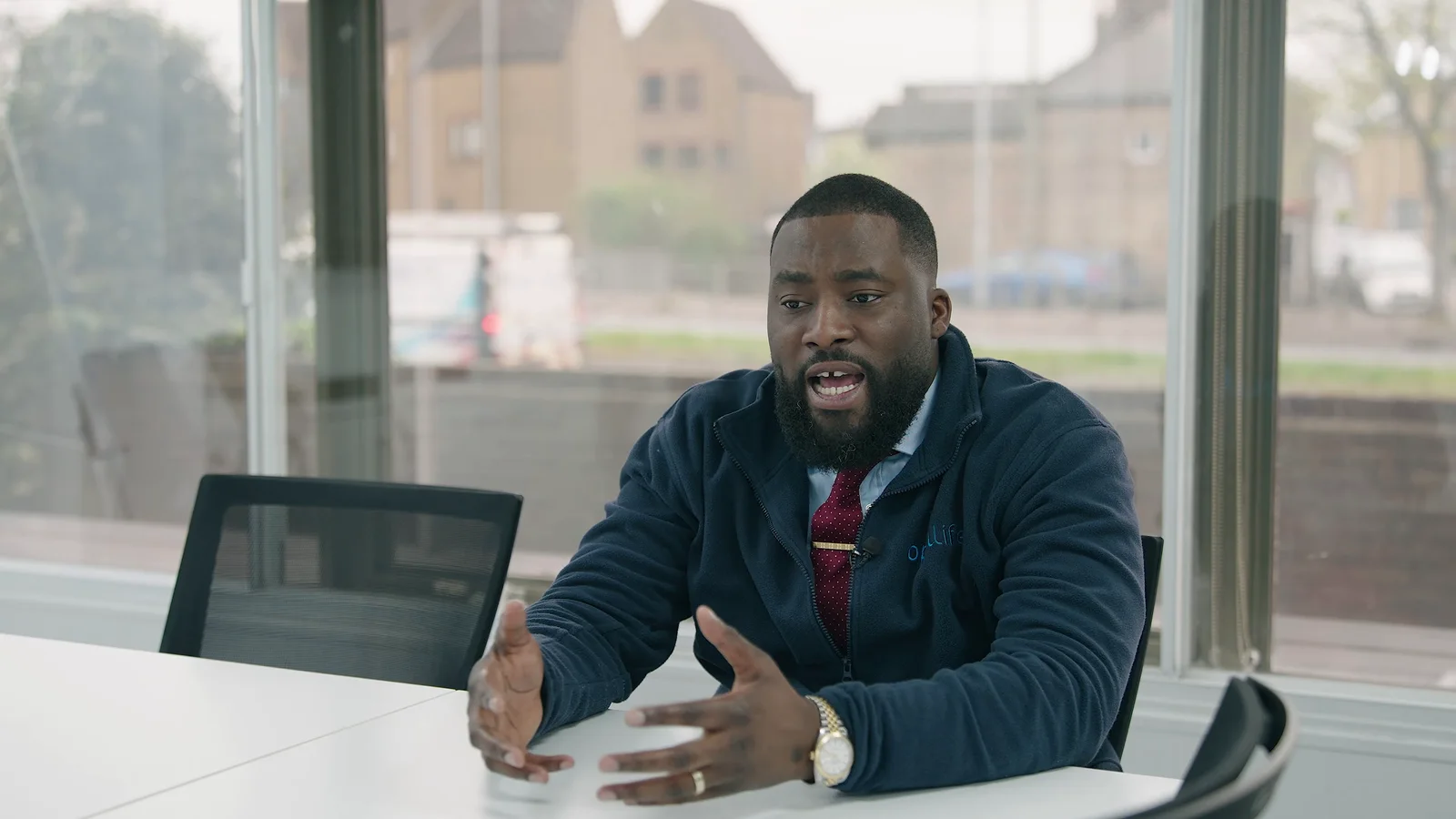
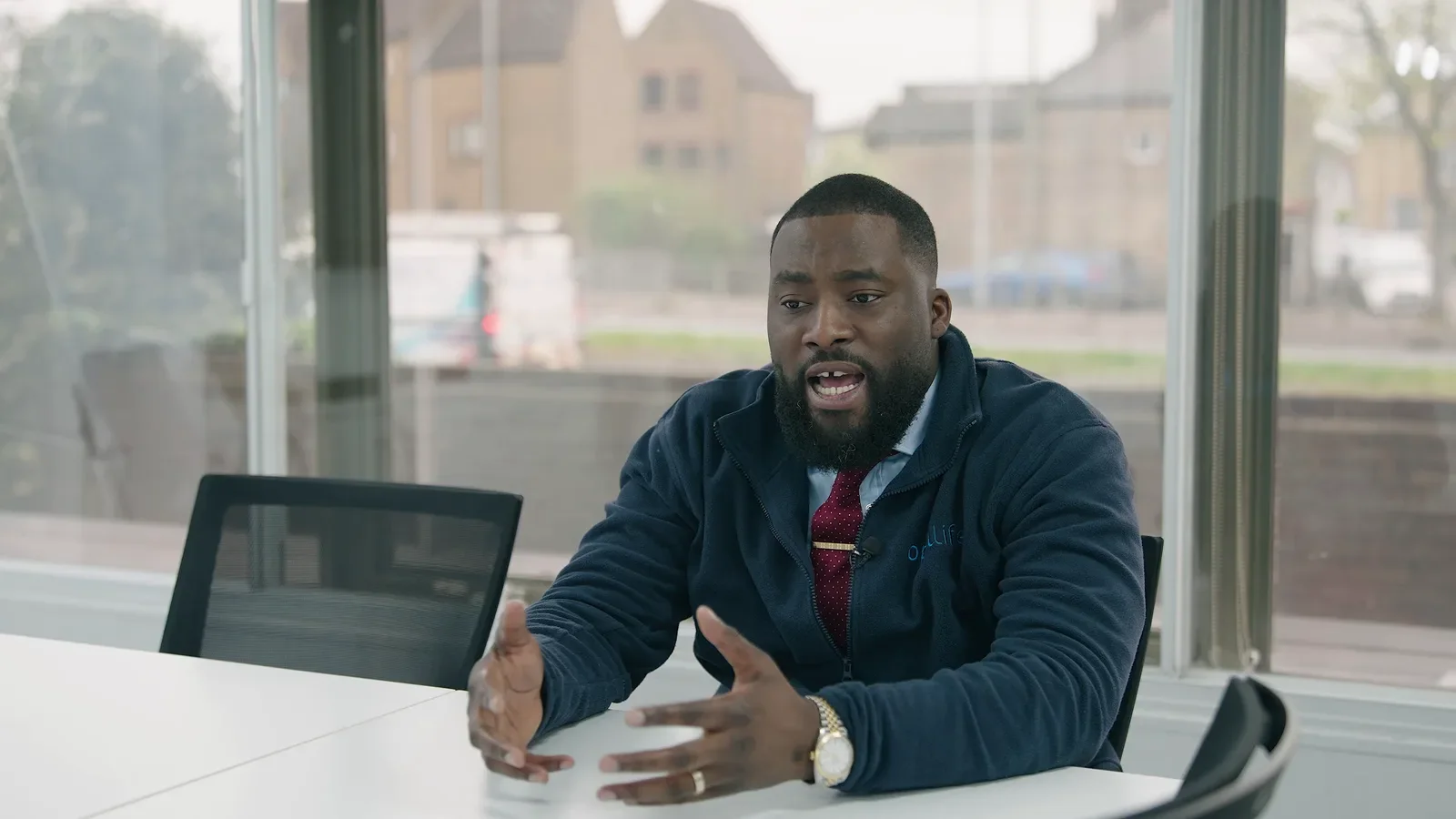
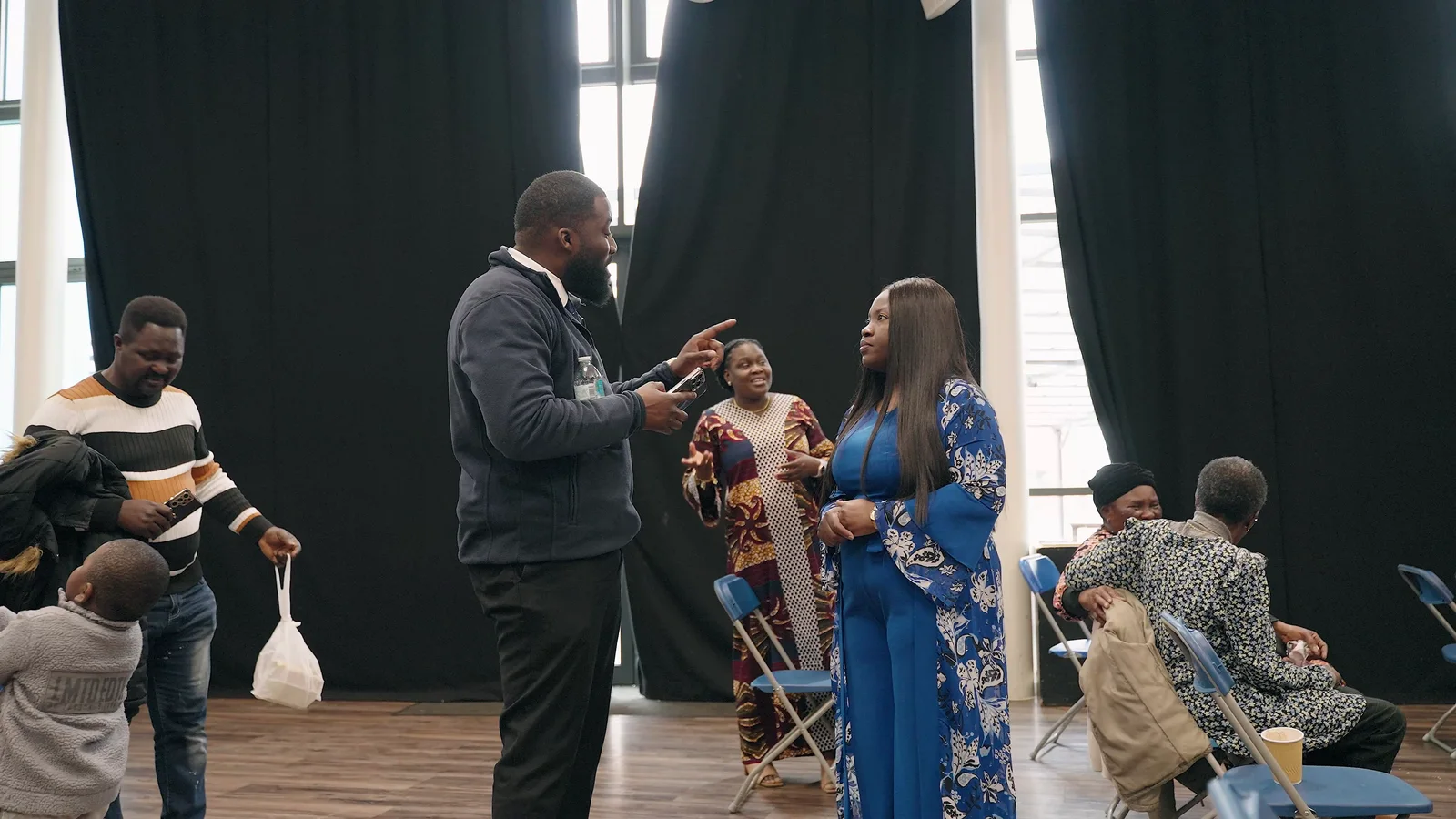
Opul Life is a Chelmsford-based financial-advice business. We filmed an interview with CEO Henry Dankwa at the company’s Chelmsford headquarters, but that interview was only one part of the story.
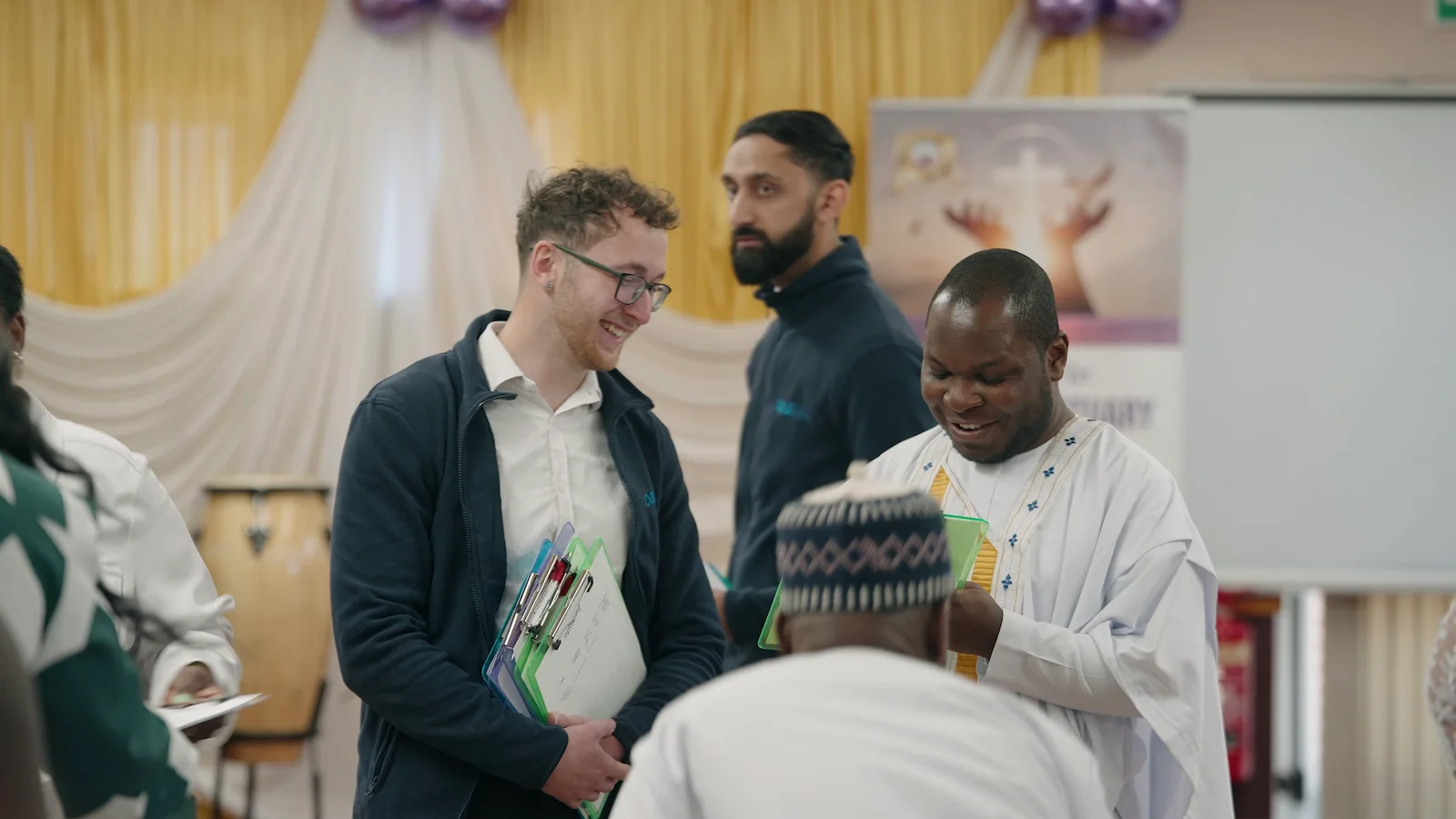
The production also followed the team through community outreach in Chelmsford and Colchester.
That gave the finished film two useful layers.
Henry could explain the business, its values and the services it provides. The outreach footage could then show the team speaking with people in the communities it serves.
We also captured corporate photography alongside the video, creating a wider library of material for the business.
The important lesson is not that every Chelmsford corporate video should involve several locations.
It is that the location should follow the story.
For another business, everything useful may happen under one roof.

Give interviews somewhere they can actually work
The boardroom with the best view is not necessarily the best interview room.
Sound matters enormously.
Before settling on a space, listen for:
- air-conditioning;
- nearby lifts;
- kitchen equipment;
- road noise;
- people walking through;
- echo from hard walls and glass;
- meeting rooms next door;
- phones and office announcements.
A professional interview filming setup can control lighting and record close, clean audio, but choosing a sensible room in the first place makes everything easier.
The room also needs enough time.
If the interview is scheduled for 10:00, the space should normally be available before then so the crew can bring equipment in, frame the shot, light the contributor and test the sound.
Booking the room from exactly 10:00 until 10:30 because the interview itself should take half an hour creates unnecessary pressure.
Do not make people memorise corporate copy
Most people sound better when they understand the subject and answer naturally.
Give contributors the themes in advance. Tell them who the film is for and what you want the audience to understand. If there are facts or wording that must be exact, identify those separately.
For most interview-led films, conversational answers are easier to watch and much easier to edit than somebody trying to remember a paragraph written by committee.
If the production includes customers or partners, the same principle applies. Our testimonial and case-study work is built around useful questions rather than forcing somebody to recite an endorsement.
Plan around the people who are difficult to schedule
The filming timetable should not always run in the order the finished film will appear.
If the managing director is only available between 09:00 and 10:00, film that contribution then.
If a working process only happens at 14:00, protect that window.
If customers arrive at a specific time, schedule the crew around the genuine activity rather than asking people to recreate it later.
A simple corporate shoot schedule might look something like this:
| Time | Production activity |
|---|---|
| 08:30 | Crew arrival, unload and interview setup |
| 09:15 | Leadership interview |
| 10:00 | Team and workplace B-roll |
| 11:30 | Second contributor or customer interview |
| 12:15 | Detail shots, exterior and branding |
| 13:00 | Lunch / room reset |
| 14:00 | Time-sensitive process, demonstration or customer activity |
| 15:30 | Additional content, social clips or photography |
| 16:30 | Final checks and pack-down |
That is only an example. A manufacturing site, professional office, retail business and conference venue would all need different timings.
What matters is allowing for setup, movement and interruptions, rather than pretending every booked hour is continuous recording time.
One location can produce much more than one film
If the team, location and production equipment are already together, it can be worth thinking beyond one final video.
That does not mean trying to cram twenty unrelated ideas into the day.
It means asking whether the same production can sensibly provide several related assets.
For example, a Chelmsford business might commission:
- one main company film;
- three short leadership or subject-expert clips;
- vertical versions for social platforms;
- a customer testimonial;
- a library of workplace B-roll;
- professional staff and workplace photographs.
The production can then be planned so those assets share setups rather than repeatedly starting from scratch.
Our video and photography services can be combined where it genuinely makes the schedule more efficient. The important thing is to agree the priorities before the shoot.
If the main film is essential and the optional social clips are not, the timetable should reflect that.
Do you need one videographer or a larger crew?
Many Chelmsford business shoots can be handled effectively by one experienced videographer.
A controlled interview, followed by workplace B-roll and a few short additional pieces, does not automatically require a large production team.
A smaller crew can also be less disruptive in a working office.
The answer changes when several important things need to happen at once.
You may need extra camera operators if:
- two interviews have to run simultaneously;
- several event spaces need continuous coverage;
- the main presentation cannot be interrupted while roaming footage is captured elsewhere;
- multiple moving cameras need active operation;
- the timetable is too compressed for one person to move between setups.
Our guide to how many camera operators a video production needs explains that distinction in more detail.
Camera count and crew size are not the same thing either. One videographer can sometimes manage multiple cameras in a controlled setup, particularly for interviews. A busy live event is a different proposition.
Think about access before the crew arrives
Corporate filming can involve more equipment than clients expect.
Even a compact production may include cameras, tripods, lighting, stands, audio equipment, batteries and cases.
Before the filming day, tell the production team:
- exactly which entrance to use;
- where unloading is permitted;
- where the vehicle can be left afterwards;
- whether reception needs a crew list;
- whether lifts or loading areas require access;
- whether there is a site induction;
- which rooms are booked;
- where equipment cases can be stored safely;
- who the on-site contact is.
This is particularly useful for shared office buildings and managed commercial premises.
“Come to the main reception” may be perfectly adequate for two people carrying laptops. It can be less helpful when somebody arrives with several cases and discovers the filming room is three floors away through controlled access.
A clear arrival plan protects filming time.
Check what will accidentally appear in shot
Corporate locations contain information.
Whiteboards may show customer names. Monitors may contain emails or dashboards. ID cards can display personal information. Prototype products, internal notices or confidential paperwork may be visible in the background.
Walk through the filming spaces before the shoot and decide what needs to be removed, hidden or replaced with approved material.
This does not need to make the office look artificial.
The goal is simply to avoid discovering a problem after an otherwise excellent shot has been filmed.
The same applies to branding belonging to other organisations, customer information and anything subject to commercial confidentiality.
Public filming in Chelmsford needs a separate check
If the whole production takes place inside your own premises with the property owner’s approval, the permissions may be relatively straightforward.
Filming in public or council-managed areas is different.
Chelmsford City Council says filming consent is required for commercial filming in areas including the High Street, Duke Street, the Retail Market and its parks. Other city-centre locations may require permission from the relevant landowner or highway authority.
The Essex Film Office is the county’s central point of contact for filming permissions and location guidance. Its highway guidance also states that commercial filming on Essex public highways and public footpaths can require permission, including relatively small handheld shoots.
If an exterior Chelmsford sequence is important to the film, establish the exact location before assuming the crew can simply turn up.
For a wider county view, our guide to video production in Essex covers some of the location and travel considerations that change across different parts of Essex.
Do you actually need recognisable Chelmsford footage?
Not always.
If the film is aimed at national customers and the location itself is unimportant, opening with an obligatory city-centre establishing shot may add very little.
Your premises, people, customers and work may tell the audience far more.
On the other hand, location can matter when:
- the business serves Chelmsford specifically;
- local presence is part of the sales message;
- the organisation is recruiting locally;
- the location gives useful context to a case study;
- the film is about an event or project happening in the city.
Use Chelmsford because it means something to the film, not because every local corporate video apparently needs a landmark in the first five seconds.
Make the office look good without pretending it is something else
A working business does not need to become a film studio.
Good lighting, careful framing and some preparation can make ordinary spaces work extremely well.
Before filming:
Clear clutter, not character.
Remove distracting rubbish, excess cables and irrelevant paperwork. Do not sterilise the room until it no longer looks like your business.
Check the background from camera height.
Something that looks harmless while standing in the room may appear directly behind the contributor once the shot is framed.
Prepare genuine activity.
Know which people, products, tools or processes the crew can film. Avoid rounding up four employees for a fake meeting simply because “we need office shots”.
Tell colleagues what is happening.
If an interview room needs to remain quiet for forty minutes, people need to know before somebody starts making coffee or holding a call outside the door.
Allow things to happen naturally.
Not every useful shot needs to be posed. Genuine interaction often looks better than an instruction to “walk down this corridor and pretend to talk”.
If natural workplace footage matters to the story, the guide to filming authentic community outreach uses the Opul Life project to show how a small production footprint can help real interactions continue normally.
Decide how the film will be used before editing begins
A two-minute website film and a sequence of LinkedIn clips may use the same shoot, but they are not necessarily the same edit with different crops.
Think about placement early.
A main website film may have time to establish the company and tell a fuller story.
A short social clip often needs to reach its point much sooner.
A presentation film may need larger captions because it will play in a busy room.
A vertical video may need different framing from a wide website hero.
Planning those requirements before filming gives the camera operator room to compose shots appropriately and helps the post-production team avoid awkward compromises later.
Our guide to using video on your company website also explains why a playable company film and a silent background loop often need different treatment.
Keep the review process simple
Corporate video can become slow after the filming is finished if five stakeholders send five separate sets of feedback.
Before the first cut arrives, decide:
- who checks factual accuracy;
- who has final approval;
- whether legal or compliance review is required;
- how comments will be consolidated;
- which branding assets and wording are current.
One organised response is far easier to action than several contradictory email threads.
This matters particularly for regulated businesses, larger organisations and films containing statistics, customer claims or detailed service information.
The creative edit should still have room to work, but factual corrections are much easier when one person owns the approval process.
What should you send a Chelmsford videographer before asking for a quote?
You do not need to write a technical specification.
A useful enquiry can be surprisingly simple:
We are a Chelmsford-based business and want a two-minute company film for our website. We would like to interview our managing director and two members of staff, then capture the team working in our office. We would also like several shorter clips for LinkedIn. We are hoping to film in November and would prefer to complete it in one day.
That already tells us far more than:
“How much is a corporate video?”
Useful information includes:
- what the business does;
- who the audience is;
- what the film needs to achieve;
- where you expect to film;
- who may appear;
- the likely deadline;
- where the finished content will be used;
- any examples of films you like;
- the approximate budget, if one is already set.
From there, we can recommend the crew, filming time and post-production rather than asking you to guess the technical requirements.
You can see our current video production pricing for straightforward filming and editing rates, but a corporate quotation should still be based on the actual brief.
Planning corporate video production in Chelmsford
A productive corporate shoot does not need a huge crew, an elaborate script or an office that looks like a television studio.
It needs a clear job.
Know who the film is for. Choose contributors who can speak usefully. Give the production access to the real work worth showing. Protect the important timings. Decide what versions you need before filming.
That is what turns a day with cameras into content the business can actually use.
The Camera Guys provides video production across Essex, including corporate films, interviews, case studies, photography and wider content production in Chelmsford.
If you are planning a shoot, send us the rough idea. You do not need to decide the number of cameras, editing hours or exact production setup first — we can work that out from what you need the finished content to do.