
Best Video Production Companies in Essex and East Anglia: 7 Teams Worth Comparing
Searching for a video production company is a slightly strange buying process.
You are choosing someone to make visual content, so naturally every company has a polished showreel.
The difficult part is working out what happens between the showreel and the finished film.
Who helps shape the brief?
Who turns up on the day?
Can the team handle photography, animation, livestreaming or several locations if the project grows?
Can you see complete examples rather than thirty seconds of everybody's nicest shots?
And when you ask what something costs, do you get enough information to understand what you are actually comparing?
There is no single “best video production company in Essex and East Anglia” for every brief.
A studio commercial, a customer testimonial, a technical factory film, a live conference and an animated campaign can need very different people and facilities.
So this is not a league table.
It is a shortlist of seven regional production companies worth looking at, followed by a practical way to narrow them down.
And yes: The Camera Guys is one of them.
We publish this website, so pretending this is an independent awards panel would be ridiculous. We will tell you clearly where our own entry is, and you can judge the work, website, portfolio, pricing and approach for yourself.
The shortlist at a glance
| Company | Base / regional presence | What stands out from its current website |
|---|---|---|
| Bruizer | Rendlesham, Suffolk | Broad in-house production offering including brand films, animation, studio production, live events, aerial and commercial work |
| Cambridge Filmworks | St Ives, Cambridgeshire | Film, video, animation and content production with a substantial portfolio across commercial, charity, healthcare, science and documentary work |
| Offshoot Films | Great Cornard, Suffolk | Corporate video, events, sports, training films, education/workshops, live streaming and aerial production |
| Poppy Productions | Southend-on-Sea, Essex | Video, photography, podcasts and a dedicated studio with infinity cove and podcast facilities |
| The Camera Guys | Near Sudbury, Suffolk | Corporate and commercial video, photography, drone, events and post-production with published pricing and detailed project case studies |
| Trett Films | Norwich and London | Story-led, cinematic production with a strong emphasis on people, values, brands and narrative |
| Vortex Visual | Norwich, Norfolk | Video alongside 3D/360 virtual tours, immersive media, drone and 360 content |
This is deliberately not ordered from best to worst.
Start with the kind of job you are commissioning.
What I would look at before contacting any production company
You can learn a surprising amount before sending an enquiry.
Do not stop at the showreel.
Look for a complete film similar to the thing you need
A showreel tells you whether a company can produce attractive images.
It does not necessarily tell you whether they can sustain a customer story for three minutes, explain a technical process clearly, record clean interviews or structure a useful event film.
If you need a corporate video, watch a complete corporate film.
If you need a conference recorded, look for actual conference work.
If your project is interview-led, listen to the interviews rather than only looking at the lighting.
One relevant full project tells you more than fifty disconnected hero shots.
Look at what they repeatedly make
A company's website usually reveals where its centre of gravity is.
One producer may show a lot of highly developed commercials.
Another may have a strong studio setup.
Another may specialise in documentary-style people stories.
Another may publish technical process films, events and straightforward business content.
None of those is inherently better.
The useful question is whether their repeated work resembles the production problem you have.
Look for enough detail to understand the process
Can you see what happens before filming?
Does the company explain editing and review?
Can you tell whether it provides one operator or a larger crew?
Does it talk about deliverables?
Are there actual case studies?
If all you can find is:
We create powerful stories that connect brands with audiences.
you may still be looking at an excellent production company.
But you will have to ask more questions before you know how the project actually works.
Our guide to what a video production company actually does explains the stages worth clarifying.
Look for evidence that matches your scale
A large campaign for a national brand can demonstrate excellent production ability.
It does not necessarily mean that company is the most sensible fit for a half-day customer interview.
Likewise, a very small operator can be perfect for a focused interview shoot but may not be structured for a multi-location campaign with several simultaneous crews.
Do not buy the biggest portfolio.
Buy the right production setup.
1. Bruizer — Rendlesham, Suffolk
Bruizer operates from Bruizer Studios at Bentwaters Park in Rendlesham, Suffolk, with a published service range that is noticeably broad.
Its current services include areas such as:
- brand films;
- commercials;
- animation;
- internal communications;
- product work;
- social media;
- photography;
- aerial filming;
- live events;
- studio production.
The studio is particularly relevant.
Bruizer describes operating from an old fire station at the former RAF Bentwaters site, with space for set builds and controlled studio productions.
That immediately separates some briefs.
If you know the production needs a constructed set, green screen, stop-motion, product filming, animation or a broader creative campaign, a company already structured around those disciplines is worth investigating.
Its portfolio also shows work ranging from major brand projects to education, infrastructure and advertising.
A recent example on the site describes a multi-week M Group brand production involving numerous UK locations, additional social deliverables and dedicated photography.
What I would ask Bruizer
If my project were relatively simple, I would ask what level of production they would actually recommend rather than assuming the whole studio machine needs to become involved.
If the project were ambitious, I would ask the opposite:
- what happens in-house;
- which specialists are brought in;
- how creative development is costed;
- whether animation or set work happens alongside live-action production;
- how many final campaign assets are included.
Worth a look if: the project may extend beyond straightforward location videography into animation, studio work, commercials or a larger creative campaign.
2. Cambridge Filmworks — St Ives, Cambridgeshire
Cambridge Filmworks presents itself as a film, video, animation and content agency working across a wide range of subjects.
Its website currently shows a substantial catalogue of finished work and recent activity across areas including:
- corporate and promotional content;
- healthcare;
- science and technology;
- charity and social-impact stories;
- documentary;
- animation;
- public-sector and educational work;
- social content.
For organisations in and around Cambridge, the science, healthcare and research experience is particularly relevant.
Some subjects are difficult because the audience needs enough technical accuracy without the film becoming inaccessible.
A portfolio containing work around research, medicine, technology and complex organisations is therefore worth examining if your own brief needs the production team to get comfortable with specialist subject matter.
The site also publishes a large amount of recent project/news activity, which makes it easier to see what the team has actually been making recently rather than relying only on a historical showreel.
What I would ask Cambridge Filmworks
For a technically complex job, I would ask to see one complete film where the subject was difficult to explain.
Then I would ask:
- how the team got up to speed on the subject;
- who shaped the interview questions or script;
- how much research was expected from the client;
- how animation and live action were combined where both were needed;
- how approvals worked with several stakeholders.
Worth a look if: the brief involves science, healthcare, education, documentary, animation or a larger organisation with several people involved in approval.
3. Offshoot Films — Great Cornard, Suffolk
Offshoot Films is based in Great Cornard, near Sudbury on the Suffolk–Essex border.
Its published services span quite a wide range:
- corporate video;
- event coverage;
- sports filming;
- product demonstrations;
- training films;
- film workshops;
- live streaming;
- aerial videography.
The company also has a particularly visible history in education, sport and community-related production through its wider work and the Offshoot Foundation.
That is useful context.
Working in a school, community environment or participatory workshop is not exactly the same production problem as filming a controlled product commercial in a studio.
The crew has to manage real people, changing activity, safeguarding considerations where relevant and a schedule that may not behave like a conventional set.
Offshoot's website also describes support from script development and storyboarding through to production and delivery, so clients who arrive with an objective rather than a finished shooting plan can discuss how much of the process they want the company to manage.
What I would ask Offshoot Films
If the brief involved education, sport or community content, I would ask for the most recent comparable example and talk through the practical production approach.
For a corporate job, I would ask:
- who would lead the project;
- how the film would be structured before the shoot;
- which crew members would attend;
- what post-production and graphics are included;
- how current live-streaming requirements are handled if the project includes an event.
Worth a look if: the project combines corporate, education, sport, community, event or live-production requirements.
4. Poppy Productions — Southend-on-Sea, Essex
Poppy Productions describes itself as a content hub covering video production, photography, podcasts and studio hire from Southend-on-Sea.
The physical facility is the obvious differentiator.
Its current website describes:
- a 20m² infinity cove;
- a podcast room;
- multiple backdrops;
- makeup and changing space;
- video production;
- photography;
- podcast recording;
- dry studio hire or production support.
That makes Poppy an interesting option if you want to bring several controlled content types together in one place.
For example, a business could potentially need:
- a batch of talking-head videos;
- still photographs;
- product content;
- podcast episodes;
- social assets.
A studio can remove variables such as weather, noisy offices, poor meeting-room acoustics and constantly changing backgrounds.
That does not automatically make studio filming the right answer.
If the whole point of the film is to show your factory, people, customers or real workplace, taking everybody to an infinity cove may solve the wrong problem.
What I would ask Poppy Productions
I would be very clear about whether I was buying:
- dry studio hire;
- a crewed studio session;
- complete production and editing;
- photography as well as video;
- a recurring content arrangement.
Then I would ask what is included in the quoted studio/production time and what happens after filming.
Worth a look if: a controlled studio, podcast setup or combined photography/video content session is central to the brief.
5. The Camera Guys — near Sudbury, Suffolk
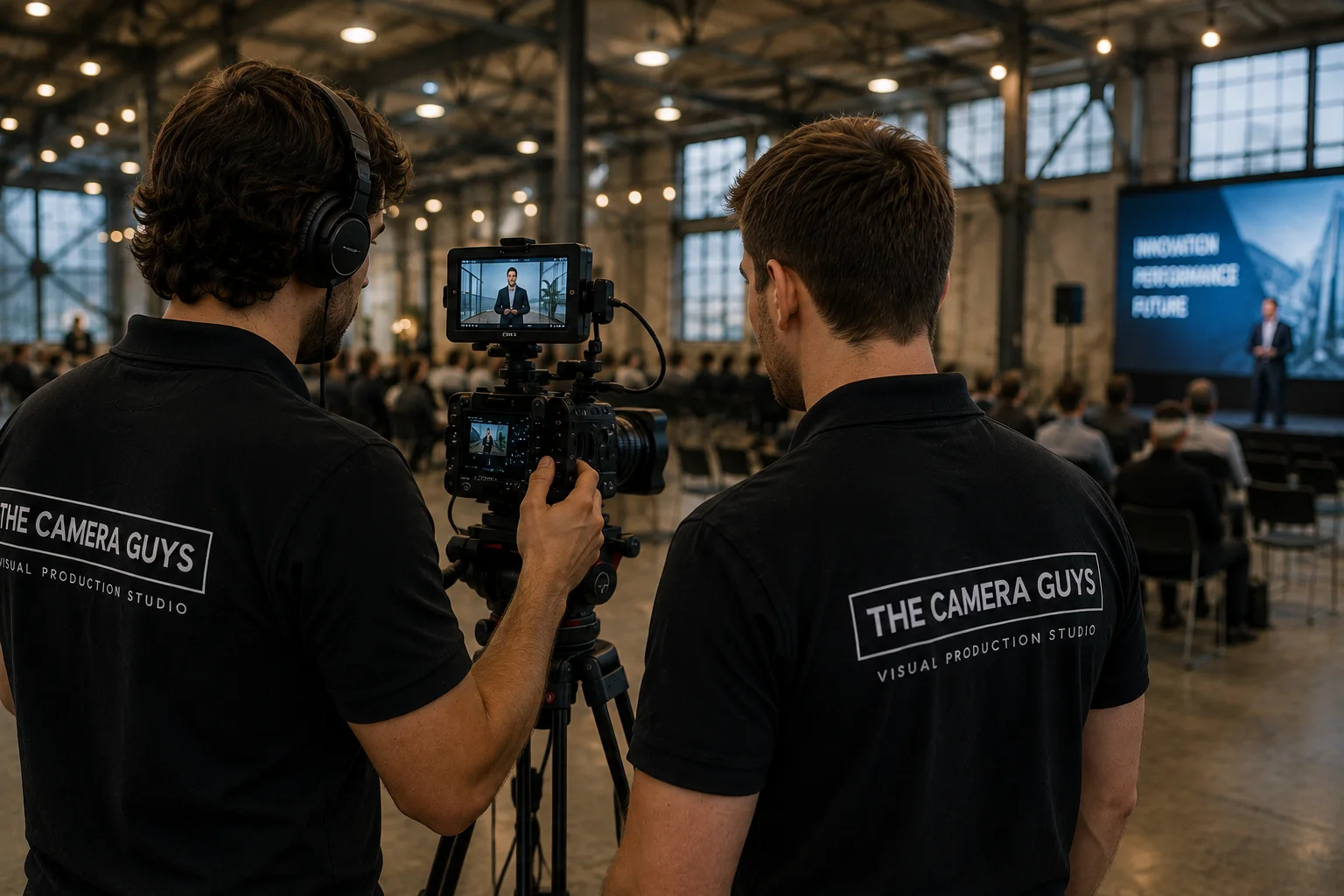
This is us.
The Camera Guys is based near Sudbury and works across Suffolk, Essex, Cambridgeshire, London and the wider UK.
Our work is strongest when the brief needs a practical combination of people, places and real activity.
That includes:
- corporate video production;
- interviews and customer stories;
- process and industrial films;
- brand and promotional content;
- events and conferences;
- product content;
- professional photography;
- drone filming;
- social content;
- post-production.
We publish a lot of complete project information because it is difficult to judge a production company from a showreel alone.
You can look through the portfolio and see different production shapes: a four-hour corporate testimonial at Sony's London headquarters, a full-day process film for Secure ITAD, multi-location agricultural work for Sentry, community-led filming for Opul Life, event productions and combined photo/video jobs.
We also publish our current production and editing rates rather than making every visitor submit an enquiry before they can establish whether the basic pricing model is in the right territory.
That does not mean every project has a fixed package price.
It means you can see the starting calculation before we scope the rest.
Where we are probably a particularly sensible fit
We would put ourselves on the shortlist for a business that wants:
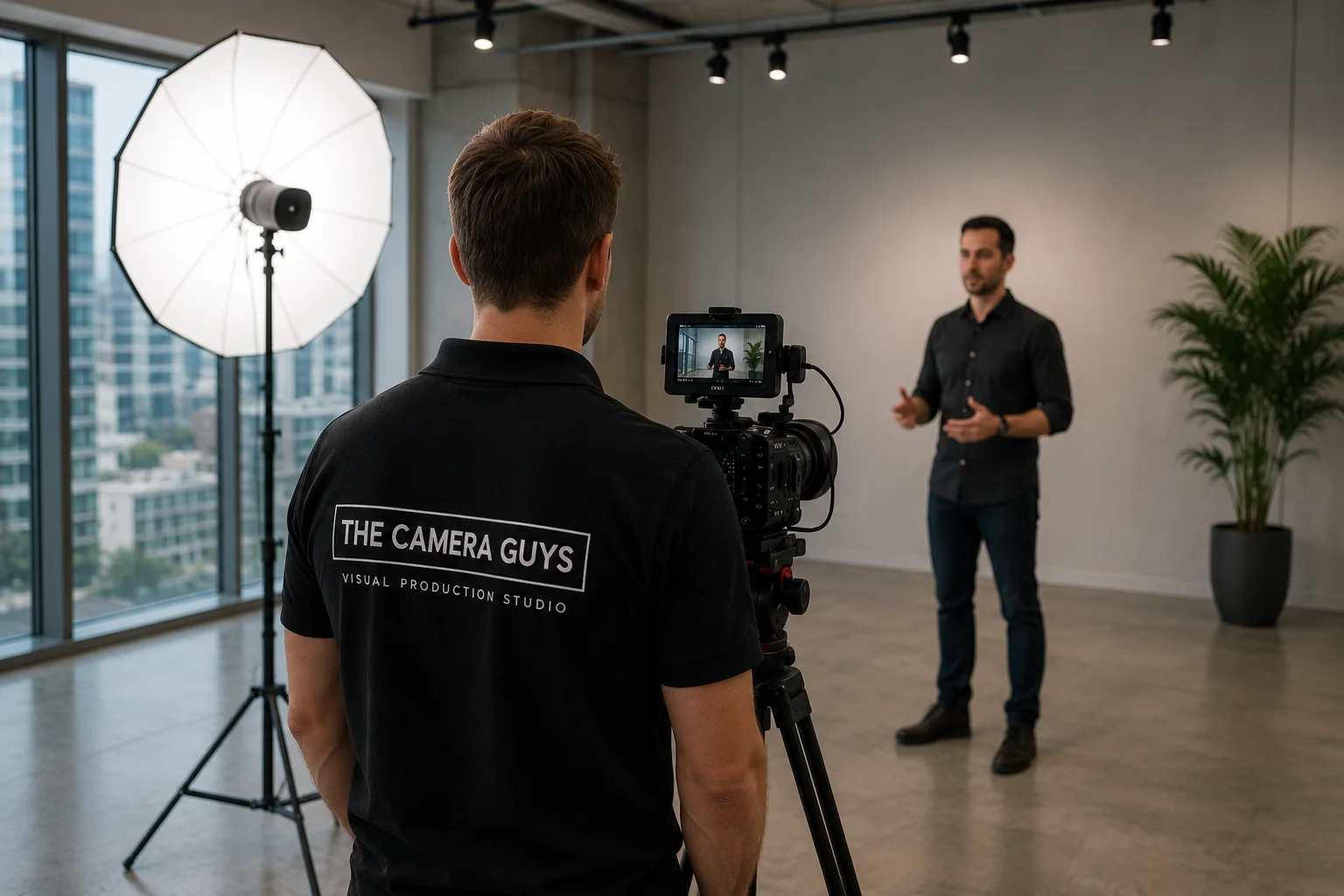
- location filming rather than a production built primarily around a studio;
- clear interviews;
- genuine workplace or process footage;
- one team handling video and photography;
- a small crew where that is sufficient, with the ability to scale where it is not;
- transparent standard rates;
- a practical brief-to-delivery process.
There are projects where another company on this page may be a more obvious starting point.
If you need a significant purpose-built set, a campaign dominated by complex character animation or a facility specifically designed around podcast production, it makes sense to look closely at the teams whose businesses are organised around those things.
That is why this page contains competitors.
What I would ask us
The same things I would ask anyone else:
- show me the closest comparable project;
- tell me who will actually be on location;
- explain what you think the brief really needs;
- separate the filming from the post-production;
- tell me what is not included;
- show me what happens when the brief changes.
If our answer does not make sense, do not hire us.
You can read the about page for more about how we work, or use the live pricing page to get a starting figure before getting in touch.
Worth a look if: you want practical corporate/commercial location production, interviews, real working environments and the option to combine video, photography and drone work through one team.
6. Trett Films — Norwich and London
Trett Films presents a noticeably story-led proposition.
Its current website describes a cinematic, emotive approach with work across commercial, education and not-for-profit projects.
The portfolio supports that positioning.
Rather than presenting only conventional corporate interviews, it shows developed narrative concepts and visually led brand work, including projects structured around characters, lifestyle and emotional storytelling.
That makes the company interesting when the brief is less:
“Please document what we do.”
and more:
“We need a film with a developed creative idea.”
Those jobs often need more work before the camera day.
The concept, casting, locations, art direction, script and story structure can become a significant part of the production.
That can be exactly what the campaign needs.
It can also be unnecessary for a straightforward business interview.
What I would ask Trett Films
I would ask to see a project with a similar creative ambition and budget scale, then discuss:
- who develops the concept;
- whether scripting is part of the scope;
- whether casting or actors are required;
- how much pre-production is expected;
- how the idea is adapted for shorter campaign content;
- whether the film still makes sense when the audience encounters it without much context.
Worth a look if: the business wants a cinematic, narrative-led brand or campaign film rather than primarily documentary-style business coverage.
7. Vortex Visual — Norwich, Norfolk
Vortex Visual is the easiest company on this list to distinguish from the others.
Its website puts 3D and 360 virtual tours, 360 content, drone imagery and immersive media at the centre of the offer, alongside conventional video production.
That matters because sometimes a normal video is not actually the best answer.
Imagine you need prospective customers to understand:
- the layout of a venue;
- the scale of a conference space;
- the inside of a property;
- a visitor attraction;
- a facility people need to explore remotely.
A linear film shows the audience what the editor chooses.
An interactive tour can let the user explore.
Those are different experiences.
Vortex's site publishes examples including virtual tours for venues, buildings and visitor spaces as well as conventional video work.
What I would ask Vortex Visual
If I were considering an immersive format, I would ask:
- where does the finished experience live;
- what devices does it need to support;
- what happens on mobile;
- whether hosting is included;
- how the tour is updated if the physical space changes;
- whether a conventional video should accompany it;
- what analytics or user behaviour can actually be measured.
Do not choose 360 because it sounds technologically impressive.
Choose it because giving the viewer control improves the communication.
Worth a look if: the location itself is a major part of what you need to communicate and an interactive/immersive format may solve the problem better than conventional video alone.
What these seven websites tell you before you contact anyone
This is one reason website screenshots are useful in an article like this.
The sites are not interchangeable.
Within a few seconds, you can usually see what each company chooses to lead with.
Bruizer foregrounds a broad production capability and studio-led creative work.
Cambridge Filmworks shows a large catalogue of films, animation and recent projects.
Offshoot presents its breadth across corporate, events, sport, education and live streaming.
Poppy makes the studio/content-hub proposition very visible.
Our own site puts corporate/commercial work, real project examples, multiple content services and transparent pricing close to the front.
Trett leads heavily with cinematic storytelling.
Vortex makes immersive and 360 work impossible to miss.
That is useful.
A production company's website is itself a piece of communication.
It will not tell you everything about how the team works, but it tells you what that business considers important enough to put first.
Do not choose purely on geography
If you are in Chelmsford, the closest suitable company may be an excellent choice.
But there is no reason to reject a Suffolk or Cambridge crew simply because the office is across a county boundary.
Video production already involves travelling to:
- client offices;
- factories;
- venues;
- farms;
- schools;
- construction sites;
- customer locations;
- event spaces.
The more useful questions are:
- what will travel cost;
- does the team understand the practical location requirements;
- can it recce the site if necessary;
- does its relevant experience justify bringing it in?
We work across Essex from our Suffolk base for exactly that reason.
For a one-hour job, distance may materially affect value.
For a £10,000 multi-day production, choosing the wrong creative/technical fit to save forty miles of travel would make much less sense.
Do not choose purely on website design either
A production company should probably have a decent website.
Still, you are not commissioning its website.
A beautiful site can make a weak portfolio look premium.
An older site can belong to people with decades of production experience.
Use the website as a navigation tool:
- Does it show the service you need?
- Can you find relevant complete work?
- Can you understand roughly how the company operates?
- Is there enough current information to have a productive conversation?
Then judge the actual production work.
The screenshots in this guide are useful because they make the regional options easier to browse, not because web design is a filmmaking competition.
Showreel versus case study: always click one level deeper
A showreel is supposed to impress you.
Fast music.
Great locations.
Best shots.
Recognisable names if available.
That is fine.
But suppose you need a three-minute customer case study.
Open one.
Listen to the dialogue.
Does the film establish enough context?
Does the B-roll relate to what the person is saying?
Do you understand the customer by the end?
Does the production feel appropriate to the brand?
A showreel can hide weak structure because every shot disappears after two seconds.
A complete film cannot.
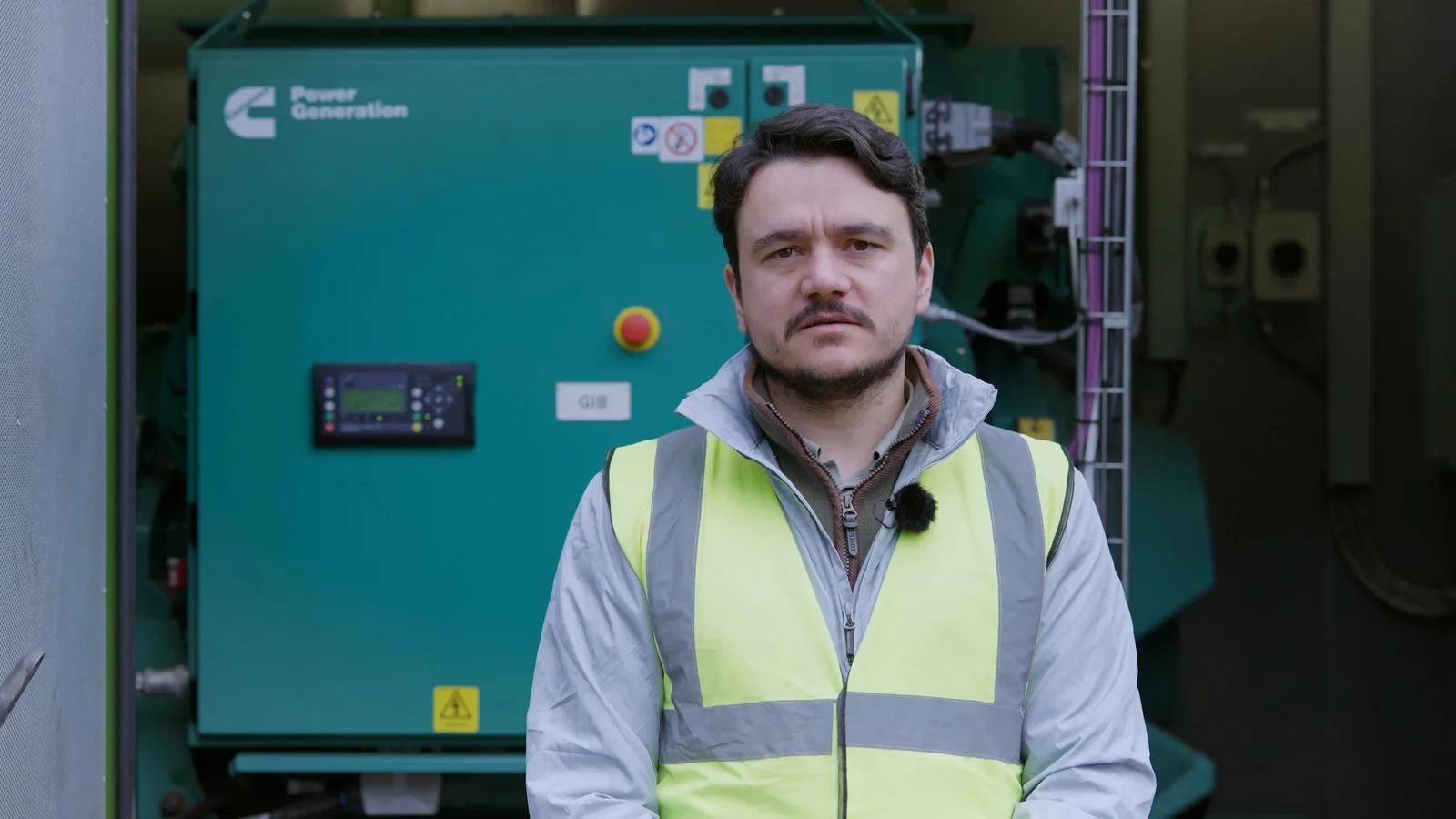
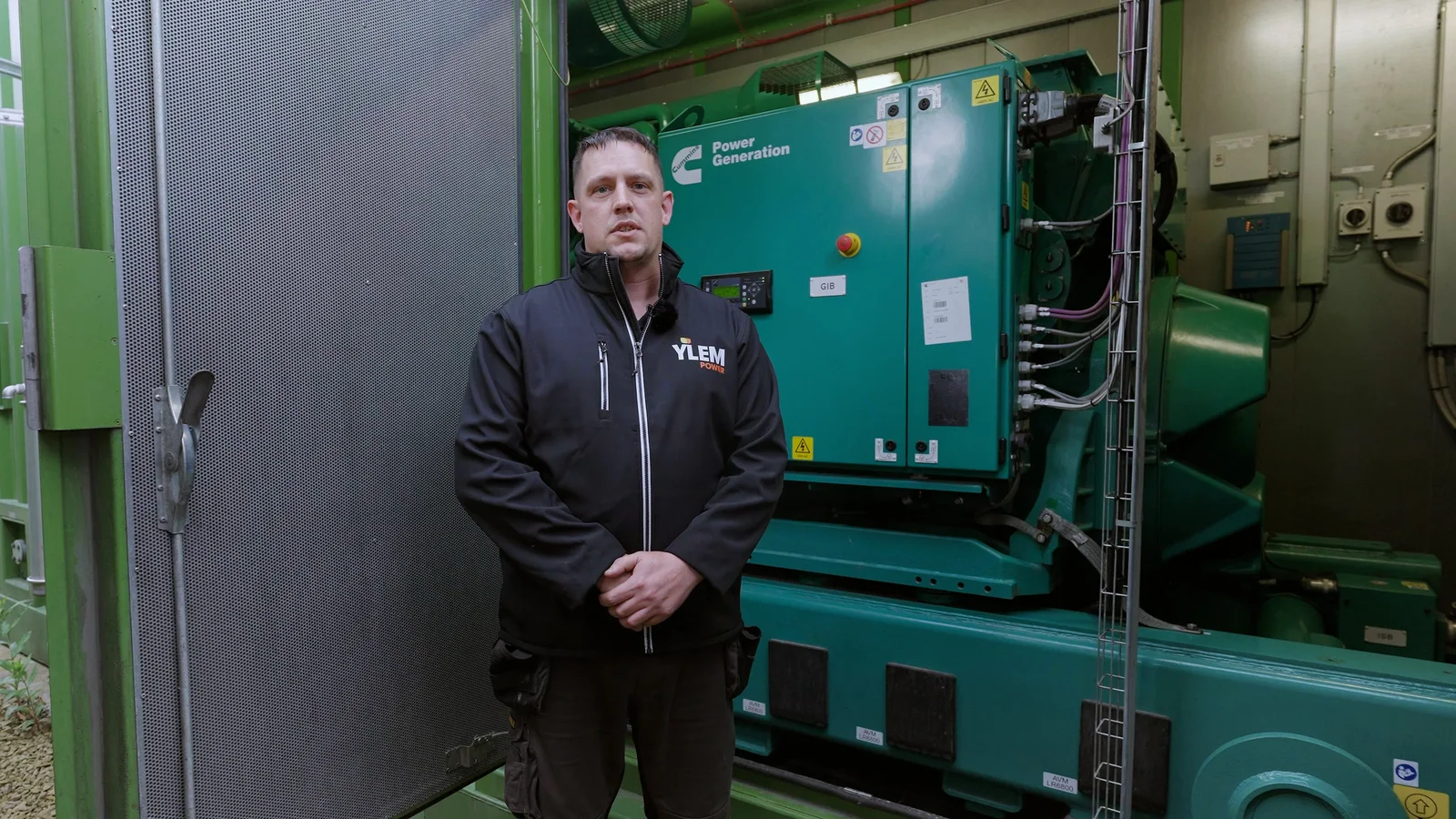
This is why our own portfolio includes full project pages alongside the visuals.
Send the same brief to every company
If you send one supplier:
“How much for a corporate video?”
and another supplier a two-page production brief, the resulting quotes are not useful comparisons.
Give the shortlist the same information.
You do not need to write a screenplay.
Include:
- the business or organisation;
- the audience;
- what the film needs to achieve;
- likely locations;
- likely contributors;
- the date or deadline;
- where the content will be used;
- how many finished videos or versions you expect;
- any fixed requirements;
- your approximate budget if one exists.
Our guide to writing a video production brief is deliberately supplier-neutral enough that you can use it when contacting us or somebody else.
That gives every company the chance to solve the same problem.
Do not compare quote totals until you compare what is inside them
Imagine two quotations.
Quote A: £2,400
Quote B: £3,600
Quote A looks cheaper.
But what if Quote B includes:
- a longer filming day;
- an additional operator;
- more pre-production;
- three finished versions;
- captions;
- graphics;
- two review rounds;
- licensed music;
- travel?
And what if you do not need half of those things?
Then Quote B may contain more value but still be the wrong scope.
Or Quote A may be exactly what the job needs.
The total cannot tell you.
Compare:
Pre-production
Who develops the idea, questions, script, schedule and shot plan?
Crew
Who is actually attending and why?
Production time
How many hours or days are included?
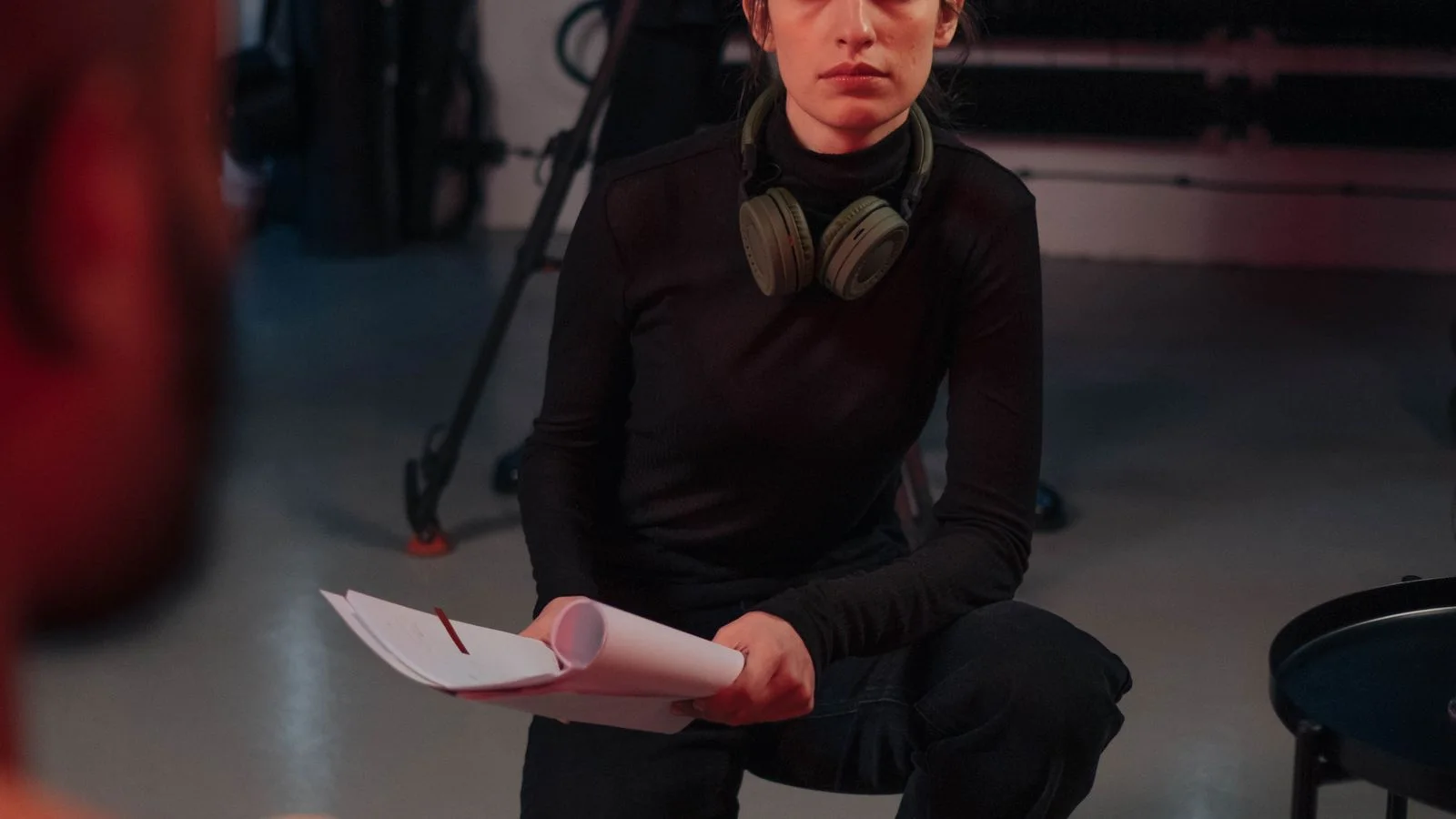
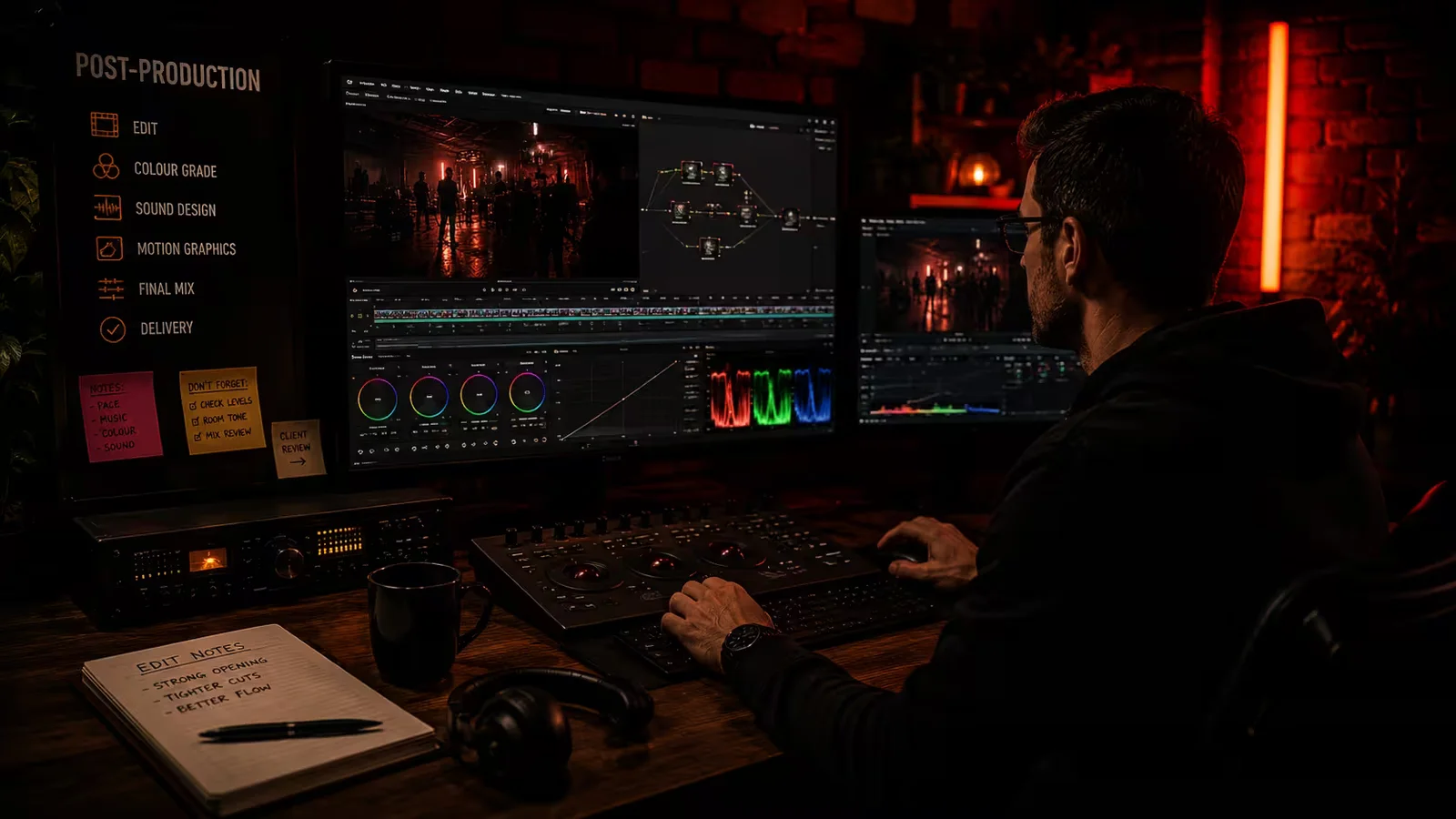
Post-production
How is editing being estimated?
Deliverables
What exact files do you receive?
Revisions
What happens after the first cut?
Travel and external costs
What is included and what remains variable?
Rights and source material
What usage is included, and what happens if you want source footage?
Our video production pricing is public partly because those distinctions are easier to discuss when the basic production calculation is already visible.
Our guide to how much video production costs in the UK goes further into comparing complete project quotes.
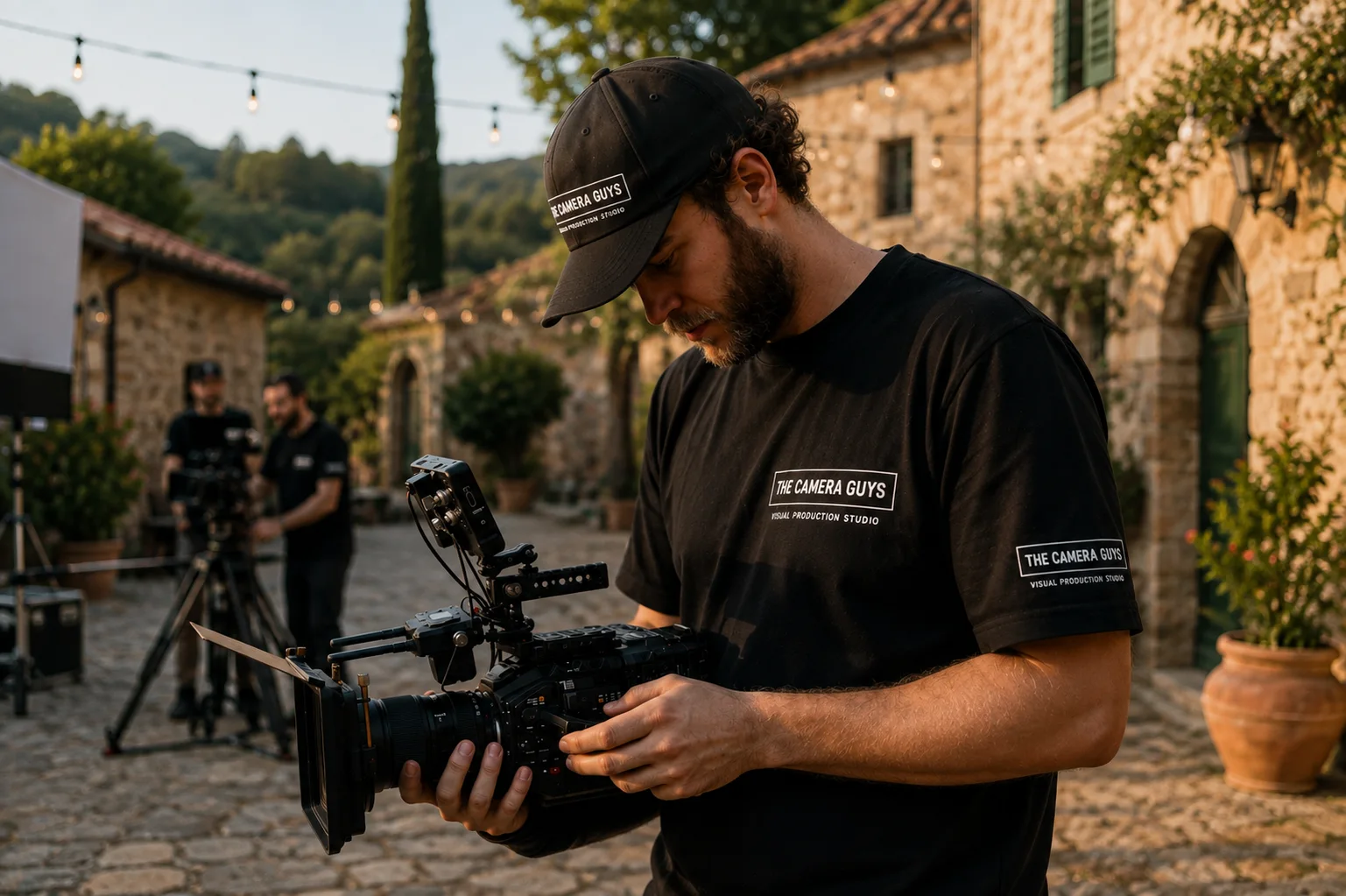
Ask who is actually making the film
This is not a trick question.
Video production is collaborative.
A company may use:
- in-house staff;
- regular freelancers;
- specialist camera operators;
- drone pilots;
- animators;
- sound recordists;
- makeup artists;
- photographers;
- agency partners.
There is nothing inherently wrong with that.
Large productions often need specialists.
The useful thing to know is who is responsible for what.
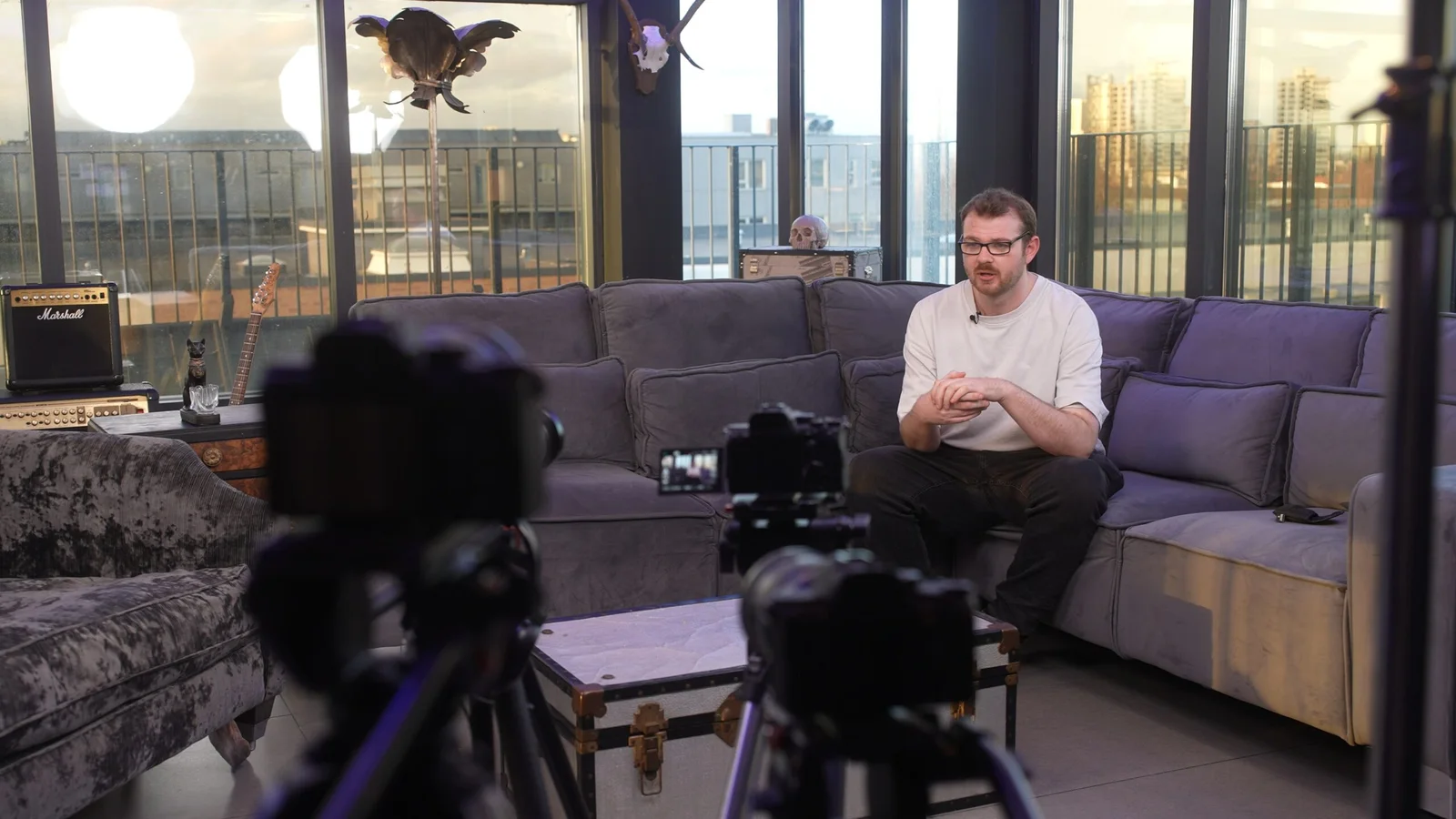
If you liked a particular portfolio film, ask what the company actually did on that production.
Did it:
- create the idea;
- direct;
- film;
- edit;
- animate;
- supply one crew member to another agency's project?
That context makes the example more useful.
It also helps you understand whether the same people and capability are available for your job.
Ask one question that forces the company to think
Instead of asking:
“Can you make this?”
ask:
“What would you change about this brief before filming?”
A thoughtful production company should be able to identify something.
Perhaps you have too many contributors.
Perhaps the location will make sound difficult.
Perhaps the proposed film is trying to serve three audiences.
Perhaps you need photography as well and should plan both together.
Perhaps the expensive drone sequence contributes almost nothing.
Perhaps the deadline is unrealistic.
A company that politely challenges part of the brief may be more useful than one that says yes to everything.
What if you only need a videographer, not a production company?
That is completely reasonable.
Sometimes the brief already exists.
You may have:
- an agency directing the production;
- an internal marketing team running the interviews;
- a finished script;
- a venue and schedule already organised.
In that case, you may primarily need an experienced videographer with the right cameras, sound and lighting.
Do not pay for a strategic process you have already completed.
The opposite is also true.
If all you currently know is:
“We need something for the new website.”
you probably need more than someone who arrives with a camera at 9am.
Understanding whether you are buying production or production support makes comparisons much cleaner.
What if you need photography as well?
Ask early.
A campaign may need:
- website photographs;
- staff portraits;
- event images;
- product stills;
- behind-the-scenes content;
- social photographs;
alongside the video.
Some companies on this list publish photography as part of their offering.
Others may bring in a photographer when required.
The important thing is to plan the schedule properly.
One person cannot provide dedicated photography in one room while simultaneously operating a video camera somewhere else.
We offer photography and videography together where it makes practical sense, with the crew built around what needs to happen at the same time.
A shortlist should end with two or three conversations
Do not send the brief to twenty companies because Google gave you twenty tabs.
You will create a lot of work for yourself and receive proposals that are difficult to process properly.
Find the teams whose work and production model appear relevant.
Then have two or three proper conversations.
By the end, you should understand:
- how each team interpreted the problem;
- what it proposes to film;
- who will be involved;
- what the finished delivery includes;
- what the assumptions are;
- what the risks are;
- what the price covers.
At that point, the decision is much easier than trying to judge seven homepages.
So which video production company should you choose?
Choose the company whose relevant work, proposed approach, scope and working relationship make sense for the film you are actually commissioning.
Not the company with the longest equipment list.
Not automatically the closest office.
Not automatically the cheapest quote.
And not automatically us just because you are reading our website.
We have deliberately included production companies here with capabilities that overlap ours and others that are quite different.
If you need substantial studio/set work, immersive 360, complex animation or a highly developed narrative campaign, one of the specialist strengths elsewhere on this list may immediately stand out.
If you need a practical corporate or commercial production built around interviews, real locations, people at work, photography, events or multiple useful marketing assets, then yes — we would very much like to be on your shortlist.
Take a look through our work, check the published pricing, and send us the same brief you would send anyone else.
That is the fairest comparison.