
What Happens on a Professional Video Shoot?
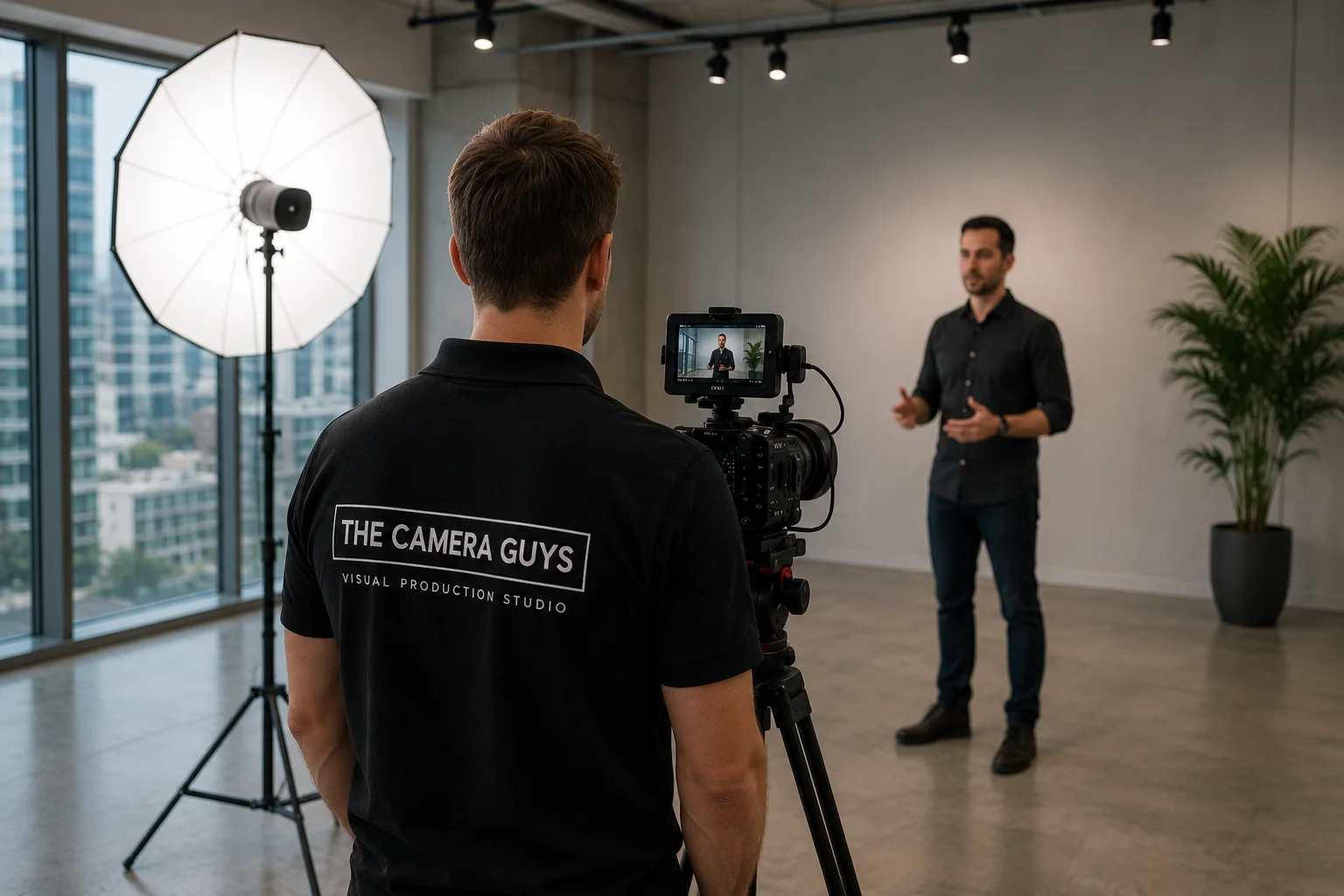
A professional video shoot involves setting up the cameras, lighting and sound, recording the planned interviews or scenes, capturing supporting footage and checking that the essential material is covered.
If it is your first time commissioning a video, the unfamiliar part is often everything around the recording. Why does the crew need the room before the interviewee? Can someone start an answer again? What should you be doing while filming is underway?
This walkthrough follows an interview-led business shoot, the kind of production used for company films, customer stories and recruitment content. Live events and product shoots work differently in places, but the same principle applies: the day is organised around capturing usable material, not keeping a camera running continuously.
The crew arrives before the first interview starts
The arrival time and the first recording time should be different entries in the schedule. Getting through reception, bringing equipment upstairs and preparing a room all happen before someone is ready to answer questions.
On arrival, the lead videographer or producer meets your nominated contact and checks the plan against what is actually happening. Is the agreed room available? Has a contributor's meeting overrun? Is a delivery about to come through the area where you intended to film?
These are adjustments to the pre-production plan, not a reason to start the whole brief again. Flag anything that has changed, particularly access restrictions, sensitive information or activity that cannot be interrupted.
Give the crew someone who can open the right doors and make practical decisions. For the arrangements worth sorting beforehand, our guide to preparing for your first video shoot covers rooms, contributors and access.
At The Camera Guys, booked production time starts with arrival and the agreed on-location setup. Normal pack-down has no separate fee. Our video production pricing explains those booking details; the time on location is not simply the number of minutes spent recording.
An ordinary room becomes a filming space
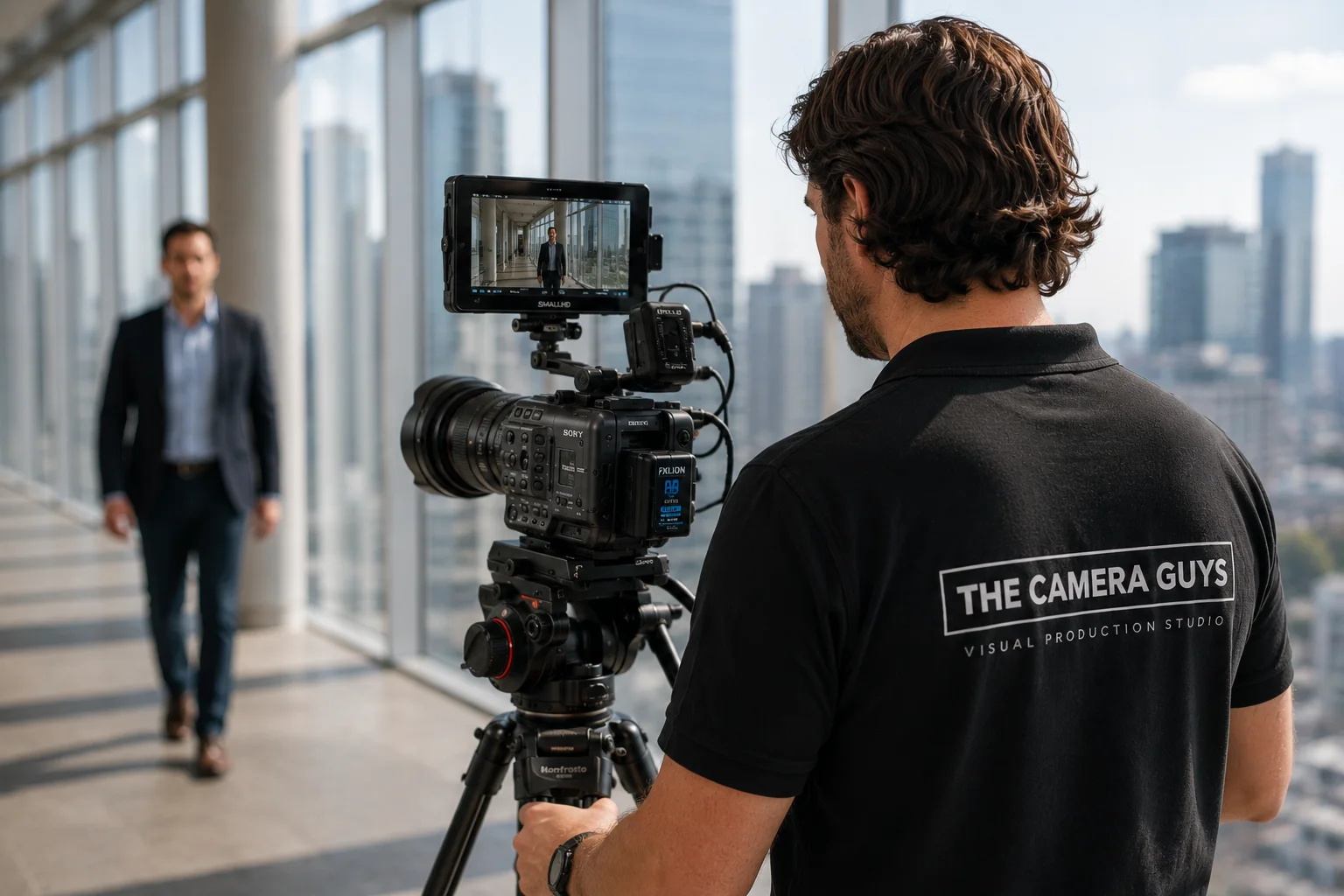
Once equipment is brought in, the crew works out how the person, background, lighting and microphones will fit together.
That might mean moving a chair away from a wall, changing the camera angle to avoid a bright window or choosing a different corner of the room. A meeting room that looks impressive through the door is not necessarily the best interview location once you listen to the air conditioning or notice the activity behind the glass.
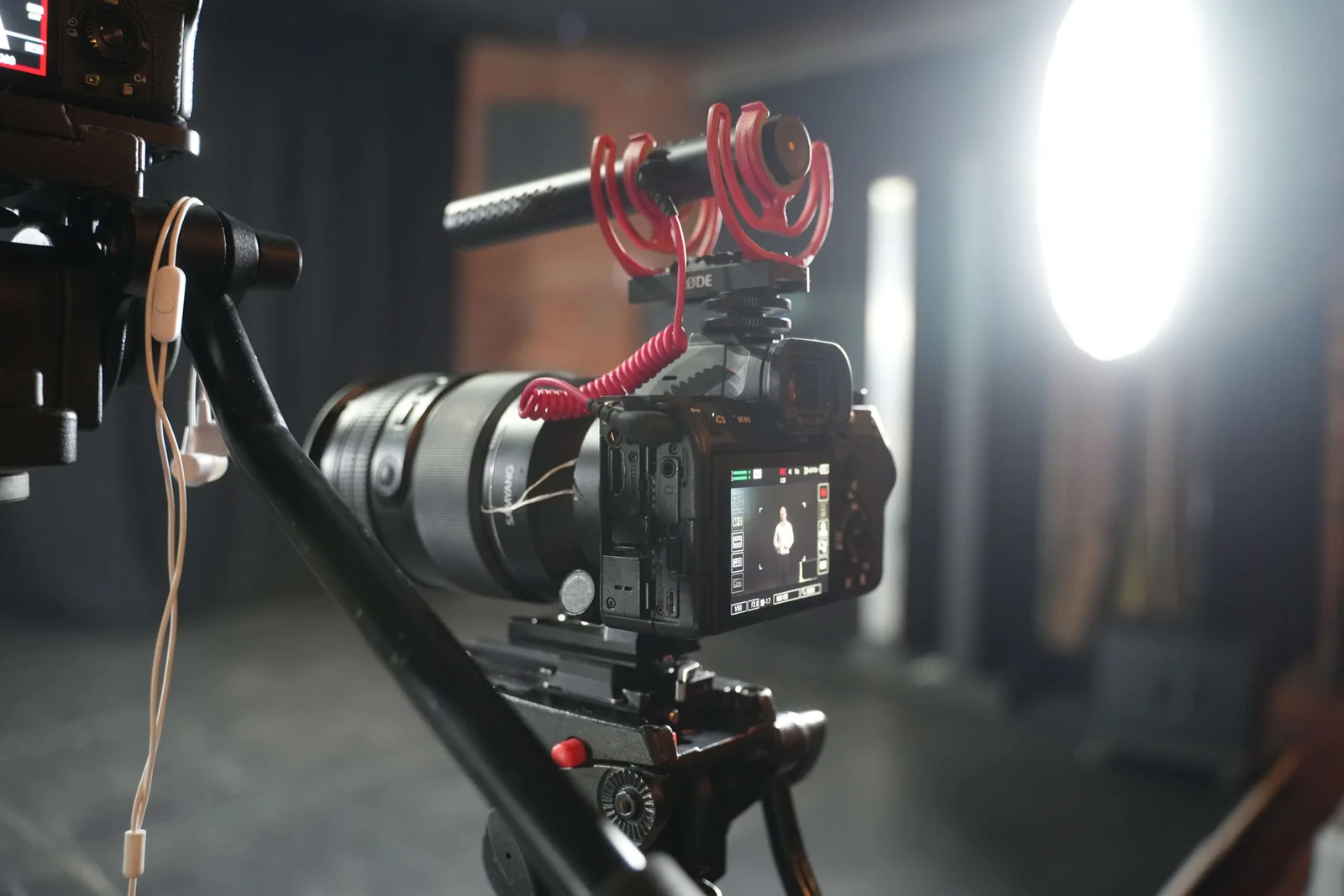
Sound gets its own attention. The crew may use a small clip-on microphone, a microphone positioned just outside the frame, or a combination suited to the setup. Test recordings help identify clothing rustle, background noise and other problems before the interview begins. That is why professional audio is part of the filming plan rather than a rescue job left for the editor.
There is no benefit in making an interviewee wait in the chair through every adjustment. Where practical, the crew can prepare the setup with someone standing in, then bring the contributor in for their own final checks.
You might see one videographer handling a manageable interview setup or a larger team dividing camera, direction, lighting and sound responsibilities. Neither arrangement tells you, on its own, how good the film will be. Our guide to how many camera operators you need explains why the work should determine the crew, rather than the other way round.
You do not have to deliver a perfect answer first time
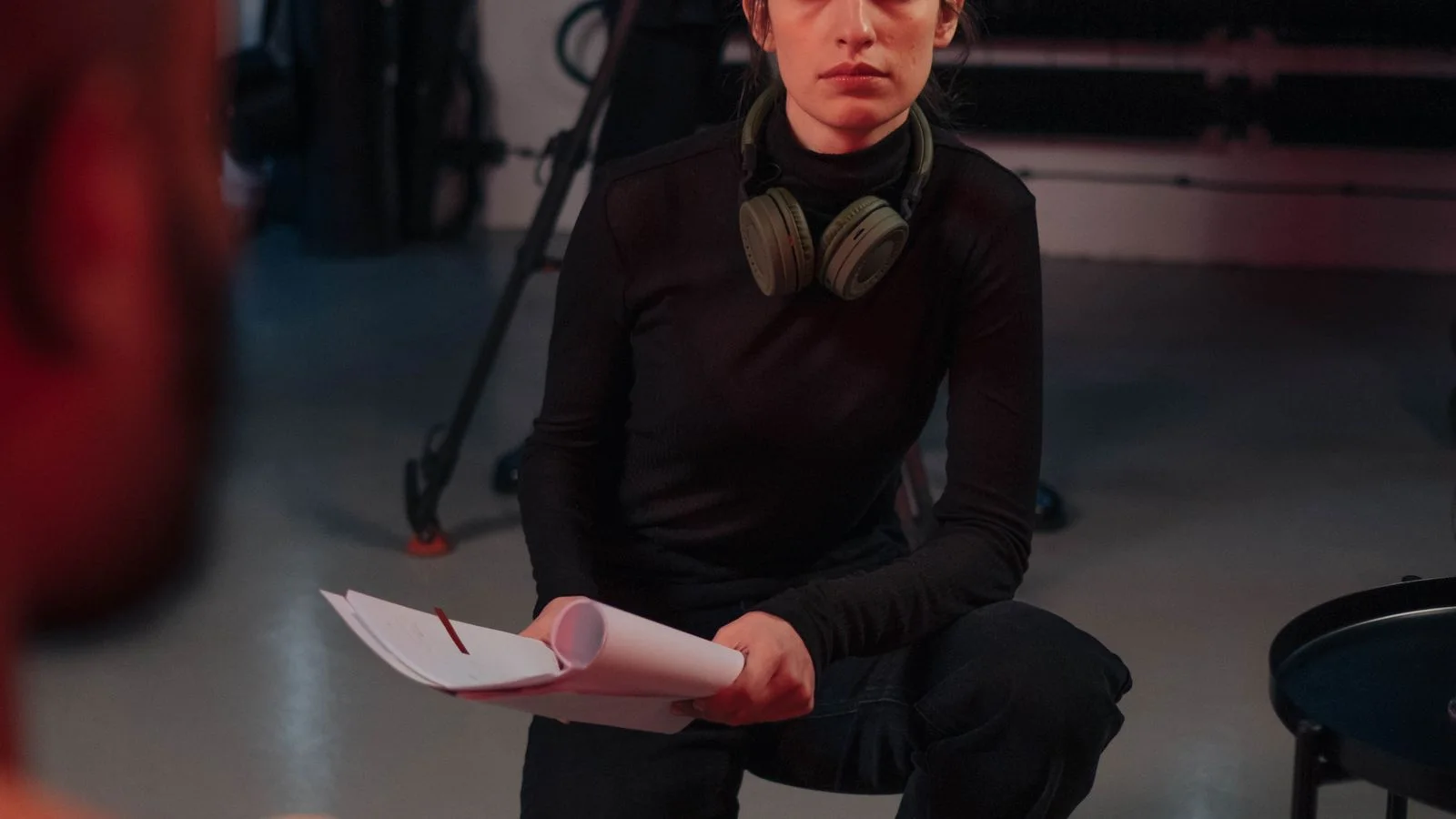
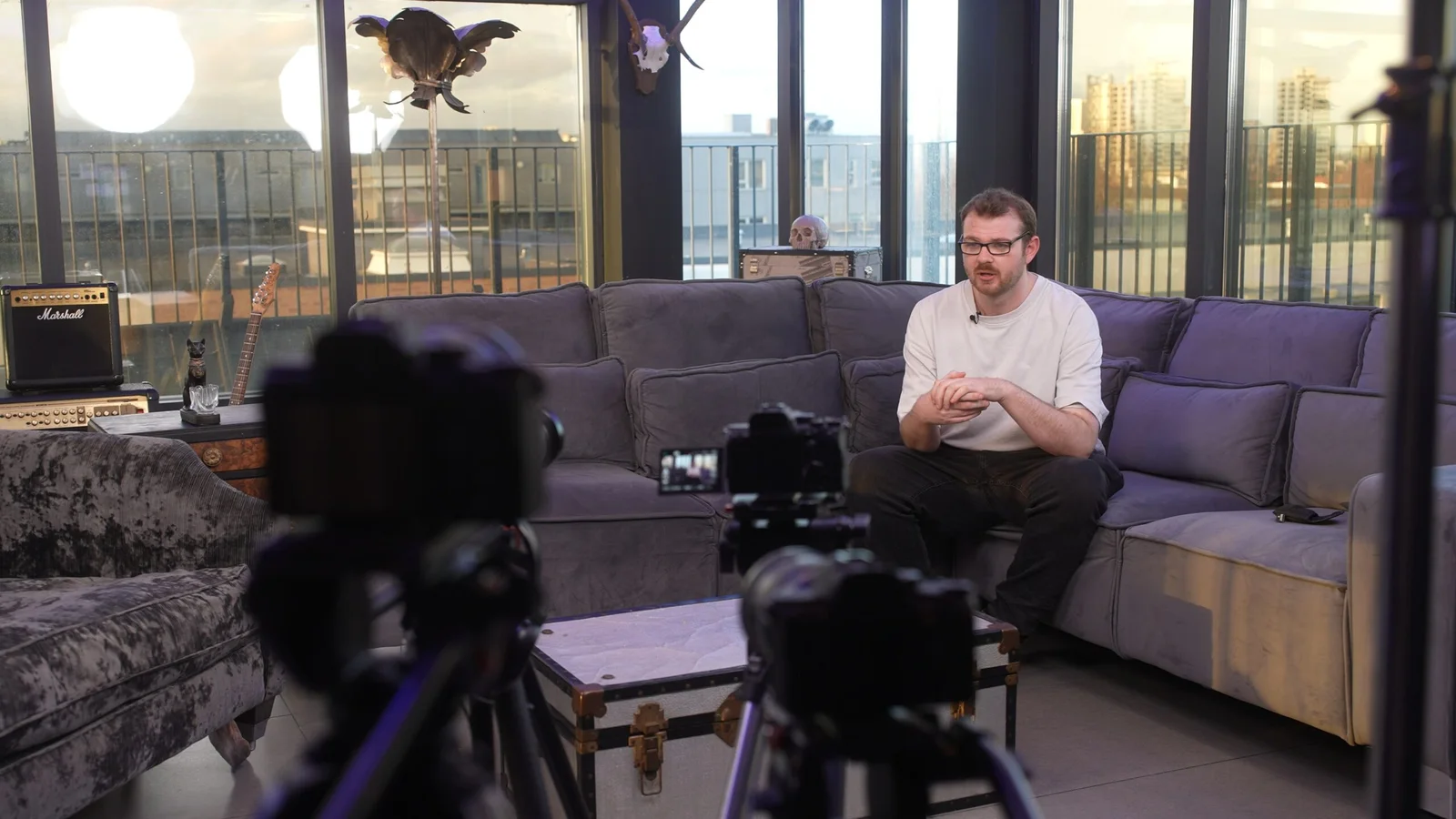
Before recording, the person leading the interview should explain where to look, how the questions will work and what to do when you lose your train of thought.
For many business interviews, you speak to an interviewer sitting close to the camera rather than looking directly into the lens. A presenter-led explanation may use direct-to-camera delivery instead. You should not have to guess which approach is expected.
A recorded interview is not a live presentation. You can pause, ask for the question again or restart an answer.
The interviewer may also ask you to repeat a useful point with a little more context. Imagine answering a question with "About six weeks." That makes sense in the conversation, but not necessarily after the question has been removed. "The installation took about six weeks" gives the editor an answer that can stand on its own.
The aim is not to make you repeat a marketing script. It is to capture a clear version of what you genuinely have to say. Our guide to interviews and customer testimonials explains how those conversations become finished films.
A script or teleprompter can be useful when precise wording is needed, but arrange that in advance. For a conversational interview, bring the facts and examples you know, rather than trying to remember a paragraph word for word.
The work continues when the interview ends
Once the speaking is finished, it can look as though the main job is done. For an interview-led film, there is usually another important part: filming what the person has been talking about.
This is supporting footage, often called B-roll. It might show someone using a product, carrying out a check, helping a customer or demonstrating a process. It gives the viewer something more informative than a face on screen for the entire film.
Imagine an engineer explaining an inspection. A wide shot can establish the work area, a closer view can show the engineer carrying out the check, and a detail can reveal the component being examined. Those shots answer different questions; they are not just three versions of the same picture.
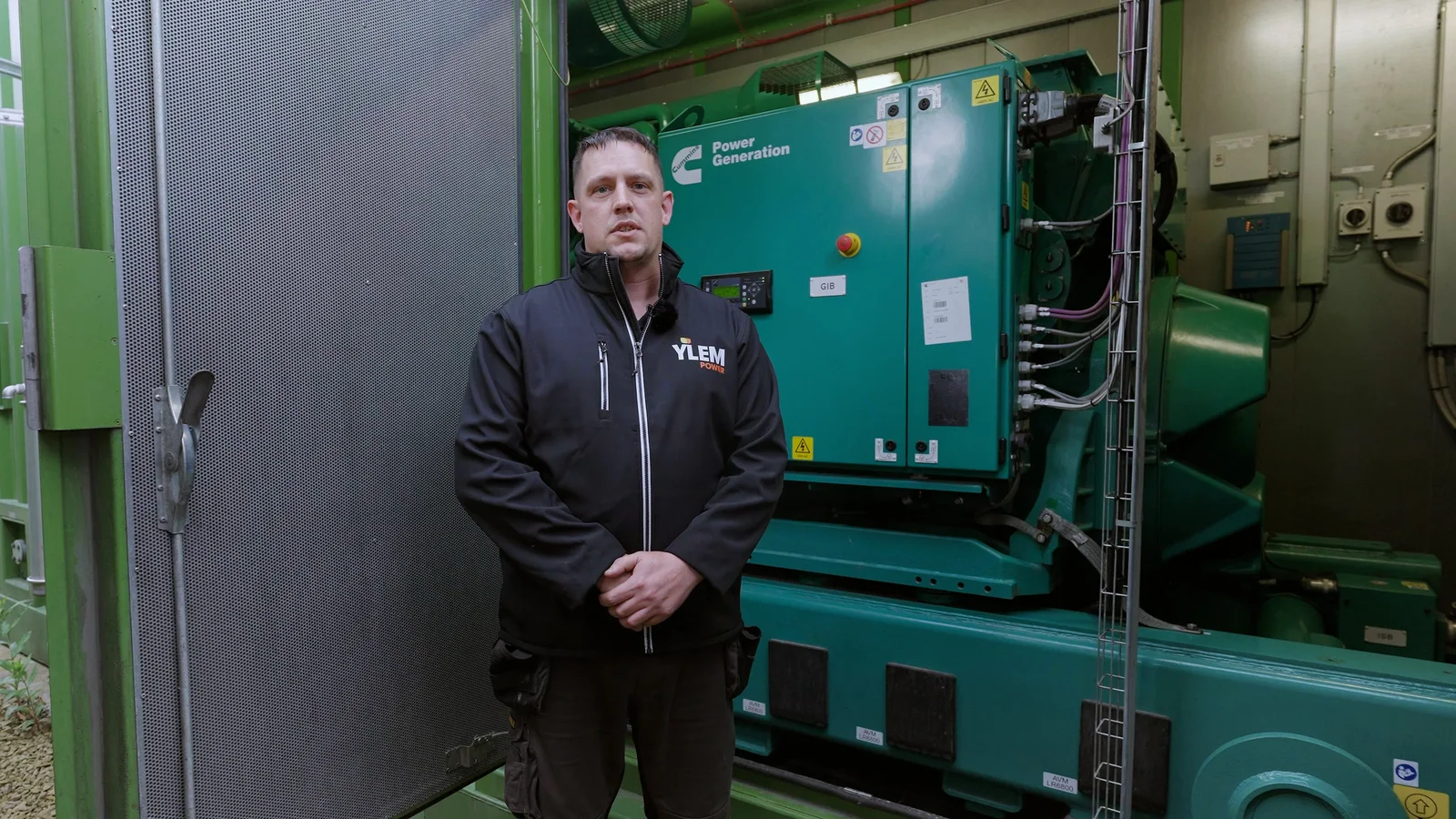
Our YLEM Terra Firma project combined customer testimony and YLEM's explanation of its work with footage of the people and equipment on site. The interviews provided the account; the surrounding footage showed the setting and practical work behind it.
For your own shoot, keep the relevant people and activity available until their supporting footage is complete. Finishing an interview does not necessarily mean that contributor has finished filming for the day.
Where an action can safely be repeated, the crew may record it from another position. Where it cannot, explain that before it happens. The filming should fit the real process, not require someone to invent an impressive-looking procedure or bypass a safety measure.
Why the filming order can look surprising
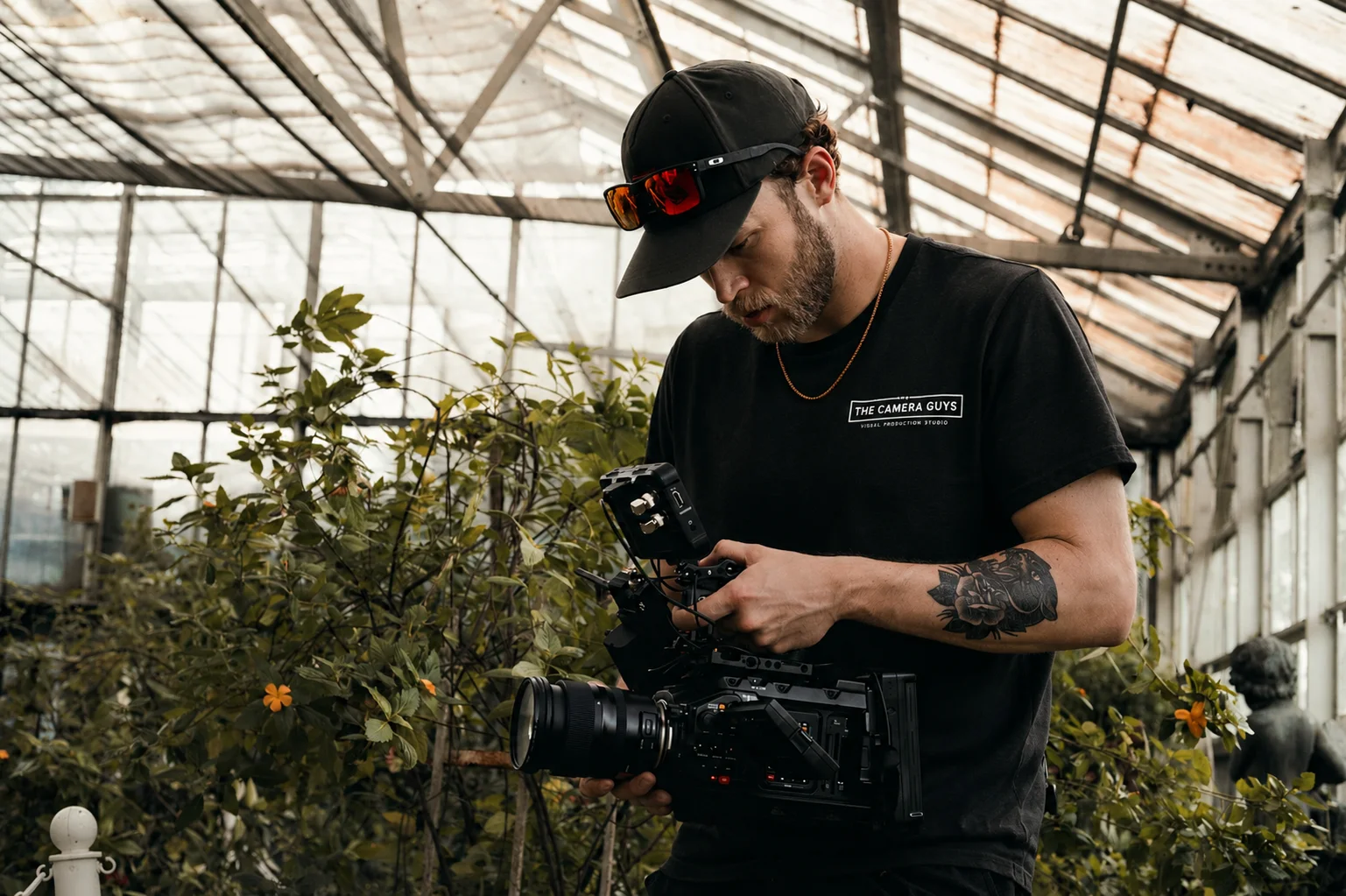
The first scene in the finished film does not have to be the first thing recorded.
Consider a company introduction that opens outside the building, moves into a working area and then introduces the founder. The crew might record the founder first because that is their only free slot, capture the working activity next and film the exterior when conditions are more suitable.
Grouping shots by location or setup can also avoid moving the same equipment backwards and forwards. On a product video shoot, several products might be filmed under one lighting arrangement before the crew changes it for a different kind of shot.
There will be pauses. A passing vehicle might interrupt an answer; moving from a seated interview to a demonstration can mean changing lighting, sound and framing. Repeating something to solve a specific problem is part of the work, although the crew should be able to explain what needs attention.
Live event filming is different: a speaker or performance cannot simply start again for the camera. Coverage must be ready around the event's timetable, with the people and viewpoints needed for moments that only happen once.
This is also why a short finished video does not automatically mean a short shoot. The number of locations, people and setups matters more than the length of the final edit.
Your job is to keep the right things moving
You do not need to supervise exposure settings or direct your colleagues between every take. The most useful client contact is someone who knows the organisation and can resolve the questions the crew cannot answer alone.
Is this the correct product version? Can that customer name appear on the screen? Is the person demonstrating the process following the approved method? Raise those points while the relevant people and setup are still available.
Agree when you will check important details. There may be an opportunity to look at the framing or a selected take, but reviewing every recording immediately can break the flow of an interview. Route requests through one contact rather than giving a contributor several competing sets of instructions.
You do not necessarily need to stand beside the camera all day. Agree where your presence is needed and stay reachable when it is not. A quieter room without unnecessary onlookers can make being filmed less daunting.
When plans change, say what matters most. Another interview, an extra location or a new product demonstration might be possible, but ask what it would displace and whether it changes the agreed time or cost. Something sounding small in conversation does not make it quick to film.
The last take is not quite the end of the day
Before people leave, check that the essential interviews, demonstrations and supporting shots have been covered. Confirm any missing names, job titles or details needed for the edit while someone can still answer them.
The crew also monitors recordings during the shoot. Checking an important clip while the contributor and equipment are still available can reveal a problem that is much harder to address after everyone has left. Those checks are not a substitute for copying and protecting the files.
Then the equipment needs packing away and the space returning as agreed. Keep that time in the room booking rather than scheduling another meeting for the moment the final interview ends.
The recordings need to be copied, checked, backed up and organised for post-production. Separately recorded picture and sound may need synchronising before the editor can build the story, refine the pacing and add the agreed finishing work.
You should leave knowing when to expect the first edit and who will gather feedback. Our guide to how long video production takes explains how filming fits into the wider schedule. The filming date is not automatically the delivery date, and a raw-footage handover is a separate arrangement from a finished-film delivery.
What a well-run shoot should leave you with
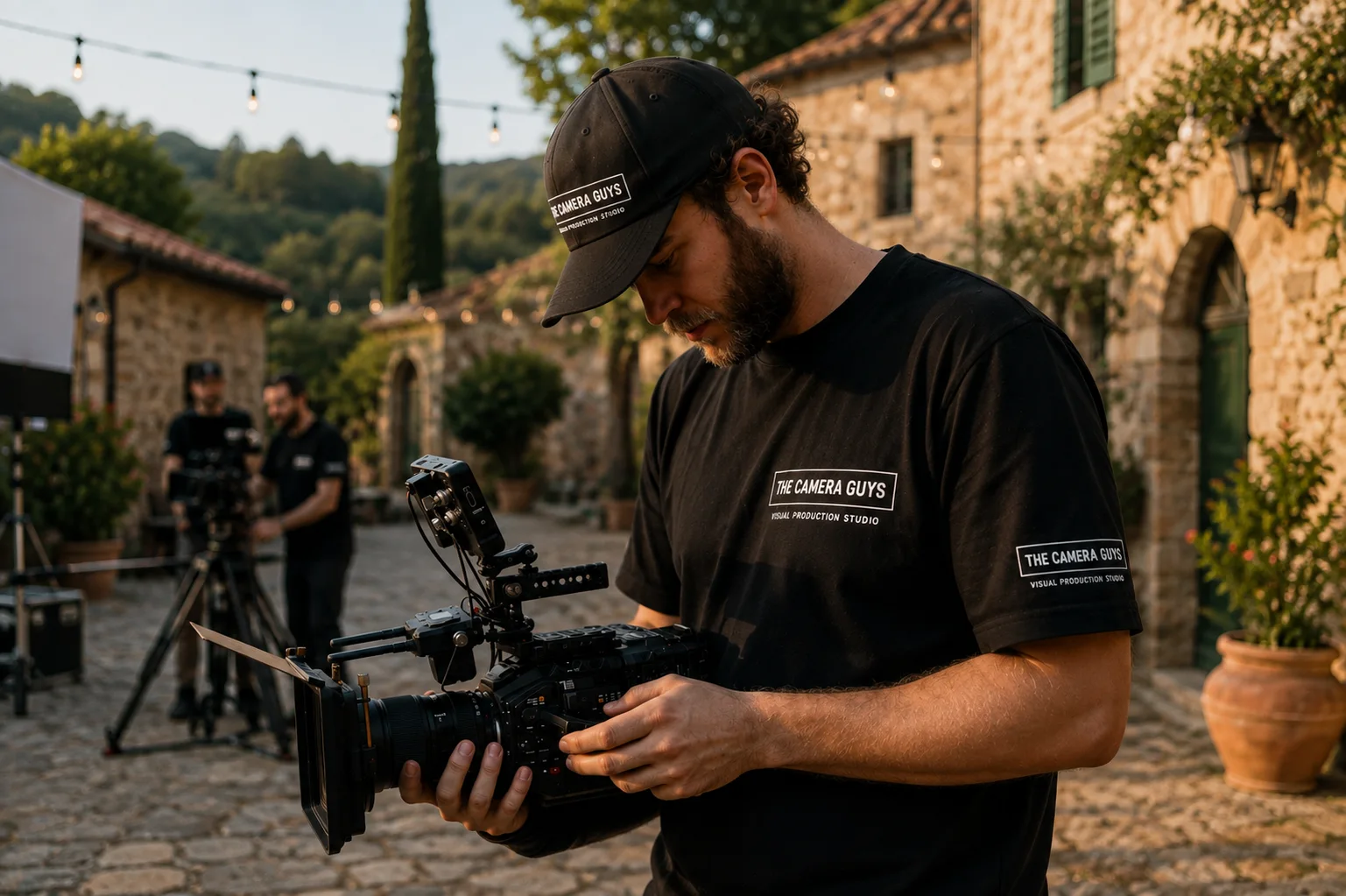
Not necessarily a perfect day without interruptions. A useful measure is whether the team captured what the brief needed, kept people informed and left a clear route to the finished film.
Our corporate video production work includes interviews, customer stories, recruitment films and content made in working environments. The filming approach needs to fit those people and places, not turn every business into the same set.
For a first shoot, tell us about the practicalities as well as the idea: who is appearing, where the filming will happen and what must carry on around it. Send us the outline of your filming day, and we can help work out what needs to happen before the first camera is switched on.