
What 28 Portfolio Films Reveal About Video Length
A two-minute brief needs more than an average
How long should a professional video be?
Our own portfolio does not produce one neat answer.
We audited the running times of 28 eligible films linked from The Camera Guys' portfolio records. The median was 2 minutes 37 seconds. The mean was 3 minutes 26 seconds. 19 of the 28 films — 67.9% — ran for less than three minutes.
Then there is a 32-minute interview.
That one film accounts for roughly a third of every recorded second in the sample and pulls the mean upwards dramatically.
So the most useful finding is not that a business video “should” last 2:37 or 3:26.
It is this:
A runtime benchmark only makes sense when you understand what kinds of films are inside it.
This is original descriptive research into a selected sample of our own work. The dataset was audited on 16 September 2026. It measures finished running time — not viewer retention, conversions, production cost or the ideal duration for somebody else's campaign.
For practical advice on choosing a target length for a new project, see our separate guide to how long a corporate video should be. This page is the evidence behind a narrower question: what lengths actually appear in our portfolio sample?
The study in four numbers
| Measure | Result | What it tells us |
|---|---|---|
| Films included | 28 | The final sample after the inclusion and exclusion rules were applied. |
| Median runtime | 2:37 | Half the sample sits below the midpoint and half above it. |
| Mean runtime | 3:26 | Total runtime divided by all 28 films; highly affected by the longest observation. |
| Under three minutes | 67.9% | 19 of the 28 included films. |
A fifth number is worth keeping beside them:
92.9% of the sample — 26 films — ran for less than five minutes.
That still does not mean “under five minutes performs better”. We did not collect performance data.
It simply describes this portfolio sample.
The most revealing result is what one long film does to the average
The longest observation is the Sophie Taylor radio interview at 32:21.
Keeping it in the dataset is correct. It is a genuine completed film that passed the audit rules.
It is also unusually long compared with the rest of the sample.
Across all 28 films:
- Mean: 3:26
- Median: 2:37
Remove only that 32:21 interview and recalculate the remaining 27 films:
- Mean: 2:22
- Median: 2:33
The mean drops by about 64 seconds.
The median moves by only four seconds.
Neither calculation is more honest than the other. They answer different questions.
The mean counts every recorded second, so an unusually long film has a large effect.
The median asks where the middle of the ordered sample sits, so one extreme value has much less influence.
For someone commissioning video, this is why “the average business video is X minutes long” deserves a follow-up question:
Average of what?
What the runtime distribution actually looks like
The largest single band in our sample was two minutes to under three minutes, containing 10 of the 28 films.
| Runtime | Films | Share |
|---|---|---|
| Under 1 minute | 5 | 17.9% |
| 1:00 to under 2:00 | 4 | 14.3% |
| 2:00 to under 3:00 | 10 | 35.7% |
| 3:00 to under 5:00 | 7 | 25.0% |
| 5:00 or longer | 2 | 7.1% |
The bands are mutually exclusive.
Exactly 1:00 enters the second band. Exactly 2:00 enters the third. Exactly 3:00 enters the fourth.
The cumulative figures tell the same distribution another way:
- 19 films — 67.9% — were under three minutes
- 26 films — 92.9% — were under five minutes
Do not add those cumulative percentages to the individual bands.
Three films show why purpose matters more than the midpoint
The sample contains films doing very different jobs.
SMART Tools — 0:30
The SMART Tools product advert runs for 30 seconds.
The product is the centre of the idea. Match cuts move rapidly between attachments, materials and practical uses. The format needs to communicate a focused product proposition inside a short advertising slot.
Longer explanation is not the point.
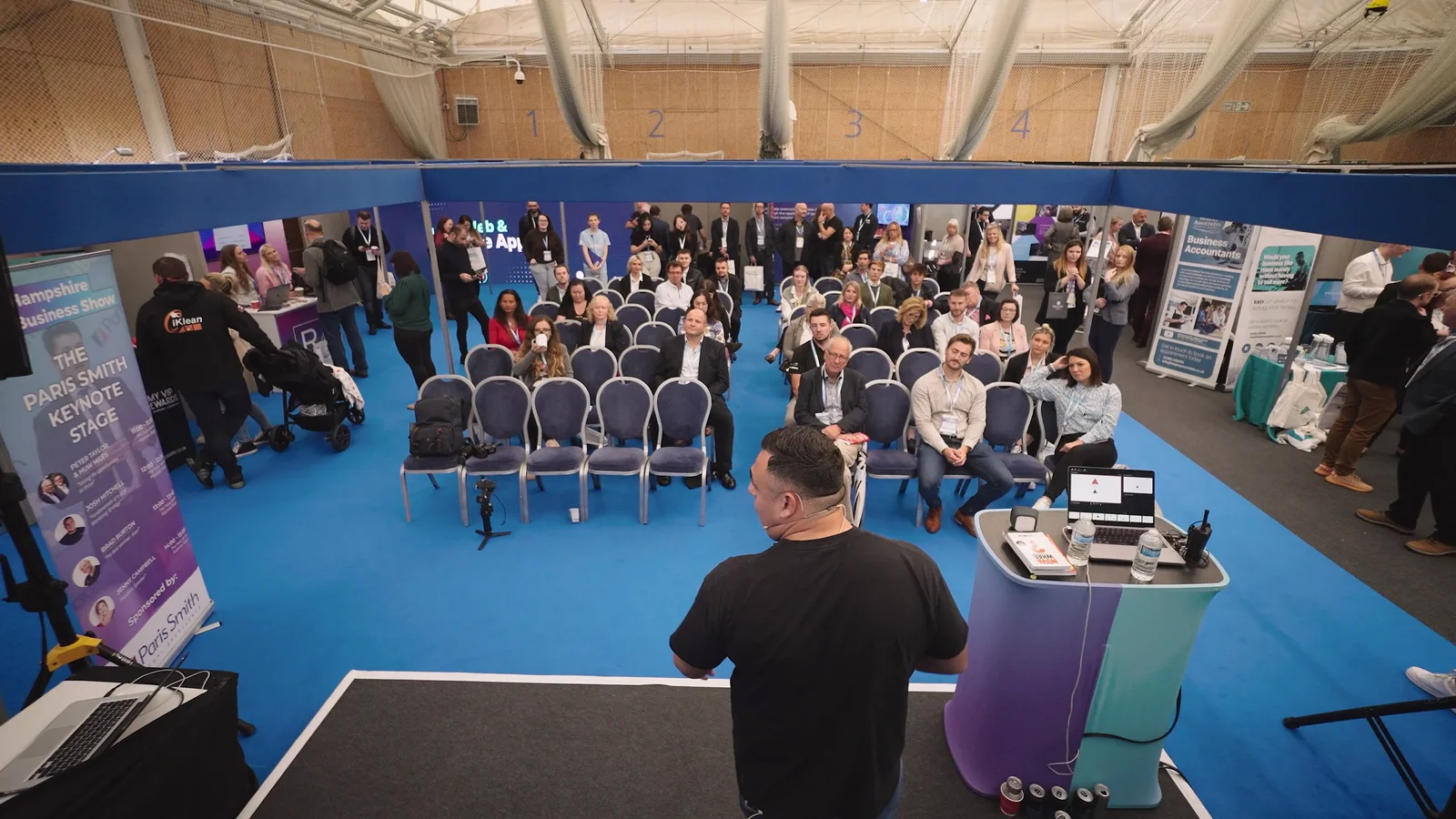
Hampshire Business Show — 2:17
The Hampshire Business Show film runs for 2 minutes 17 seconds.
It has another job: condense a live B2B event into speakers, exhibitors, audience activity and the conversations happening around the venue.
It needs enough time to make the show feel substantial without attempting to preserve every presentation.
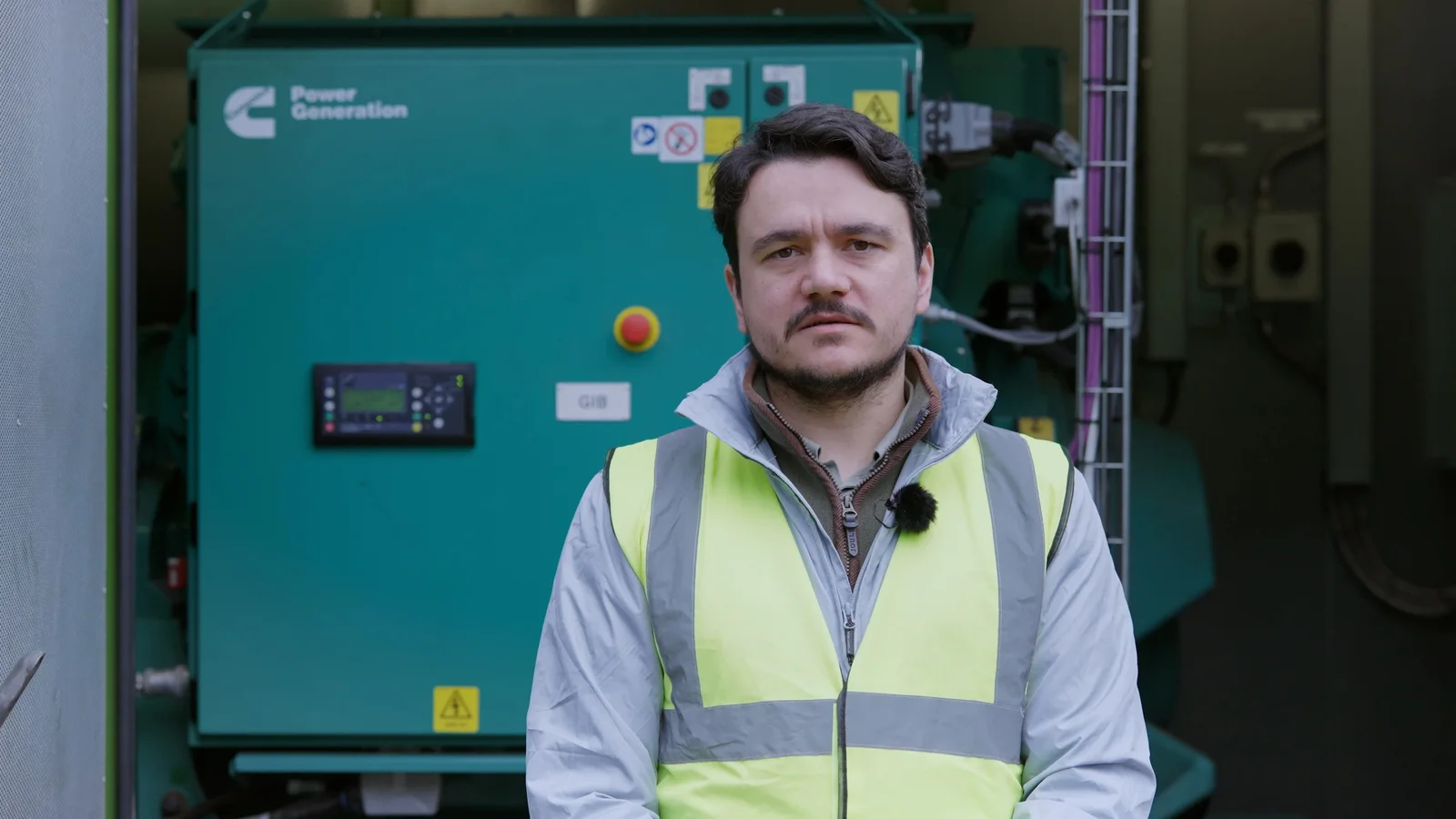
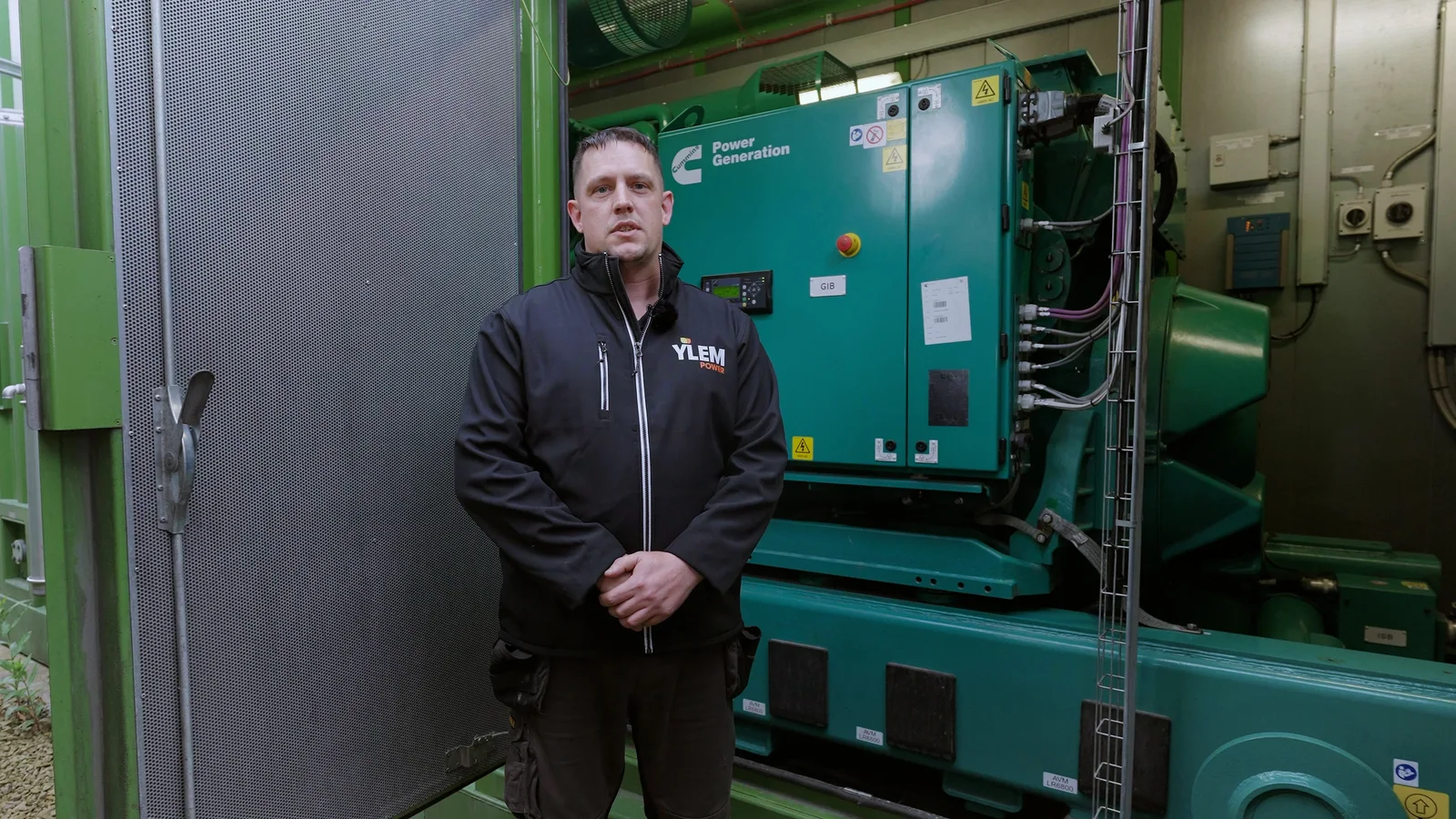
YLEM Terra Firma — 6:22
The YLEM Terra Firma case-study film runs for 6 minutes 22 seconds.
This is an interview-led technical story combining the customer's perspective, YLEM's expertise, the working generation site and evidence of the service being discussed.
The additional runtime creates room for context and explanation that would make little sense inside the SMART advert's 30 seconds.
These are observed finished lengths.
They are not evidence that one of the films performed better because of its duration.
Even the 32-minute outlier is not "too long" by definition
The longest film is useful precisely because it resists a simplistic conclusion.
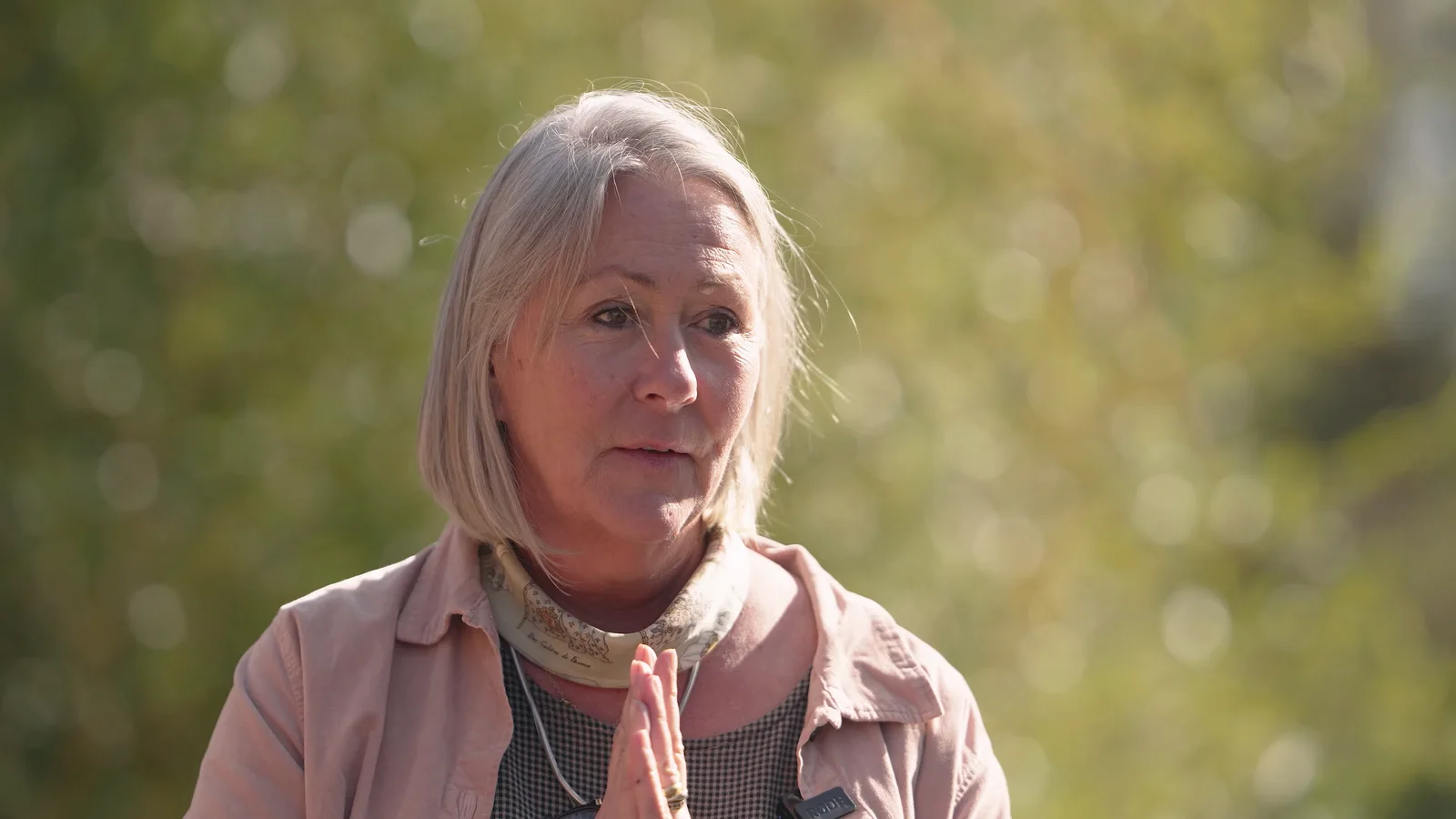
The Sophie Taylor film documents a substantial radio interview. Its editorial purpose is much closer to preserving a conversation than distilling a product proposition into an advertisement.
Calling 32:21 an outlier describes its position in this dataset.
It does not mean the film should have been shortened to match the rest of the portfolio.
That distinction matters whenever somebody turns descriptive statistics into production advice.
A long training session, detailed interview or conference presentation should not be compressed to two minutes merely because a portfolio median happens to sit near that point.
Equally, a 30-second advert does not need another two minutes of material simply to resemble a corporate average.
How to use this study when writing a video brief
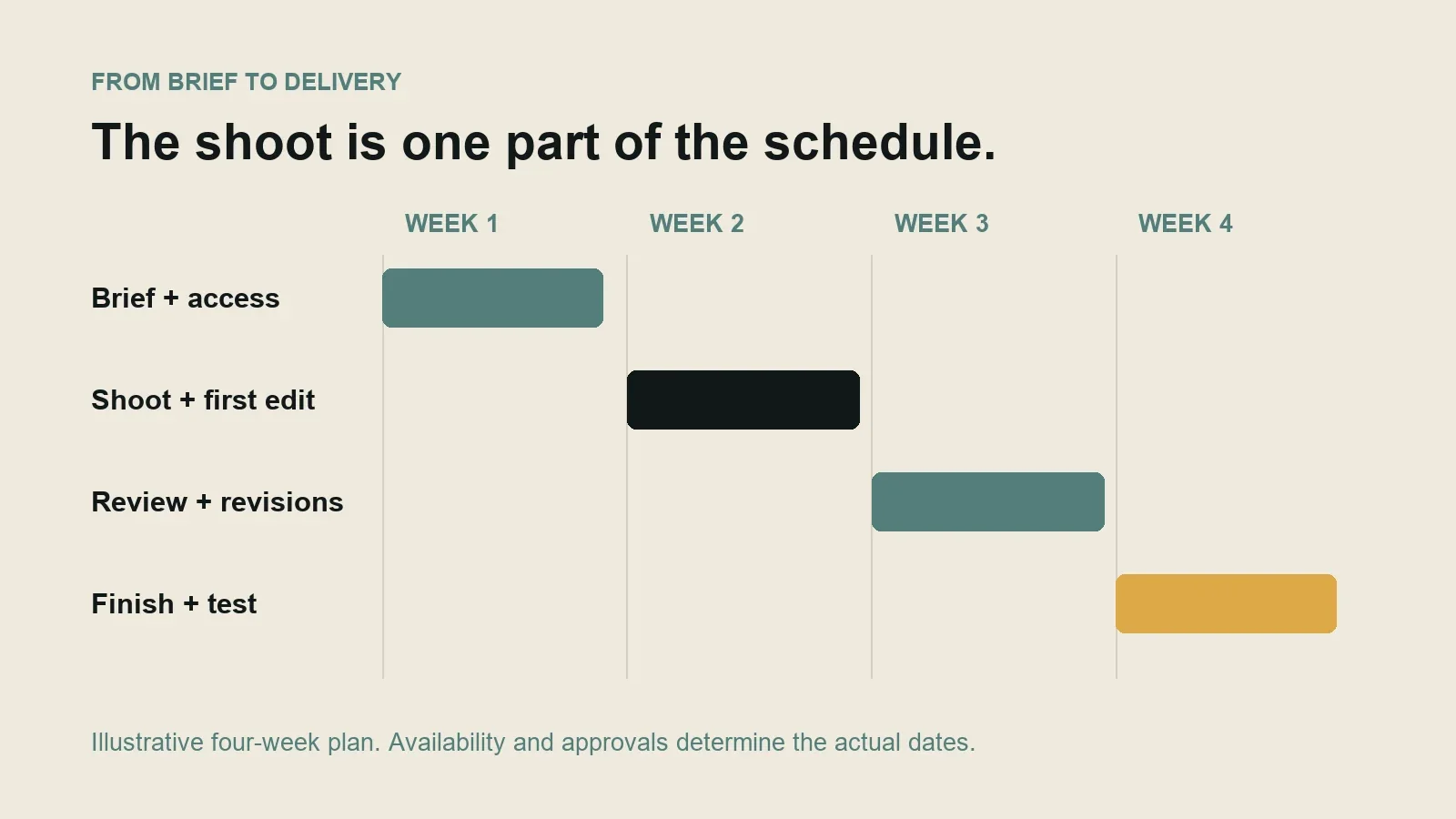
The data is most useful as a way to ask better questions.
Before writing “video length: two minutes” into a brief, work through these four:
What job does the film have?
An advert, customer story, event highlight, training film and recorded interview are different editorial products.
Compare like with like where possible.
What information genuinely needs to survive the edit?
List the facts, evidence, demonstrations or voices the viewer needs.
If the list cannot fit comfortably into the proposed duration, the problem may be the scope rather than the editing speed.
Does one film need to do too many jobs?
A concise homepage introduction and an in-depth customer case study do not necessarily need to be the same edit.
Planning a main film alongside focused cutdowns can be more useful than asking one compromise version to work everywhere.
Our guide to writing a video production brief covers those decisions before filming.
What does the comparison sample contain?
If somebody quotes a benchmark, ask:
- Which industries are represented?
- Which formats are included?
- Are social cutdowns counted separately?
- Are webinars or full interviews included?
- Is the figure a mean or a median?
- Is it a runtime study or a performance study?
A precise statistic can still be irrelevant to the film you need.
What this study does not show
This is deliberately a modest piece of research.
It can describe the 28 films that met our inclusion rules.
It cannot tell you:
- the best-performing video length;
- the ideal duration for a particular platform;
- how long viewers watched;
- which films generated enquiries or sales;
- whether a longer film cost more to produce;
- the average runtime across the UK video-production industry;
- the average runtime across all work The Camera Guys has ever delivered.
We did not collect watch time, completion rate, audience characteristics, distribution spend, conversions or production cost.
Several observations also come from related clients or projects, so the rows are not independent observations drawn randomly from UK businesses.
The sample is selected portfolio work from one production company.
That makes it useful for describing our audited portfolio sample and inappropriate as an industry-wide benchmark.
For broader external evidence about video marketing, use our separate video marketing statistics guide, where third-party findings are attributed to their original sources.
Methodology
Audit version: 1.0
Audit date: 16 September 2026
Scope: Selected business, organisational and event films represented in The Camera Guys' main portfolio records.
This is a snapshot of portfolio work available to the audit. It is not a study of films produced only during 2026.
Starting records
We exported 58 published project records flagged for inclusion in the main portfolio.
For records with a mapped full-film Vimeo ID, we retrieved the public Vimeo oEmbed metadata and recorded the returned duration in seconds.
We used the full-film mapping, not the shorter self-hosted autoplay previews used by the portfolio grid.
Returned film titles were checked against the corresponding project records.
Exclusions
From the 58 starting records:
- 22 had no mapped Vimeo ID and were excluded;
- 7 were wedding, music or artist-performance work, outside this audit's business, organisational and event-film scope;
- 2 Sentry records returned the same title and the same 38-second duration, so we conservatively treated them as one observation and retained the record linked to the case study.
That leaves:
58 − 22 − 7 − 1 duplicate = 28 films
The Sentry decision is based on matching metadata, not a frame-by-frame identity test.
The sample includes two different Essex Sport films: the basketball promo and the overall promotional film.
A portfolio project can also contain more delivered versions than its mapped film. We did not assume one portfolio record represented every deliverable supplied to a client.
Calculations
Total runtime:
5,779 seconds = 96 minutes 19 seconds
Mean:
5,779 ÷ 28 = 206.393 seconds = 3:26 when rounded to the nearest second
Median:
The two central observations in the ordered 28-film sample are 153 seconds and 161 seconds.
(153 + 161) ÷ 2 = 157 seconds = 2:37
Longest-film share:
1,941 ÷ 5,779 × 100 = 33.587%
Mean with the longest film removed:
3,838 ÷ 27 = 142.148 seconds = 2:22
Median with the longest film removed:
2:33
Calculations use the unrounded values. Displayed percentages are rounded to one decimal place and displayed average runtimes to the nearest second.
A note about evidence links after the audit
The table below preserves the source URLs used for the audit wherever possible.
Online hosting changes.
As of 29 September 2026, the original Vimeo URLs used for the Edd Callegari 0:12 film and Essex Sport basketball 1:43 film return 404 responses. Their durations remain in this dataset because they were recorded as part of the 16 September 2026 audit snapshot.
This means those particular rows cannot currently be independently re-watched from the original Vimeo links.
Other films or hosted versions may also move or change after publication. The audit date therefore matters: this dataset records what was retrieved and calculated at that point in time.
Complete film-by-film dataset
The table is ordered by runtime.
| Portfolio film | Runtime | Evidence / project |
|---|---|---|
| Edd Callegari Estate Agent | 0:12 | Original Vimeo URL — currently unavailable · Project |
| SMART Tools | 0:30 | Vimeo · Project |
| Sentry | 0:38 | Vimeo · Project |
| Social Shakes | 0:46 | Vimeo · Project |
| Target Car Supermarket | 0:53 | Vimeo · Project |
| JD Fitness | 1:18 | Vimeo |
| Kesseler Kitchens Witham | 1:33 | Vimeo · Project |
| Southwold Maize Maze | 1:37 | Vimeo |
| Essex Sport — basketball | 1:43 | Original Vimeo URL — currently unavailable |
| Platinum Cleaning | 2:02 | Vimeo · Project |
| Wasing Pumpkin Patch | 2:03 | Vimeo · Project |
| Hampshire Business Show | 2:17 | Vimeo · Project |
| Root Power — Coryton Substation | 2:23 | Vimeo · Project |
| Hamplified Rugby Tournament | 2:33 | Vimeo · Project |
| The Rugby 7s / TR7 | 2:41 | Vimeo · Project |
| Mail Solutions | 2:49 | Vimeo · Project |
| Essex Sport — 20 Sports Videos — overall promotional film | 2:56 | Vimeo · Project |
| South Essex Wildlife Hospital | 2:57 | Vimeo · Project |
| King Edmund School & College | 2:58 | Vimeo · Project |
| AmWorld | 3:02 | Vimeo |
| The Prince's Countryside Fund | 3:03 | Vimeo · Project |
| Chrome Telecoms / Winchester Golf Academy | 3:08 | Vimeo |
| Secure IT | 3:10 | Vimeo · Project |
| Opul Life | 3:19 | Vimeo · Project |
| My Home Life | 3:30 | Vimeo · Project |
| TR7 Cheltenham | 3:35 | Vimeo · Project |
| YLEM Terra Firma | 6:22 | Vimeo · Project |
| Sophie Taylor — Radio Interview | 32:21 | Vimeo · Project |
How to cite this research
If you use the analysis, please credit and link to this page.
Suggested reference:
The Camera Guys (2026), What 28 Portfolio Films Reveal About Video Length, Portfolio Film Runtime Audit, version 1.0, audited 16 September 2026.
When quoting an individual statistic, keep the sample description with it.
For example:
In The Camera Guys' audit of 28 eligible portfolio films, the median runtime was 2 minutes 37 seconds. The sample covers selected work from one production company and is not an industry-wide benchmark.
That qualification matters.
The analysis is ours; the linked films provide the underlying runtime evidence where those hosted versions remain available.
What should your own film length be?
This study can tell you that 2:37 was the median in this particular 28-film sample.
It cannot tell you whether your film should also last 2:37.
For a new corporate video production, start with the viewer's question, the information needed to answer it and the action or understanding the film should support.
Then choose a runtime that gives those things enough space without carrying material the audience does not need.
If the answer is still unclear, send us the brief or rough idea. We can recommend a structure and target duration around the actual content rather than forcing the project towards an average.